Tag: aging over 50

  • How to Enjoy Life After 50: 4 Simple Habits That Make the Years Better

    How to Enjoy Life After 50: 4 Simple Habits That Make the Years Better

    How can you enjoy life more as you get older?

    Short answer: Joyspan is how much you actually enjoy your life as you get older. Gerontologist Dr. Kerry Burnight of the UC Irvine School of Medicine came up with the word, and she says four habits build it: grow, connect, give and adapt.

    Most of us have spent years thinking about how long we’ll live. Then the doctors started talking about how many of those years we’ll stay healthy. Fair enough.

    But here’s a question nobody asks you at your checkup: Are you still enjoying it?

    Turns out there’s a word for that. It’s called joyspan, and I reckon it might be the number that matters most.

    Where the word came from

    Dr. Kerry Burnight came up with it. She’s a gerontologist, which is a doctor who studies aging, and she teaches at the UC Irvine School of Medicine. She spent 16 years working with older folks who’d been neglected and mistreated. After seeing the worst side of growing old, she went looking for the other side: what makes people thrive later in life.

    That search turned into her 2025 book, Joyspan: The Art and Science of Thriving in Life’s Second Half. It became a New York Times bestseller.

    Her idea is simple. Joyspan is how much you actually enjoy your life as you get older. Not how many pills you take or how many steps your watch counts. Just whether you still wake up glad to be here.

    Here’s the part I like best. You don’t have to be in perfect shape to have a long joyspan. Bad knees, stiff back and all, you can still have a good one.

    The four things that build it

    Dr. Burnight boils it down to four habits: grow, connect, give, and adapt. Harvard Health wrote about them too. Here’s how I look at each one.

    1. Grow

    Keep learning something. Doesn’t have to be big. A new recipe. A trail you’ve never walked. Finally figuring out what all those buttons on the TV remote do.

    For me, it’s been this website. Some days I’ve wanted to toss the computer out in the yard. But every time I finally figure something out, I feel about ten years younger. That’s what growing does for you.

    2. Connect

    Stay close to people. This one has a lot of science behind it.

    Yvette Francino is a retired coach who writes a blog called Living Life to the Fullest. After she read the book, she wrote about what keeps her own joy going. One of the biggest? She calls her mom every single night.

    Now, you might think that’s her doing her mom a favor. But Yvette says she gets just as much out of those calls as her mom does. A few minutes on the phone, a few laughs, and they both go to bed a little happier.

    That’s what connection looks like. It doesn’t have to be a big family reunion. It just has to happen.

    And the experts back her up. In the 2026 U.S. News Healthy Aging Survey, 59% of the 63 health experts they asked named loneliness and isolation as the most overlooked thing that speeds up aging.

    Easy start: call one person this week you haven’t talked to in a while. Just to see how they’re doing.

    3. Give

    Help somebody. Drive a neighbor to an appointment. Teach a grandkid to fish. Share what you’ve learned the hard way. Helping somebody you know does more for you than you’d think, and we’ve all got something worth passing on.

    4. Adapt

    Things change. Our bodies change, people we love pass on, plans fall through. Dr. Burnight treats those hard times as a normal part of life, not a sign that the good part is over.

    Helen Williams writes about getting older on her Substack, and she shared a story about her grandparents that I can’t stop thinking about.

    Her grandfather walked everywhere. Swam every day. Kept up with his friends. He stayed in the game right up until illness finally made him stop.

    Her grandmother went the other way. One by one, she found reasons to quit the things she loved.

    Same family. Same generation. Two very different later years. And a lot of that difference came down to little choices, made one day at a time. Like the old saying goes, you can’t change the wind, but you can adjust your sails.

    Quick check: What’s your joyspan?

    Grab a pencil or just keep count in your head. Give yourself a score from 1 to 5 on each one. A 1 means “not me at all.” A 5 means “that’s me all day long.”

    1. Grow: I’ve learned or tried something new in the last month.
    2. Connect: I talk with somebody I care about most days.
    3. Give: I’ve helped somebody this week, even in a small way.
    4. Adapt: When things don’t go my way, I find a way to keep going.

    Now add them up:

    • 16 to 20: You’re doing great. Keep it up, and maybe share what’s working with a friend.
    • 10 to 15: Pretty good, with some room to grow. Look at your lowest score and start there.
    • 4 to 9: No shame in that. It just means you’ve got the most to gain. Pick one area and do one small thing this week.

    This is just for fun, not a medical test. It’s a way to see where you stand today.

    A few small ways to start this week

    Jane Woods is a blogger over in England. She’s closing in on 70, taking care of her husband, and still chasing her own goals. She gave Joyspan five stars on her blog Changing People, and she pointed out something I’d never really thought about.

    Joy and happiness aren’t the same thing.

    You can be going through a rough patch, not happy at all, and still catch a moment of joy. A grandbaby’s laugh. A good cup of coffee on a cool morning. Joy lives in the little moments, if you slow down long enough to notice them.

    So here are a few easy ways to catch more of them. None of them cost a dime.

    • Slow down for the good stuff. That first cup of coffee, a sunset, and a song you love. Actually notice it.
    • Take a “joy snapshot” every day. Before bed, think of one moment that made you smile.
    • Volunteer. Church, food bank, library, or wherever fits you.
    • Tend your friendships. They’re like a garden. They need a little water now and then.
    • Get moving outside. A walk in fresh air does more than you’d think.

    How it fits with everything else

    That same U.S. News survey found the experts put plain old exercise and good food at the top of the list, way ahead of trendy supplements and gadgets. (I looked at one of those trendy supplements in my post on NMN.)

    Joyspan is the other half of that. Exercise and good food help you get more years. Joy is the reason you want them.

    If you want to dig deeper, Dr. Burnight’s book Joyspan is a good place to start. It’s a good one to keep on the nightstand.

    Common Questions

    What is joyspan?
    Joyspan is a word coined by gerontologist Dr. Kerry Burnight. It means how much joy and satisfaction you get out of life as you get older, not just how many years you have.

    How is joyspan different from lifespan and healthspan?
    Lifespan is how long you live. Healthspan is how many of those years you’re healthy. Joyspan is how much you enjoy them.

    What are the four parts of joyspan?
    Grow, connect, give, and adapt. Keep learning, stay close to people, help others, and roll with the changes life brings.

    Can you raise your joyspan after 60?
    Yes. Dr. Burnight treats joyspan as a habit, not luck, and says the best time to start is now. Small steps, like calling a friend or trying something new, count.

    Do you have to be healthy to have a long joyspan?
    No. Plenty of folks with aches, health problems, or hard seasons still find real joy. It’s more about how you live your days than how perfect your body is.

    One question to sit with

    What did you enjoy this week?

    If the answer comes quick, good for you. If it comes slow, pick one of the four, grow, connect, give, or adapt, and do one small thing with it before Sunday.

    Y’all let me know in the comments which one you’re working on. I’d like to hear it.

    — Tom

    I’ve also mapped out some great tools on my new Tech for Independent Living After 50 page.

  • Thinning Hair After 50? What Actually Works (and What’s a Waste of Money)

    Thinning Hair After 50? What Actually Works (and What’s a Waste of Money)

    What actually works for thinning hair after 50?

    Short answer: First, ask your doctor for a simple blood test to rule out fixable causes like low iron, thyroid problems or a medicine side effect. For treatment, minoxidil, the active ingredient in Rogaine, is the best-proven option for both men and women, and store brands work the same for less. For men, the prescription pill finasteride is one of the strongest options. Skip biotin gummies unless you’re actually low.

    I’ll be honest with you: this one is personal. My hair has been thinning too, so when I started digging into what actually helps, I wasn’t just researching for a blog post. I wanted answers for myself.

    And here’s what I found. There’s a lot of noise out there: gummies, oils, shampoos and gadgets all promising thick hair again. But only a handful of treatments have real evidence behind them. The good news? Those few actually do work for a lot of people, men and women, if you start early and stick with them.

    The short answer

    • Get checked first. Low iron, thyroid problems and some medications can cause thinning, and fixing them can help.
    • Minoxidil (the active ingredient in Rogaine) is the best-proven treatment for both men and women.
    • Men: finasteride, a prescription pill, is one of the strongest options.
    • Give it time. Most treatments take 3 to 6 months to show results, and you have to keep using them.
    • Skip the biotin gummies unless a doctor finds you’re actually low.

    Why hair thins after 50

    Thinning hair isn’t one single problem, and that’s why there’s no single fix. These are the most common reasons:

    • Pattern hair loss. The most common cause by far, in men and women. Hair follicles slowly shrink and grow thinner, shorter hairs. In men it usually shows at the temples and crown. In women it usually shows as a widening part.
    • Menopause. Hormone shifts can trigger extra shedding and speed up pattern thinning. VCU Health experts say 40% to 60% of women notice hair loss during menopause.
    • Aging itself. With age, follicles respond differently to hormones, nutrients and blood flow, so hair naturally gets sparser.
    • Shedding after a shock to the system. Surgery, illness, a big stress, rapid weight loss or a new medication can cause a wave of shedding a few months later. Doctors call it telogen effluvium. The good news: it usually grows back.
    • Health problems. Low iron, thyroid disease and celiac disease are worth ruling out, especially for women.
    • How you treat your hair. Tight ponytails, braids, harsh dyes and lots of heat can damage hair over time.

    Not sure if you’re shedding or truly losing hair? The American Academy of Dermatology explains the difference, and it matters, because shedding often stops on its own.

    Step 1: Rule out the fixable causes

    Before you spend a dime on products, talk to your doctor. A simple blood test can check your iron stores (ferritin), thyroid and vitamin levels. Ask too whether any of your medications could be playing a part. If something’s off, treating it can slow the thinning and sometimes help hair come back. It’s the cheapest step, and the one most people skip.

    Treatments that actually work

    These have the strongest evidence, according to a 2023 medical review of hair loss treatments.

    1. Minoxidil (Rogaine and store brands): for men and women

    This is the one to know. It’s FDA-approved, sold over the counter, and works for both men and women. You apply the liquid or foam to your scalp. Men can use the 5% liquid or foam. Women can use the 2% liquid or the 5% foam. Store brands work the same as name brands and cost less.

    What to expect: results usually start showing after 2 to 4 months, and the best results come around 4 months and beyond. Many people shed a little more in the first few weeks. That’s normal and means it’s working. The catch is that you have to keep using it. If you stop, the new growth fades.

    2. Finasteride: for men

    Finasteride is a daily prescription pill that’s FDA-approved for male pattern hair loss, and it has some of the strongest evidence for men. It works by blocking the hormone that shrinks hair follicles. Results build over about a year.

    Be aware: some men get sexual side effects or mood changes, so talk it through with your doctor. It’s not used by women who could become pregnant, because it can cause birth defects.

    3. Low-dose minoxidil pills: a newer option

    More dermatologists now prescribe minoxidil as a small daily pill instead of a scalp liquid. It’s easier than applying something twice a day, and a systematic review found it can help both men and women. It’s prescription only and used off-label, and it can cause extra hair growth on the face or body and swelling in the ankles. This is one to discuss with a dermatologist, especially if you take blood pressure medicine.

    4. Spironolactone: for women

    For women with pattern hair loss, doctors sometimes prescribe spironolactone, a pill that blocks hormones linked to thinning. It’s off-label, takes at least 6 months to judge, and needs a doctor to check your blood pressure and potassium.

    5. Red light (laser) caps and combs: for men and women

    Low-level laser devices, caps, helmets and combs that shine red light on your scalp, have FDA clearance and decent evidence, especially as an add-on to minoxidil. They’re pricey up front and need regular use. If you’re curious about red light in general, I wrote about whether red light therapy really works after 50.

    6. Hormone therapy around menopause

    For some women, hormone replacement therapy may slow menopause-related hair loss. It’s a bigger decision with other pros and cons, so it’s a conversation for your doctor. More in my post on managing menopause after 50.

    Treatments with some promise

    • PRP (platelet-rich plasma): your own blood is spun down and injected into your scalp. Results look encouraging, but the studies are small and the treatments are expensive and not standardized.
    • Microneedling: tiny needles on the scalp, used alongside minoxidil, may boost results. Evidence is early, so have it done professionally or ask a dermatologist before trying it at home.
    • Rosemary oil: it went viral for a reason. In a 2015 study of 100 people, rosemary oil worked about as well as 2% minoxidil after six months, with less scalp itching. That’s interesting, but it’s one small study, and it was compared to the weaker strength of minoxidil. If you want to try it, dilute it in a carrier oil and patch-test first.

    What’s mostly a waste of money

    • Biotin gummies and “hair vitamins.” Unless you’re actually deficient, which is rare, extra biotin isn’t likely to help. Worse, high-dose biotin can throw off lab results. The FDA has warned that it can cause falsely low results on a heart attack test. If you take it, tell your doctor before any blood work.
    • “Thickening” shampoos that promise regrowth. They can make hair look fuller for the day, which is nice, but they don’t grow new hair.
    • Anything promising fast results. Real hair growth takes months. A product promising thick hair in two weeks is selling you a story.

    Everyday habits that help your hair

    • Eat enough protein. Hair is made of protein. Here’s how much protein you need after 50.
    • Go easy on your hair. Skip tight styles, keep heat low, and use gentle shampoo and conditioner.
    • Don’t crash diet. Losing weight fast can trigger shedding months later.
    • Protect your scalp from the sun. As hair thins, your scalp is more exposed. Wear a hat outdoors.
    • Get a cut that works with your hair. A good stylist can make thinning hair look fuller in one visit. Shorter, layered cuts often help.

    When to see a doctor or dermatologist

    • Your hair is coming out in clumps or patches
    • Your scalp is itchy, painful, red or scaly
    • You also feel unusually tired, cold or have other new symptoms
    • The thinning is getting worse quickly
    • You want to try prescription options

    Starting early matters. Most treatments are better at holding on to the hair you have than at bringing back hair that’s been gone for years.

    Common Questions

    How do I stop my hair from thinning after 50?
    Start by seeing your doctor to rule out low iron, thyroid problems or medication side effects. Then the best-proven treatment for most men and women is minoxidil. Men can also ask about finasteride. Give any treatment at least 3 to 6 months.

    Can thinning hair grow back after 50?
    Often, yes, at least partly. Shedding from stress or illness usually grows back on its own. With pattern hair loss, treatment works best at slowing thinning and regrowing some hair, especially if you start early.

    What is the best treatment for thinning hair in women over 50?
    Minoxidil has the strongest evidence for women. Doctors may also suggest spironolactone, a laser device, or hormone therapy around menopause. A checkup for iron and thyroid comes first.

    What is the best treatment for thinning hair in men over 50?
    Minoxidil and finasteride, often used together, have the strongest evidence. Talk to your doctor about side effects before starting finasteride.

    Does rosemary oil really work for hair growth?
    One small 2015 study found it worked about as well as 2% minoxidil after six months. That’s promising, but more research is needed. It’s not a proven replacement for minoxidil.

    Does biotin help thinning hair?
    Only if you’re actually deficient, which is uncommon. High doses can also interfere with some blood tests, so tell your doctor if you take it.

    My take

    Thinning hair can hit your confidence harder than people admit. I get it. But after looking at the research, I feel a lot better knowing there are real options, and that most of the expensive “miracle” stuff can stay on the shelf. Get checked, pick a proven treatment, give it a fair six months, and take care of the hair you have.

    Your turn: Are you dealing with thinning hair too? Tell me in the comments what you’ve tried and whether it helped. Your experience could help someone else.

    This article is general information, not medical advice. Talk with your doctor or a dermatologist before starting prescription treatments or supplements, especially if you have other health conditions or take medications.

    About the Author

    Tom Green writes Sturdy Years. He was born in Pell City, Alabama, in 1962, and he’s a country boy and a true Southerner through and through. He’s just a regular, laid-back 64-year-old who keeps things simple. He shares what he learns about skincare, fitness and getting older, and what’s working for him. He’s also the author of A Practical Guide to Getting Older Without Giving Up on Yourself.

    Tom isn’t a doctor. He reads up on the research and passes along what’s useful, plain and simple.

    I’ve also mapped out some great tools on my new Tech for Independent Living After 50 page.

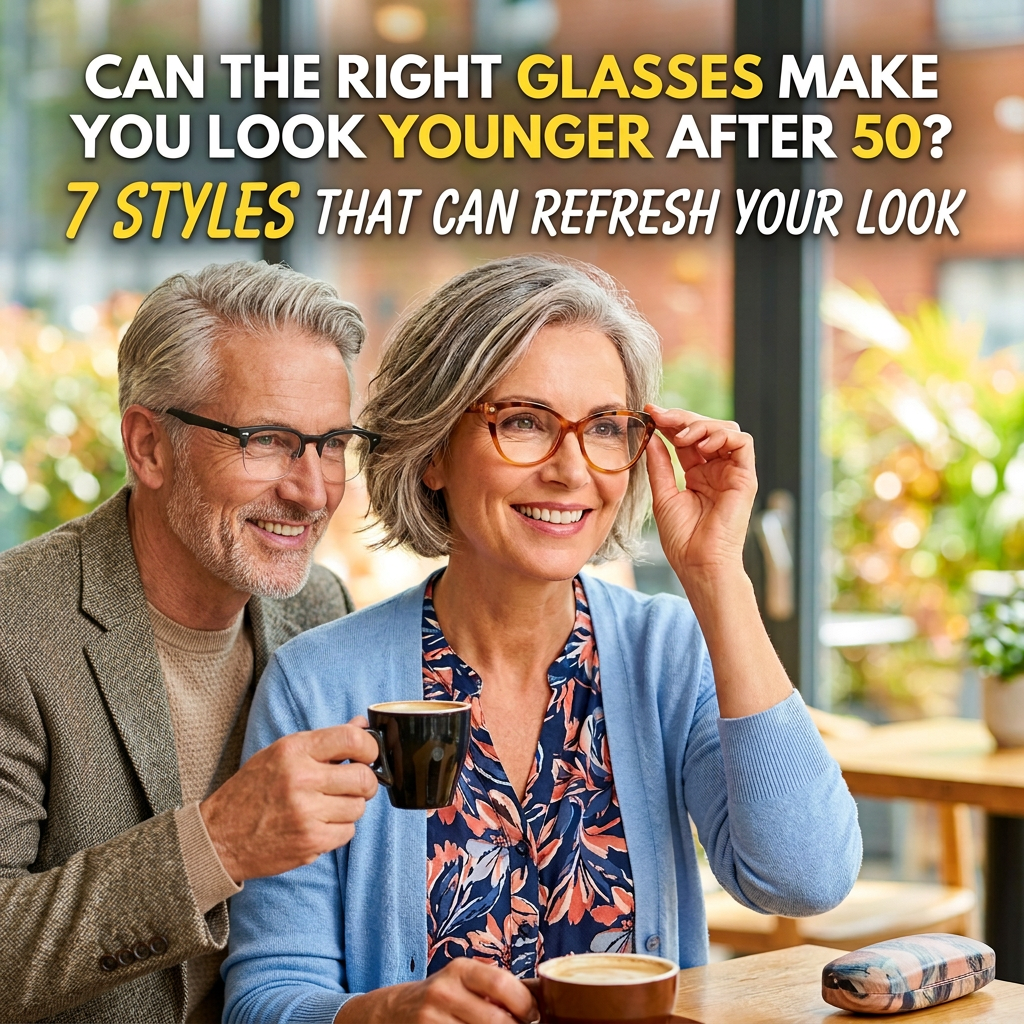
  • Can the Right Glasses Make You Look Younger After 50? 7 Styles That Can Refresh Your Look

    Can the Right Glasses Make You Look Younger After 50? 7 Styles That Can Refresh Your Look

    Can the right glasses make you look younger?

    Short answer: A little, but not by “10 years.” A 2020 study found glasses can change how old people think you look, though the effect is modest. Frames that sweep up slightly at the corners, a color that suits your hair and skin, and a size that fits your face can make you look more awake and current.

    Can a pair of glasses actually make you look younger after 50? Not in the magical “take 10 years off” way some ads suggest. But the right frames can change how your face is perceived, and they can make your overall look feel fresher, more current and more intentional.

    That matters because glasses sit right in the middle of your face. Shape, color, thickness, size and even the position of the frame relative to your eyebrows can change the impression you make.

    Can glasses really make you look younger?

    There is some evidence that eyewear changes perceived age, although the effect is usually modest rather than dramatic. A 2020 study published in i-Perception found that eyewear can influence judgments of age and appearance, but it is only one part of the picture.

    Forget the promise of looking “10 years younger.” A better goal after 50 is to find frames that make you look awake, current, confident and comfortable in your own skin.

    1. Try an upswept or softly cat-eye shape

    A frame that rises slightly toward the outer corners can give the face a subtle lifted appearance. It can also draw attention toward the eyes and eyebrows.

    You don’t need an exaggerated cat-eye. A gentle upward sweep is often easier to wear every day and looks modern without looking like you’re chasing a trend.

    2. Don’t automatically avoid stronger frames

    Black or dark frames can be surprisingly flattering after 50. They create definition around the eyes and can make a simple outfit look more polished.

    The trick is proportion. If the frame is extremely thick, oversized or heavy for your face, it can overwhelm your features.

    3. Clear and translucent frames can look fresh

    Clear, champagne, soft gray and translucent frames can give you definition without adding a heavy dark line across your face.

    4. Thin frames can soften the look

    Minimal frames can work beautifully if you prefer an understated appearance. Metal, thin acetate and lightweight designs can add structure while keeping the face visually open.

    5. Consider color instead of always choosing black

    Brown, tortoiseshell, burgundy, deep blue, olive and warm neutral shades can complement hair, skin and eye color while making the glasses feel intentional.

    6. Frame size matters more than most people realize

    Oversized glasses can look stylish, but there is a point where they begin to hide the eyes and dominate the face. Frames that are too small can have the opposite problem.

    Ideally, the frame should sit comfortably without sliding, the eyes should sit reasonably well within the lenses, and the bridge should feel secure without pressure.

    7. Pay attention to your eyebrows and eyes

    Your glasses and eyebrows work together. A frame that sits too low can cover the eyebrows and make the upper face look heavier. A frame that sits at the right height can help the eyes look more open.

    What glasses should you avoid if you want a fresher look?

    There are no universal “bad” frames. But be cautious with frames that:

    • are badly oversized for your face
    • sit too low on the nose
    • pinch your temples or slide constantly
    • hide your eyes or eyebrows
    • look dated simply because you’ve worn the same style for decades
    • have a color that makes your complexion look tired or washed out

    Try this simple photo test before buying

    Take a clear photo facing the camera in natural light. Try three or four very different frames and take another photo in the same lighting.

    Don’t ask, “Which one makes me look younger?” Ask: Which one makes my eyes stand out? Which one makes my face look balanced? Which one looks current without looking like a costume? Which one makes me look like myself on a really good day?

    What about “anti-aging” glasses and blue-light claims?

    Be skeptical of glasses marketed as if the lenses themselves will reverse visible aging. Blue-light glasses may be useful for some people who find them comfortable, but they are not proven anti-aging treatment for the skin or face.

    If you’re buying prescription glasses, prioritize the prescription, fit, lens quality and your actual visual needs. Style comes next—but it absolutely matters.

    The Bottom Line

    The right glasses won’t turn back the clock. They can, however, change the way your face is framed—and that can make a real difference in how fresh, polished and confident you look.

    After 50, I think that’s a much better goal than trying to look younger at any cost.

    For another style-focused perspective, designer and lifestyle blogger Cindy Hattersley has written about choosing eyewear after 50. Her approach reinforces a useful point: frames should suit your face and personal style, not follow a rule that everyone must wear the same shape.

    Common Questions

    What glasses make you look younger after 50?

    There is no single best frame for everyone. Upswept shapes, well-proportioned dark frames, translucent frames and modern thin frames can all work. The key is fit, proportion and how the frame works with your face.

    Do bigger glasses make you look younger?

    Not necessarily. Oversized frames can look fashionable, but if they overwhelm your features or hide your eyes, they may have the opposite effect.

    Are cat-eye glasses good for mature faces?

    A softly upswept cat-eye can be flattering because it draws attention toward the outer corners of the eyes. A subtle version is usually easier to wear than an extreme shape.

    Do clear glasses look good after 50?

    Yes. Clear and translucent frames can create definition without looking heavy, and they can give an outfit a clean, contemporary feel.

    Can glasses really make you look younger?

    They can influence how people perceive your appearance, but the effect is usually modest. Good fit, flattering color and a current shape are more realistic goals than expecting a frame to erase years.

    A Note From Tom Green

    I’m a big believer in making small changes that help you feel better about how you look without pretending you’re someone else. Glasses are a perfect example. You don’t need to look younger—you just want a pair that makes you look like the best version of yourself right now.

    Keep Reading

    If you’re interested in looking and feeling your best after 50, take a look at 50+ Looksmaxxing: Simple Ways to Look Better at Any Age.

    Disclaimer: This article is for general informational purposes and is not medical or vision-care advice. For changes in vision, eye symptoms or questions about prescription lenses, consult an eye-care professional.

    I’ve also mapped out some great tools on my new Tech for Independent Living After 50 page.

  • When You Don’t Recognize Yourself Anymore: How to Make Peace With Aging After 50

    When You Don’t Recognize Yourself Anymore: How to Make Peace With Aging After 50

    How do you make peace with aging when you don’t recognize yourself?

    Short answer: Making peace with aging starts with not letting the mirror be the judge. There’s nothing wrong with wanting to look good, but maybe the goal isn’t to look younger. Your body is for living, not just for being looked at, so stop inspecting yourself so closely and give yourself grace on the hard days.

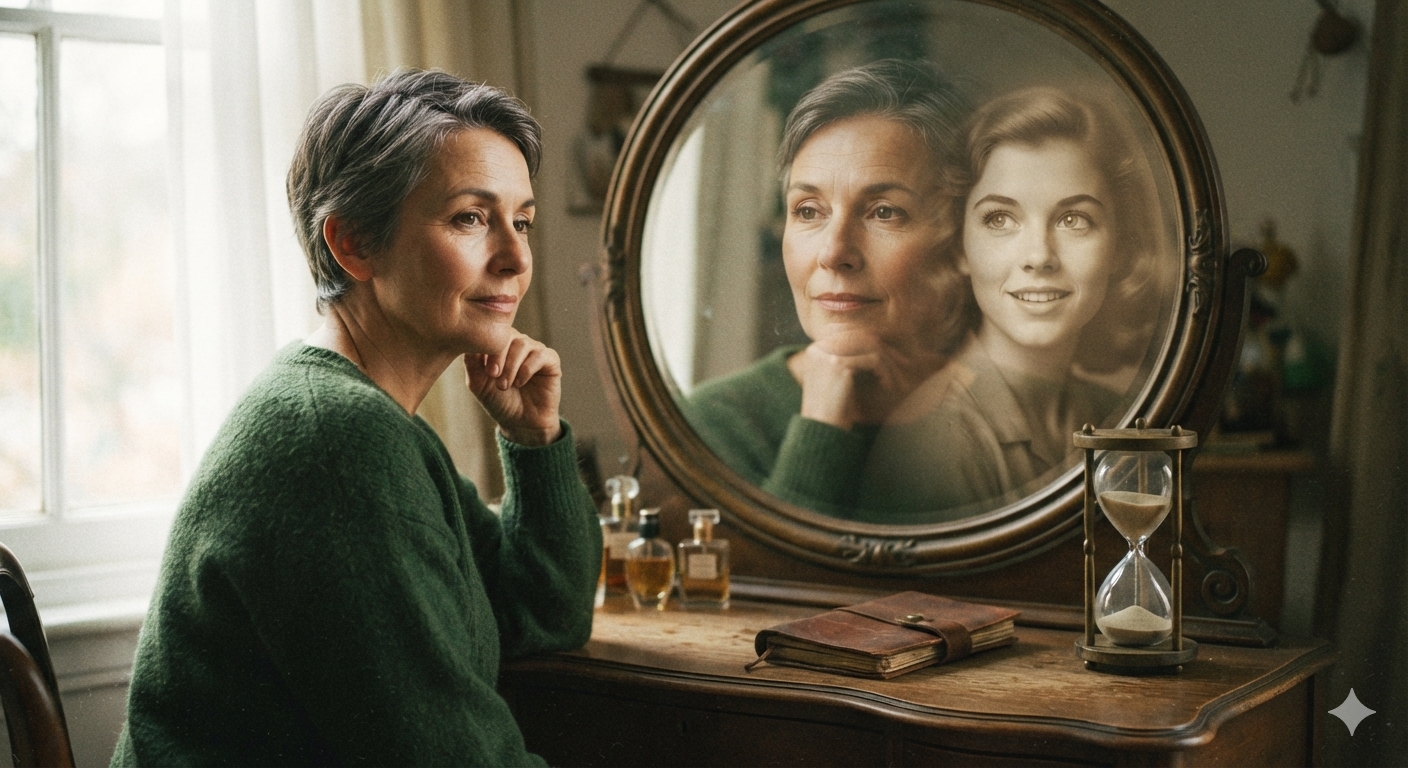
    There can be a strange moment in the aging process when you look in the mirror and realize something has changed.

    Maybe it is the lines around your eyes.

    Maybe your face looks thinner or softer than it used to. Your neck has changed. Your hair is different. Your body doesn’t look quite the way it did ten, twenty or thirty years ago.

    And sometimes the hardest part isn’t the wrinkle itself.

    It’s realizing that the person looking back at you doesn’t look like the person you still feel like inside.

    If you’ve ever had that experience, you’re not being vain.

    You’re being human.

    Aging changes our appearance, but it can also change the way we think about ourselves.

    And learning to live with that may be one of the less-discussed challenges of getting older.

    You can know you’re aging and still be surprised by it

    Most of us understand intellectually that we’re going to get older.

    We know our hair may turn gray. Skin loses some of its elasticity. Muscle mass becomes harder to maintain. Facial features change. Our bodies don’t necessarily respond to exercise, food or lack of sleep the way they once did.

    But knowing something is coming doesn’t necessarily prepare you emotionally for seeing it.

    That’s especially true when the change happens gradually.

    You don’t wake up one morning twenty years older.

    Instead, you notice little things.

    • A photograph.
    • A reflection in a store window.
    • A video someone took when you weren’t expecting it.
    • A shirt that fits differently.
    • A face in the mirror that suddenly looks older than you feel.

    And you may find yourself thinking:

    When did that happen?

    The mirror can become more powerful than it deserves to be

    Our appearance isn’t just about appearance.

    It can become tied to identity.

    For decades, you may have received messages—directly and indirectly—that looking young meant looking attractive, energetic, successful or desirable.

    Advertising certainly hasn’t helped.

    The beauty industry has built an enormous market around the idea that every visible sign of aging is something that should be corrected.

    And social media can make the comparison even harder.

    Research published in 2025 found associations between appearance-focused social media use, self-objectification and body-image concerns. The researchers also identified self-compassion as a potentially protective factor.

    There’s nothing wrong with wanting to look good

    This is important.

    Accepting aging does not mean you have to stop caring about your appearance.

    • You can still enjoy skincare.
    • You can color your hair if you want to.
    • You can exercise because you like the way a stronger body looks.
    • You can dress well.
    • You can take care of your teeth, skin and hair.
    • You can use products that make you feel better about yourself.

    And if you choose a cosmetic treatment after understanding its risks and benefits, that is your decision.

    The problem begins when taking care of yourself turns into being at war with yourself.

    There’s a big difference between:

    “I want to look my best.”

    and

    “I can’t stand the person I’m becoming.”

    The first can be healthy.

    The second can become exhausting.

    Maybe the goal isn’t to look younger

    This may be one of the most useful changes in thinking after 50.

    Instead of asking:

    “How can I look younger?”

    try asking:

    “How can I look healthy, cared for, confident and like myself?”

    Those aren’t the same goal.

    You may never get your 35-year-old face back.

    None of us does.

    But you can become the 50-, 60-, 70- or 80-year-old version of yourself who looks like she takes care of herself, stands tall, smiles easily and still has somewhere she wants to go.

    That’s a different kind of beauty.

    And arguably a more interesting one.

    Your body isn’t only something other people look at

    This is where aging can offer an unexpected opportunity.

    For much of our younger lives, we’re taught to think about our bodies from the outside.

    • How do I look?
    • Am I thin enough?
    • Do I look attractive?
    • Do other people notice me?
    • Do I look younger than my age?

    But eventually, many people begin to appreciate something different.

    What can my body still do for me?

    • Can I walk around the neighborhood?
    • Carry groceries?
    • Get up from the floor?
    • Travel?
    • Play with grandchildren?
    • Lift weights?
    • Garden?
    • Dance?
    • Climb stairs without stopping?
    • Go somewhere new?

    Those things may not show up in a selfie.

    But they can become far more important than a selfie.

    There is actually research behind this shift

    A 2026 study involving adults ages 60 to 80 found that greater body appreciation was associated with greater life satisfaction, and self-acceptance helped explain that relationship.

    That doesn’t mean you have to suddenly love every part of your body.

    That’s not realistic.

    You can dislike a particular wrinkle.

    You can wish your waist were smaller.

    You can miss your old hair.

    You can wish your skin were firmer.

    Acceptance doesn’t require pretending everything is perfect.

    It means learning not to let the things you dislike become the entire story about yourself.

    What if you stopped inspecting yourself so closely?

    Here’s an experiment worth trying.

    For a week, stop looking for flaws.

    • Don’t stand in front of the bathroom mirror examining your neck.
    • Don’t repeatedly pull the skin under your eyes.
    • Don’t take five photographs looking for the “bad side.”
    • Don’t zoom in on every line in a picture.

    Take care of yourself normally.

    Then step back.

    Look at the whole person.

    • How do you carry yourself?
    • Do you look healthy?
    • Do your eyes look alive?
    • Are you smiling?
    • Does your clothing fit?
    • Does your hair make you feel good?
    • Do you look like someone who is participating in life?

    Sometimes we become so focused on individual imperfections that we completely miss the person.

    And yes, there will be days when you don’t feel good about yourself

    That’s normal too.

    You don’t have to turn aging into a positive-thinking exercise every morning.

    Some days you may look in the mirror and think:

    “I really don’t like what I see today.”

    That’s okay.

    You don’t have to argue with yourself.

    You can simply say:

    “This is how I look today. I’m still going to have a good day.”

    That’s a powerful distinction.

    Your appearance doesn’t have to improve before you’re allowed to enjoy your life.

    Be careful about who gets inside your head

    Pay attention to the people and accounts you follow.

    If every photograph makes you feel older, heavier, less attractive or less successful, ask yourself why you’re continuing to look at it.

    You don’t have to hate social media.

    You don’t even have to stop following beauty accounts.

    But you can choose more carefully.

    Follow people who make you feel inspired rather than inadequate.

    Follow women who are active, funny, stylish, interesting and honest about getting older.

    Follow people who remind you that life doesn’t end when your face changes.

    Your feed becomes part of your environment.

    Choose an environment that helps you.

    Don’t confuse acceptance with giving up

    This may be the biggest misconception of all.

    Accepting your age doesn’t mean giving up.

    It can actually make it easier to take good care of yourself.

    You can say:

    “My skin is changing, so I’m going to take good care of it.”

    Not:

    “My skin is changing, so I need to fight it every day.”

    You can say:

    “I’m losing some muscle as I get older, so I’m going to strength train.”

    Not:

    “My body isn’t what it used to be, so what’s the point?”

    You can say:

    “I don’t look 40 anymore, but I still want to look my best.”

    Not:

    “If I can’t look 40, I don’t want to look at all.”

    That difference matters.

    Maybe growing older requires a new definition of beautiful

    When we’re young, beauty can be largely about symmetry, smooth skin, hair, body shape and looking desirable.

    Later, something else begins to show.

    • Character.
    • Confidence.
    • Humor.
    • Kindness.
    • Strength.
    • Curiosity.
    • How you treat people.
    • How you carry yourself.
    • Whether you still get excited about something.
    • Whether you have something to look forward to.
    • Whether you’ve learned how to survive difficult things without becoming bitter.

    None of those things erase wrinkles.

    They make wrinkles less important.

    You don’t have to love every change

    Maybe that’s the most honest place to end.

    You don’t have to celebrate every gray hair.

    You don’t have to love every wrinkle.

    You don’t have to pretend you never miss your younger face.

    You don’t have to stop wanting to look attractive.

    And you don’t have to apologize for caring about yourself.

    But you also don’t have to spend the rest of your life trying to defeat a process that every human being eventually faces.

    Take care of your appearance. Take care of your body. Take care of your health. But don’t forget to take care of the person underneath all of it.

    Because there is still a person in that mirror who has somewhere to go, people to love, things to learn and experiences that haven’t happened yet.

    And perhaps that’s the part of aging we don’t talk about enough.

    You may look different than you once did.

    But you’re not finished becoming who you’re going to be.

    A Final Thought

    The goal after 50 doesn’t have to be looking like the person you were twenty years ago.

    Maybe the goal is to look in the mirror and eventually say:

    “Yes. This is me now. And I still like where I’m going.”

    That may be a much better definition of aging well.

    For another thoughtful perspective on emotional well-being and finding your footing in later life, you may enjoy Sixty and Me, founded by Margaret Manning, which explores life transitions and personal growth.

    Common Questions

    Is it normal to struggle with changes in appearance after 50?

    Yes. Changes in appearance can affect how people think and feel about themselves, and research suggests that body dissatisfaction and concerns about aging appearance don’t simply disappear with age.

    Does accepting aging mean I shouldn’t care about how I look?

    No. Acceptance and self-care can exist together. You can enjoy skincare, exercise, clothing, hair care and other ways of looking after yourself without making youthfulness the only measure of your worth.

    Can social media make aging and body image harder?

    It can. Research has linked appearance-focused social media use with self-objectification and body-image concerns. Choosing what you consume online—and practicing more self-compassion—may help.

    What is a healthier goal than trying to look younger?

    Try aiming to look healthy, cared for, confident and like yourself. You can still improve things you want to improve without making your entire identity about reversing age.

    Can accepting my changing appearance actually make me feel better?

    Research in older adults has found an association between body appreciation, self-acceptance and greater life satisfaction.

    A Note From Tom Green

    At Sturdy Years, I don’t think getting older means giving up on yourself. I think it means figuring out what is worth improving, what is worth accepting and what is worth letting go.

    You can still care about how you look.

    You can still work on your health.

    You can still get stronger.

    You can still take pride in yourself.

    But you don’t have to spend your life apologizing for getting older.

    Tom Green

    Sturdy Years

    Medical & Wellness Note

    This article discusses general experiences and research related to aging, appearance and body image. It is not medical or mental-health advice. If concerns about your appearance are causing significant distress or interfering with your daily life, consider talking with a qualified healthcare or mental-health professional

    Sources & Further Reading

    Keep Reading

    About the Author

    Tom Green writes Sturdy Years. He was born in Pell City, Alabama, in 1962, and he’s a country boy and a true Southerner through and through. He’s just a regular, laid-back 64-year-old who keeps things simple. He shares what he learns about skincare, fitness and getting older, and what’s working for him. He’s also the author of A Practical Guide to Getting Older Without Giving Up on Yourself. Tom isn’t a doctor. He reads up on the research and passes along what’s useful, plain and simple.

    I’ve also mapped out some great tools on my new Tech for Independent Living After 50 page.

  • How to Look and Feel Better as You Age After 50

    How to Look and Feel Better as You Age After 50

    How can you look and feel better as you age?

    Short answer: Looking and feeling better after 50 starts with strength training, then moving more between workouts, simple skin care without overdoing it, good sleep and eating to support the person you want to be. And don’t turn normal aging into a problem that needs fixing.

    Getting older changes the way we look and feel. I notice it myself. Hair changes, skin changes, recovery can take longer, and the body does not always bounce back the way it did years ago. But looking older does not have to mean looking worn down. For me, aging well is less about trying to look 30 again and more about taking care of the things that help me look healthy, capable and like myself.

    Start With Strength

    Muscle matters more as we get older. Strength training can help us stay capable in everyday life, from carrying groceries to getting out of a chair or climbing stairs. You do not have to train like a bodybuilder. Consistent resistance exercise, adjusted to your abilities, is a practical way to keep using the muscles you want to keep.

    Keep Moving Between Workouts

    A workout is only part of the day. Walking, taking the stairs, doing household tasks and getting up regularly can keep your body from becoming too accustomed to sitting. I think of everyday movement as maintenance. It does not have to be complicated.

    Take Care of Your Skin Without Overdoing It

    Skin changes with age, but a complicated routine is not automatically a better routine. Gentle cleansing, moisturizer when your skin needs it and daily sun protection are reasonable basics. It is easy to buy too many products chasing every new wrinkle. A simple routine that you actually stick with makes more sense.

    Pay Attention to Sleep and Recovery

    When sleep is poor, many people notice it in their energy, mood and appearance. Recovery also becomes important when you are exercising regularly. Rest is not wasted time. It is part of taking care of the body you are asking to keep working.

    Eat to Support the Person You Want to Be

    Food cannot stop aging, but what you eat supports the things that matter as you age. Getting enough protein, eating a variety of nutritious foods and staying hydrated can support an active lifestyle.

    Do Not Turn Normal Aging Into a Problem

    Gray hair, wrinkles and changes in facial shape are normal parts of getting older. Wanting to look your best is fine. I just do not think every sign of age needs to become something we fight every morning in the mirror. My goal is simpler: look cared for, stay as strong and mobile as I can, and feel good about the person looking back at me. One easy way to look more cared for is a fresh pair of glasses. If you’ve been wearing the same frames for years, an updated pair can freshen up your whole face.

    A Simple Weekly Check-In

    Instead of obsessing over one more line or gray hair, ask a few better questions: Did I move this week? Did I work on my strength? Did I get enough rest? Did I take care of my skin? Did I eat reasonably well? Did I do something that made me feel good? Those questions tell me more about aging well than a number on a birthday cake ever could. Another voice on making the most of later life is Margaret Manning’s Sixty and Me, which explores aging, identity, personal growth, and the next chapter of life. Looking and feeling better is about more than appearance alone.

    Common Questions

    What are the simplest ways to look and feel better after 50? Small, consistent habits can make a noticeable difference. Staying active, building or maintaining muscle, eating well, sleeping enough, caring for your skin, and staying connected can all support how you look and feel. Can strength training really change how you look after 50? Yes. Regular strength training can help maintain muscle, improve posture, and support a stronger, more capable appearance as you age. How does walking help you feel better after 50? Walking is an easy way to add more movement to your day and can support cardiovascular health, mobility, endurance, and overall activity levels. What should you eat if you want to feel better after 50? Build meals around nutritious foods such as protein, vegetables, fruits, whole grains, beans, and healthy fats. The goal is a sustainable eating pattern rather than a restrictive diet. Can better sleep make you look and feel better after 50? Yes. Consistent, quality sleep supports energy, mood, concentration, and physical recovery, all of which can affect how you feel during the day. What skincare habits are worth keeping after 50? Keep your routine simple and consistent. Gentle cleansing, moisturizer, and daily sunscreen provide a practical foundation, with targeted products added based on your individual concerns. How can you improve your appearance without trying to look decades younger? Focus on looking healthy and well cared for. A flattering haircut, healthy skin, good posture, appropriate clothing, and maintaining muscle can help you look more refreshed without chasing a younger appearance. What lifestyle changes can help you feel more confident after 50? Taking care of your body, making time for things you enjoy, maintaining meaningful relationships, and continuing to learn or try new activities can all contribute to greater confidence and enjoyment of life.

    The Bottom Line

    Aging well is not about pretending you are not getting older. It is about taking reasonable care of yourself so that you can keep doing the things that matter to you. That is the approach I am taking after 50: less obsession with looking younger, and more attention to looking healthy, staying capable and enjoying the years ahead. I’m not a doctor or medical professional. I’m sharing what I’ve learned, what I notice in my own life and practical ideas worth discussing with a healthcare professional when appropriate. Practical takeaway: You do not have to chase looking younger. Focus on strength, movement, sleep, nourishing food, simple skincare, and the habits that help you feel like yourself.

    Keep Reading

    Written by Tom Green, creator of Sturdy Years Tom Green writes Sturdy Years. He was born in Pell City, Alabama, in 1962, and he’s a country boy and a true Southerner through and through. He’s just a regular, laid-back 64-year-old who keeps things simple. He shares what he learns about skincare, fitness and getting older, and what’s working for him. He’s also the author of A Practical Guide to Getting Older Without Giving Up on Yourself. Tom isn’t a doctor. He reads up on the research and passes along what’s useful, plain and simple.

    I’ve also mapped out some great tools on my new Tech for Independent Living After 50 page.

  • Getting Older and Watching Your Hormones Change

    Getting Older and Watching Your Hormones Change

    How do your hormones change as you get older?

    Short answer: Hormones do change as you age, but not every symptom is a hormone problem. Testing can help when a doctor looks at it in context. Don’t let the internet sell you a hormone shortcut, because sleep, movement, good food and regular checkups still matter most.

    Hormones are one of those subjects that can make getting older sound much more mysterious than it really is. One article says everything is caused by a hormone being “low.” Another promises that a supplement, cream or treatment will restore the person you were at 30. Real life is more complicated—and that is actually useful to understand. Hormone levels change with age, but so do sleep, activity, body composition, nutrition, stress, medications and many other parts of health. A change in how you feel does not automatically tell you which hormone is responsible.

    What Can Change as We Get Older?

    People may notice changes in energy, sleep, body composition, muscle and recovery, sexual function, temperature regulation or mood. Some of these changes can involve hormones. Others have nothing to do with hormones. For women, menopause brings major changes in ovarian hormone production. For men, testosterone levels generally decline gradually rather than switching off at a particular age. Either way, the individual picture matters.

    Symptoms Don’t Come With a Hormone Label Attached

    This is where online checklists can get misleading. Feeling tired can have many causes. So can gaining weight, sleeping poorly, losing strength, having less interest in sex or feeling different emotionally. A symptom may deserve attention without proving what caused it. That is why I think it is better to tell a healthcare professional what changed, when it changed and what else was happening at the time than to walk in convinced that one particular hormone is the answer.

    Testing Can Help, But Context Matters

    When hormone testing is appropriate, a lab result is only one piece of the picture. Timing, the specific test, medications, symptoms and the person’s overall health can affect how results are interpreted. A single number pulled out of context can create more confusion than clarity. Your clinician can decide whether testing makes sense and what the results mean for you.

    Don’t Let the Internet Sell You a Hormone Shortcut

    There is a huge market built around the idea of reversing aging. Some products use words such as “balance,” “reset,” “boost” or “restore” without giving you a clear explanation of what problem they are actually treating. That doesn’t mean every hormone treatment is inappropriate. Some treatments have legitimate medical uses. It means the reason for using one should be clear, and the risks and benefits should be discussed with a qualified professional.

    The Basics Still Matter

    Before turning every change into a hormone problem, I would pay attention to the basics:
    • Sleep: Give it enough time and take persistent problems seriously.
    • Strength training: Resistance exercise can help maintain muscle and physical function.
    • Regular movement: Walking and other activity count.
    • Nutrition: Eat enough protein and a varied diet rather than chasing miracle foods.
    • Stress: Find realistic ways to reduce the load when you can.
    • Routine care: Keep appropriate checkups and discuss persistent changes.

    There Is No Single “Normal” Way to Get Older

    Two people the same age can feel completely different. Their medical histories, medications, sleep, activity, genetics, diet and life circumstances can all be different. That is why I don’t think aging should be treated like a scorecard. Notice what has changed, take reasonable care of yourself and get help when something doesn’t seem right.

    What I Think Is Worth Paying Attention To

    I’m much more interested in whether I can stay active, keep building or maintaining strength, sleep reasonably well, enjoy my life and deal with health changes intelligently than I am in trying to make every number look like it did decades ago. Aging is not a failure of your body. It is a process. The goal is to understand what is changing without letting every change scare you into buying something. For a midlife-focused perspective on changing routines and wellbeing after menopause, Forward After the Pause writes about life after menopause, everyday wellness, and moving into a new chapter. For symptoms that concern you, a qualified clinician is still the right person to help interpret what your own hormone changes may mean.

    Common Questions

    What happens to your hormones as you get older? Hormone levels and patterns can change with age. The changes differ between men and women and can affect things such as sleep, energy, muscle, mood, and sexual health. Do hormones change after 50? Yes. Hormonal changes are a normal part of aging, although the timing and degree vary from person to person. Why do hormones change as you age? Hormone production and regulation naturally change over time as part of the aging process. Can changing hormones affect your energy after 50? They can. Changes in hormones may be one factor affecting energy, but sleep, nutrition, physical activity, medications, stress, and health conditions can also play important roles. Can hormone changes affect muscle after 50? Yes. Age-related hormonal changes can contribute to changes in muscle mass and strength, which is one reason regular resistance exercise and adequate nutrition become important. Can hormone changes affect sleep after 50? They can. Hormonal changes may contribute to sleep changes, although many other factors can also affect sleep as you get older. Do men and women experience hormonal changes differently? Yes. The specific hormones involved, timing, and symptoms can differ significantly between men and women. Does feeling tired always mean your hormones are changing? No. Fatigue has many possible causes. Persistent or unusual tiredness shouldn’t automatically be blamed on aging or hormones. Can lifestyle habits help you manage changes that come with aging? Regular exercise, nutritious food, adequate sleep, stress management, and maintaining healthy habits can support overall health as hormone patterns change. When should you talk with a doctor about hormone changes? If you have persistent or concerning symptoms such as major changes in energy, mood, sleep, sexual function, or other unexplained changes, discuss them with a healthcare professional. Practical takeaway: Hormone changes are part of getting older, but they aren’t the whole story. Focus on the things you can control—exercise, nutrition, sleep, stress, and regular healthcare. This article is general information and reflects my personal perspective. Hormone-related symptoms and treatments are individual medical questions; talk with a qualified healthcare professional about your situation. Written by Tom Green, creator of Sturdy Years Tom Green writes Sturdy Years. He was born in Pell City, Alabama, in 1962, and he’s a country boy and a true Southerner through and through. He’s just a regular, laid-back 64-year-old who keeps things simple. He shares what he learns about skincare, fitness and getting older, and what’s working for him. He’s also the author of A Practical Guide to Getting Older Without Giving Up on Yourself. Tom isn’t a doctor. He reads up on the research and passes along what’s useful, plain and simple.

    Keep Reading

    I’ve also mapped out some great tools on my new Tech for Independent Living After 50 page.
  • Memory Getting Slippery After 50? Citicoline Explained

    Memory Getting Slippery After 50? Citicoline Explained

    Does citicoline help memory after 50?

    Short answer: Citicoline is a supplement your body turns into compounds the brain uses. In one 12-week study of 100 healthy adults ages 50 to 85 with age-related memory slips, those who took 500 mg a day improved more on memory tests than those on a dummy pill. But the European Food Safety Authority found it hasn’t been proven to improve memory, so don’t expect a miracle.

    Ever walk into a room and forget why you went there? Or know a person’s name perfectly well—until the exact moment you need it? Those little memory lapses can become more noticeable after 50+, and they can make you wonder whether there is anything simple you can do to support your brain. That’s one reason citicoline, also called CDP-choline, has been getting attention. But does citicoline actually help memory? The answer is more interesting than a simple yes or no.

    What Is Citicoline?

    Citicoline is a naturally occurring compound involved in the body’s production of phospholipids and the neurotransmitter acetylcholine. After it is taken, it provides choline and cytidine, which are used in several pathways important to brain-cell membranes and brain chemistry. That sounds impressive, but here’s the important distinction: a supplement having a plausible biological role does not automatically mean it will noticeably improve memory in everyday life.

    So, Can Citicoline Help Memory After 50+?

    There is some human research worth paying attention to. One randomized, double-blind, placebo-controlled trial included 100 healthy adults ages 50 to 85 who had age-associated memory impairment. Participants received either placebo or 500 mg of citicoline daily for 12 weeks. At the end of the study, the citicoline group showed greater improvement on measures of episodic memory and overall composite memory than the placebo group. That’s encouraging—but it was one relatively small 12-week study, not proof that citicoline will improve memory for everyone.

    What Makes Citicoline Interesting?

    Citicoline supplies choline, which the body uses to make acetylcholine. Acetylcholine is a neurotransmitter involved in attention and memory. Citicoline also contributes building blocks used in cell-membrane metabolism. Researchers have therefore been interested in whether supporting these pathways might help the aging brain function more efficiently. In other words, there is a reasonable biological explanation for studying citicoline. But mechanism is not the same thing as proof of a real-world benefit.

    What the Research Does—and Doesn’t—Prove

    This is where I think readers 50+ should be careful. The positive clinical trial is useful because it actually tested people rather than simply looking at laboratory mechanisms. But broader evidence is not strong enough to say that citicoline is a proven treatment for age-related memory loss. A later scientific assessment by the European Food Safety Authority concluded that a cause-and-effect relationship between citicoline and improved, maintained, or reduced loss of memory had not been established. In other words, the evidence remains promising but incomplete.

    How Much Citicoline Was Studied?

    The most directly relevant memory trial in adults 50+ used 500 mg per day for 12 weeks. That does not mean 500 mg is a recommended dose for everyone, and it doesn’t mean that taking more will work better. Studies of citicoline for other medical conditions have used different amounts, but those results shouldn’t automatically be applied to healthy people simply interested in memory. If you’re considering a supplement, check the label carefully and talk with your healthcare professional or pharmacist if you take medications or have a medical condition.

    Is Citicoline a Nootropic?

    You’ll often see citicoline described online as a nootropic—a substance marketed for cognitive support. That’s a useful search term, but don’t let the label make the evidence sound stronger than it is. The important question isn’t whether something is called a nootropic. It’s whether controlled human studies show a meaningful benefit. With citicoline, there are some encouraging findings, but more research is needed.

    What About Side Effects?

    Citicoline has generally been described as well tolerated in clinical research, but “natural” or “well tolerated” doesn’t mean risk-free. Reported unwanted effects in some research have included headache, digestive discomfort and sleep-related complaints. If a supplement seems to make you feel worse, disrupts your sleep or causes a new symptom, that’s a good reason to stop and discuss it with a healthcare professional.

    What I Would Take Away From the Research

    If you’re interested in memory after 50+, citicoline is worth knowing about—but not worth treating like a miracle supplement.
    • There is a human trial in adults 50–85 showing improvement in certain memory measures.
    • The study used 500 mg daily for 12 weeks.
    • The overall evidence is still limited.
    • Citicoline has a plausible role in brain-cell and neurotransmitter metabolism.
    • More research is needed before anyone can say it prevents or reverses normal age-related memory decline.

    Common Questions

    Is it normal to have more memory lapses after 50? Occasional forgetfulness can happen with normal aging, but persistent or worsening memory problems deserve attention. What is citicoline? Citicoline is a compound that provides choline and is involved in processes related to cell membranes and brain function. Can citicoline improve memory? Some research has explored citicoline for memory and cognitive function, but the evidence is not strong enough to say it will improve memory for everyone. Is citicoline the same as CDP-choline? Yes. Citicoline and CDP-choline are two names commonly used for the same compound. Is citicoline safe for people 50+? Citicoline appears to be generally well tolerated in studies, but supplements can interact with individual health conditions or medications. It’s smart to discuss regular supplement use with a healthcare professional. When should memory problems be checked by a doctor? If memory changes are frequent, getting worse, interfere with everyday activities, or concern you or someone close to you, bring them up with a healthcare professional.

    And Don’t Forget the Boring Stuff

    Before spending money on another supplement, remember that the basics still matter. Regular physical activity, adequate sleep, a balanced diet, social connection and staying mentally engaged all have a place in healthy aging. Citicoline may eventually prove to have a useful role for some people. For now, the most honest description is interesting, researched and promising—but not proven. Sturdy Years note: This article is for general education, not medical advice. New, sudden or steadily worsening memory problems deserve a conversation with a healthcare professional rather than a supplement experiment.

    Sources

    Citicoline and Memory Function in Healthy Older Adults: Randomized, Double-Blind, Placebo-Controlled Clinical Trial Citicoline Improves Verbal Memory in Aging Citicoline: Pharmacological and Clinical Review, 2022 Update   Practical takeaway: You do not need to overhaul your life to make a useful change. Start with one realistic step, give it time, and build from there. A gentle well-being note: This article is for general information and is not a substitute for professional medical advice. If you have persistent, severe, or worsening symptoms, talk with a qualified healthcare professional.

    Keep Reading

    Written by Tom Green, creator of Sturdy Years Tom Green writes Sturdy Years. He was born in Pell City, Alabama, in 1962, and he’s a country boy and a true Southerner through and through. He’s just a regular, laid-back 64-year-old who keeps things simple. He shares what he learns about skincare, fitness and getting older, and what’s working for him. He’s also the author of A Practical Guide to Getting Older Without Giving Up on Yourself. Tom isn’t a doctor. He reads up on the research and passes along what’s useful, plain and simple.

    I’ve also mapped out some great tools on my new Tech for Independent Living After 50 page.
  • Hormone Changes After 50: What’s Normal, What Can Change, and When to Ask Questions

    Hormone Changes After 50: What’s Normal, What Can Change, and When to Ask Questions

    What hormone changes are normal after 50?

    Short answer: Hormone changes around menopause can bring hot flashes, sleep changes, mood changes and shifts in weight. After menopause, women become more prone to osteoporosis and heart disease, so bone health, activity, good food and regular checkups matter more. Don’t assume every symptom is just menopause, and talk to your doctor about whether hormone therapy fits you.

    Hormone changes after 50 can make your body feel unfamiliar. Sleep may change. Your weight may shift. You may notice hot flashes, changes in your periods, mood changes, or a difference in how your body stores fat.

    For women, many of these changes are connected with the menopausal transition. But not every new symptom should automatically be blamed on hormones.

    What happens to hormones around menopause?

    During the menopausal transition, production of estrogen and progesterone declines substantially. The transition commonly begins between ages 45 and 55, although timing varies. Menopause itself is confirmed after 12 months without a menstrual period.

    Changes you may notice

    • Hot flashes or night sweats
    • Changes in sleep
    • Irregular periods during the transition
    • Changes in body shape or fat distribution
    • Changes in bone density and physical function
    • Vaginal or sexual changes

    What can actually help?

    Start with the basics that support health at any age: regular physical activity, nutritious food, adequate sleep, and staying socially connected. Exercise that includes muscle strengthening is especially useful for maintaining strength and physical function.

    Don’t assume every symptom is “just menopause.”

    Some symptoms overlap with other health conditions, medications, or normal changes that are not directly caused by menopause. If something is new, severe, persistent, or worrying you, bring it up with your healthcare professional.

    One important change after menopause

    After menopause, women become more vulnerable to conditions including osteoporosis and cardiovascular disease. That makes this a good time to pay attention to bone health, physical activity, nutrition, and regular medical care rather than focusing only on hot flashes.

    What about hormone therapy?

    Hormone therapy is a medical decision, not a one-size-fits-all solution. The benefits and risks depend on your health history, symptoms, age, and other factors. If symptoms are interfering with your life, discuss your options with a qualified healthcare professional.

    Hormone changes can be frustrating—but understanding what is happening can make the next step much less confusing.

    Question: What change surprised you most after 50?

    For more perspectives on menopause and navigating midlife changes, you can also explore Forward After the Pause, which focuses on menopause and midlife well-being.

    Common Questions

    Do hormone levels normally change after 50?
    Yes. Hormone production changes naturally with age, although the timing and degree of change vary from person to person.

    What hormone changes are common after 50?
    Changes in estrogen, progesterone, testosterone, thyroid hormones, and other hormones can occur with aging. The specific changes depend on factors such as sex, health, medications, and life stage.

    What symptoms can hormone changes cause?
    Depending on the hormone involved, people may notice changes in sleep, energy, mood, body composition, sexual function, temperature regulation, or other aspects of health. These symptoms can also have many causes besides hormones.

    Does feeling tired after 50 always mean your hormones are changing?
    No. Fatigue can have many possible causes, including poor sleep, stress, medications, nutritional issues, and medical conditions. Persistent or unexplained fatigue is worth discussing with a healthcare professional.

    Should everyone have their hormones tested after 50?
    Not necessarily. Hormone testing is generally most useful when there are symptoms or other reasons for a healthcare professional to investigate a possible hormone-related problem.

    When should I ask a doctor about hormone changes?
    If symptoms are persistent, bothersome, sudden, or affecting your daily life, bring them up with your healthcare professional. They can help determine whether hormones—or something else—could be contributing.

    Written by Tom Green, creator of Sturdy Years

    Practical takeaway: You do not need to overhaul your life to make a useful change. Start with one realistic step, give it time, and build from there.

    A gentle well-being note: This article is for general information and is not a substitute for professional medical advice. If you have persistent, severe, or worsening symptoms, talk with a qualified healthcare professional.

    Keep Reading

    Written by Tom Green, creator of Sturdy Years

    Tom Green writes Sturdy Years. He was born in Pell City, Alabama, in 1962, and he’s a country boy and a true Southerner through and through. He’s just a regular, laid-back 64-year-old who keeps things simple. He shares what he learns about skincare, fitness and getting older, and what’s working for him. He’s also the author of A Practical Guide to Getting Older Without Giving Up on Yourself. Tom isn’t a doctor. He reads up on the research and passes along what’s useful, plain and simple.

    I’ve also mapped out some great tools on my new Tech for Independent Living After 50 page.
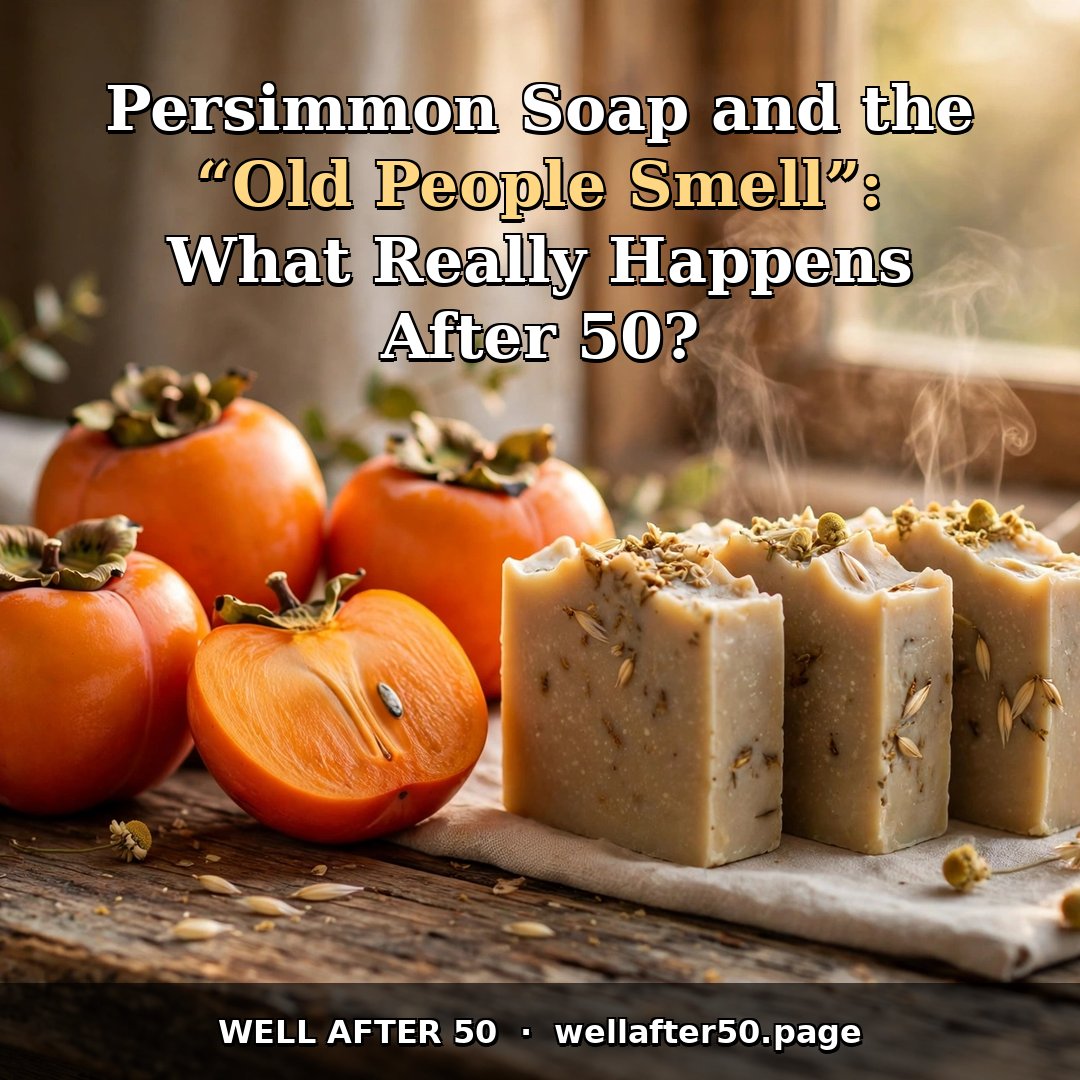
  • Persimmon Soap and the “Old People Smell”: What Really Happens After 50?

    Persimmon Soap and the “Old People Smell”: What Really Happens After 50?

    What causes “old people smell,” and does persimmon soap help?

    Short answer: Yes, body odor can change after 50, and researchers have tied part of it to a compound called 2-nonenal. Persimmon soap is marketed to help neutralize that smell. It isn’t magic, but it’s an inexpensive thing to try along with a good daily washing routine.

    Did you know you might start smelling a little different after 50?

    Yep. Nobody puts that on the birthday card.

    You get the cake, the candles, maybe a card that says, “50 is the new 40!”

    But somewhere in the fine print is:

    “Your skin may now have its own personality.”

    And that brings us to one of the funniest—and slightly embarrassing—questions people over 50 sometimes ask:

    Why do old people smell different?

    And more importantly…

    Can persimmon soap help with “old people smell”?

    First: What Is “Old People Smell”?

    “Old people smell” is a phrase people use to describe a particular odor that can sometimes develop as we age.

    There is actually some science behind it.

    As skin ages, changes in the skin’s oils can result in the formation and oxidation of certain compounds. One compound researchers have associated with age-related body odor is 2-nonenal.

    That doesn’t mean everyone over 50 develops it. It doesn’t mean older people are dirty. And it definitely doesn’t mean you suddenly need to apologize when you walk into a room.

    But aging can change your skin—and sometimes that can change how you smell.

    So… Is Persimmon Soap the Answer?

    This is where persimmon soap enters the story.

    Persimmon-based soaps have become popular because they are marketed as a way to help neutralize or reduce unwanted body odors associated with aging.

    And honestly, I can understand the appeal.

    Nobody wants to walk past a bathroom mirror, catch their own reflection and think:

    “Well, apparently I’m becoming my grandfather.”

    A good cleanser can help you feel fresh and clean.

    But persimmon soap isn’t magic. It’s still soap. You shouldn’t expect it to completely eliminate every odor caused by aging, hormones, sweat, skin oils, clothing or other factors.

    Why Does Your Body Odor Change After 50?

    Getting older can bring plenty of changes that nobody warned us about.

    Hair changes. Skin changes. Muscle changes. Sleep changes.

    And apparently, even your personal fragrance department gets reorganized.

    Older skin generally becomes drier and thinner, and the composition of skin oils can change. Hormonal changes can also affect sweating and body odor. Then there are medications, diet, exercise, stress and everyday hygiene.

    So if you notice that you smell different than you did when you were 30, you’re not necessarily imagining it.

    Your body really is changing.

    And Here’s the Funny Part…

    When we’re young, we spend ridiculous amounts of money trying to smell like something we’re not.

    Mountain breeze. Ocean mist. Fresh rain. Midnight adventure.

    I don’t know what “midnight adventure” smells like, but apparently it comes in a spray bottle.

    Then you hit 50 and suddenly you’re perfectly happy smelling like:

    Soap.

    Clean skin. Fresh laundry. Maybe a little aftershave.

    And honestly? That’s not bad.

    I Kind of Like the “Old People Smell”

    Here’s a confession:

    Sometimes I actually like the smell people call “old people smell.”

    Not because I want to smell stale.

    Because certain smells are connected to memories.

    The smell of an old-fashioned bar of soap. Your parents’ bathroom. A freshly washed towel. Your grandparents’ house. The aftershave your father wore. A particular hand lotion your mother used.

    Those smells can take you backward in time faster than a photograph.

    So maybe we should be careful about automatically calling every familiar older-person smell “bad.”

    Sometimes it’s just nostalgia with a scent.

    But I Still Want to Smell Good

    Of course.

    Being comfortable with getting older doesn’t mean giving up personal hygiene.

    I’m over 50. I still want to smell clean. I still want people to enjoy standing next to me. And I definitely don’t want someone opening a window when I walk into the room.

    A Good After-50 Smell Routine

    • Shower regularly. Nothing fancy required.
    • Clean areas that sweat. Armpits, feet and other areas where sweat and bacteria can accumulate deserve attention.
    • Try a gentle soap. If you’re interested in persimmon soap, give it a try and see how your skin responds.
    • Moisturize afterward. Dry skin becomes more common with age, and harsh cleansers can make it worse.
    • Wash clothes and towels regularly. Sometimes the smell isn’t coming from your body at all. Your favorite shirt may be the actual criminal.
    • Don’t drown yourself in cologne. There’s a point where “I want to smell good” becomes “I have entered the room before my body has.” A little is usually enough.

    Want to Try Persimmon Soap?

    If you’re curious about persimmon soap, you can check out the product I found on Amazon here:

    See Persimmon Soap on Amazon

    This is an affiliate link. If you purchase through this link, I may earn a commission at no additional cost to you.

    Does Persimmon Soap Really Work?

    That’s where we need to separate advertising from reality.

    Persimmon soap may help reduce unwanted odor for some people, but there’s no reason to expect it to completely reverse age-related changes in body odor.

    If you try it, look at how your skin responds.

    • Does it leave you feeling clean?
    • Does it cause dryness or irritation?
    • Do you like the smell?

    Those questions matter more than expecting one bar of soap to turn back the clock.

    And if you have a sudden or unusually strong change in body odor that doesn’t make sense, that’s something worth discussing with a healthcare professional rather than simply buying stronger soap.

    Getting Older Isn’t the Problem

    Here’s what I’ve learned about being over 50.

    You don’t have to fight every sign of aging.

    Some things are worth taking care of. Some things are worth laughing about. And some things are worth simply accepting.

    Wrinkles? They’re coming.

    Gray hair? Probably coming.

    Making noises when you stand up? Welcome to the club.

    And apparently, there’s a possibility that your skin develops a slightly different smell.

    Fine.

    I’ll take the persimmon soap.

    Maybe “Old People Smell” Isn’t Such a Terrible Thing

    We’re living longer. We’re staying active longer. We’re exercising. We’re taking better care of our skin. We’re learning about nutrition.

    We’re starting over. We’re dating. We’re traveling. We’re doing things we didn’t have time—or courage—to do when we were younger.

    So if getting older occasionally means needing a different kind of soap?

    I’ll take the deal.

    And if somebody tells me I smell like an old person?

    I’ll probably say:

    “Thanks. I’ve worked hard to get here.”

    Bottom Line

    Persimmon soap is worth knowing about if you’re concerned about body odor after 50 or what people jokingly call “old people smell.”

    It may help with unwanted odors, but it isn’t a miracle cure.

    The real goal isn’t to smell 25 again.

    It’s much simpler:

    Stay clean. Take care of your skin. Smell fresh. And don’t be embarrassed about getting older.

    After all, we’re not trying to become younger.

    We’re trying to get better at being ourselves.

    Amazon.com : Mirai Clinical Persimmon Soap for Old People Smell,Nonenal® Odor Eliminator | Japanese Persimmon Soap, Natural Body Odor Soap, Green Tea Extract, Deodorizing Bar for Men, Women, Gentle for All Skin

    Mirai Clinical Persimmon Soap for Old People Smell,Nonenal® Odor EliminatorJapanese Persimmon Soap, Natural Body Odor Soap, Green Tea Extract, Deodorizing Bar for Men, Women, Gentle for All Skin Types

    https://amzn.to/3VDASVf 

    Common Questions About Persimmon Soap and Aging-Related Odor

    Why can body odor change as we age?

    Body odor can change with age because skin chemistry, sweat, bacteria, diet and personal care habits can all change. A new or unusual odor can also have other causes.

    Does persimmon soap really remove aging-related odor?

    Persimmon products are marketed for odor control, but individual results vary. Good hygiene and checking persistent changes with a clinician are more important than relying on one product.


    About Tom Green

    Tom Green writes Sturdy Years. He was born in Pell City, Alabama, in 1962, and he’s a country boy and a true Southerner through and through. He’s just a regular, laid-back 64-year-old who keeps things simple. He shares what he learns about skincare, fitness and getting older, and what’s working for him. He’s also the author of A Practical Guide to Getting Older Without Giving Up on Yourself. Tom isn’t a doctor. He reads up on the research and passes along what’s useful, plain and simple.

    Disclosure: Some links in this article are affiliate links. If you purchase through one of these links, Sturdy Years may earn a commission at no additional cost to you.

    I’ve also mapped out some great tools on my new Tech for Independent Living After 50 page.

  • A Practical Guide to Getting Older Without Giving Up on Yourself

    A Practical Guide to Getting Older Without Giving Up on Yourself

    What is the Sturdy Years book about?

    Short answer: It’s my book, Sturdy Years: A Practical Guide to Getting Older Without Giving Up on Yourself. It’s an honest, plain-spoken look at strength, food and protein, skin, staying involved in life and making the years ahead better. It’s about feeling good about who you are now, not pretending to be younger.

    Getting older doesn’t mean giving up on yourself.

    It means learning how to work with the changes, take better care of yourself, and enjoy the person you’re becoming.

    That’s the idea behind Sturdy Years: A Practical Guide to Getting Older Without Giving Up on Yourself, by Tom Green.

    This is a practical, honest look at life after 50—the things that change, the things that can frustrate you, and the things you can still do to feel stronger, healthier, more confident, and more involved in life.

    Inside the Book

    • Strength & staying active — How important strength becomes as we age—and why staying active is about much more than exercise.
    • Food, protein & weight — What happens to your body as you get older, why that middle can become so frustrating, and practical ways to think about food and protein.
    • Skin & appearance — Getting older doesn’t mean you have to stop caring about how you look. It’s about looking your best without trying to look 25 again.
    • Staying engaged with life — Keeping your curiosity, interests, connections, and desire to keep moving forward.
    • Making the most of the years ahead — Because growing older isn’t the end of the story. There is still plenty to learn, experience, improve, and enjoy.

    This isn’t a book about pretending you’re younger.

    It’s about feeling good about who you are now—and making the years ahead better.

    📚 Want to Take a Look?

    A Practical Guide to Getting Older Without Giving Up on Yourself (Sturdy Years Book 1)

    A Practical Guide to Getting Older Without Giving Up on Yourself
    By Tom Green

    👉 Read about the book or get the Kindle edition on Amazon

    Keep Reading

    Sturdy Years — because getting older doesn’t mean giving up.

    Disclosure: Some links in this article are affiliate links. If you purchase through one of these links, Sturdy Years may earn a commission at no additional cost to you.

    Common Questions About Getting Older Without Giving Up on Yourself

    How can I age without giving up on myself?

    Focus on what remains changeable: strength, movement, relationships, interests, routines and how you spend your time.

    Is it too late to make healthy changes after 50?

    No. Small, consistent changes can still improve habits and daily life at any age.

    About Tom Green

    Tom Green writes Sturdy Years. He was born in Pell City, Alabama, in 1962, and he’s a country boy and a true Southerner through and through. He’s just a regular, laid-back 64-year-old who keeps things simple. He shares what he learns about skincare, fitness and getting older, and what’s working for him. He’s also the author of A Practical Guide to Getting Older Without Giving Up on Yourself. Tom isn’t a doctor. He reads up on the research and passes along what’s useful, plain and simple.

    I’ve also mapped out some great tools on my new Tech for Independent Living After 50 page.