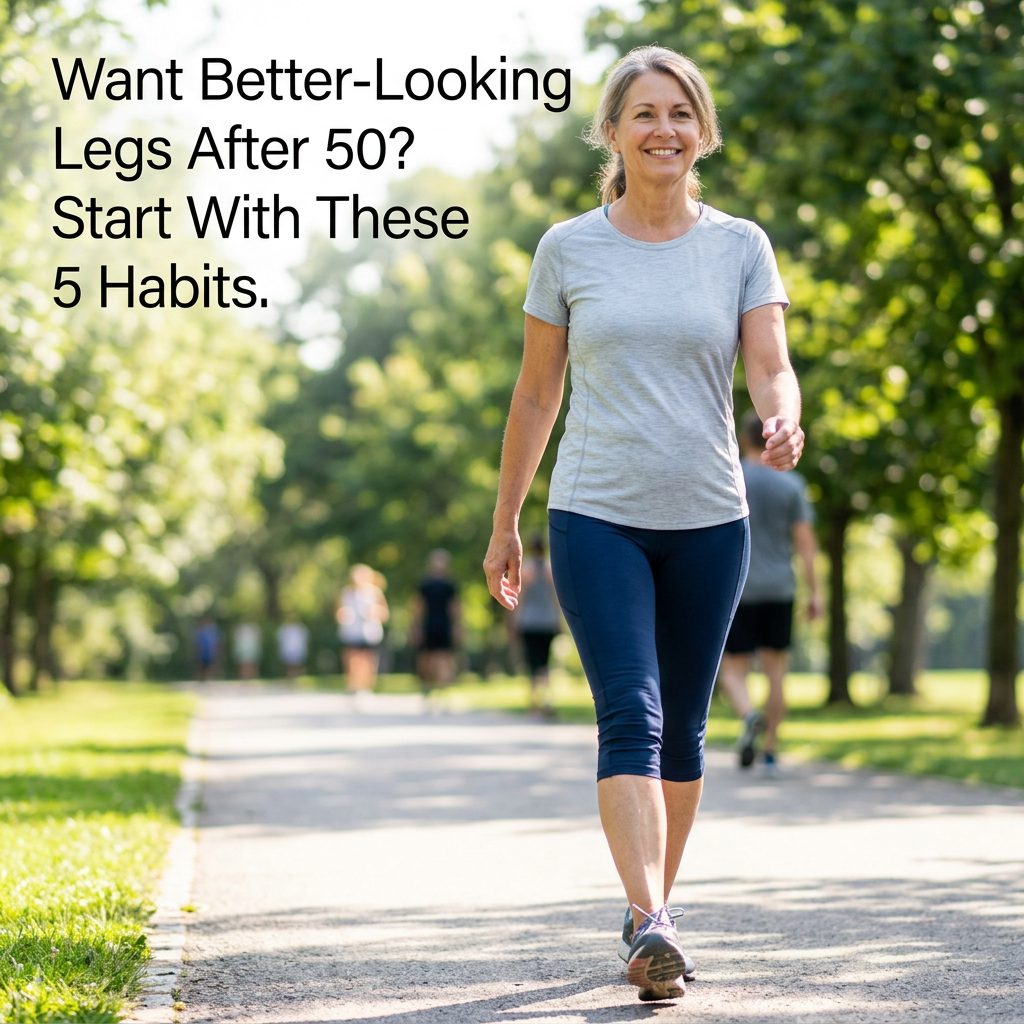
How do you get better-looking legs after 50?
Short answer: Better-looking legs after 50 start with the muscle underneath, not a firming cream. Train your legs twice a week with moves like chair stands and step-ups, move around between long sits, moisturize after showering while your skin’s still damp, wear SPF 30+ on bare legs outdoors, and eat enough protein to support the work.
If your legs don’t look quite like they used to, you’re not imagining things. But I wouldn’t start by buying a firming cream. I’d look at the muscle underneath, how much I move, and how I’m treating the skin.
Legs change as we get older, and the changes aren’t only cosmetic. Muscle can decrease, skin can become drier, activity levels can change and years of sun exposure can show up as texture or discoloration.
The encouraging part is that several of the basics are still very much within your control.
Build the Muscle Underneath
Resistance training is one of the most useful things you can do for the appearance and function of your legs. You don’t need enormous weights. You need movements you can perform safely, consistently and progressively.
- Thighs: A suitable squat, leg press or similar movement.
- Hamstrings: A safe leg curl or another movement appropriate for you.
- Calves: Direct calf work can complement walking and other lower-body training.
- Glutes: Include an appropriate hip or glute movement.
Don’t Forget the Skin
If your legs are dry or rough, a simple moisturizer can make a surprisingly visible difference. For exposed legs, sun protection matters too. You don’t need aggressive scrubbing to make mature skin look better.
Movement Does More Than Improve Appearance
Walking, climbing stairs and regular lower-body training keep your legs involved in daily life. Looking better is nice, but strong legs give you something more valuable: the ability to keep doing things for yourself.
Give Your Routine Time
Muscle doesn’t appear overnight, and skin quality doesn’t transform after three applications of moisturizer. Give a sensible routine weeks and months before deciding whether it is helping.
Pay Attention to Sudden Changes
A sudden one-sided change in swelling, color, warmth or pain is not a skincare problem. New or significant symptoms deserve medical advice.
My Realistic Goal
I don’t expect my legs to look like they did decades ago. I want them to look cared for and, more importantly, to be strong enough to carry me where I want to go.
That is a goal I can actually live with.
A Practical Two-Day Leg Routine
You don’t need seven exercises a day. Start with two nonconsecutive sessions each week, choosing a level that feels challenging but controlled. If you’re new to training, practice with light resistance and build up gradually.
- Leg press or supported sit-to-stand: 2 sets of 8–12 controlled repetitions.
- Seated leg curl: 2 sets of 8–12, without jerking.
- Calf raise with support: 2 sets of 10–15.
- Step-up to a low stable step, or an appropriate alternative: 1–2 sets of 6–10 per leg if your balance allows.
Rest between sets and stop if you develop sharp pain, chest discomfort or dizziness. Adapt the plan to your health, joint problems and experience. If you’re already training, adjust the volume upward only if you’re recovering well.
What Results Can You Actually Expect?
Stronger legs can help shape the thighs and calves over time, but building muscle takes consistency. Walking is excellent for cardiovascular health and everyday activity; it doesn’t replace a progressive strength routine when the goal is added muscle. Creams can make dry skin look less flaky, but they won’t create new quadriceps.
The CDC’s exercise guidance for older adults recommends a combination of aerobic movement, muscle strengthening and balance work. The National Institute on Aging’s exercise guide offers low-impact examples and safety precautions. For your skin, the American Academy of Dermatology’s moisturizing guide explains why creams and ointments can be more useful than light gels for pronounced dryness.
Five Habits That Give You the Most for Your Effort
- Train your legs twice weekly and record the weight or repetitions so you know when you’re progressing.
- Walk or move between sitting periods rather than expecting one gym session to carry the whole week.
- Moisturize after showering while the skin is a little damp. Don’t scrub crepey-looking skin aggressively.
- Protect exposed legs with SPF 30+ sunscreen when outdoors; sun damage can worsen discoloration and rough texture.
- Eat enough nutritious food and protein to support training instead of relying on extreme dieting.
Related: Building Muscle After 60 and Crepey Skin on Arms and Legs. One-sided swelling, warmth or sudden leg pain needs timely medical assessment; sudden breathlessness or chest pain is an emergency.
What Research Says About Stronger Legs
Maren Fragala, Mikel Izquierdo, Mark Peterson and their colleagues coauthored one major resistance-training position statement for older adults. It supports progressive, individualized strength training to improve strength and daily function. It does not claim that exercise erases cellulite, wrinkles or every age-related leg change.
Common Questions
How can I keep my legs looking better after 50?
Focus on the basics: keep your leg muscles active, moisturize your skin, protect your legs from the sun, and stay active throughout the day.
Can strength training make your legs look better after 50?
Yes. Exercises such as squats, step-ups, lunges, and calf raises can help maintain muscle and create a stronger, more defined appearance.
Can walking help your legs look better after 50?
Yes. Regular walking keeps your legs moving, supports circulation, and helps maintain muscle and overall fitness.
How can I make dry, crepey leg skin look better after 50?
Use a gentle cleanser, moisturize regularly, and apply moisturizer soon after bathing while your skin is still slightly damp.
Does exfoliating help the appearance of legs after 50?
Gentle exfoliation may help remove some surface buildup and make skin feel smoother, but over-exfoliating can make mature skin dry and irritated.
Can sunscreen improve the appearance of your legs after 50?
Sunscreen won’t reverse existing aging, but protecting exposed leg skin can help prevent additional sun-related wrinkles and discoloration.
Can exercise help with the appearance of cellulite after 50?
Building muscle and maintaining a healthy body composition may make cellulite less noticeable, although cellulite is normal and can remain even in very fit people.
What leg exercises are most useful after 50?
A simple routine can include squats or sit-to-stands, step-ups, calf raises, and supported lunges, adjusted to your fitness level.
How often should you work your legs after 50?
Aim for regular strength training rather than trying to train your legs every day. Give your muscles time to recover between challenging workouts.
What is the simplest leg-care routine after 50?
Walk regularly, strength-train your legs, moisturize after bathing, protect exposed skin from the sun, and keep moving throughout the day.
A gentle health note: If you notice sudden leg swelling, significant pain, unusual skin color changes, or a major difference between your legs, don’t assume it’s simply part of aging. Talk with a healthcare professional.
General information only; exercise and skincare choices should be adapted to your own circumstances.
About Tom Green
Tom Green writes Sturdy Years. He was born in Pell City, Alabama, in 1962, and he’s a country boy and a true Southerner through and through. He’s just a regular, laid-back 64-year-old who keeps things simple. He shares what he learns about skincare, fitness and getting older, and what’s working for him. He’s also the author of A Practical Guide to Getting Older Without Giving Up on Yourself. Tom isn’t a doctor. He reads up on the research and passes along what’s useful, plain and simple.
I’ve also mapped out some great tools on my new Tech for Independent Living After 50 page.




What do you think? Have a tip, question, or personal experience to share? We’d love to hear from you. After 50, there’s always something new to discover—and your thoughts might help someone else, too!