Tag: mature skin

  • When You Don’t Recognize Yourself Anymore: How to Make Peace With Aging After 50

    When You Don’t Recognize Yourself Anymore: How to Make Peace With Aging After 50

    How do you make peace with aging when you don’t recognize yourself?

    Short answer: Making peace with aging starts with not letting the mirror be the judge. There’s nothing wrong with wanting to look good, but maybe the goal isn’t to look younger. Your body is for living, not just for being looked at, so stop inspecting yourself so closely and give yourself grace on the hard days.

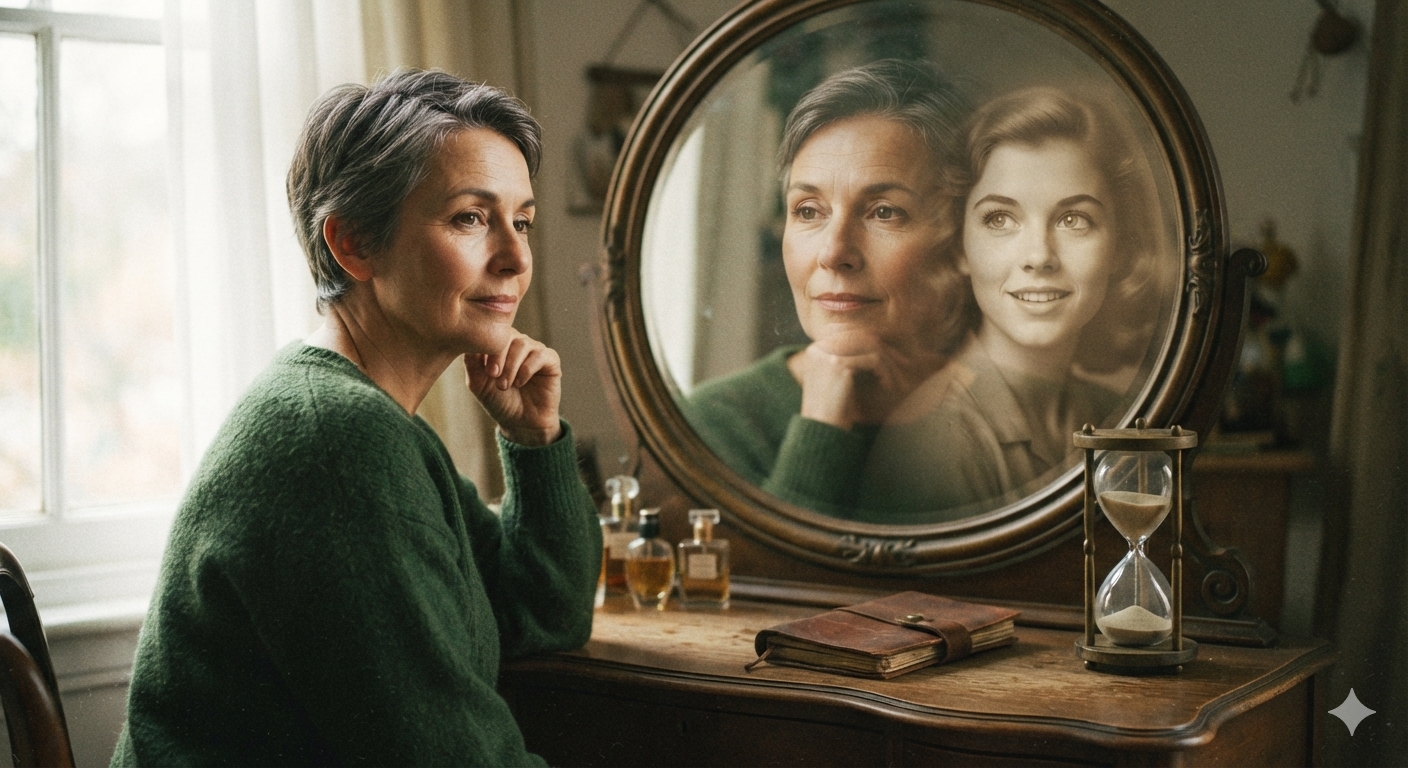
    There can be a strange moment in the aging process when you look in the mirror and realize something has changed.

    Maybe it is the lines around your eyes.

    Maybe your face looks thinner or softer than it used to. Your neck has changed. Your hair is different. Your body doesn’t look quite the way it did ten, twenty or thirty years ago.

    And sometimes the hardest part isn’t the wrinkle itself.

    It’s realizing that the person looking back at you doesn’t look like the person you still feel like inside.

    If you’ve ever had that experience, you’re not being vain.

    You’re being human.

    Aging changes our appearance, but it can also change the way we think about ourselves.

    And learning to live with that may be one of the less-discussed challenges of getting older.

    You can know you’re aging and still be surprised by it

    Most of us understand intellectually that we’re going to get older.

    We know our hair may turn gray. Skin loses some of its elasticity. Muscle mass becomes harder to maintain. Facial features change. Our bodies don’t necessarily respond to exercise, food or lack of sleep the way they once did.

    But knowing something is coming doesn’t necessarily prepare you emotionally for seeing it.

    That’s especially true when the change happens gradually.

    You don’t wake up one morning twenty years older.

    Instead, you notice little things.

    • A photograph.
    • A reflection in a store window.
    • A video someone took when you weren’t expecting it.
    • A shirt that fits differently.
    • A face in the mirror that suddenly looks older than you feel.

    And you may find yourself thinking:

    When did that happen?

    The mirror can become more powerful than it deserves to be

    Our appearance isn’t just about appearance.

    It can become tied to identity.

    For decades, you may have received messages—directly and indirectly—that looking young meant looking attractive, energetic, successful or desirable.

    Advertising certainly hasn’t helped.

    The beauty industry has built an enormous market around the idea that every visible sign of aging is something that should be corrected.

    And social media can make the comparison even harder.

    Research published in 2025 found associations between appearance-focused social media use, self-objectification and body-image concerns. The researchers also identified self-compassion as a potentially protective factor.

    There’s nothing wrong with wanting to look good

    This is important.

    Accepting aging does not mean you have to stop caring about your appearance.

    • You can still enjoy skincare.
    • You can color your hair if you want to.
    • You can exercise because you like the way a stronger body looks.
    • You can dress well.
    • You can take care of your teeth, skin and hair.
    • You can use products that make you feel better about yourself.

    And if you choose a cosmetic treatment after understanding its risks and benefits, that is your decision.

    The problem begins when taking care of yourself turns into being at war with yourself.

    There’s a big difference between:

    “I want to look my best.”

    and

    “I can’t stand the person I’m becoming.”

    The first can be healthy.

    The second can become exhausting.

    Maybe the goal isn’t to look younger

    This may be one of the most useful changes in thinking after 50.

    Instead of asking:

    “How can I look younger?”

    try asking:

    “How can I look healthy, cared for, confident and like myself?”

    Those aren’t the same goal.

    You may never get your 35-year-old face back.

    None of us does.

    But you can become the 50-, 60-, 70- or 80-year-old version of yourself who looks like she takes care of herself, stands tall, smiles easily and still has somewhere she wants to go.

    That’s a different kind of beauty.

    And arguably a more interesting one.

    Your body isn’t only something other people look at

    This is where aging can offer an unexpected opportunity.

    For much of our younger lives, we’re taught to think about our bodies from the outside.

    • How do I look?
    • Am I thin enough?
    • Do I look attractive?
    • Do other people notice me?
    • Do I look younger than my age?

    But eventually, many people begin to appreciate something different.

    What can my body still do for me?

    • Can I walk around the neighborhood?
    • Carry groceries?
    • Get up from the floor?
    • Travel?
    • Play with grandchildren?
    • Lift weights?
    • Garden?
    • Dance?
    • Climb stairs without stopping?
    • Go somewhere new?

    Those things may not show up in a selfie.

    But they can become far more important than a selfie.

    There is actually research behind this shift

    A 2026 study involving adults ages 60 to 80 found that greater body appreciation was associated with greater life satisfaction, and self-acceptance helped explain that relationship.

    That doesn’t mean you have to suddenly love every part of your body.

    That’s not realistic.

    You can dislike a particular wrinkle.

    You can wish your waist were smaller.

    You can miss your old hair.

    You can wish your skin were firmer.

    Acceptance doesn’t require pretending everything is perfect.

    It means learning not to let the things you dislike become the entire story about yourself.

    What if you stopped inspecting yourself so closely?

    Here’s an experiment worth trying.

    For a week, stop looking for flaws.

    • Don’t stand in front of the bathroom mirror examining your neck.
    • Don’t repeatedly pull the skin under your eyes.
    • Don’t take five photographs looking for the “bad side.”
    • Don’t zoom in on every line in a picture.

    Take care of yourself normally.

    Then step back.

    Look at the whole person.

    • How do you carry yourself?
    • Do you look healthy?
    • Do your eyes look alive?
    • Are you smiling?
    • Does your clothing fit?
    • Does your hair make you feel good?
    • Do you look like someone who is participating in life?

    Sometimes we become so focused on individual imperfections that we completely miss the person.

    And yes, there will be days when you don’t feel good about yourself

    That’s normal too.

    You don’t have to turn aging into a positive-thinking exercise every morning.

    Some days you may look in the mirror and think:

    “I really don’t like what I see today.”

    That’s okay.

    You don’t have to argue with yourself.

    You can simply say:

    “This is how I look today. I’m still going to have a good day.”

    That’s a powerful distinction.

    Your appearance doesn’t have to improve before you’re allowed to enjoy your life.

    Be careful about who gets inside your head

    Pay attention to the people and accounts you follow.

    If every photograph makes you feel older, heavier, less attractive or less successful, ask yourself why you’re continuing to look at it.

    You don’t have to hate social media.

    You don’t even have to stop following beauty accounts.

    But you can choose more carefully.

    Follow people who make you feel inspired rather than inadequate.

    Follow women who are active, funny, stylish, interesting and honest about getting older.

    Follow people who remind you that life doesn’t end when your face changes.

    Your feed becomes part of your environment.

    Choose an environment that helps you.

    Don’t confuse acceptance with giving up

    This may be the biggest misconception of all.

    Accepting your age doesn’t mean giving up.

    It can actually make it easier to take good care of yourself.

    You can say:

    “My skin is changing, so I’m going to take good care of it.”

    Not:

    “My skin is changing, so I need to fight it every day.”

    You can say:

    “I’m losing some muscle as I get older, so I’m going to strength train.”

    Not:

    “My body isn’t what it used to be, so what’s the point?”

    You can say:

    “I don’t look 40 anymore, but I still want to look my best.”

    Not:

    “If I can’t look 40, I don’t want to look at all.”

    That difference matters.

    Maybe growing older requires a new definition of beautiful

    When we’re young, beauty can be largely about symmetry, smooth skin, hair, body shape and looking desirable.

    Later, something else begins to show.

    • Character.
    • Confidence.
    • Humor.
    • Kindness.
    • Strength.
    • Curiosity.
    • How you treat people.
    • How you carry yourself.
    • Whether you still get excited about something.
    • Whether you have something to look forward to.
    • Whether you’ve learned how to survive difficult things without becoming bitter.

    None of those things erase wrinkles.

    They make wrinkles less important.

    You don’t have to love every change

    Maybe that’s the most honest place to end.

    You don’t have to celebrate every gray hair.

    You don’t have to love every wrinkle.

    You don’t have to pretend you never miss your younger face.

    You don’t have to stop wanting to look attractive.

    And you don’t have to apologize for caring about yourself.

    But you also don’t have to spend the rest of your life trying to defeat a process that every human being eventually faces.

    Take care of your appearance. Take care of your body. Take care of your health. But don’t forget to take care of the person underneath all of it.

    Because there is still a person in that mirror who has somewhere to go, people to love, things to learn and experiences that haven’t happened yet.

    And perhaps that’s the part of aging we don’t talk about enough.

    You may look different than you once did.

    But you’re not finished becoming who you’re going to be.

    A Final Thought

    The goal after 50 doesn’t have to be looking like the person you were twenty years ago.

    Maybe the goal is to look in the mirror and eventually say:

    “Yes. This is me now. And I still like where I’m going.”

    That may be a much better definition of aging well.

    For another thoughtful perspective on emotional well-being and finding your footing in later life, you may enjoy Sixty and Me, founded by Margaret Manning, which explores life transitions and personal growth.

    Common Questions

    Is it normal to struggle with changes in appearance after 50?

    Yes. Changes in appearance can affect how people think and feel about themselves, and research suggests that body dissatisfaction and concerns about aging appearance don’t simply disappear with age.

    Does accepting aging mean I shouldn’t care about how I look?

    No. Acceptance and self-care can exist together. You can enjoy skincare, exercise, clothing, hair care and other ways of looking after yourself without making youthfulness the only measure of your worth.

    Can social media make aging and body image harder?

    It can. Research has linked appearance-focused social media use with self-objectification and body-image concerns. Choosing what you consume online—and practicing more self-compassion—may help.

    What is a healthier goal than trying to look younger?

    Try aiming to look healthy, cared for, confident and like yourself. You can still improve things you want to improve without making your entire identity about reversing age.

    Can accepting my changing appearance actually make me feel better?

    Research in older adults has found an association between body appreciation, self-acceptance and greater life satisfaction.

    A Note From Tom Green

    At Sturdy Years, I don’t think getting older means giving up on yourself. I think it means figuring out what is worth improving, what is worth accepting and what is worth letting go.

    You can still care about how you look.

    You can still work on your health.

    You can still get stronger.

    You can still take pride in yourself.

    But you don’t have to spend your life apologizing for getting older.

    Tom Green

    Sturdy Years

    Medical & Wellness Note

    This article discusses general experiences and research related to aging, appearance and body image. It is not medical or mental-health advice. If concerns about your appearance are causing significant distress or interfering with your daily life, consider talking with a qualified healthcare or mental-health professional

    Sources & Further Reading

    Keep Reading

    About the Author

    Tom Green writes Sturdy Years. He was born in Pell City, Alabama, in 1962, and he’s a country boy and a true Southerner through and through. He’s just a regular, laid-back 64-year-old who keeps things simple. He shares what he learns about skincare, fitness and getting older, and what’s working for him. He’s also the author of A Practical Guide to Getting Older Without Giving Up on Yourself. Tom isn’t a doctor. He reads up on the research and passes along what’s useful, plain and simple.

    I’ve also mapped out some great tools on my new Tech for Independent Living After 50 page.
  • What Does an Attractive 50-Year-Old Woman Really Look Like? The Answer Might Surprise You

    What Does an Attractive 50-Year-Old Woman Really Look Like? The Answer Might Surprise You

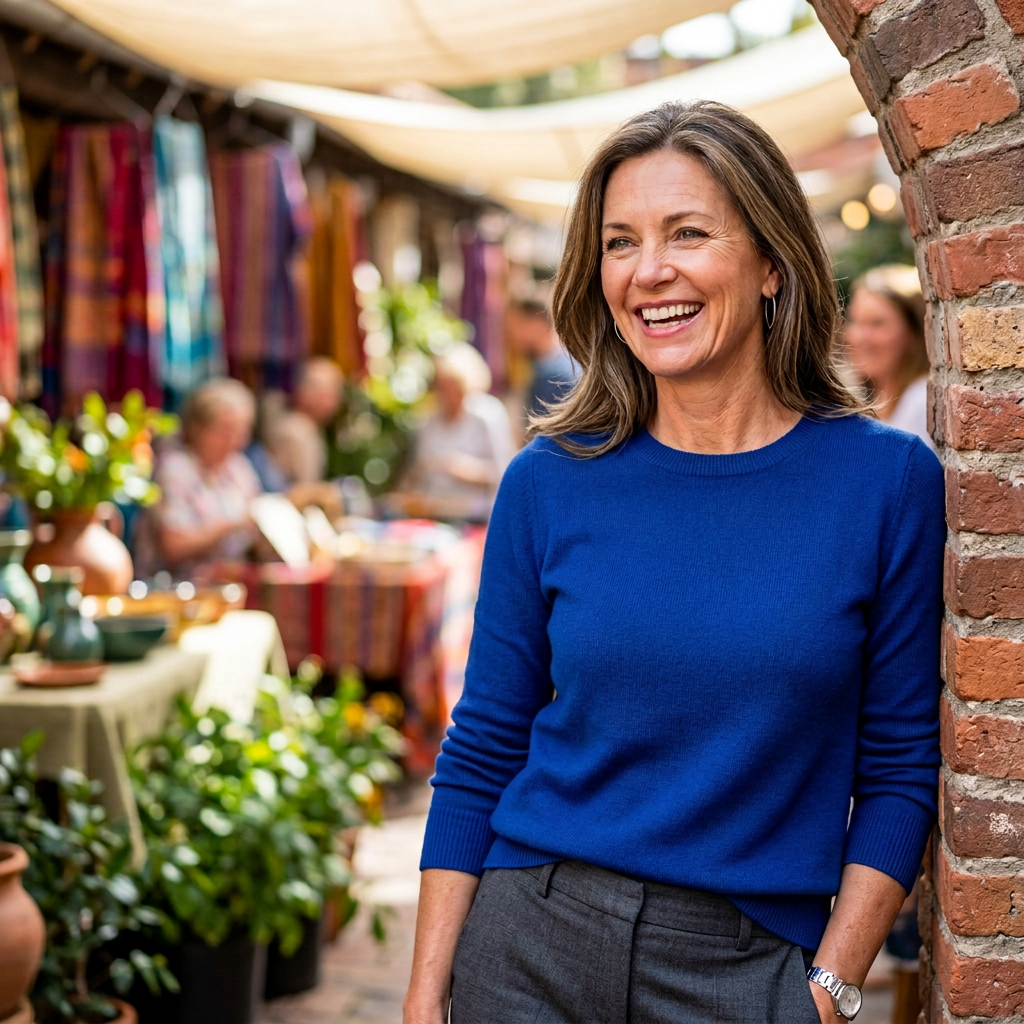
    What does an attractive 50-year-old woman really look like?

    Short answer: An attractive 50-year-old woman doesn’t have to look 35. Confidence and strength show more than trying to look younger, and a little gray hair or a few wrinkles don’t change that. Being fit and feeling good in your own skin matters more than being thin.

    Forget the “looks 35” nonsense for a minute.

    What does an attractive 50-year-old woman actually look like?

    That’s a surprisingly complicated question.

    And before somebody gets mad at me, I’m not talking about whether women should care about their appearance. Of course they can. Looking good can feel good. Taking care of your skin, hair, body and clothes isn’t vanity.

    But somewhere along the way, we’ve gotten the idea that an attractive woman over 50 has to look like she just escaped from a time machine.

    Why?

    Why can’t a beautiful 50-year-old woman actually look 50?

    She might have a few wrinkles. Her hair might have some gray in it. Her body might not look like it did at 25. Her face may have changed.

    And she might still turn heads when she walks into a room.

    Maybe attractiveness changes as we get older

    One thing that keeps coming up in conversations about aging is confidence.

    Women talking about getting older often mention things like strength training, better skin care, a good haircut, dressing well and—perhaps most importantly—not caring quite so much about what everybody else thinks.

    That last one might be the most attractive thing of all.

    Because confidence looks different from trying desperately to prove you’re still 30.

    A woman who walks into a room comfortable in her own skin can be incredibly attractive.

    Let’s talk about the elephant in the bathroom mirror

    At 50, you may start noticing things you didn’t notice before.

    Fine lines. Changes in your skin. Hair getting thinner. A different shape around your waist.

    Maybe your face doesn’t look exactly like it did ten years ago.

    And suddenly your bathroom mirror has apparently decided to become your enemy.

    😂

    You lean toward it. You lean back. You change the lighting.

    Then you turn the bathroom light off and decide you’re perfectly happy with yourself.

    Problem solved.

    Until tomorrow morning.

    But here’s the thing: taking care of yourself and accepting that you’re aging aren’t opposites.

    You can use good skin care. You can exercise. You can eat better. You can get a great haircut. You can wear clothes that make you feel good.

    You can even choose cosmetic treatments if that’s what you want.

    “I’m not trying to become 30 again. I’m trying to look like the best version of me at 50.”

    That’s a very different goal.

    And strength is attractive too

    Something else gets overlooked when we talk about attractiveness.

    How you carry yourself.

    Getting stronger can change posture, movement and the way you feel about your body.

    You don’t have to become a bodybuilder. You don’t even have to love the gym.

    But there is something pretty damn good about being 50, 60 or 70 and realizing:

    “I’m stronger than I thought I would be at this age.”

    That confidence tends to show.

    Questions We All Wonder About

    Let’s get real for a minute. These are some of the questions people quietly wonder about but don’t always ask out loud.

    Does a woman have to look younger than 50 to be considered attractive?

    Why is “you look 40!” automatically treated as the ultimate compliment?

    What if someone simply said: “You look great for 50.”

    Would that be enough?

    Or have we been taught that aging itself is something we need to hide?

    Are wrinkles actually unattractive?

    Some people want every line softened. Others don’t mind them at all. Plenty of people are somewhere in the middle.

    Where do you stand?

    Do you want to soften the signs of aging, embrace them, or a little of both?

    Is being fit more important than being thin?

    A woman can be a perfectly healthy weight and not look like a fitness model. She can also be strong, active and muscular without being particularly thin.

    So when you picture an attractive woman over 50, does fitness matter more to you than a certain body size?

    Does gray hair make a woman look older—or can it make her look better?

    Some women couldn’t wait to stop coloring their hair. Others will keep coloring it until they’re 90.

    😂

    Neither choice is wrong.

    Silver, blonde, brunette, red—or whatever makes her feel good?

    What about makeup?

    Does makeup make someone more attractive after 50? Or does less makeup sometimes look better?

    And is there such a thing as too much makeup?

    That’s probably a conversation all by itself.

    Does confidence really make someone more attractive?

    Imagine two women. One looks younger but constantly worries about how she looks. The other has a few more lines but walks into the room smiling, laughing and completely comfortable being herself.

    Which qualities matter more to you?

    Can personality actually make someone physically more attractive?

    Most of us have probably experienced this.

    Someone who didn’t initially catch your eye becomes incredibly attractive after you get to know them.

    Then the opposite can happen too.

    Someone can be gorgeous—and then open their mouth.

    😂

    Suddenly you’re looking for the nearest exit.

    So how much does personality change your perception of someone’s attractiveness?

    So what does an attractive 50-year-old woman look like?

    Honestly?

    She can look like a lot of different things.

    Short. Tall. Curvy. Slim. Gray-haired. Blonde. Natural. Glamorous. Wrinkled. Athletic. Soft. Dressed up. Wearing jeans and sneakers.

    There isn’t one face or body that qualifies.

    And maybe that’s the point.

    At 50, attractiveness doesn’t have to mean looking younger.

    It can mean looking alive. Looking healthy. Looking confident. Having a sense of humor. Taking care of yourself. Knowing who you are.

    And maybe having reached the age where you finally realize you don’t have to impress everybody.

    That might be one of the best things about getting older.

    Now I want to hear from you

    Here’s where I really want to know what you think.

    Women 50+: What makes a woman attractive to you now that might not have mattered as much when you were 25?

    A) Confidence
    B) Fitness/strength
    C) Hair, skin and style
    D) Personality and humor
    E) The way she carries herself
    F) Something completely different

    And men, you’re welcome to answer this one too.

    Just be respectful. 😉

    What do you think makes someone genuinely attractive after 50?

    And be honest…

    Has your definition of “attractive” changed as you’ve gotten older?

    Keep Reading

    How to Look and Feel Better as You Age After 50

    The Simple Morning Routine That Can Make You Look and Feel Better After 50

    7 Strength Habits That Matter More After 60


    About the Author

    Tom Green writes Sturdy Years. He was born in Pell City, Alabama, in 1962, and he’s a country boy and a true Southerner through and through. He’s just a regular, laid-back 64-year-old who keeps things simple. He shares what he learns about skincare, fitness and getting older, and what’s working for him. He’s also the author of A Practical Guide to Getting Older Without Giving Up on Yourself.

    Tom isn’t a doctor. He reads up on the research and passes along what’s useful, plain and simple.

    Affiliate Disclosure: Some links in this post may be affiliate links. If you purchase something through one of these links, Sturdy Years may earn a small commission at no extra cost to you. This helps support the site and allows us to continue creating helpful content.

    I’ve also mapped out some great tools on my new Tech for Independent Living After 50 page.

  • 50+ Looksmaxxing: Simple Ways to Look Better at Any Age

    50+ Looksmaxxing: Simple Ways to Look Better at Any Age

    How can you look better at any age?

    Short answer: Looking better after 50 isn’t about looking 25. Start with your skin, build some muscle, fix your posture, and pay attention to your hair, teeth, glasses and hands. Clothes that actually fit make a big difference, and fellas, facial hair needs a plan.

    “Looksmaxxing” is one of those internet words that sounds like it was invented by a 20-year-old guy measuring his jawline in the bathroom mirror.

    But strip away the silly name and there’s a useful idea underneath it: getting the most out of what you already have.

    For someone 50+, that doesn’t mean trying to look 25. It means looking healthy, strong, well-groomed, alert and comfortable in your own skin—without spending a fortune or chasing every new anti-aging trick.

    1. Start With Your Skin

    You don’t need a complicated 12-step routine. Gentle cleansing, a good moisturizer and daily sun protection can go a long way. If you have a specific concern, such as dryness or uneven tone, add one targeted product rather than turning your bathroom into a laboratory.

    Sun protection is especially important because UV exposure contributes to visible skin aging. A simple routine you actually use beats an expensive routine that sits untouched in a cabinet.

    2. Muscle Is One of the Best 50+ Beauty Treatments

    Strength training is usually discussed in terms of health, independence and function—and it should be. But there’s an appearance benefit too.

    Building or maintaining muscle can improve how your clothes fit, give your shoulders and arms more shape, support better posture and help you maintain a more athletic-looking body as you age. Regular muscle-strengthening activity is recommended for adults by organizations such as the CDC and ACSM.

    3. Fix Your Posture

    This might be the cheapest appearance upgrade on the list because it costs nothing.

    Stand comfortably upright. Let your shoulders settle back instead of collapsing forward. Keep your head in a natural position. You don’t have to walk around like a soldier.

    Try taking a before-and-after photo from the same angle. The difference can be surprisingly noticeable.

    4. Your Hair Matters More Than You Think

    A good haircut can change your entire appearance. The goal isn’t necessarily to hide gray hair or thinning hair. Work with what you have.

    Gray hair can look great when it is intentional and well maintained. If your hair is thinning, a style that works with it usually looks better than trying to force it into a style you had decades ago.

    5. Don’t Underestimate Your Teeth

    A healthy-looking smile makes a difference. Keep up with brushing, flossing and regular dental care. If whitening is appropriate for you, that can be another option.

    You don’t need an unnaturally bright Hollywood smile. Healthy and natural-looking is the goal.

    6. Glasses Can Become Part of Your Look

    If you wear glasses, stop thinking of them as something you simply have to wear. They are part of your face and can become part of your style.

    If your frames are old or no longer suit your face, try something different. A modern frame can make a surprisingly big difference.

    7. Clothes That Fit Are Practically Cheating

    You don’t need designer clothes. You need clothes that fit.

    Pay attention to the shoulders, sleeves, waist, pant length and jacket length. Clothes that fit your current body usually look more polished than clothes that are either too tight or hanging off you.

    Modern beats juvenile. You can look current without dressing like you’re trying to sneak into a college fraternity.

    8. Take Care of Your Hands

    Your hands are one of the first places people notice age-related changes. Keep your nails neat, use moisturizer when your hands are dry and protect them from excessive sun exposure.

    9. Facial Hair Needs a Strategy

    A beard or mustache can completely change the way the lower half of your face looks. That can be useful—but only if it looks intentional.

    Keep the edges and length maintained. If facial hair is patchy or uneven, a shorter style may look cleaner.

    10. Sleep Is an Appearance Hack Nobody Wants to Hear About

    There is nothing glamorous about getting enough sleep, which is probably why the internet doesn’t sell it as aggressively as expensive creams.

    But being rested can affect how alert and healthy you look. Sleep is also part of the bigger picture of healthy aging, recovery and energy.

    11. Don’t Ignore Your Weight—but Don’t Obsess Over It

    Your appearance is affected by body composition, but the number on the scale is only one piece of the picture.

    Strength training, adequate protein, regular movement and sensible eating can help you maintain muscle and a healthy body composition. The goal isn’t perfection. It’s looking and feeling capable.

    The Secret Weapon: Energy

    There is something about a person who has energy that makes them look better.

    Exercise, good sleep, mobility, nutritious food and staying socially and mentally engaged can all contribute to how you carry yourself. Someone who looks interested in life often looks younger without actually trying to look younger.

    What NOT to Do

    • Don’t obsess over tiny imperfections.
    • Don’t compare yourself with celebrities, influencers or heavily edited photos.
    • Don’t chase every new “anti-aging” trick.
    • Don’t make looking younger your entire identity.

    The point is presentation, not perfection.

    The 50+ Looksmaxxing Checklist

    • Get a haircut that suits your current hair.
    • Keep facial hair intentional and maintained.
    • Take care of your teeth.
    • Moisturize and protect your skin from the sun.
    • Strength train.
    • Maintain a healthy body composition.
    • Work on posture and mobility.
    • Wear clothes that fit.
    • Update your glasses if your frames are dated.
    • Take care of your hands and nails.
    • Get enough sleep.
    • Keep moving like you still have somewhere to go.
    • Smile.
    • Stop trying to look 25.

    The Real 50+ Looksmaxxing Goal

    You don’t need to look 25.

    You want to look healthy. Strong. Well-groomed. Alert. Confident. Comfortable.

    That’s a much more realistic—and much more useful—version of looksmaxxing for life after 50.

    For another perspective on looking and feeling good in midlife, Felice Shapiro’s Better After 50 shares stories and ideas about style, wellness, and life after 50. Use any trend as inspiration—not a rule—and choose changes that suit your own face, skin, budget, and comfort.

    What does looksmaxxing mean for someone 50+?
    For 50+ adults, looksmaxxing can simply mean making practical improvements that help you look and feel your best without trying to look younger than you are.

    Can you really improve your appearance after 50?
    Absolutely. Small changes to skincare, hair, grooming, clothing, posture, fitness, and sleep can make a noticeable difference in how you look.

    What are the easiest ways to look better after 50?
    Start with the basics: take care of your skin, get a haircut that suits you, keep facial hair groomed, wear clothes that fit well, stay active, and pay attention to posture.

    Does fitness help you look better after 50?
    Yes. Building or maintaining muscle, staying active, and improving posture can change your overall appearance as well as how you carry yourself.

    Do you have to spend a lot of money to improve your appearance?
    No. Many of the most noticeable improvements—better grooming, fitting clothes, regular exercise, good skincare, and better sleep—don’t require a large budget.

    Is it too late to start looksmaxxing at 50+?
    Not at all. You can start making small improvements at any age, and the goal doesn’t have to be perfection. Looking healthier, more confident, and more put-together is a worthwhile goal at any stage of life.

    A Note on the Research

    The recommendations here are based on the basics of healthy aging: sun protection, regular physical activity and strength training, adequate sleep, dental care and simple skincare. The CDC recommends regular physical activity that includes muscle-strengthening activity, while dermatology organizations emphasize protection from UV exposure.

    In other words: the boring stuff works. And at 50+, boring can be pretty damn effective.

    Keep Reading

    Written by Tom Green, creator of Sturdy Years

    Tom Green writes Sturdy Years. He was born in Pell City, Alabama, in 1962, and he’s a country boy and a true Southerner through and through. He’s just a regular, laid-back 64-year-old who keeps things simple. He shares what he learns about skincare, fitness and getting older, and what’s working for him. He’s also the author of A Practical Guide to Getting Older Without Giving Up on Yourself. Tom isn’t a doctor. He reads up on the research and passes along what’s useful, plain and simple.

    I’ve also mapped out some great tools on my new Tech for Independent Living After 50 page.
  • What Can a Man Over 50 Do to Look Younger?

    What Can a Man Over 50 Do to Look Younger?

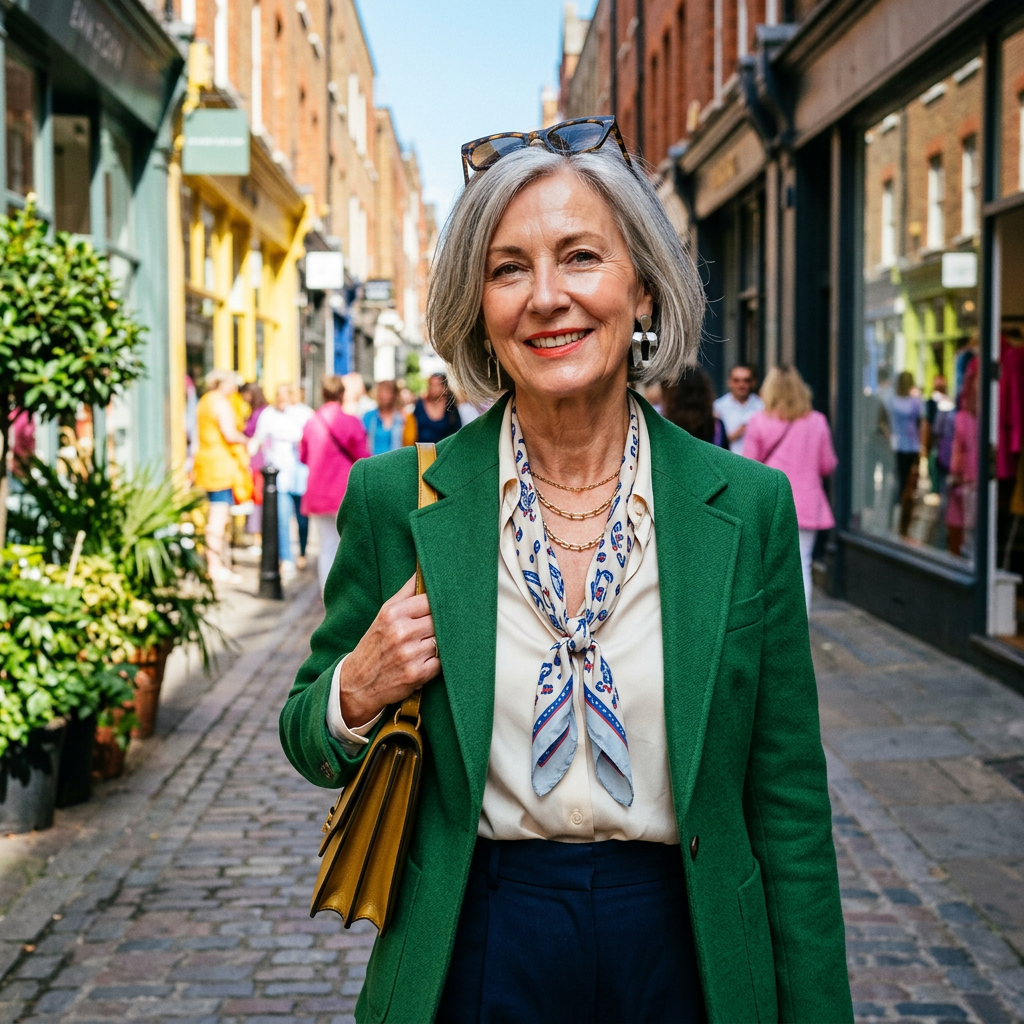
    What can a man over 50 do to look younger?

    Short answer: Looking younger after 50 isn’t about looking 30. For men, muscle makes the biggest difference, especially in the shoulders and legs, along with a trimmer waist. Take care of your skin, stand up straight, and wear clothes that fit. Your hair doesn’t have to be dark to look good.

    If you ask a man over 50 what he could do to look younger, you might get some predictable answers.

    Get a better haircut. Lose some weight. Buy better clothes. Use a good moisturizer. Maybe even color the gray.

    All of those things can change how a man looks. But there is one thing that can change much more than his face.

    Build and maintain muscle.

    That doesn’t mean a man in his 50s, 60s or 70s needs to become a bodybuilder. It means doing enough resistance training to keep his shoulders, chest, back, arms and legs strong and developed.

    And there is a good reason this matters as we get older: muscle mass and strength naturally tend to decline with age, while resistance training can help maintain and build them. The CDC specifically recommends muscle-strengthening activity for older adults.

    Looking Younger Isn’t Really About Looking 30

    I don’t think most men over 50 actually need to look 30.

    Trying to erase every sign of age can sometimes have the opposite effect.

    Gray hair isn’t necessarily aging a man badly. Neither are a few wrinkles.

    What tends to make a man look older is looking tired, weak, poorly groomed or physically inactive.

    A man with gray hair, some wrinkles and a strong body can look considerably younger than a man the same age who has spent years becoming inactive.

    That’s why the goal shouldn’t necessarily be “look young.”

    A better goal is:

    Look healthy, strong, energetic and well cared for.

    Why Muscle Makes Such a Difference

    Think about the male body when you are young. The shoulders are generally broader than the waist. The chest and back have shape. The arms have some size. The legs have muscle.

    As men age and become less active, some of that shape can disappear. The shoulders may look narrower. The chest can become softer. The arms lose some fullness. The waist may get larger. Posture can deteriorate.

    Put all of that together and a man can look considerably older—even if his face hasn’t changed dramatically.

    Resistance training attacks several of those problems at once.

    The CDC notes that muscle-strengthening activity can increase or maintain muscle mass and strength, and recommends working the major muscle groups, including the legs, hips, back, chest, abdomen, shoulders and arms.

    And you don’t have to lift enormous weights. Consistency matters much more than trying to impress everybody in the gym.

    Your Shoulders May Be More Important Than You Think

    One of the easiest ways to change a man’s overall appearance is to develop the upper body.

    • shoulders
    • upper chest
    • back
    • arms

    A little more muscle in these areas can change the proportions of the entire body.

    A stronger upper body can make the waist appear smaller simply because the shoulders and torso have more shape.

    That’s one reason I wouldn’t recommend that a man over 50 focus exclusively on losing weight.

    If you lose weight but also lose muscle, you can end up smaller without necessarily looking younger.

    The goal is different: lose excess body fat while protecting or building muscle.

    Don’t Forget Your Legs

    There is another mistake men make. They train their chest and arms because those are the muscles they see in the mirror. Then they neglect their legs.

    That’s a mistake at any age, but especially as you get older.

    Strong legs contribute to mobility, balance and everyday function. The CDC recommends combining aerobic activity, muscle strengthening and balance activities as part of healthy aging.

    And visually, muscular legs help keep the entire body looking proportionate.

    You don’t need enormous legs. You need strong legs that still look like they belong to an active man.

    Then There’s the Waist

    A man can build muscle and still look older if his waist continues getting larger.

    That’s why the combination of muscle plus reasonable body-fat control is so important.

    You don’t have to become extremely lean. In fact, some older men look worse when they chase a very low body-fat percentage and lose too much fullness from their face and body.

    Instead, think about keeping your waist under control while maintaining muscle throughout your body. That’s a much more sustainable goal.

    Your Skin Gives Away More Than Your Hair

    You can have a great haircut, a strong body and nice clothes—but badly sun-damaged skin can still make you look older.

    And unlike a lot of anti-aging claims on the internet, there is actual clinical research behind sun protection. A randomized trial found that regular sunscreen use slowed the progression of skin aging compared with discretionary sunscreen use.

    That doesn’t mean sunscreen is going to erase 20 years from your face. It means protecting your skin from additional UV damage is one of the few anti-aging strategies with solid evidence behind it.

    For a man over 50, a simple routine can be enough: Morning: cleanse if needed, moisturizer, broad-spectrum sunscreen. Night: cleanse, moisturizer, and whatever additional skin-care product fits your skin and routine.

    You don’t need a bathroom counter full of products.

    Hair Doesn’t Have to Be Dark to Look Younger

    This is something I’ve been thinking about more lately.

    A lot of men automatically assume gray hair makes them look old. Not necessarily.

    Gray hair that’s clean, shaped and intentional can look fantastic.

    The bigger issue is whether the haircut suits the man’s face and whether the hair looks cared for.

    If you color your hair, that’s fine too. But you don’t necessarily need to eliminate every gray hair to look younger.

    Posture Can Change Your Appearance in Seconds

    Here’s a free anti-aging trick: stand up straight.

    It sounds almost too simple, but posture changes the way the body presents itself.

    A man who walks with his head up, shoulders comfortably back and chest open can immediately look more energetic.

    And good posture isn’t just about appearance. Strengthening the back, abdomen and legs can help support physical function and balance as we age.

    You don’t need to walk around stiffly with your chest pushed out. Just stop folding yourself forward.

    Clothes Matter More Than Expensive Clothes

    You don’t need designer clothes to look younger. You need clothes that fit the man you are now.

    Too-big shirts can make a man look older and less defined. Extremely tight clothes can make him look like he’s trying too hard.

    Find clothes that fit your shoulders, chest, arms and waist properly. Keep them clean and current. And don’t be afraid of wearing something other than the same clothes you’ve worn for the last 20 years.

    Same goes for your glasses. If you’re still wearing the frames you bought ten years ago, a fresh pair can update your whole face faster than just about anything.

    What About Cardio?

    Absolutely. Building muscle doesn’t mean ignoring cardiovascular fitness.

    The CDC recommends regular aerobic activity along with muscle-strengthening and balance activities as people get older.

    Walking is a great place to start. You can also cycle, swim, hike, use an elliptical, dance or do whatever activity you will actually continue doing.

    The best exercise program isn’t the one that looks impressive on paper. It’s the one you keep doing.

    So What’s the One Thing?

    If you force me to choose only one thing for a man over 50, I’d choose:

    Resistance training.

    Not because lifting weights magically removes wrinkles. It doesn’t.

    I choose it because maintaining muscle changes so many parts of aging at the same time.

    It can help you stay stronger. It can help preserve physical function. It can change your body shape. It can improve the way your clothes fit.

    And when combined with regular walking or other cardiovascular activity, it becomes part of a much bigger strategy for staying active as you age.

    Keep your waist reasonable. Protect your skin. Get a good haircut. Take care of your teeth. Dress for your current body. Stand up straight. Stay active.

    For additional practical skincare and grooming perspectives for men, David Evans’s Grey Fox Blog covers style, grooming, and looking your best as you age. Choose advice that fits your own needs and budget.

    Common Questions

    What can a man 50+ do to look younger?
    Simple changes can make a noticeable difference, including taking better care of your skin, staying active, getting enough sleep, maintaining a healthy weight, and keeping your hair and clothing looking current.

    What skincare products can help a man 50+ look younger?
    A basic routine with a gentle cleanser, moisturizer, and daily sunscreen is a good starting point. Targeted ingredients such as retinoids or vitamin C may also help with specific signs of skin aging.

    Does exercise help men 50+ look younger?
    Regular exercise can help maintain muscle, posture, mobility, and a healthy body composition. Strength training can be particularly useful for maintaining muscle as you age.

    Can losing excess weight make a man look younger after 50?
    If someone is carrying excess weight, gradual weight loss may improve overall appearance and health. However, losing weight too quickly can sometimes make the face look thinner or more aged.

    Does a haircut make a difference in looking younger after 50?
    Yes. A well-maintained haircut that suits your face and current hair can make a man look more polished and refreshed without trying to look like someone much younger.

    How important is sleep for looking younger after 50?
    Getting consistent, good-quality sleep can affect how rested and refreshed you look. Sleep also supports overall health and recovery.

    Do men 50+ need expensive products to look younger?
    Not necessarily. Consistent basics—good skincare, sun protection, exercise, sleep, grooming, and healthy habits—can matter more than having an expensive collection of products.

    Can you really look younger after 50?
    You can’t stop the natural aging process, but you can improve many visible signs of aging and present a healthier, more energetic appearance at any age.

    My Take

    I think men over 50 sometimes make the mistake of fighting age instead of taking care of themselves.

    There’s nothing wrong with gray hair. There’s nothing wrong with wrinkles. There’s nothing wrong with looking your age.

    But there’s a big difference between looking your age and looking like you’ve stopped taking care of yourself.

    Build some muscle. Move your body. Take care of your skin. Get cleaned up. Wear clothes that fit. And stay interested in life.

    You may not look 30. You may not even want to.

    But you can look like a strong, healthy, well-groomed man in his 50s, 60s, 70s or beyond.

    And to me, that’s a much better goal.

    This article is for general informational purposes and reflects my personal observations along with information from health and research sources. I am not a doctor or medical professional

    About Tom Green

    Tom Green writes Sturdy Years. He was born in Pell City, Alabama, in 1962, and he’s a country boy and a true Southerner through and through. He’s just a regular, laid-back 64-year-old who keeps things simple. He shares what he learns about skincare, fitness and getting older, and what’s working for him. He’s also the author of A Practical Guide to Getting Older Without Giving Up on Yourself. Tom isn’t a doctor. He reads up on the research and passes along what’s useful, plain and simple.

    I’ve also mapped out some great tools on my new Tech for Independent Living After 50 page.

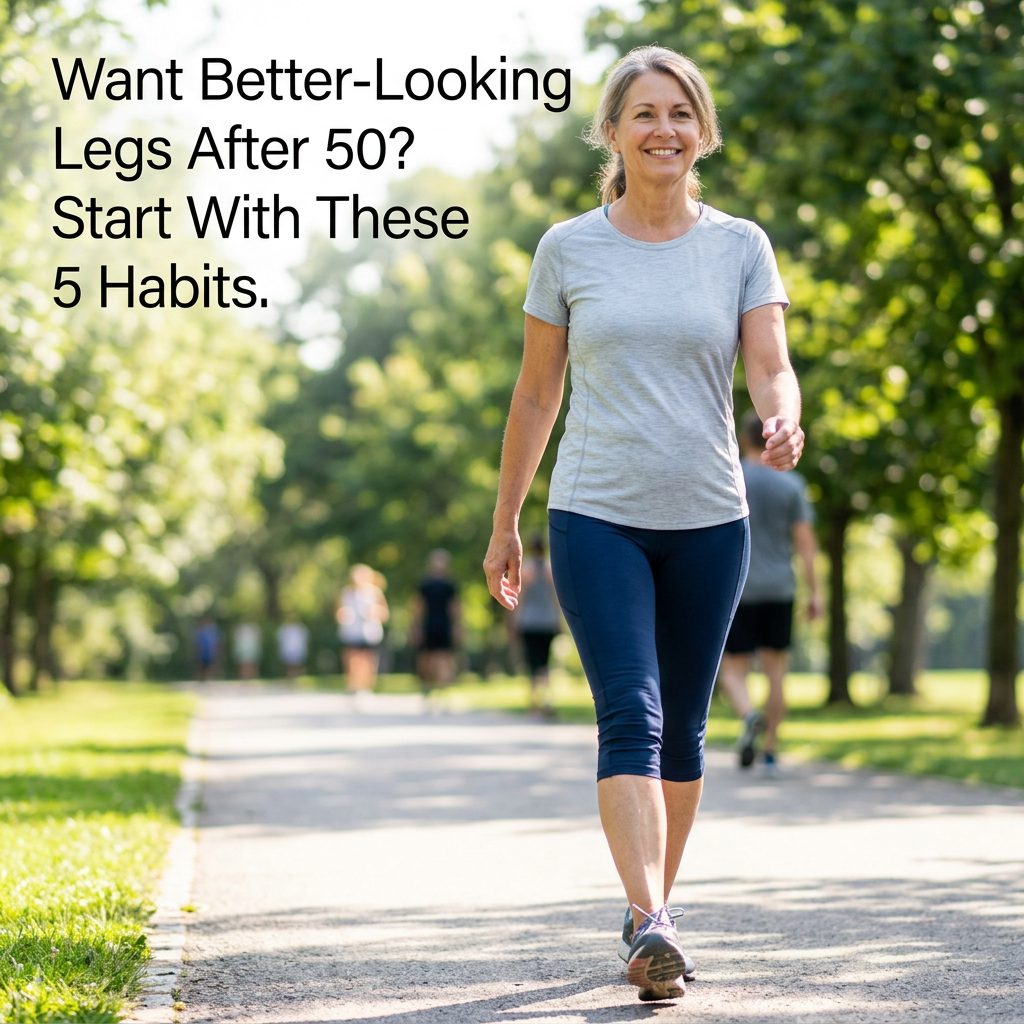
  • Want Better-Looking Legs After 50? Start With These 5 Habits

    Want Better-Looking Legs After 50? Start With These 5 Habits

    How do you get better-looking legs after 50?

    Short answer: Better-looking legs after 50 start with the muscle underneath, not a firming cream. Train your legs twice a week with moves like chair stands and step-ups, move around between long sits, moisturize after showering while your skin’s still damp, wear SPF 30+ on bare legs outdoors, and eat enough protein to support the work.

    If your legs don’t look quite like they used to, you’re not imagining things. But I wouldn’t start by buying a firming cream. I’d look at the muscle underneath, how much I move, and how I’m treating the skin.

    Legs change as we get older, and the changes aren’t only cosmetic. Muscle can decrease, skin can become drier, activity levels can change and years of sun exposure can show up as texture or discoloration.

    The encouraging part is that several of the basics are still very much within your control.

    Build the Muscle Underneath

    Resistance training is one of the most useful things you can do for the appearance and function of your legs. You don’t need enormous weights. You need movements you can perform safely, consistently and progressively.

    • Thighs: A suitable squat, leg press or similar movement.
    • Hamstrings: A safe leg curl or another movement appropriate for you.
    • Calves: Direct calf work can complement walking and other lower-body training.
    • Glutes: Include an appropriate hip or glute movement.

    Don’t Forget the Skin

    If your legs are dry or rough, a simple moisturizer can make a surprisingly visible difference. For exposed legs, sun protection matters too. You don’t need aggressive scrubbing to make mature skin look better.

    Movement Does More Than Improve Appearance

    Walking, climbing stairs and regular lower-body training keep your legs involved in daily life. Looking better is nice, but strong legs give you something more valuable: the ability to keep doing things for yourself.

    Give Your Routine Time

    Muscle doesn’t appear overnight, and skin quality doesn’t transform after three applications of moisturizer. Give a sensible routine weeks and months before deciding whether it is helping.

    Pay Attention to Sudden Changes

    A sudden one-sided change in swelling, color, warmth or pain is not a skincare problem. New or significant symptoms deserve medical advice.

    My Realistic Goal

    I don’t expect my legs to look like they did decades ago. I want them to look cared for and, more importantly, to be strong enough to carry me where I want to go.

    That is a goal I can actually live with.

    A Practical Two-Day Leg Routine

    You don’t need seven exercises a day. Start with two nonconsecutive sessions each week, choosing a level that feels challenging but controlled. If you’re new to training, practice with light resistance and build up gradually.

    • Leg press or supported sit-to-stand: 2 sets of 8–12 controlled repetitions.
    • Seated leg curl: 2 sets of 8–12, without jerking.
    • Calf raise with support: 2 sets of 10–15.
    • Step-up to a low stable step, or an appropriate alternative: 1–2 sets of 6–10 per leg if your balance allows.

    Rest between sets and stop if you develop sharp pain, chest discomfort or dizziness. Adapt the plan to your health, joint problems and experience. If you’re already training, adjust the volume upward only if you’re recovering well.

    What Results Can You Actually Expect?

    Stronger legs can help shape the thighs and calves over time, but building muscle takes consistency. Walking is excellent for cardiovascular health and everyday activity; it doesn’t replace a progressive strength routine when the goal is added muscle. Creams can make dry skin look less flaky, but they won’t create new quadriceps.

    The CDC’s exercise guidance for older adults recommends a combination of aerobic movement, muscle strengthening and balance work. The National Institute on Aging’s exercise guide offers low-impact examples and safety precautions. For your skin, the American Academy of Dermatology’s moisturizing guide explains why creams and ointments can be more useful than light gels for pronounced dryness.

    Five Habits That Give You the Most for Your Effort

    • Train your legs twice weekly and record the weight or repetitions so you know when you’re progressing.
    • Walk or move between sitting periods rather than expecting one gym session to carry the whole week.
    • Moisturize after showering while the skin is a little damp. Don’t scrub crepey-looking skin aggressively.
    • Protect exposed legs with SPF 30+ sunscreen when outdoors; sun damage can worsen discoloration and rough texture.
    • Eat enough nutritious food and protein to support training instead of relying on extreme dieting.

    Related: Building Muscle After 60 and Crepey Skin on Arms and Legs. One-sided swelling, warmth or sudden leg pain needs timely medical assessment; sudden breathlessness or chest pain is an emergency.

    What Research Says About Stronger Legs

    Maren Fragala, Mikel Izquierdo, Mark Peterson and their colleagues coauthored one major resistance-training position statement for older adults. It supports progressive, individualized strength training to improve strength and daily function. It does not claim that exercise erases cellulite, wrinkles or every age-related leg change.

    Common Questions

    How can I keep my legs looking better after 50?
    Focus on the basics: keep your leg muscles active, moisturize your skin, protect your legs from the sun, and stay active throughout the day.

    Can strength training make your legs look better after 50?
    Yes. Exercises such as squats, step-ups, lunges, and calf raises can help maintain muscle and create a stronger, more defined appearance.

    Can walking help your legs look better after 50?
    Yes. Regular walking keeps your legs moving, supports circulation, and helps maintain muscle and overall fitness.

    How can I make dry, crepey leg skin look better after 50?
    Use a gentle cleanser, moisturize regularly, and apply moisturizer soon after bathing while your skin is still slightly damp.

    Does exfoliating help the appearance of legs after 50?
    Gentle exfoliation may help remove some surface buildup and make skin feel smoother, but over-exfoliating can make mature skin dry and irritated.

    Can sunscreen improve the appearance of your legs after 50?
    Sunscreen won’t reverse existing aging, but protecting exposed leg skin can help prevent additional sun-related wrinkles and discoloration.

    Can exercise help with the appearance of cellulite after 50?
    Building muscle and maintaining a healthy body composition may make cellulite less noticeable, although cellulite is normal and can remain even in very fit people.

    What leg exercises are most useful after 50?
    A simple routine can include squats or sit-to-stands, step-ups, calf raises, and supported lunges, adjusted to your fitness level.

    How often should you work your legs after 50?
    Aim for regular strength training rather than trying to train your legs every day. Give your muscles time to recover between challenging workouts.

    What is the simplest leg-care routine after 50?
    Walk regularly, strength-train your legs, moisturize after bathing, protect exposed skin from the sun, and keep moving throughout the day.

    A gentle health note: If you notice sudden leg swelling, significant pain, unusual skin color changes, or a major difference between your legs, don’t assume it’s simply part of aging. Talk with a healthcare professional.

    General information only; exercise and skincare choices should be adapted to your own circumstances.


    About Tom Green

    Tom Green writes Sturdy Years. He was born in Pell City, Alabama, in 1962, and he’s a country boy and a true Southerner through and through. He’s just a regular, laid-back 64-year-old who keeps things simple. He shares what he learns about skincare, fitness and getting older, and what’s working for him. He’s also the author of A Practical Guide to Getting Older Without Giving Up on Yourself. Tom isn’t a doctor. He reads up on the research and passes along what’s useful, plain and simple.

    I’ve also mapped out some great tools on my new Tech for Independent Living After 50 page.
  • Why Your Face Looks Different After 50—Even at the Same Weight

    Why Your Face Looks Different After 50—Even at the Same Weight

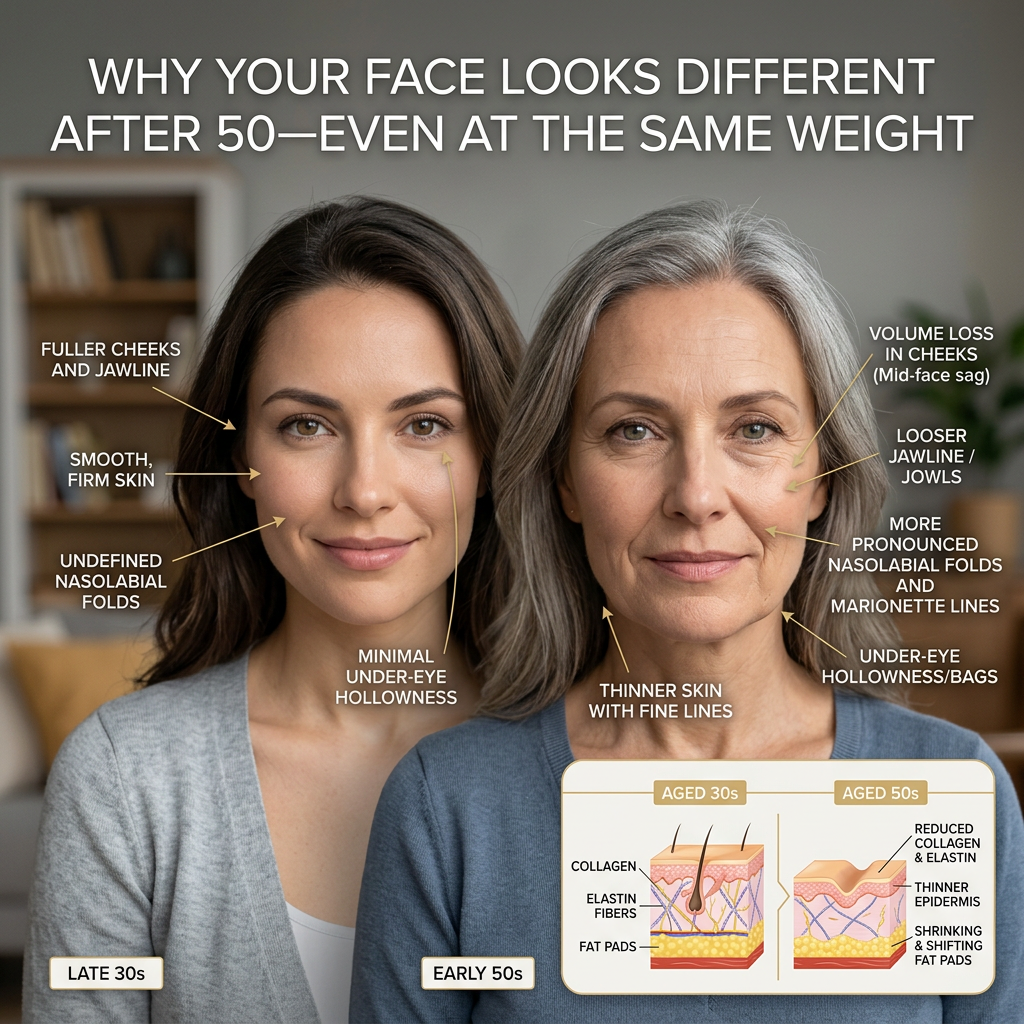
    Why does your face look different after 50 even at the same weight?

    Short answer: Your face can look different after 50 even at the same weight because more is changing than your skin. Facial fat shifts and loses volume, and the support underneath, from ligaments to bone, changes too. Creams can help dryness and fine lines, but they can’t replace that deeper volume.

    Ever catch your reflection and wonder why your cheeks or jawline look different even though the scale has hardly moved? I have. The explanation is more interesting than a new wrinkle—and it isn’t always something a cream can fix.

    Have you ever looked in the mirror and thought, “I haven’t gained or lost much weight, so why does my face look different?” I think this is one of the most confusing parts of getting older.

    We tend to blame the scale, but the scale doesn’t tell the whole story. After 50, the face can change because several things are happening at once: skin changes, shifts in facial fat, changes in body composition, sun exposure, hydration, sleep and simply the passage of time.

    Weight Is Only One Piece of the Picture

    When your face changes, it is tempting to assume you need to lose weight, gain weight or buy a new anti-aging product. Sometimes the change has very little to do with the number on the scale.

    • Skin gradually changes in firmness and elasticity.
    • Facial fat can change position and volume over time.
    • Sun exposure can contribute to visible texture and pigmentation changes.
    • Sleep and hydration can affect how tired or drawn the face looks from day to day.
    • Changes in overall muscle and body composition can alter appearance even when weight barely moves.

    Why Your Face Can Look Different From One Day to the Next

    Not every change in the mirror is permanent. Poor sleep, allergies, alcohol, salty meals and normal fluid changes can affect puffiness and definition. That’s one reason I wouldn’t judge my appearance from one bad morning.

    What You Can Actually Work On

    • Protect your skin: Consistent sun protection is one of the most useful long-term habits for exposed skin.
    • Keep skincare simple: Gentle cleansing, appropriate moisture and carefully chosen active ingredients can support healthier-looking skin.
    • Maintain muscle: Resistance training supports strength, function and body composition.
    • Eat enough nutritious food: Constant crash dieting can make some people look drawn while also making muscle maintenance harder.
    • Sleep and recover: A rough stretch of sleep can show up surprisingly quickly.

    Don’t Let Anti-Aging Become a Full-Time Job

    There is nothing wrong with wanting to look your best. I just don’t think every hollow area, line or change in facial shape needs to become a problem that must be fixed.

    My goal is simpler: I want my face to look healthy, cared for and like me. That means taking care of my skin and health without spending every morning searching for something new to fight normal aging.

    It’s Not Just Your Skin: What Changes Underneath

    Your face has layers: skin, fat pads, ligaments, muscles and bone. Over time, those layers can change at different rates. A plumper cheek may become flatter, or the same skin may have less support underneath it. A cream can improve dryness and fine lines, but it cannot rebuild lost facial bone or replace deeper volume.

    Dermatologist Dr. Neil Sadick and coauthors describe how separate superficial and deep facial fat compartments contribute to aging changes in the cheeks, chin and jowls. Surgeons David Kahn and Robert Shaw discuss changes to both soft tissue and the facial skeleton. A review of facial anatomy similarly identifies bone, fat, muscle and skin as interacting factors. None suggests that everybody’s face changes in exactly the same way.

    Three Changes You Might Notice—and What They Mean

    • Cheeks look flatter: ordinary shifts in facial volume and skin support may contribute. More moisturizer won’t replace deeper tissue.
    • Jawline looks softer: skin elasticity and changes in deeper tissues can both play a part; surface products have limits.
    • Fine lines look sharper in the morning: dryness or temporary puffiness can exaggerate appearance; consistent moisturizer may help the surface look smoother.

    Where I’d Spend Money—and Where I Wouldn’t

    I’d start with a gentle cleanser, a moisturizer that suits my skin, and broad-spectrum SPF 30+ when outdoors. The American Academy of Dermatology’s guidance for skin in your 40s and 50s puts sun protection and moisturizing before a cabinet full of miracle products. A carefully chosen retinoid may help certain visible effects of sun damage, but don’t expect topical skincare to change facial bone structure.

    If you’re considering fillers or procedures, ask a qualified board-certified specialist about realistic outcomes, risks, alternatives and cost. There is no obligation to do anything. A natural-looking face that still looks like you is a perfectly good goal.

    A Useful Two-Week Mirror Check

    Instead of studying your reflection every morning, compare photos in the same lighting, time of day and camera angle a couple of weeks apart. Note changes in sleep, salt intake, weight and skincare. It’s an imperfect comparison, but better than letting one unflattering bathroom mirror decide how you feel.

    Keep reading: Skincare After 50: What to Buy and What to Skip. Sudden new facial weakness, drooping or difficulty speaking is an emergency—not normal aging.

    What Named Researchers Actually Found

    Plastic surgeon Dr. Rod Rohrich coauthored a review explaining how superficial and deep facial fat compartments contribute to changes in facial contour. That helps explain why a face can change shape without a dramatic change on the scale.

    Surgeon Dr. Joel Pessa coauthored anatomical research showing that facial fat is organized into distinct compartments, rather than one uniform layer. Those structures matter when understanding aging cheeks and jowls.

    Surgeon Dr. Robert Shaw and colleagues examined age-related changes in the facial skeleton. Their work provides another reason not to promise that a moisturizer alone can reverse every change you notice in the mirror.

    Common Questions

    Why does your face look different after 50?
    Changes in collagen, elastin, facial fat, bone structure, skin thickness, and hydration can gradually change how your face looks.

    Why does your face lose some firmness after 50?
    Collagen and elastin decline with age, which can contribute to looser skin and softer facial contours.

    Why do cheeks look different after 50?
    Changes in facial fat and skin support can make the cheeks look less full or change the way your facial contours appear.

    Why does your jawline change after 50?
    Changes in skin elasticity, facial fat, and underlying tissues can make the jawline appear softer or less defined.

    Can dry skin make your face look older after 50?
    Yes. Dryness can make fine lines and rough texture more noticeable and leave skin looking dull.

    Can skincare improve how your face looks after 50?
    Yes. A consistent routine can improve hydration, texture, and the appearance of some signs of aging.

    Does sunscreen still matter after 50?
    Absolutely. Daily broad-spectrum sunscreen helps protect against UV damage that contributes to wrinkles and uneven skin tone.

    Can exercise affect how your face looks after 50?
    Regular exercise supports overall health, muscle tone, circulation, and body composition, all of which can contribute to a healthier appearance.

    What is a simple skincare routine after 50?
    Morning: Gently cleanse or rinse, moisturize, and apply broad-spectrum sunscreen.
    Evening: Cleanse, use a targeted treatment if appropriate, and moisturize your face and neck.

    Do you need lots of anti-aging products after 50?
    No. A few products you use consistently can be more practical than a complicated routine with too many active ingredients.

    Can you really change how your face looks after 50?
    You can’t stop normal aging, but skincare, sleep, nutrition, exercise, sun protection, and other healthy habits can help you look and feel your best.

    A gentle health note: Facial changes are usually gradual. Sudden or unusual changes—especially swelling, weakness, numbness, or significant asymmetry—should be discussed with a healthcare professional.

    My Take After 50

    If your weight hasn’t changed but your face has, don’t automatically assume you’ve done something wrong. Look at the bigger picture—skin care, sun exposure, sleep, nutrition, activity, muscle and normal aging.

    If a facial change is sudden, dramatic or accompanied by other symptoms, that’s different from ordinary aging and is worth discussing with a healthcare professional.

    I’m sharing personal observations and general healthy-aging information, not medical advice. Everyone ages differently, and persistent or concerning changes should be evaluated by a qualified professional.


    About Tom Green

    Tom Green writes Sturdy Years. He was born in Pell City, Alabama, in 1962, and he’s a country boy and a true Southerner through and through. He’s just a regular, laid-back 64-year-old who keeps things simple. He shares what he learns about skincare, fitness and getting older, and what’s working for him. He’s also the author of A Practical Guide to Getting Older Without Giving Up on Yourself. Tom isn’t a doctor. He reads up on the research and passes along what’s useful, plain and simple.

    I’ve also mapped out some great tools on my new Tech for Independent Living After 50 page.