Tag: loneliness

  • What Loneliness Does to Your Body After 55, and How to Turn It Around

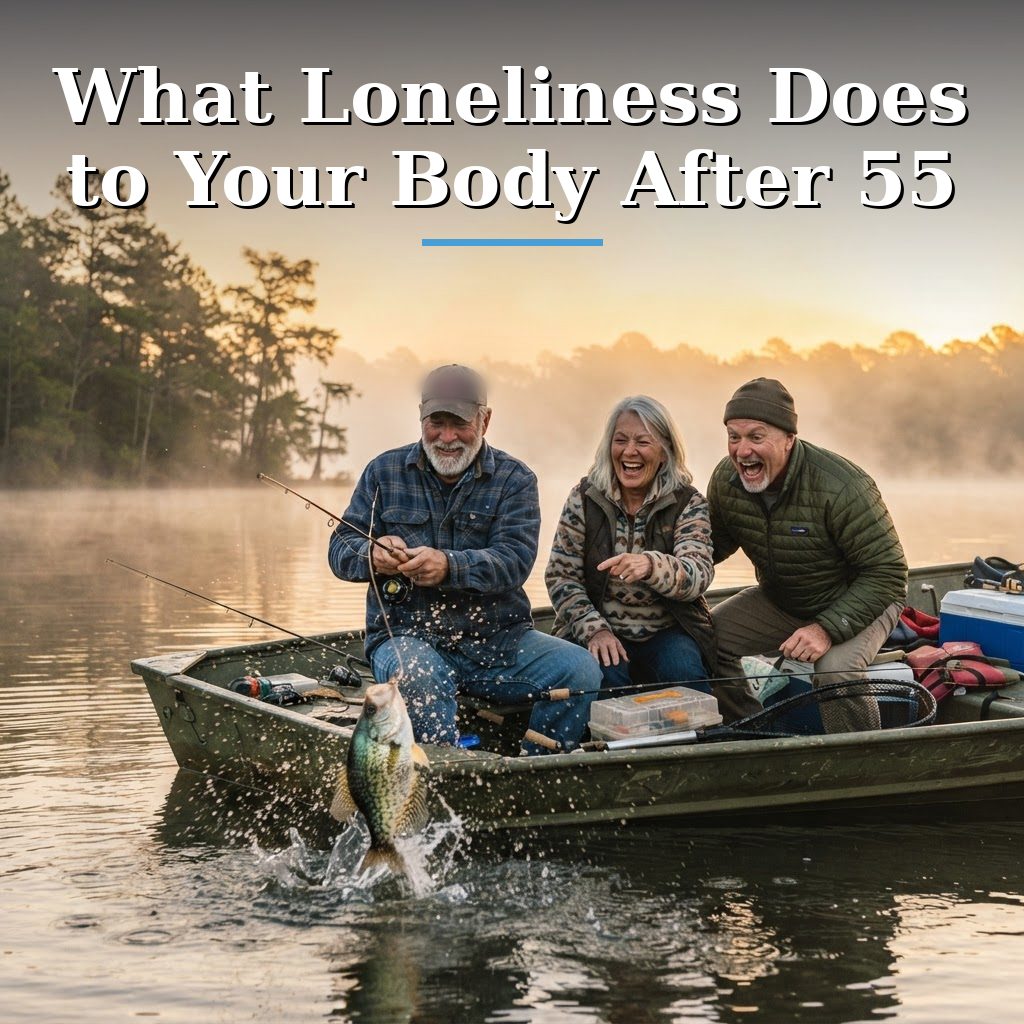
    What Loneliness Does to Your Body After 55, and How to Turn It Around

    How does loneliness affect you physically after 55?

    Short answer: When loneliness hangs on, your body stays in a low hum of stress. Over time that can push your blood pressure up, stir up inflammation, break up your sleep and make it harder to fight off viruses. It’s also tied to higher odds of heart disease, stroke and dementia. The good news is the fix doesn’t cost a dime, and your body starts settling down once you get back around people you enjoy.

    Thanksgiving’s almost here, and for a lot of folks that means a full table and too much pie. For a lot of others it means a quiet house and the TV on for company. I’ve been reading up on what that second kind of holiday does to us, and I’ll be honest, it surprised me. Loneliness gets into your blood pressure, your blood work and even your sleep.

    Stick with me, though, because this one ends on a hopeful note. The same research that shows how hard loneliness is on the body also shows how much good company helps. And men and women both have a better shot at it in these years than most people think.

    How common is loneliness after 55?

    More common than folks let on. AARP surveyed about 3,300 Americans 45 and older and found that 4 in 10 are lonely, up from about a third in 2010 and 2018. For the first time, men came out lonelier than women, 42% to 37%. Men were also more likely to say they don’t have a single close friend.

    Now for the part I liked. In that same survey, loneliness was highest for folks in their late 40s and 50s, and it dropped after 60. AARP has seen that same pattern every time they’ve asked since 2010. So if you’re coming up on 60 or already past it, the odds are leaning your way.

    What does loneliness do to your body?

    Dr. Robert Waldinger explains it about as plain as anybody. He’s a Harvard psychiatrist who runs the Harvard Study of Adult Development, which has followed the same men and their families since 1938, and he co-wrote the bestseller The Good Life about what they learned.

    When something upsets you, your body goes into fight-or-flight. Your heart speeds up and your blood pressure climbs, which is normal. Most of the time you go home, talk it over with somebody who listens, and your body calms back down. Waldinger told the Harvard Gazette that when you don’t have anybody like that, your body can stay stuck in a low level of fight-or-flight. More stress hormones and more inflammation keep running through you, and little by little they wear on your whole system.

    The National Institute on Aging says it about the same way. The hurt of being lonely sets off the same stress response in your body that physical pain does. Let that go on long enough and it can lead to chronic inflammation and a weaker immune system.

    Can loneliness raise your blood pressure?

    It sure looks that way. The late John Cacioppo was a University of Chicago scientist who spent his whole career on loneliness and wrote a book on it called Loneliness. He and researcher Louise Hawkley followed 229 people ages 50 to 68 for five years. By year four, the loneliest folks had seen their top blood pressure number rise 14.4 points more than the people who were happiest with their social lives. That held up even after they accounted for age, weight, smoking and drinking.

    Hawkley pointed out something worth remembering. You can have a whole lot of people around and still be lonely if those relationships leave you empty, and you can live a quiet life and be just fine if the few people in it really matter to you. So what really counts is how connected you feel inside.

    Margaret Manning, who started Sixty and Me, one of the biggest sites for women over 60, draws that same line. She says there’s nothing wrong with being alone, and introverts need it to recharge their batteries. Loneliness is when you want real company and can’t find it. Gretchen Rubin, the bestselling author of The Happiness Project, goes a step further on her blog and lays out seven different kinds of loneliness, because she says you have to know why you feel lonely before you can fix it. The one that rang truest for me is what she calls quiet-presence loneliness. You’ve got friends and family, but you miss having somebody around the house to fix a cup of coffee with or sit beside on the sofa.

    High blood pressure doesn’t usually hurt, which is why it sneaks up on so many of us. If yours has been creeping up, it’s worth mentioning to your doctor how much company you’ve been keeping lately, right along with the salt and the exercise.

    Does loneliness weaken your immune system?

    This was the part that got me. Cacioppo teamed up with Steve Cole at UCLA to look inside the immune cells of lonely people, including adults in their 50s and 60s. In the loneliest folks, the genes that turn up inflammation were working overtime, while the genes that help fight off viruses were turned down.

    The researchers’ thinking makes a lot of sense to me. Way back, being cut off from your people meant real danger, so the body seems to treat loneliness like a threat and brace for the wrong kind of fight. That leaves lonely folks a little more open to the colds and bugs going around, which is no small thing heading into winter.

    Can loneliness mess with your sleep?

    It can. Cacioppo and Cole’s work found that lonely, isolated people wake up more during the night and spend less of their time in bed actually asleep. Anybody who’s laid there at 3 AM listening to a quiet house knows that feeling. Poor sleep then feeds right back into blood pressure, mood and your immune system, so it all piles on. If that 3 AM wake-up sounds familiar, I wrote a whole post on waking up at 3 AM.

    How does loneliness affect your heart and brain?

    The numbers get big when you look at the heart and brain. When Dr. Vivek Murthy was U.S. Surgeon General, he put out a national advisory on loneliness. It found that poor social connection is tied to a 29% higher risk of heart disease and a 32% higher risk of stroke. For older adults, it was tied to a 50% higher risk of developing dementia.

    Murthy then went on to co-chair a World Health Organization commission on the same subject. Their 2025 report found that about 1 in 6 people worldwide are lonely, and that loneliness is linked to more than 871,000 deaths a year. That works out to about 100 every hour.

    Now, in fairness, most of this research shows a strong link, and it can’t prove loneliness alone caused every one of those problems. Lonely folks also tend to move less, sleep worse and skip the doctor. But when study after study points the same direction, I’d rather pay attention than wait around for more proof.

    Why do friendships thin out in retirement?

    Arthur Brooks, the Harvard professor who writes the happiness column for The Atlantic, has a way of putting it that cleared it up for me. He says most of us have a lot of what he calls deal friends, the folks we’re friendly with because of work or because they’re handy to know. Then there are real friends, the ones you’d call with any silly thought. Deal friends are fine, but they tend to crowd out the real ones. And I reckon when the job ends, a lot of those deal friends go right along with it.

    Longevity doctor Peter Attia talked this over with Brooks on his podcast and came away with some good advice. If you look around and can only name deal friends, don’t panic. That part of your life just needs some time and effort, and real friendships grow best when you spend your free time together on something you both enjoy.

    Fellas, that’s exactly why so many retired guys are finding their way to Men’s Sheds, the community workshops I wrote about in Men’s Sheds: Where Retired Guys Go to Make Real Friends. Ladies, a lot of y’all already know this one by heart. The friend you walk with every Tuesday becomes the friend you call when the news is bad.

    How do you turn loneliness around?

    Start smaller than you think you need to. Waldinger told the Gazette that “our social life is a living system, and it needs maintenance too.” His advice is to sit and think about who you miss, or who you haven’t heard from in a while, and then send them a text or pick up the phone. He says people are amazed at how warmly folks answer back.

    That one tiny step is where I’d start, today, before supper. After that, go looking for something that repeats. A standing breakfast with your old buddies, the same walking group every week, a volunteer shift, choir practice or a card night. Seeing the same faces over and over is how strangers turn into friends, and the National Institute on Aging suggests most of the same things.

    For the lonely evenings when nobody’s around to call, Leo Babauta has some gentle advice. He writes Zen Habits, one of the best-known blogs on simple living, and he admits he gets lonely himself when his wife and kids are out of town. Instead of running from that feeling or covering it up with snacks and the TV remote, he suggests sitting with it a minute and getting curious about it. Then go find people at a class or a club and take a real interest in them. I like that, because it takes the shame out of feeling lonely in the first place.

    One more thing that doesn’t get talked about enough. If your hearing has slipped, get it checked. The NIA notes that folks who can’t hear well often pull back from people because they’re embarrassed about missing what’s being said. A hearing aid might do more for your social life than any new hobby.

    Does good company really help your health?

    It does, and this is my favorite finding of the whole bunch. When the Harvard researchers looked back at their men in their 80s, they expected the best predictor of who aged well to be something like cholesterol or blood pressure at age 50. It wasn’t. Waldinger said the best predictor of a happy and healthy life was how satisfied they were with their relationships.

    Think about that for a minute. The people you share a cup of coffee with may matter as much to your heart as anything your doctor prescribes. Like the old saying goes, if you want a friend, you’ve got to be one.

    Common Questions

    Can loneliness make you physically sick?

    It can raise your risk. Long-lasting loneliness keeps the body’s stress response switched on, which is linked to inflammation, higher blood pressure, poorer sleep and a weaker defense against viruses.

    Does loneliness raise blood pressure?

    In a University of Chicago study of adults 50 to 68, the loneliest people saw their systolic blood pressure rise 14.4 points more over four years than the least lonely people.

    Is being alone the same as being lonely?

    No. Loneliness is feeling less connected than you want to be. Some people live alone and feel fine, while others are surrounded by people and still feel lonely.

    Are men lonelier than women as they get older?

    In AARP’s latest survey of adults 45 and older, 42% of men were lonely compared with 37% of women, and men were more likely to have no close friends.

    How can I feel less lonely after 55?

    Reach out to one person you miss today, then join something that meets on a regular schedule so you see the same faces often. Get your hearing checked if conversations have gotten hard to follow.

    So who’s the one person you’ve been meaning to call? Tell me in the comments, then go call them. I’d love to hear how it went.

    Tom

    About Tom Green

    Tom Green writes Sturdy Years. He was born in Pell City, Alabama, in 1962, and he’s a country boy and a true Southerner through and through. He’s a regular, laid-back 64-year-old who keeps things simple and passes along what he learns about getting older. Tom isn’t a doctor. He reads up on the research and shares what’s useful, plain and simple. Read more about Tom.

    Health note: This article is for general education and isn’t medical advice. If loneliness or low moods have been hanging on for weeks, let your doctor know. It’s a real health concern, and help is out there.

    Research & Sources

    Advertisement

    Marley Spoon meal kits advertisement

    Marley Spoon Meal Kits (affiliate link)
  • Men’s Sheds: Where Retired Guys Go to Make Real Friends

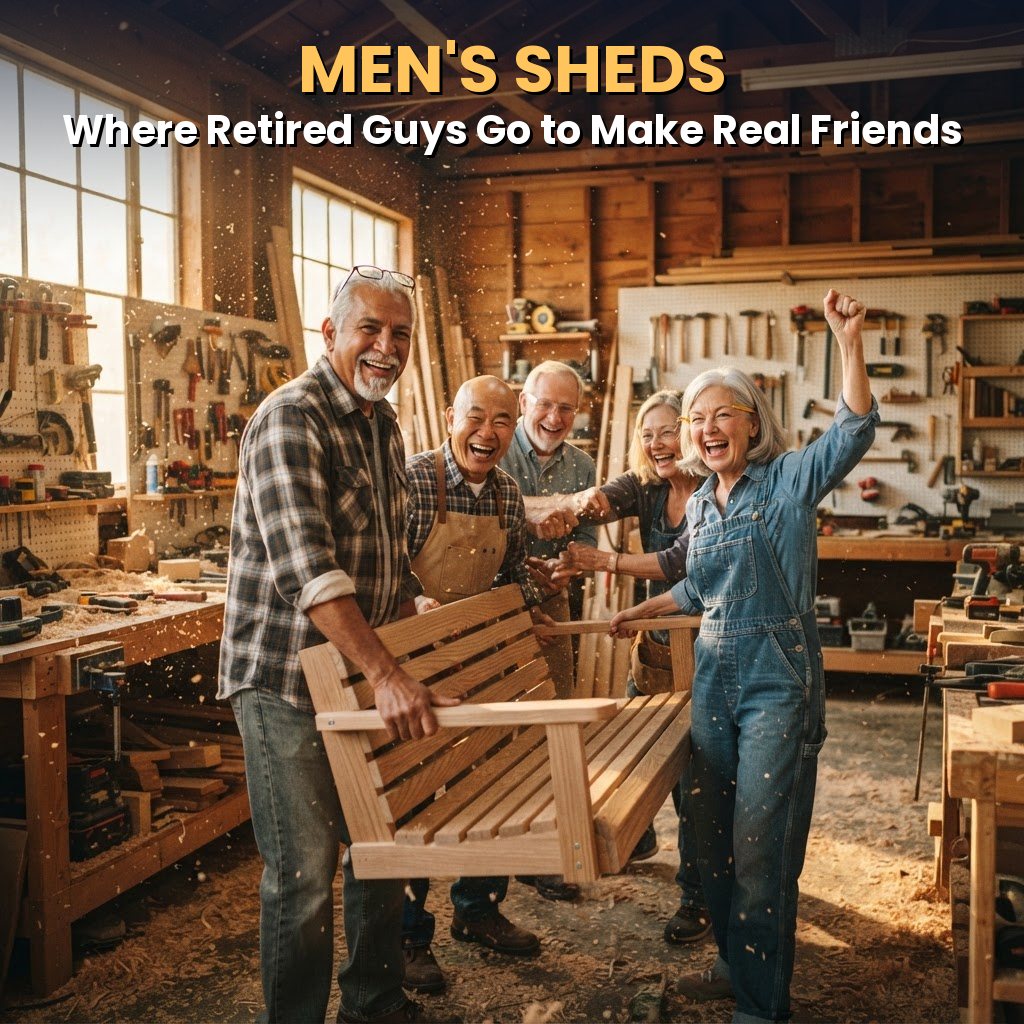
    Men’s Sheds: Where Retired Guys Go to Make Real Friends

    What is a Men’s Shed, and why are retired guys joining them?

    Short answer: A Men’s Shed is a community workshop where mostly retired men, and plenty of women too, get together to build, fix and swap stories. The idea started in Australia in the 1990s, and Australia now has more than 1,300 of them. Men join for something to do with their hands and stay for the friends. In one Canadian survey, about a quarter of members said they felt isolated before joining, and fewer than 1 in 10 did afterward.

    When I was a boy, I spent my school breaks and holidays fishing. Some days it was the lake on my mama’s daddy’s farm. Other days it was Logan Martin Lake right there in Pell City, from daybreak to sundown, and I loved every minute of it. My daddy’s daddy knew everything under that water. He’d sawmilled the land down there before it ever became a lake.

    I started when I was just a tiny boy. My first fish was a big ole crappie, caught on a winter day in my granddad’s green aluminum boat, and I didn’t even know how to reel it in yet. Men have always done their best learning and their best talking side by side like that, in a boat or at a workbench. Somebody in Australia figured out that’s exactly what a lot of retired men are missing, and they built a whole movement around it called the Men’s Shed. It’s one of the happiest ideas I’ve run across in a long time. I spent my working years in design, making things with color and texture, so I know the good feeling of standing back and looking at something you made with your own two hands. It feels even better with a buddy standing next to you.

    Where did Men’s Sheds come from?

    The first one opened in 1993 in Goolwa, South Australia, at a day center for older folks. The coordinator, Maxine Chaseling, had noticed that the only thing that seemed to give her own father a sense of purpose was puttering in his shed. So she set one up for the men who came to her center. The first shed to actually go by the name “Men’s Shed” opened in Tongala, Victoria, in 1998, and from there the idea took off.

    Today the Australian Men’s Shed Association supports more than 1,300 sheds. Here’s a fact I love: that’s more sheds than there are McDonald’s restaurants in Australia. The UK has over 1,150 more, and Ireland, Canada and New Zealand caught on too.

    Their motto came from researcher Barry Golding, who has written two books on the movement. At a 2007 shed conference he told the crowd, “Men don’t talk face to face, they talk shoulder to shoulder.” Sheds all over the world use that line now, and I reckon any man who’s ever worked on a truck with his buddy knows it’s true.

    Why do men need a place like this?

    Because a lot of us let our friendships slide without ever meaning to. Pollster Daniel Cox, who runs the Survey Center on American Life, calls it a “friendship recession.” His research found the share of men with no close friends at all jumped from 3% in 1990 to 15%. That’s a big change in one lifetime.

    Retirement can make it worse. When the job goes, so do the guys you saw every day at work. And it matters for more than your mood. The U.S. Surgeon General’s advisory on loneliness said being cut off from people can be about as hard on your health as smoking up to 15 cigarettes a day. I covered the hopeful flip side of that in my post on the Yale study showing nearly half of us get better with age. Staying connected is a big part of how that happens.

    Boston Globe writer Billy Baker learned all this the hard way. His editor handed him an assignment on why middle-aged men don’t have friends, and he realized he’d lost touch with nearly all of his. He turned it into a book, We Need to Hang Out, and told NPR that men’s friendships are nearly always built around doing something together. One of his buddies told him golf is just a way to keep your hands busy while you talk. Baker said on The Art of Manliness podcast that the Men’s Shed idea of giving men somewhere to go, something to do and someone to talk to is what got him to finally go out and make new friends.

    Do Men’s Sheds really help?

    The early numbers look good. This spring, Raza Mirza of HelpAge Canada shared research on Canadian shed members. About a quarter of the men said they’d felt isolated before they joined, and fewer than 10% felt that way after. Sixty-seven percent said their life had gotten better since they became a “shedder,” according to Taproot Edmonton.

    The stories are even better than the numbers. Alison Biggar of the American Society on Aging wrote about the Honolulu Men’s Shed, where a member named Walt Miyashiro looked after another shedder going through bypass surgery. They’d had the same surgeon. The other fella wasn’t much of a talker in person, but he opened up to Walt over email. Up in Hopkins, Minnesota, when one member lost his wife suddenly, the whole shed gathered around him and carried him through it.

    Nobody signed up for a support group. They signed up to fix canoes and build porch swings, and the friendship snuck in the side door.

    What do people actually do at a Men’s Shed?

    Pretty much whatever the members want. Next Avenue visited a shed in Ruston, Louisiana, where members turn out porch swings, bird feeders and charcuterie boards, then donate them to local nonprofits or sell them to keep the lights on. The shed’s president, Tommy Folk, is a 77-year-old retired contractor who mostly sits back, lends a hand now and then, and visits with everybody.

    The North Palm Beach County shed in Florida does a lot less sawing. They’ve played bocce, gone fishing, toured a 911 call center and watched cooking demonstrations. The Honolulu crew works out of a 6,000-square-foot warehouse and restores old outrigger canoes.

    And if you’ve never held a hammer in your life, that’s fine too. Steve Werner of the US Men’s Sheds Association told Next Avenue that even a man who “doesn’t know what a screwdriver is” belongs there. Somebody will show you. Many hands make light work.

    Can women join a Men’s Shed?

    Yes, and plenty do. That Ruston shed is about half women. Some of them head for the craft room to sew and paint, and others are right out there doing woodworking with the men. The US Men’s Sheds Association says women have been key founders and leaders, and that everyone is welcome.

    Ladies, Werner gave y’all some credit too. He said that in a lot of cases, it’s the wives who “literally and figuratively will drive men to the sheds.” Honolulu’s shed only exists because founder Glenn Sears’s wife showed him an article about the sheds in Australia.

    How do you find or start a Men’s Shed?

    Start with the “Find a Shed” page on the US Men’s Sheds Association website. The movement is still young here, with only a few dozen sheds across the country, so there may not be one close to you yet.

    If there isn’t, you’re in good company. When Glenn Sears went looking in Honolulu, he couldn’t find a single shed anywhere in the country. So he called the folks in Australia, and they told him to start one. That shed has more than 100 members now.

    You don’t need a warehouse to get going. Billy Baker started his own crew by inviting about a dozen guys to a barn on a Wednesday night. He found that just sitting around talking got old fast, so the group needed what he calls a “velvet hook,” a soft excuse to keep showing up. For them it was a plan to build a dirt bike track. For you it might be fixing up lawn chairs for the senior center or building a little free library for the neighborhood. A garage, a coffee pot and a standing day of the week will do the rest.

    Your local senior center, library, church or VFW hall is a good place to ask about room to meet. And if you want something to do with your new friends besides sanding, my winter checklist has a whole section on why putting people on the calendar every week is good for you.

    Common Questions

    What is a Men’s Shed?

    A Men’s Shed is a community workshop or meeting place where mostly older and retired men gather to build, fix, learn and talk. The idea started in Australia in the 1990s.

    Do Men’s Sheds help with loneliness?

    Early research says yes. In a Canadian survey, about a quarter of shed members felt isolated before joining, compared with fewer than 10% after.

    Can women join a Men’s Shed?

    Yes. The US Men’s Sheds Association says everyone is welcome, and some sheds, like the one in Ruston, Louisiana, are about half women.

    Do you need woodworking skills to join a Men’s Shed?

    No. Many sheds also fish, cook, play games and take field trips, and members are happy to teach beginners.

    How do I find a Men’s Shed near me?

    Check the “Find a Shed” page on the US Men’s Sheds Association website. If none is nearby, the association can help you start one.

    So tell me in the comments: if your town opened a shed tomorrow, what’s the first thing you’d want to build? And if you’re already a shedder, I’d love to hear about your crew.

    Tom

    About Tom Green

    Tom Green writes Sturdy Years. He was born in Pell City, Alabama, in 1962, and he’s a country boy and a true Southerner through and through. He’s a regular, laid-back 64-year-old who keeps things simple and passes along what he learns about getting older. Tom isn’t a doctor. He reads up on the research and shares what’s useful, plain and simple. Read more about Tom.

    Health note: This article is for general education and isn’t medical advice. If loneliness or low moods have been hanging on for a while, let your doctor know. It’s a real health concern, and help is out there.

    Research & Sources

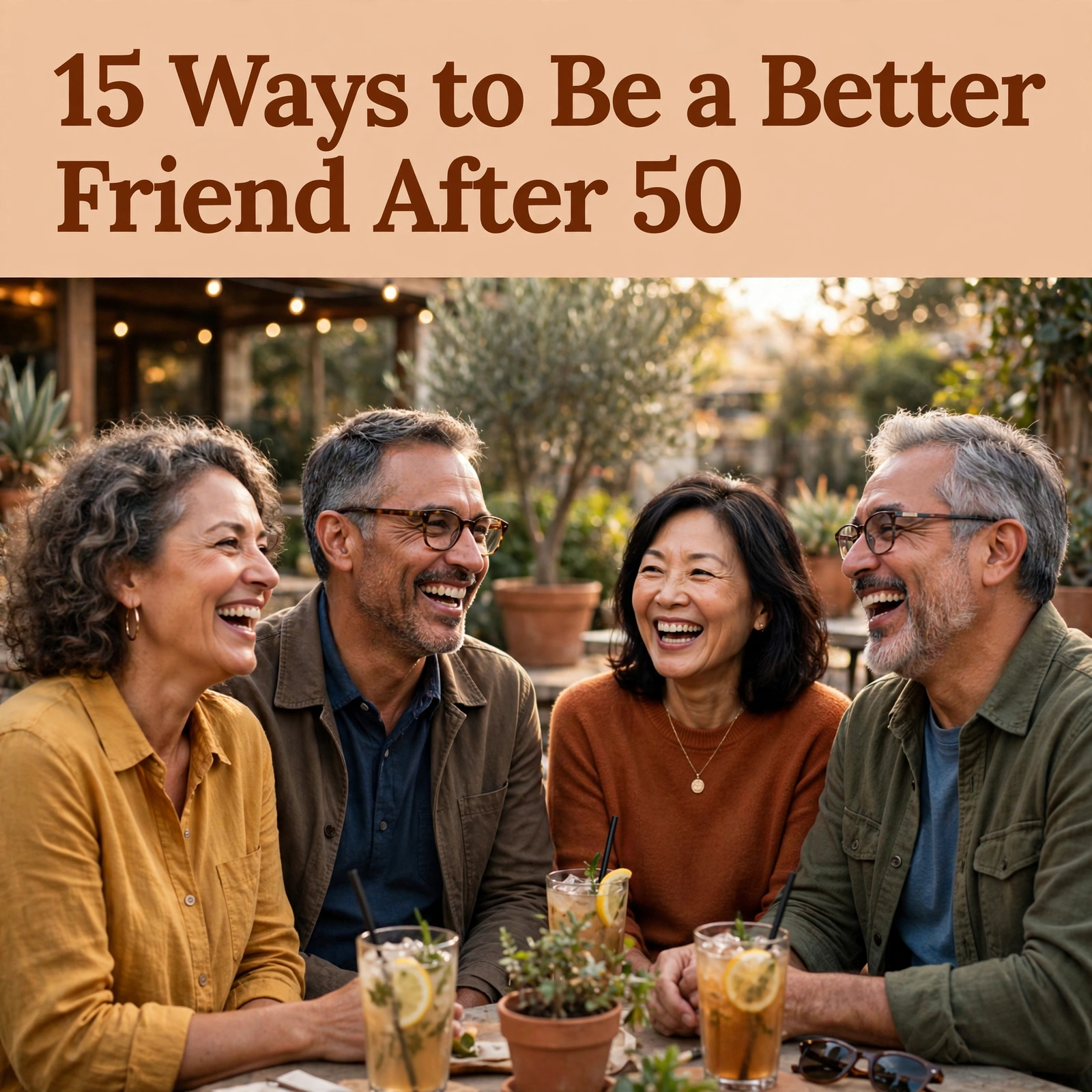
  • 15 Ways to Be a Better Friend After 50

    15 Ways to Be a Better Friend After 50

    How can you be a better friend after 50?

    Short answer: Being a better friend after 50 mostly comes down to small things done often. Make the first move instead of waiting for a call, remember the little things your friend told you about, and keep showing up. A simple “Hey, I was thinking about you” can mean more than you realize.

    Friendship hits different after 50. Here’s how to keep the good ones strong, make room for new connections, and become the kind of friend people are glad to have.

    Friendship changes as we get older. Careers shift, families grow up, people move away, and sometimes the friends we thought would always be around become harder to reach.

    But here’s the good news: it’s never too late to become a better friend—or to build new friendships.

    Being a good friend after 50 doesn’t require grand gestures, endless free time, or a perfect personality. It comes down to small things that show people they matter.

    Here are 15 ways to make your friendships stronger, more meaningful, and a whole lot more fun.

    1. Make the First Move

    Stop waiting for someone else to call. Send a text, pick up the phone, or suggest lunch. A simple “Hey, I was thinking about you” can mean more than you realize.

    2. Remember the Little Things

    Ask about the doctor’s appointment, the job interview, or the family problem your friend mentioned last week. Remembering details shows you were listening—and that you care.

    3. Listen Without Trying to Fix Everything

    Sometimes a friend needs advice. Other times, they just need someone to hear them out. Before offering solutions, try asking, “Do you want my advice, or do you just need to talk?”

    4. Show Up When Life Gets Hard

    Anyone can be around for the fun stuff. A good friend also checks in during a rough patch, offers practical help, or simply sits beside someone who is having a difficult day.

    You don’t need the perfect words. Being there counts.

    5. Celebrate Their Good News

    A friend’s success isn’t a competition. Whether they get a promotion, reach a personal goal, or finally take that dream trip, celebrate with them. Give their good news the attention you’d want for your own.

    6. Put the Phone Down

    When you’re spending time together, be present. Make eye contact, listen, and resist the urge to check every notification. Your friend deserves more than half your attention.

    7. Be Honest—but Be Kind

    Real friendship allows room for honesty. If something bothers you, talk about it respectfully instead of letting resentment build. The goal isn’t to win an argument. It’s to understand each other.

    8. Don’t Keep Score

    Healthy friendships aren’t always perfectly balanced. One person might need more support during a difficult season, while the other needs help later. Give when you can, accept help when you need it, and look for mutual care over time.

    9. Make Plans That Actually Happen

    “We should get together sometime” sounds nice, but it rarely gets anyone out the door. Suggest a day, a time, and something simple to do. Coffee, a walk, lunch, or a movie can be enough.

    10. Give People Room to Change

    The person you knew at 30 may not be exactly the person you know at 60. Neither are you. Let friendships grow as interests, circumstances, and priorities change. You don’t have to agree on everything to care about each other.

    11. Apologize When You’re Wrong

    Everybody makes mistakes. Maybe you said something hurtful, forgot an important date, or jumped to the wrong conclusion. A sincere apology can help repair the damage. Skip the excuses and take responsibility for your part.

    12. Respect Their Boundaries

    Your friend may not be available every time you call. They may need quiet time, have family responsibilities, or simply have a different way of communicating. Respecting those limits helps a friendship feel safe rather than demanding.

    13. Keep Your Sense of Humor

    Don’t underestimate the power of laughing together. Share a funny story, enjoy an old inside joke, or be willing to laugh at yourself. Friendship doesn’t have to be serious all the time to be meaningful.

    14. Be Open to New Friends

    Don’t assume your best friendships are all behind you. Join a local group, try a class, volunteer, or strike up a conversation with someone you see regularly. New connections can begin in surprisingly ordinary places.

    15. Know When to Let Go

    Not every friendship lasts forever, and that’s okay. If a relationship repeatedly leaves you feeling disrespected, drained, or used, consider whether an honest conversation could help—or whether it’s time to step back. You can appreciate a friendship’s history without forcing it to continue as it once did.

    Other Voices on Friendship

    If you’d like to explore friendship more deeply, these three writers offer worthwhile places to start.

    Shasta Nelson is a friendship expert and author of Frientimacy: How to Deepen Friendships for Lifelong Health and Happiness. Her work explores how we can turn casual connections into closer, more supportive relationships.

    Nina Badzin is a writer who focuses on the ups and downs of adult friendship. She hosts Dear Nina: Conversations About Friendship, a podcast and newsletter that explore real-life friendship questions and dilemmas.

    Lydia Denworth is a science journalist and the author of Friendship: The Evolution, Biology, and Extraordinary Power of Life’s Fundamental Bond. Her book explores the science behind why friendship and social connection matter throughout our lives.

    Their work offers a useful reminder: friendship isn’t just something that happens to us. It’s a relationship we can keep building through attention, effort, and care.

    The Bottom Line

    You don’t need dozens of friends to have a rich social life. A few dependable people who laugh with you, listen when you need them, and show up when life gets messy can make a real difference.

    Start small. Reach out to someone you’ve been meaning to call. Listen a little more closely. Make a plan instead of putting it off.

    What’s one thing you think makes someone a truly good friend after 50? Share your thoughts in the comments. Your experience might be just what another reader needs to hear.


    About the Author

    Tom Green writes Sturdy Years. He was born in Pell City, Alabama, in 1962, and he’s a country boy and a true Southerner through and through. He’s just a regular, laid-back 64-year-old who keeps things simple. He shares what he learns about skincare, fitness and getting older, and what’s working for him. He’s also the author of A Practical Guide to Getting Older Without Giving Up on Yourself. Tom isn’t a doctor. He reads up on the research and passes along what’s useful, plain and simple.

    Sturdy Years — Look better. Feel stronger. Age well.


    I’ve also mapped out some great tools on my new Tech for Independent Living After 50 page.

  • Life After 50 With a Dog: The Joys, the Benefits—and the Reality

    Life After 50 With a Dog: The Joys, the Benefits—and the Reality

    Is getting a dog good for you after 50?

    Short answer: A dog can make life after 50 better. Dogs get you moving every day, make ordinary days more interesting, help you meet people, and don’t care how old you look. Just be honest about the time, money and energy a dog needs before you bring one home.

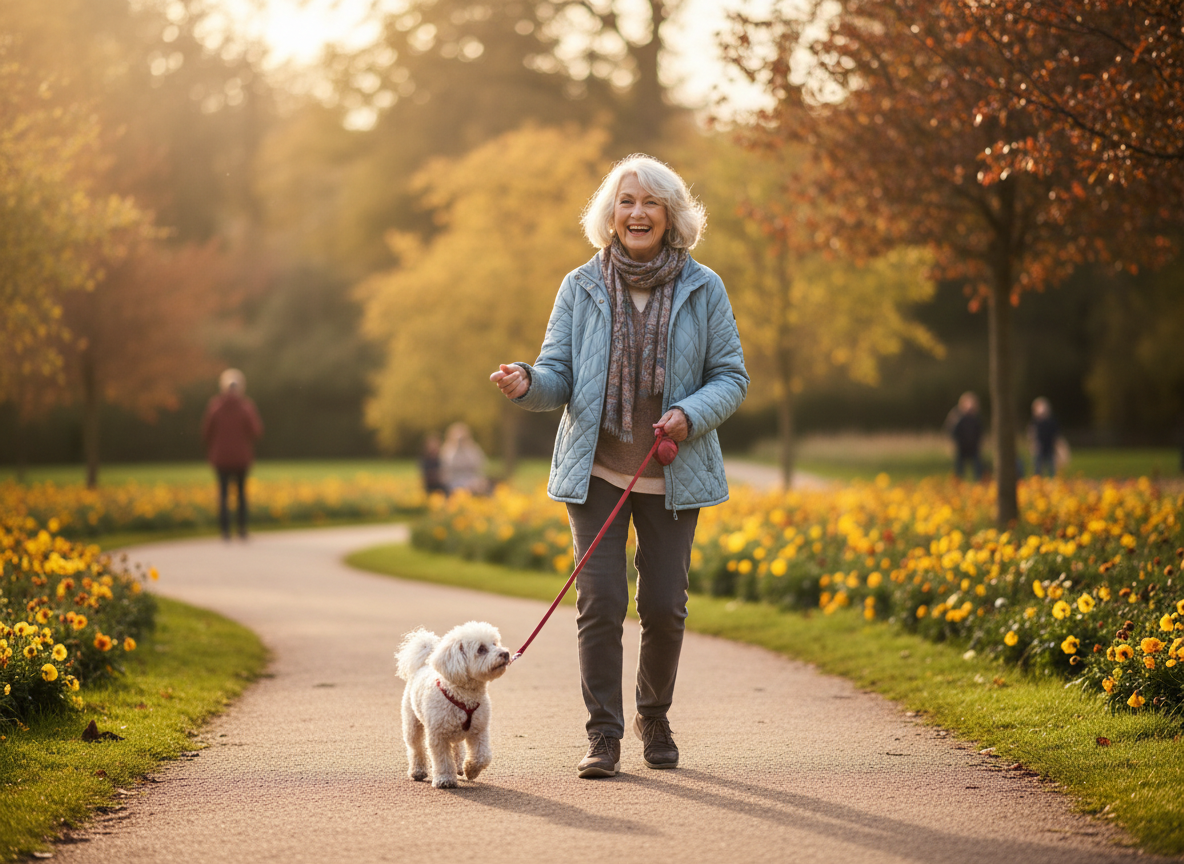
    Life after 50 can bring more freedom, but it can also bring quieter days, new routines, and a body that does not always want to move the way it once did. A dog has a way of pulling your attention back to the present: the leash waiting by the door, the happy greeting, the ridiculous thing they just did, and the simple fact that someone is counting on you. A dog is not a miracle cure for loneliness or a substitute for human connection. But for the right person, a dog can add movement, affection, structure, and a little everyday comedy to life. Those small things deserve more credit than they often get. Dogs do not care about your birthday. They care about whether you are ready for a walk, whether there is something interesting happening in the kitchen, and whether you have time for them.

    Dogs Keep You Moving

    One of the simplest benefits of having a dog is that they give you a reason to get up and move. A walk around the neighborhood may not feel like a workout, but regular movement adds up. There are also all the little movements that come with caring for a dog—feeding them, letting them outside, playing, cleaning up and getting down on the floor when they decide that is where they want you.

    They Make Ordinary Days More Interesting

    After 50, routines can become comfortable. That is not necessarily a bad thing, but a dog can interrupt the routine in ways that are usually good for you. A funny expression, an unexpected burst of energy or the simple excitement of seeing you walk through the door can make an ordinary day feel different.

    Dogs Can Keep You Connected

    Walking a dog can also create opportunities for casual conversations with neighbors and other dog owners. Sometimes a simple hello is enough to make a day feel a little less isolated.

    They Do Not Care How Old You Look

    This may be one of my favorite things. Your dog is not looking at your wrinkles, gray hair or whether you look tired today. You are simply their person.

    Getting Older Does Not Mean Stopping

    Having a dog does not magically make every day easy. Older dogs may need more care, and your own abilities may change over time. But there is something valuable about continuing to have reasons to move, laugh and get outside. For me, a dog is a good reminder that getting older is not the same thing as checking out of life.

    What Research Says About Dogs and Healthy Aging

    There is research behind some of these everyday benefits, although it is important not to promise more than the evidence can show. The Centers for Disease Control and Prevention (CDC) notes that pets can create opportunities to exercise, get outside, and socialize, and that companionship may help some people manage loneliness. The CDC also points out that pets can carry germs, so good hygiene and appropriate veterinary care matter. A 2022 systematic review published in Social Psychiatry and Psychiatric Epidemiology examined 24 studies on pet ownership, loneliness, and social isolation. The findings were mixed: some studies found associations with less isolation or loneliness, while others did not. The honest takeaway is that a pet may be a meaningful source of companionship, but it will not make everyone feel less lonely. You can read the full review on PubMed Central. There is also a measurable connection between dog walking and activity. In a 2017 study published in Innovation in Aging, researchers followed 86 adults ages 65 to 81 and used activity monitors. The dog owners averaged about 31 minutes a day walking at a moderate pace, compared with 11 minutes among the adults without dogs; they also took more steps on average. The study was relatively small, so it does not prove that a dog will make every owner more active. But it is a useful reminder that a daily walk can become a habit when another living creature is counting on you. Read the study summary at PubMed Central.

    Small Ways to Make Dog Ownership Work Better After 50

    • Make the walk fit your body. Two short, comfortable walks may work better than one long outing. If balance, joint pain, breathing, or stamina is a concern, ask a healthcare professional what level of activity is appropriate.
    • Let the dog sniff. A walk does not have to be a race or a step-count competition. Safe sniffing time gives your dog enrichment and gives you a reason to slow down and notice the neighborhood.
    • Build a rainy-day routine. A few minutes of gentle indoor play, simple training, or hide-and-seek with a toy can keep you connected when weather or mobility makes a walk difficult.
    • Make the home safer for both of you. Keep leashes and toys out of walkways, use good lighting, and consider whether a dog that pulls hard on the leash could throw you off balance. Training and a well-fitted harness may help.
    • Plan for care before you need it. Identify a backup walker, pet sitter, or trusted person who can help if you are sick, traveling, or recovering from an injury.
    • Protect your budget. Food, routine veterinary visits, dental care, medications, grooming, and unexpected emergencies can add up. A realistic pet budget is part of responsible ownership, not a lack of love.

    The Part People Do Not Always Mention: Dogs Need Care, Too

    It is easy to talk about what a dog brings into our lives and forget the work involved. Some dogs need more exercise than their owners can comfortably provide. Older dogs may need medication, help with stairs, or more frequent veterinary visits. Puppies can be exhausting, and a strong dog that pulls on a leash can be a genuine fall risk. If you are thinking about adopting a dog after 50, choose for temperament, size, energy level, and care needs—not just a cute face. An adult dog with a known personality may be a better fit than a high-energy puppy for some households. A shelter or rescue can help you ask the right questions. And if a dog is not a realistic fit right now, helping a neighbor walk their dog, pet-sitting occasionally, or volunteering with an animal organization may offer some of the connection without the full-time responsibility.

    A Simple Reminder: You Do Not Need a Perfect Day

    Some days the walk will be short. Some days you will be tired. Some days your dog will stop to investigate one patch of grass as if it contains the secrets of the universe. That is part of the charm. Healthy aging is not about turning every moment into a performance. It is about finding manageable reasons to move, connect, laugh, and take part in the day. If a dog gives you one more reason to step outside, speak to a neighbor, keep a routine, or smile at something silly, that is worthwhile—even if it never shows up on a fitness tracker.

    Sources and Further Reading

    Before You Bring a Dog Home, Ask These Five Questions

    There is something wonderful about being greeted at the door by a dog who thinks you’re the best thing in the world. But I wouldn’t want anyone to adopt on a lonely afternoon without thinking about the next ten years.

    1. Can I comfortably handle this dog’s size and energy? A calm adult dog may be a better fit than a large, excitable puppy.
    2. Can I afford routine and unexpected vet care? Include food, medication, preventive care, and emergencies—not just the adoption fee.
    3. Who helps if I get sick? Have a backup person or local boarding plan before you need one.
    4. What does this individual dog actually need? Temperament, training, grooming, and exercise differ more than advertisements suggest.
    5. Am I ready for the commitment? If not, fostering, volunteering, or visiting a friend’s dog can still add joy.

    The American Veterinary Medical Association’s pet-selection advice makes the responsibility clear: choose thoughtfully and plan for a dog’s social, physical, and veterinary needs. You aren’t just choosing a companion; you’re agreeing to care for a living animal.

    What the Research Actually Says About Loneliness

    It’s easy to see why pet stories are popular. But a dog isn’t a guaranteed treatment for loneliness. A systematic review of 24 studies found mixed results: some studies linked pet ownership with less isolation, while evidence on loneliness was inconsistent. I think that’s a more useful message than telling someone a pet will fix everything.

    The National Institute on Aging stresses the importance of human connection, too. A dog can be a wonderful part of a life that also includes friends, neighbors, family, or community.

    Make the First Month Easier

    Keep the dog’s routine simple: regular meals, short walks or play suited to its needs, quiet rest, and a vet appointment. Put a leash by the door, keep fresh water available, and resist the urge to expect perfect behavior in a week. Like the rest of us, a new companion needs time to settle in.

    Common Questions

    Can having a dog help you stay active after 50? A dog can encourage regular walking and everyday movement, although the amount of activity depends on the dog and your own abilities. Can dogs help with loneliness after 50? Pets can provide companionship and routine, and walking a dog can create opportunities for social interaction. Do dogs care about your age? Not in the way people do. Dogs generally respond to the relationship, attention, routine, and care you provide. Is having a dog good for your mental well-being? Companionship, routine, physical activity, and the simple responsibility of caring for another living thing can be meaningful parts of daily life. What if you are not able to walk a dog very far? Dogs and people have different needs. Short walks, play, time outside, and other forms of interaction can still provide activity and companionship. Can a dog give you more purpose after 50? Caring for a pet can add structure and responsibility to the day, which some people find meaningful. What is one of the best things about having a dog after 50? A dog can give you a reason to get up, move around, laugh, and pay attention to the present moment. Practical takeaway: Getting older does not mean life has to become smaller. A dog can be one simple reason to keep moving, stay connected, and enjoy ordinary days. A gentle well-being note: Pets are a personal choice, and caring for one should fit your health, living situation, finances, and ability to provide appropriate care.

    Keep Reading

    Written by Tom Green, creator of Sturdy Years Tom Green writes Sturdy Years. He was born in Pell City, Alabama, in 1962, and he’s a country boy and a true Southerner through and through. He’s just a regular, laid-back 64-year-old who keeps things simple. He shares what he learns about skincare, fitness and getting older, and what’s working for him. He’s also the author of A Practical Guide to Getting Older Without Giving Up on Yourself. Tom isn’t a doctor. He reads up on the research and passes along what’s useful, plain and simple.

    I’ve also mapped out some great tools on my new Tech for Independent Living After 50 page.

  • Best Apps for Older Adults: 5 Ways to Stay Connected, Active and Engaged After 50

    Best Apps for Older Adults: 5 Ways to Stay Connected, Active and Engaged After 50

    What are the best apps for older adults?

    Short answer: Some of the best apps for staying connected after 50 are Stitch for meeting people your age, Meetup for finding folks who like what you like, Libby for free library books, AARP Now and SilverSneakers GO for getting your body moving. WhatsApp and FaceTime are free for video calls with family.

    There is a strange thing about getting older: making friends can become harder at exactly the time when having good people around may matter more.

    People move. Friends retire and relocate. A spouse or partner may die. Work no longer puts you around the same people every day. You may even discover that you know plenty of people but don’t have many you would actually call when you want to go somewhere, try something new, or simply talk.

    And that is where some of today’s apps can be surprisingly useful.

    After looking closely at Stitch’s guide to apps for older adults, I think there is a bigger story here than simply finding another app to put on your phone. The right app can help you find a walking group, a book discussion, a local event, an online class—or even somebody you genuinely enjoy talking to.

    Research from the National Institute on Aging is one reason this matters. Social isolation and loneliness are associated with higher risks of several health problems, including depression, heart disease and cognitive decline. NIA also recommends staying connected through activities, hobbies, classes, volunteering, phone calls, social media and video chats. NIA: Tips for Staying Connected

    The Best Apps for Older Adults at a Glance

    If you want to…Try this appCost
    Make friends 50+StitchFree to join, paid extras
    Find local groups and eventsMeetupFree to join groups
    Get to know your neighborsNextdoorFree
    Video chat with familyWhatsApp or FaceTimeFree
    Read and listen to booksLibbyFree with a library card
    Find 50+ events and discountsAARP NowFree app, some features need membership
    Exercise classesSilverSneakers GOFree if your Medicare plan includes it
    Learn a languageDuolingoFree, with a paid option
    Remember your medicationsMedisafeFree, with a paid option
    Get help seeing somethingBe My EyesFree

    Below, I go through each one: what it is really useful for, and what to watch out for.

    So Which Apps Are Actually Worth Knowing About After 50?

    There isn’t one perfect app for everyone. A person who wants new friends has a different goal from someone who wants free audiobooks or a way to find exercise classes.

    Here are several worth knowing about—and what each one is really useful for.

    1. Stitch: When You Want to Meet People Who Are Also 50+

    Stitch is the one that caught my attention because it is built specifically around adults 50 and older rather than trying to squeeze older adults into a platform designed primarily for younger users.

    Stitch says its community has more than 400,000 members and is built around companionship, shared interests, activities, groups, discussions, travel and events. It isn’t strictly a dating service. Its own materials describe friendship and companionship alongside romance, and the company’s app listing says many members use it simply to make friends and participate in community activities.

    That distinction matters. You don’t have to be looking for romance to want more people in your life.

    What makes Stitch interesting: You can look for people around interests and activities rather than starting with the awkward question, “So…what do you do?” Stitch also offers virtual events and discussions, which can be useful if you live somewhere small or don’t always get out easily.

    Safety note: Stitch says members must complete a verification process before communicating, and it says profiles are not publicly searchable. Those are Stitch’s own safety claims, so I’d still use normal online-safety habits: don’t send money, don’t give out sensitive financial information, and take your time before meeting anyone in person.

    2. Meetup: Find People Who Already Like the Things You Like

    Meetup takes a different approach. Instead of being specifically for older adults, it organizes communities around interests and local events.

    That can actually be an advantage. You might find a hiking group, photography club, gardening group, book club, cooking meetup, walking group or something completely unexpected.

    The official Meetup app lets you find groups and upcoming events in your area and stay connected with people you meet through those activities.

    Best for: Someone who doesn’t necessarily want a “senior” group but does want to meet people who share a particular interest.

    3. Libby: A Social App Disguised as a Reading App

    Okay, Libby isn’t really a friendship app—but I love what it can do for life after 50.

    Libby lets you borrow ebooks, audiobooks and magazines from participating public libraries for free with a library card. You can even download titles for offline use.

    Why include it in an article about staying connected? Because interests create connections. A book you discover on Libby can lead to a library book club, a conversation with a friend, or a new class or group.

    Best for: Readers, audiobook fans and anyone looking for an inexpensive way to keep learning and exploring new interests.

    4. AARP Now: More Than News

    If you’re 50+, you’ve probably heard of AARP. Its AARP Now app puts news, events, nearby benefits and other AARP services on your phone.

    One useful feature is the local-events side of the app. AARP says users can find hundreds of local and online events, including workshops and classes, and register through the app. Some features and benefits depend on membership.

    Best for: People who want a mixture of information, events, discounts and AARP resources in one place.

    5. SilverSneakers GO: For Getting Your Body Moving Again

    Sometimes the best way to become more social is to get out of the house and start moving.

    SilverSneakers offers online and on-demand exercise options, and its SilverSneakers GO app can help eligible members find participating locations, access fitness programs and schedule activities. Eligibility and coverage depend on the person’s Medicare plan.

    And there’s a social bonus: exercise classes give you a reason to see the same people regularly. That’s often how acquaintances turn into actual friends.

    Best for: Adults who want structured movement and the possibility of meeting people through recurring activities.

    5 More Free Apps Worth Having on Your Phone

    These aren’t about making new friends, but they make everyday life after 50 easier, and a few help you stay close to the people you already have.

    6. WhatsApp or FaceTime: Free Video Calls With Family

    If your kids or grandkids live far away, a weekly video call is one of the easiest ways to stay close. FaceTime comes built into iPhones and iPads. WhatsApp works on both iPhone and Android, so it’s handy when family members use different phones. Both are free over Wi-Fi.

    7. Nextdoor: Get to Know the People on Your Street

    Nextdoor is a neighborhood app for local news, recommendations, lost pets, garage sales and events close to home. It’s a low-pressure way to feel more connected where you live, and a good place to find a walking buddy. Like any social app, it can get gossipy, so take what you read with a grain of salt.

    8. Duolingo: Keep Your Brain Busy With a New Language

    Duolingo turns learning a language into short daily lessons of just a few minutes. It’s a fun habit, and if you’re planning a trip, it gives you a goal. The free version is plenty to start.

    9. Medisafe: Never Wonder “Did I Take My Pills?”

    Medisafe sends reminders when it’s time to take your medications and keeps track of what you’ve taken. If you manage several prescriptions, it takes a lot of guesswork out of the day. Always check with your pharmacist or doctor about your actual schedule.

    10. Be My Eyes: Help When Your Eyesight Isn’t What It Was

    Be My Eyes connects people who are blind or have low vision with sighted volunteers through a live video call, so someone can help you read a label, a thermostat or an expiration date. It’s free, and a lovely example of technology bringing people together.

    And if you’re curious where this kind of tech is headed next, MemoMind makes AI glasses with a small built-in display and an AI assistant you can talk to. They aren’t free like the apps above, but they’re a neat look at what’s coming. (affiliate link)

    What These Apps Have in Common

    The biggest idea here isn’t really any one app. It’s that companionship deserves to be treated as something you can actively build.

    That’s worth remembering after 50.

    You don’t have to wait for friendship to happen by accident. You can join something. You can start a conversation. You can attend the same walking group every Tuesday. You can join a book discussion. You can volunteer. You can take a class.

    The app is just the doorway.

    And There Is Real Evidence That Connection Matters

    This isn’t just feel-good advice.

    The National Institute on Aging says loneliness and social isolation are associated with higher risks of depression, heart disease, cognitive decline and other health problems. NIA also points to meaningful activities with other people as one way to support well-being and a sense of purpose.

    More recently, an NIA-funded analysis involving more than 600,000 participants across 21 longitudinal cohorts found that loneliness was associated with a higher risk of dementia. That is an association, not proof that loneliness directly causes dementia, but it adds to the evidence that social connection deserves attention as we age.

    How to Use These Apps Without Getting Overwhelmed

    Don’t download five apps tonight and then wonder why your phone is driving you crazy.

    • Pick one goal. Do you want friends, exercise, books, local events or something to do?
    • Try one app first. Give yourself a week or two to see whether you actually use it.
    • Turn off unnecessary notifications. Your phone should serve you—not nag you.
    • Look for real-world connection. An online conversation is great, but a recurring class, walk, coffee or group activity can build a deeper routine.
    • Protect your information. Never send money to someone you just met online. Be cautious about sharing your address, financial information or identification.
    • Meet safely. For a first in-person meeting, choose a public place and let someone you trust know where you are going.

    The Best App May Be the One That Gets You Out the Door

    That’s probably my biggest takeaway from researching Stitch and the other options.

    Technology can be useful after 50, but the goal shouldn’t be to spend more time staring at a screen. The goal is to make it easier to find people, activities, information and experiences that make real life better.

    Maybe that’s a Stitch group. Maybe it’s a local Meetup. Maybe it’s a library book club you discovered after downloading Libby. Maybe it’s an exercise class.

    Don’t wait for your social life to happen to you. Build a little of it on purpose.

    Quick Takeaway

    • Want 50+ companionship? Explore Stitch.
    • Want interest-based groups? Try Meetup.
    • Want free books and audiobooks? Try Libby.
    • Want events and 50+ resources? Look at AARP Now.
    • Want more movement and fitness options? Check SilverSneakers GO if you’re eligible.

    Common Questions

    What is the best app for older adults to make friends?
    Stitch is built specifically for people 50 and older and focuses on friendship and companionship, not just dating. Meetup is a good choice if you’d rather meet people of all ages through a shared interest, and Nextdoor helps you connect with neighbors.

    What kinds of apps are useful for adults 50+?
    Apps can help with staying connected, exercising, learning, managing everyday tasks, finding entertainment, and keeping in touch with family and friends.

    Can apps help older adults stay socially connected?
    Yes. Messaging, video calling, social networking, and community apps can make it easier to stay connected with people even when they don’t live nearby.

    Are fitness apps useful after 50?
    They can be. Walking trackers, workout apps, stretching programs, and other tools can provide reminders and help you keep track of your activity.

    What apps can help keep your brain active?
    Puzzle games, language-learning apps, reading apps, educational platforms, and other learning tools can provide opportunities to keep learning and mentally engaged.

    Are apps difficult for older adults to learn?
    Some apps are easier to use than others. Look for simple layouts, readable text, clear instructions, and settings that let you adjust text size or notifications.

    Do you have to pay for useful apps?
    No. Many useful apps have free versions, although some offer optional subscriptions or paid features.

    How do I choose the right apps for me?
    Start with what you actually want to accomplish—such as staying in touch, becoming more active, learning something new, or organizing your day—then choose apps that make that task easier rather than more complicated.

    Sources & Further Reading

    Sturdy Years provides practical lifestyle and wellness information for educational purposes. App features, availability, membership terms and eligibility can change, so check the official service before signing up.

    View this item on Amazon

    Disclosure: This article contains an affiliate link. If you purchase through it, Sturdy Years may earn a commission at no additional cost to you.

    Keep Reading

    About Tom Green

    Tom Green writes Sturdy Years. He was born in Pell City, Alabama, in 1962, and he’s a country boy and a true Southerner through and through. He’s just a regular, laid-back 64-year-old who keeps things simple. He shares what he learns about skincare, fitness and getting older, and what’s working for him. He’s also the author of A Practical Guide to Getting Older Without Giving Up on Yourself. Tom isn’t a doctor. He reads up on the research and passes along what’s useful, plain and simple.

    I’ve also mapped out some great tools on my new Tech for Independent Living After 50 page.