Tag: healthy aging

  • 8 Amazing Technologies Changing Life After 50

    8 Amazing Technologies Changing Life After 50

    What new technology is changing life after 50?

    Short answer: Some of the most useful tech for life after 50 is already here: AI glasses that describe what’s around you, AirPods that can work as hearing aids, watches that call for help after a hard fall, phones that read tiny print aloud, smarter pill dispensers, glucose sensors and even robotic suits that help you walk.

    Imagine glasses that describe what is around you, earbuds that make conversations easier to hear, or a watch that can call for help after a serious fall. Technology that once sounded like science fiction is becoming part of everyday life.

    I’m 64, and what interests me isn’t owning the newest gadget. It’s whether something can help us hold on to independence. I don’t want to waste money on complicated products that promise miracles and end up in a drawer, either.

    So I looked at eight technologies that could make life after 50 easier. Some may already be on your phone. Others are expensive, specialized, or still developing. Here’s what they do, what the evidence actually supports, and what I’d ask before spending a dime.

    1. AI Smart Glasses That Describe the World

    Certain camera-equipped smart glasses can interpret visual information and describe signs or objects aloud. Compatible Meta AI glasses can also connect with Be My Eyes, which helps people who are blind or have low vision access sighted assistance. Be My Eyes explains its smart-glasses accessibility features.

    Technology journalist Victoria Song of The Verge explored how people with limited vision use the glasses in real life. That reporting matters more to me than a manufacturer’s demonstration: the value is what someone can actually accomplish.

    Before you buy: Not all smart glasses have cameras or support the same features. AI can misidentify things, and glasses are not a replacement for mobility aids. Find out which phone, software and subscription requirements apply, and be mindful of other people’s privacy.

    2. Earbuds That Can Help You Hear

    Some compatible wireless earbuds now offer hearing assistance. In 2024, the FDA authorized Apple’s Hearing Aid Feature for certain AirPods Pro models, intended for adults who perceive mild to moderate hearing loss. A clinical evaluation involving 118 participants supported its performance compared with professional fitting of the same device. Read the FDA’s authorization.

    It’s worth considering if you struggle to follow conversations in noisy restaurants or often ask someone to repeat themselves. But earbuds aren’t appropriate for every type of hearing loss, require charging and compatible equipment, and won’t suit everyone.

    What I’d do first: Get your hearing assessed, especially if the change is recent or worsening. Sudden hearing loss needs prompt medical evaluation. Check whether devices you already own have supported hearing features before buying something else.

    3. Fall-Detection Watches That Can Call for Help

    A compatible smartwatch may recognize a hard fall, ask if you need help and, under certain conditions, contact emergency services. Apple explains the limitations and setup of Fall Detection. That could be reassuring for someone who lives alone or spends time outdoors.

    I also pay attention to independent aging-technology analysts such as Laurie Orlov of Aging and Health Technology Watch, who examines the practical challenges of technology for older adults. It’s important to distinguish detecting a fall from preventing one.

    The catch: No watch detects every fall. Emergency calling can depend on settings, connectivity and battery life. Test the emergency-contact setup, consider whether a dedicated alert service is more suitable, and don’t let a gadget replace balance work, safe footwear or good home lighting.

    4. Your Phone Can Read Tiny Print Aloud

    One of my favorite ideas costs nothing extra if your phone already supports it. Apple’s Magnifier can enlarge nearby text, and compatible iPhones offer text-reading functions, including Point & Speak for certain physical controls. See Apple’s instructions. Android phones also have accessibility and text-recognition features, though the specifics differ.

    Think restaurant menus, hard-to-read packaging and controls on household appliances. Start with a familiar label and practice in good light. Camera-based text recognition isn’t always accurate, so don’t rely on it alone for medication doses or safety-critical instructions.

    5. Medication Dispensers That Do More Than Beep

    Automatic pill dispensers can organize doses, issue reminders and, depending on the model, notify caregivers. For someone managing several medications, that might reduce confusion. But an alert doesn’t prove someone actually swallowed a pill.

    Richard Caro and the Tech-enhanced Life team tested automatic pill dispensers in practical use. I especially like their approach of matching a device to the person’s needs instead of crowning one gadget the universal winner.

    Questions worth asking: Who refills it? Can it handle your medications and schedule? What happens if electricity or Wi-Fi fails? Does it need a subscription? A traditional pillbox and phone reminder may be plenty for some people; a pharmacist can help decide whether a more complicated system makes sense.

    6. Smart Homes That Make Everyday Tasks Easier

    Motion-activated hallway lights, voice-controlled switches and accessible thermostats can make life more convenient, particularly if mobility, vision or dexterity has changed. For some people, reducing unnecessary movement across a dark room is worth far more than an elaborate home-security package.

    Independent writer Mike Smith discusses accessible smart-home ideas at Clarejon, including lighting, sensors and the importance of keeping manual controls. I agree with that last point. If the internet is down, you should still be able to turn on a light or unlock your door.

    Start with one real problem, not a house full of gadgets. For monitoring systems, ask who can view your data, whether cameras are involved, what gets stored and how false alarms are handled. Convenience shouldn’t mean giving up privacy.

    7. Glucose Sensors That Show Patterns Between Appointments

    Continuous glucose monitors use a small sensor under the skin to estimate glucose in interstitial fluid over time. In 2024, the FDA cleared Dexcom’s Stelo as an over-the-counter option for certain adults who do not use insulin. Read the FDA clearance announcement.

    Seeing trends after meals or physical activity may be useful for some people managing diabetes. But that doesn’t mean everyone without diabetes needs to monitor every fluctuation. More numbers don’t necessarily translate to better decisions.

    Be skeptical of miracle claims. The FDA has warned against smartwatches and rings claiming to measure glucose without piercing the skin. Ask a clinician whether glucose monitoring is useful in your circumstances.

    8. Robotic Exoskeletons That Assist Walking

    Here’s where the future really starts to show. Robotic exoskeletons are wearable mechanical systems that can assist certain movements. Some are designed for rehabilitation or carefully selected people with serious mobility impairments, including some spinal cord injuries.

    This technology doesn’t simply restore ordinary walking. Eligibility depends on medical assessment, physical capability, device design and training. Many systems are expensive and require assistance. They are not an everyday solution for sore knees or weak legs.

    Still, I find it remarkable that engineers are working on ways to expand what some people can do physically. For most of us, ordinary strength training, fall-prevention work and physical therapy are much more accessible ways to stay mobile right now.

    Which Technology Is Actually Worth Your Money?

    Here’s how I’d narrow it down: if tiny print is the problem, explore phone accessibility first. If hearing is changing, start with a hearing evaluation. If you’re concerned about getting help after a fall, compare watch-based and dedicated alert options. If medications are complicated, ask a pharmacist about organizing them safely. If moving around the house is hard, begin with lighting and simple accessible controls.

    Then ask four questions. What specific problem does this solve? Can I operate it comfortably? What will it cost after subscriptions and accessories? And what happens if it fails? A good return policy matters, too.

    I also appreciate technology reporting that isn’t afraid to point out limitations. Victoria Song’s independent wearable-tech coverage, Laurie Orlov’s aging-tech analysis, Richard Caro’s hands-on dispenser comparisons and Mike Smith’s practical accessibility examples are worthwhile places to learn more.

    The Part That Excites Me Most

    It isn’t AI answering questions. It’s someone with low vision gaining access to information, someone hearing a conversation more clearly, or a person managing a complicated routine with less frustration.

    I don’t think getting older should mean automatically giving up the things we enjoy. Sometimes the answer is medical care or better habits. Sometimes it’s an adjustment around the house. And sometimes it’s a clever piece of technology that really does what it promises.

    Technology can’t stop aging. But the right technology may help us live more comfortably, confidently and independently. That’s progress worth paying attention to.

    Your Turn

    Have you tried technology that genuinely made life easier after 50? Maybe it’s a useful phone feature, hearing device, smartwatch or something I’ve missed. Tell me in the comments whether it was worth the money. Your experience could save another reader an expensive mistake.

    About the Author

    Tom Green writes Sturdy Years. He was born in Pell City, Alabama, in 1962, and he’s a country boy and a true Southerner through and through. He’s just a regular, laid-back 64-year-old who keeps things simple. He shares what he learns about skincare, fitness and getting older, and what’s working for him. He’s also the author of A Practical Guide to Getting Older Without Giving Up on Yourself. Tom isn’t a doctor. He reads up on the research and passes along what’s useful, plain and simple.

    Health note: I’m not a doctor. I’m a man in my 60s sharing personal experience and research. This article is general information, not medical advice. Health and safety technology should be discussed with appropriate healthcare professionals where necessary and should not replace emergency services or prescribed treatment.

    I’ve also mapped out some great tools on my new Tech for Independent Living After 50 page.
  • The Floor Test That May Predict Longevity: How to Score It and Improve It

    The Floor Test That May Predict Longevity: How to Score It and Improve It

    Tom Green, Sturdy Years

    What is the floor test, and can it predict how long you’ll live?

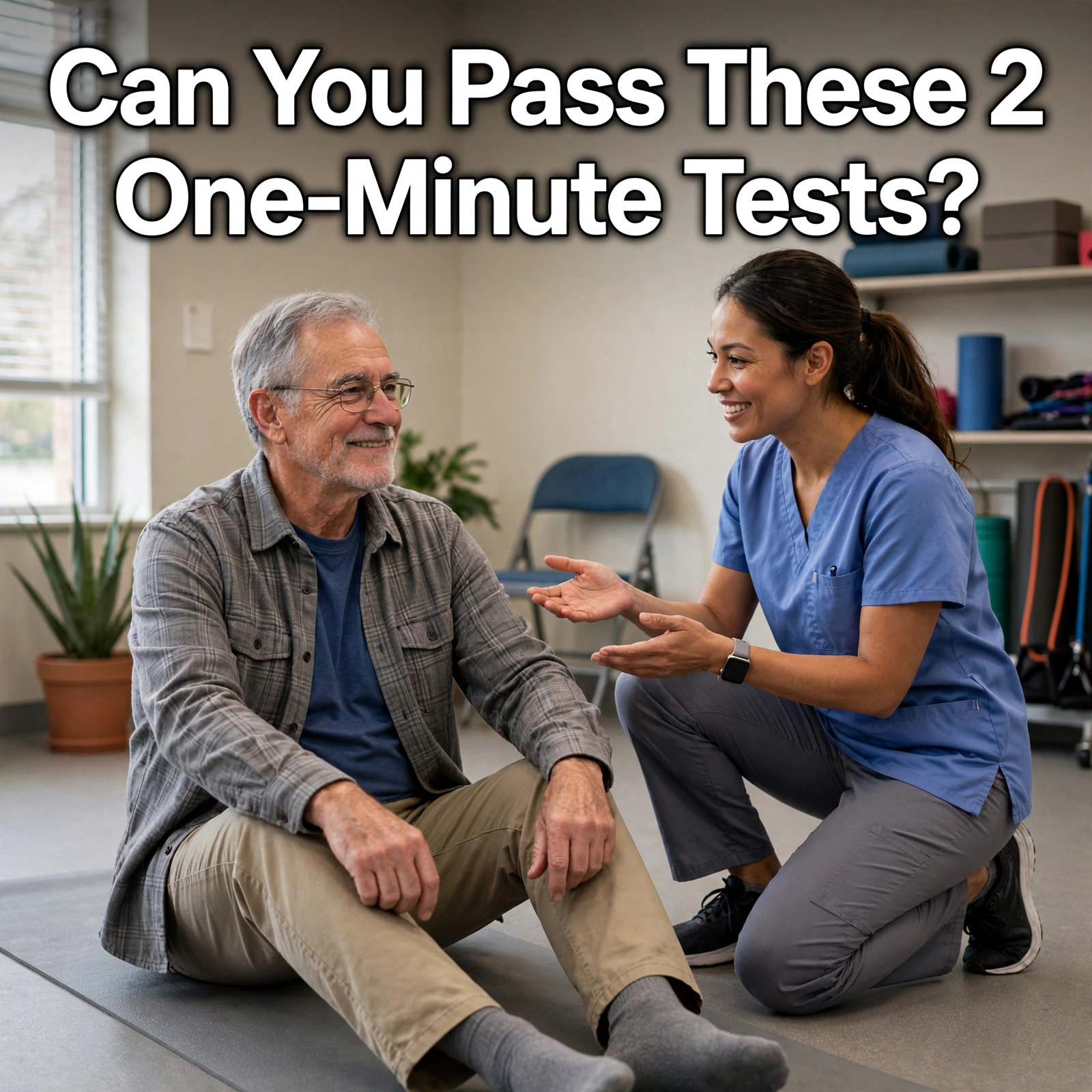
    Short answer: The floor test, also called the sitting-rising test, scores how easily you sit down on the floor and get back up, from 0 to 10. In a 2025 study of 4,282 adults aged 46 to 75, people who scored 0 to 4 had about 3.8 times the risk of dying from natural causes as those who scored a perfect 10. The good news: you can raise your score.

    We keep a close eye on blood pressure and cholesterol. But when was the last time you checked how well you balance, or whether you can get up off the floor without a struggle?

    I’m 64, and I’ve noticed I’m more prone to accidental falls than I used to be. It’s not one thing. It’s a few different things, and it means I have to think ahead in situations where a fall could happen. Balance isn’t something I used to think about. Now I do, and that’s why the research of Dr. Claudio Gil Araújo caught my attention.

    Here’s what you’ll get from this article: two simple tests you can try at home, what the research really found (and what it didn’t), what other real writers and bloggers have said about these tests, and a gentle plan for getting steadier. I won’t pretend any test can predict your future, because none can.

    Please read this first: safety comes before any score. Do both tests next to something sturdy to grab, and don’t try them alone if you might fall. If you have dizziness, balance problems, recent surgery, a hip or knee replacement, or a history of falls, check with your doctor before you try either one.

    Who Is Dr. Claudio Gil Araújo?

    Dr. Araújo is a physician in exercise medicine. In 1994 he founded a clinic called CLINIMEX in Copacabana, Rio de Janeiro, and it has done more than 15,000 fitness evaluations since. He created the Sitting-Rising Test and a flexibility test called the Flexitest, and he led the 2022 research on the 10-second one-legged stance. He has published more than 250 papers, and his patients range from Olympic athletes to people recovering from heart surgery, which he says gives a more realistic picture than studies of healthy volunteers only.

    He studies what he calls non-aerobic fitness: muscle strength and power, flexibility, balance, and body composition. We usually think of fitness as walking, cycling, and getting the heart rate up. But these other abilities are what you use to get out of a chair, climb steps, pick something up, or catch yourself when you stumble. They are what keeps you independent.

    One note: each study below used its own group of patients, not all 15,000, and they all came from one clinic in Rio. The findings may not apply equally to everyone.

    Test 1: The 10-Second One-Leg Stand

    How to do it

    Stand right beside a counter or sturdy support you can grab.

    Arms at your sides, eyes on a spot straight ahead.

    Lift one foot and rest it behind the opposite calf.

    Hold for 10 seconds without putting that foot down.

    In his clinic, Dr. Araújo uses a force platform that tracks body sway. The pass-or-fail home version exists because almost nobody has that equipment, so please don’t treat your home result as a diagnosis.

    What the research found

    The study followed 1,702 people aged 51 to 75 for a median of about 7 years.

    Roughly 1 in 5 couldn’t hold the position for 10 seconds.

    About 17.5% of that group died during follow-up, compared with 4.6% of those who passed.

    After adjusting for age, sex, body mass index, and health conditions, the risk of death was about 84% higher for those who failed.

    In plain English: People who couldn’t hold the position were more likely to have died during the study, even after researchers accounted for some differences between them. That’s a reason to pay attention to balance. It is not a prediction about you. The link is an association, not proof that failing the test causes anything, and the study didn’t account for things like recent falls or activity level. Dr. Araújo told an interviewer the same thing: the link is partial, not proven cause and effect. He also said about 60% of 70-year-olds can hold the position for 10 seconds, so if you can’t, you are far from alone. He mentioned a 97-year-old patient who can still do it after exercising at his clinic for 30 years.

    What other writers say about the one-leg stand

    Alex Brooks, who writes the newsletter Dueto for women over 45, admits she only just passed the one-leg test after years of hot yoga, and says it was strength training that really helped. It’s honest, funny, and very relatable.

    Wellness coach Gillian Bogden, in a guest column on Heather Martin’s Tumbleweed newsletter, tested herself the second she read about the study, then tried to beat her age group. She also shares easy daily habits, like standing on one foot while you brush your teeth or putting on your socks and shoes one leg at a time.

    Personal trainer Jennifer Rizzuto, who works with seniors, explains how a single-leg balance test can help you think about fall risk and how long you should be able to hold it as you age.

    If you couldn’t make 10 seconds, don’t panic. TODAY’s Brianna Steinhilber shares easy ways to build up: start with a few seconds per leg, lightly rest the toe of your lifted foot for help, or touch a wall and lean on it less over time.

    And for a smile, the blogger at WorkersCompensation.com had some fun with this study, joking that a thousand readers would push away from their desks to see if they could stand on one leg. I’d bet you’ve already thought about trying it too.

    Test 2: The Sitting-Rising Test (the “Floor Test”)

    How to do it

    Stand barefoot on a firm, non-slip surface with a clear area of about 6 by 6 feet. Put a mat down.

    Have another person beside you, clear any obstacles behind you, and keep something sturdy within reach.

    Without rushing, sit down on the floor, then stand back up, using as much support as you need to stay safe. The goal is not to force a high score.

    How it’s scored: You start with 5 points for sitting and 5 for rising. You lose a point each time you use a hand, forearm, knee, or the side of your leg for support (yes, a hand on your knee counts), and half a point for a wobble. Crossing your legs is allowed. A perfect score is 10.

    Watch it done by the team that created the test

    Dr. Araújo kindly shared his team’s updated 2025 demonstration video for Sturdy Years readers. It shows how the test is done and how each point is scored.

    CLINIMEX: Sitting-rising test (SRT), an updated 2025 video

    He also pointed readers to the full research article, which you can read for free: the sitting-rising test study in the European Journal of Preventive Cardiology (free full-text PDF).

    What the research found

    A 2025 study followed 4,282 adults aged 46 to 75 for a median of about 12 years.

    Death rates ranged from 3.7% among people who scored 10 to 42.1% among those who scored 0 to 4.

    After adjustment, the lowest-scoring group had about 3.8 times the risk of death from natural causes and about 6 times the risk of cardiovascular death, compared with the highest-scoring group.

    An earlier 2014 study from the same research group had also linked these scores to the risk of dying.

    In plain English: The people who needed the most help getting down and back up tended to have worse outcomes over the following years. The test checks muscle power, strength, balance, flexibility, and body weight all in one movement, and it matches real life: picking up something you dropped, or getting down to play with your grandchildren. But scoring poorly doesn’t seal anyone’s fate.

    What other writers say about the floor test

    This is where I found the most honest takes, and they’re worth your time.

    Humorist Dave Barry tried the test in his bedroom, asked his neighbors to try it, and came away convinced a perfect score is unrealistic for most of us. It’s a funny reminder that science still has to make sense to real people.

    On her independent blog Fit Is a Feminist Issue, Catherine W. wrote about trying to get up off the floor and asked sharp questions. She pointed out that the lowest scorers were older on average than the highest scorers, that knee problems and arthritis will hurt your score at any age, and that sitting on the floor isn’t part of every culture. That’s a good attitude for all of us: take the science seriously, but ask what it really measures.

    Patrick Posten shows himself doing the test on his Substack, losing a point for every hand or shin he needs, and tells readers to try it and see how they score. It’s a good look at what a real, everyday attempt looks like.

    Certified trainer Ashley Blake Greenblatt walks through the test in the Philadelphia Inquirer and follows it with simple floor exercises, like glute bridges, to build the strength you need.

    Muscle Power May Matter More Than Strength

    Strength is how much force you can produce. Power is force plus speed. You use power when you rise from a chair, climb stairs, or move fast enough to catch your balance.

    A 2025 study of 3,889 adults aged 46 to 75, with about 11 years of follow-up, found roughly 5.9 times the risk of death in men and 6.9 times in women with the lowest relative muscle power compared with the highest. Handgrip strength alone did not show a statistically significant link in the same analysis. The numbers for women had wide margins of error, so take the exact figure with a grain of salt.

    In plain English: The ability to move with power seemed more closely tied to survival than grip strength alone. That doesn’t mean strength is unimportant, and it doesn’t mean training faster will extend your life. Dr. Araújo has observed that after about age 60 we tend to lose speed faster than we lose strength. His approach is to lift a weight fairly quickly and lower it under control, for about 6 to 8 repetitions. That isn’t for everyone, so if you’re new to resistance training or have injuries, work with a qualified trainer or physical therapist first.

    Flexibility: The Overlooked Piece

    The Flexitest checks 20 movements across seven joints for a score from 0 to 80. In a 2024 study of 3,139 adults aged 46 to 65, women scored about 35% higher than men, and lower flexibility was linked to higher mortality in both sexes.

    In plain English: More flexible people tended to have better survival odds in this group. That can’t tell us whether stretching more would itself help anyone live longer. In an interview, Dr. Araújo suggested flexibility may take as little as about 10 minutes a day to improve, far less than aerobic fitness takes. Think ankles, knees, hips, trunk, wrists, elbows, and shoulders, not just hamstrings, and never stretch into pain.

    What These Tests Do Not Mean

    The numbers can sound frightening without context. Here’s what I want you to remember:

    They show associations, not guarantees. A low score might reflect illness, frailty, or other factors.

    No study here proves that raising your score adds years to your life.

    The groups came from one clinic in Rio. Results may not apply equally to every community.

    Standing still isn’t the whole story of falling. Moving safely takes abilities these tests don’t fully measure.

    A low score is a reason to ask questions and work on what you safely can. It is not a verdict.

    How to Get Steadier Without a Gym

    Practice balance with support. If your doctor says it’s safe, try brief one-leg stands next to a counter with your hand on it, even while the microwave runs or you brush your teeth. Don’t add distractions if you’re unsteady.

    Practice getting up and down safely. If the floor test seems unsafe, start with supported chair movements, or ask a physical therapist for an adapted progression.

    Build controlled leg strength. With medical clearance, practice rising from a sturdy chair and sitting back down slowly.

    Move your joints gently. A few minutes of easy stretching goes a long way.

    A simple seven-day starter plan

    Day 1: Read the instructions and safety notes. Only attempt a test if it’s safe for you. Otherwise, pick one comfortable, supported movement to practice.

    Days 2 to 6: Supported balance practice if appropriate, plus about 10 minutes of gentle stretching.

    Days 3 and 5: Add a few slow, controlled chair stands if you can do them safely.

    Day 7: Notice what feels steadier. Retest only if it’s safe and you want to.

    One week won’t change your long-term health. A habit you can stick with will.

    If you lose points, work on the part that cost you

    • If you needed your hands or knees to get up, that usually points to leg strength. Slow chair stands are a good place to start: sit, stand up without using your hands, then sit back down slowly. Try 8 to 10 if it feels safe.
    • If you wobbled or lost your balance, practice the one-leg stand next to a counter with a hand on it. As you get steadier, use just a fingertip, then no hand.
    • If getting down or up felt stiff, spend a few minutes a day sitting cross-legged on a mat or firm cushion, with a sturdy chair or couch beside you, practicing the lowering and rising movement.

    None of this is a prescription. If you’re unsure what’s safe for you, a physical therapist can tailor it.

    Your Turn

    Can you stand on one leg for 10 seconds? If it’s safe for you to try, tell me how it went in the comments. And if you’ve ever struggled to get up off the floor, you are certainly not the only one. You might also enjoy my earlier article, Can You Get Up From the Floor? What a Simple Test Reveals About Strength After 50.

    Health note: I’m not a doctor. I’m a man in my 60s sharing personal experience and research that interests me. This article is general information, not medical advice. Please check with your clinician before trying these tests or starting an exercise program, especially if you have fallen, feel dizzy, have joint replacements or recent surgery, or have other health concerns. Do not risk a fall to earn a score.

    More Reading From Real People

    Alex Brooks (Dueto), “Why balance is brutal”

    Gillian Bogden, guest column on Tumbleweed with Heather Martin, “How Long Can You Stand on One Leg?”

    Dave Barry, “Aging Well”

    Catherine W., “The sit-rise test: trying to get up to save my life”

    Patrick Posten, “Scoring Well On This Test Could Extend Your Life”

    Jennifer Rizzuto, a personal trainer’s take on the single-leg balance test

    Ashley Blake Greenblatt, “What this one-minute fitness test can reveal about your health”

    Brianna Steinhilber on TODAY, the 10-second balance test and how to build up to it

    Credits: Dr. Claudio Gil Araújo and CLINIMEX (Clínica de Medicina do Exercício), Rio de Janeiro. Dr. Araújo’s interview comments come from a conversation with writer Eli Lichter for Medical Guardian (August 2026).

    About the Author

    Tom Green writes Sturdy Years. He was born in Pell City, Alabama, in 1962, and he’s a country boy and a true Southerner through and through. He’s just a regular, laid-back 64-year-old who keeps things simple. He shares what he learns about skincare, fitness and getting older, and what’s working for him. He’s also the author of A Practical Guide to Getting Older Without Giving Up on Yourself. Tom isn’t a doctor. He reads up on the research and passes along what’s useful, plain and simple.

    I’ve also mapped out some great tools on my new Tech for Independent Living After 50 page.
  • Are Peptides the Secret to Saving Your Muscle After 50? (What You Need to Know First)

    Are Peptides the Secret to Saving Your Muscle After 50? (What You Need to Know First)

    Do peptides help you keep muscle after 50?

    Short answer: No, peptides aren’t the secret. There’s no good clinical evidence that peptide treatments like CJC-1295 or ipamorelin safely build meaningful muscle in healthy adults over 50, and they aren’t FDA-approved for that. Strength training, enough protein and good rest are still what work.

    Let’s be honest — nobody hits 50 and gets excited about losing strength.

    You go to pick up a heavy bag of mulch in the yard, or reach up to lift luggage into an overhead bin, and suddenly you notice it:

    things feel heavier than they used to.

    If you’ve noticed your energy dipping or your muscles feeling softer despite staying active, you’re not imagining it. Muscle mass and strength can decline with age, especially when we are less active. The clinical term sarcopenia describes age-related loss of muscle strength and mass. It becomes more common as people get older, but prevalence estimates vary depending on how it is measured.

    Lately, though, you can’t turn on a health podcast or scroll through social media without hearing about peptides. People are calling them the new “fountain of youth” for muscle growth, fat loss, and anti-aging.

    So, are peptides the real deal, or are they just another high-priced wellness trend? Let’s break down what’s hype, what’s real, and what medical consensus says you actually need to do to save your muscle after 50.

    What Exactly Are Peptides, Anyway?

    To keep it simple, peptides are short chains of amino acids — the basic building blocks of proteins. Your body naturally produces thousands of different peptides to send signals between cells. Think of them as tiny cellular messengers telling your body to release hormones, repair tissue, or burn fat.

    When people in the wellness world talk about “peptide therapy,” they are usually referring to growth hormone secretagogues (like Sermorelin, CJC-1295, or Ipamorelin). These are synthetic compounds designed to encourage your pituitary gland to produce more of your body’s own growth hormone, which naturally declines with age.

    Do Peptides Actually Build Muscle After 50?

    Here is the straightforward truth: Peptides are not magic injections, and they will not build muscle for you while you sit on the couch.

    Here is what clinical insights and medical experts say about what they can and cannot do:

    What the evidence actually shows: Sermorelin, CJC-1295, and ipamorelin are promoted for anti-aging, recovery, and muscle growth. But there is not good clinical evidence that these treatments safely build meaningful muscle in otherwise healthy adults over 50. Changes in growth-hormone levels do not automatically translate into better strength or function.

    What they cannot replace: None is a proven substitute for resistance training, adequate protein, and recovery. Given the cost, uncertain benefits, and safety concerns, these peptides are not a sensible first step for most people seeking to maintain muscle.

    ⚠️ Medical safety: CJC-1295 and ipamorelin have not been FDA-approved to build muscle or slow aging, and the FDA has identified safety concerns with compounded preparations, including limited human safety data. Sermorelin has a different history as a previously approved, discontinued prescription product; that does not establish a benefit for age-related muscle building. Rules for compounded peptides are changing, so ask a licensed clinician to check their current regulatory status and risks. Avoid online products sold as unapproved “research” injections. Read the FDA safety information.

    3 Common Muscle Questions Answered

    1. “I lift weights, but I’m still losing muscle tone. Why?”

    One possible reason is anabolic resistance: with aging, muscle can respond less strongly to protein eaten at meals. That does not mean gaining strength is impossible. A 2026 review of 46 studies found that muscle’s response to exercise may remain relatively well preserved. Consistent training, sufficient food, and gradual progression still matter.

    2. “How much protein do I actually need every day now?”

    The adult protein Recommended Dietary Allowance is 0.8 grams per kilogram of body weight per day (about 0.36 grams per pound). Many active older adults may benefit from more, depending on their goals and health. One commonly discussed target is roughly 1.0–1.2 grams per kilogram daily (about 0.45–0.55 grams per pound). For a 180-pound person, that works out to about 82–98 grams daily. People doing demanding strength training sometimes need more, but there is no single right amount for everyone. If you have kidney disease or have been told to limit protein, ask your clinician before increasing intake.

    3. “Do I need peptides, or should I start with creatine?”

    Creatine monohydrate has substantially more evidence for strength than these anti-aging peptide treatments. A 2026 systematic review of 11 trials found a modest added strength benefit from creatine when combined with resistance training in generally healthy adults 60 and older. The evidence for extra muscle mass or better physical function was less certain. Claims about memory and brain energy remain less established than those for exercise-related strength. If you want to discuss a supplement with your clinician, plain creatine monohydrate is the straightforward option; there’s no need for fancy blends. Ask your doctor first if you have kidney problems or take medications that affect kidney function.

    For me, the practical focus is still showing up for strength workouts, eating enough, and judging progress over time — not chasing every expensive new promise.

    Peptides aren’t the only pricey anti-aging promise out there. I took the same hard look at another popular one here: Been Hearing About NMN Supplements? Would It Work for You After 50?

    The “Sturdy Years” Action Plan for Muscle Loss

    Before spending money on high-end therapies or unregulated supplements, secure these three evidence-backed pillars:

    1. Prioritize Protein at Breakfast

    A protein-containing breakfast is an easy place to start, especially if you struggle to eat enough over the whole day. Eggs, Greek yogurt, milk, or a protein smoothie can help. What matters most is your total daily intake; spreading protein over meals can make that easier.

    2. Focus on “Compound” Strength Movements

    You don’t have to spend hours in the gym. Choose exercises that train major muscle groups, adapt them to your abilities, and increase resistance gradually. The CDC recommends muscle-strengthening activity at least two days weekly for older adults.

    • Squats or Box Squats (strengthens legs and hips)
    • Push-ups or Dumbbell Chest Presses (builds chest and upper body)
    • Rows or Lat Pulldowns (strengthens back and posture)
    • Farmer’s Carries (builds grip strength and core stability)

    Aim for 2 to 3 days per week of progressive resistance training.

    3. Protect Your Sleep

    Deep sleep is associated with pulses of growth-hormone release, and sleep supports recovery. But there is no need to put an exact percentage on how much of everyone’s daily growth hormone is released during sleep. Consistent, adequate sleep belongs alongside training and nutrition in a practical muscle-maintenance plan.

    The Bottom Line

    Peptides are receiving plenty of attention, but the muscle-building promises run ahead of the evidence. You don’t need to chase an expensive injection to start protecting your strength. The basics — resistance training, enough protein, and recovery — deserve first place.

    Focus on lifting safely, eating enough protein, and getting good rest. Strength is about more than what you can lift in a gym — it helps you remain capable and independent. For another practical look at strength after 50, read Can You Get Up From the Floor? What a Simple Test Reveals About Strength After 50.


    Research & sources: 2026 review: anabolic resistance · 2026 review: creatine and strength · FDA: peptide compounding safety · CDC: physical activity for older adults

    Written by Thomas Green, creator of Sturdy Years

    Tom Green writes Sturdy Years. He was born in Pell City, Alabama, in 1962, and he’s a country boy and a true Southerner through and through. He’s just a regular, laid-back 64-year-old who keeps things simple. He shares what he learns about skincare, fitness and getting older, and what’s working for him. He’s also the author of A Practical Guide to Getting Older Without Giving Up on Yourself. Tom isn’t a doctor. He reads up on the research and passes along what’s useful, plain and simple.

    I’ve also mapped out some great tools on my new Tech for Independent Living After 50 page.
  • 15 Ways to Be a Better Friend After 50

    15 Ways to Be a Better Friend After 50

    How can you be a better friend after 50?

    Short answer: Being a better friend after 50 mostly comes down to small things done often. Make the first move instead of waiting for a call, remember the little things your friend told you about, and keep showing up. A simple “Hey, I was thinking about you” can mean more than you realize.

    Friendship hits different after 50. Here’s how to keep the good ones strong, make room for new connections, and become the kind of friend people are glad to have.

    Friendship changes as we get older. Careers shift, families grow up, people move away, and sometimes the friends we thought would always be around become harder to reach.

    But here’s the good news: it’s never too late to become a better friend—or to build new friendships.

    Being a good friend after 50 doesn’t require grand gestures, endless free time, or a perfect personality. It comes down to small things that show people they matter.

    Here are 15 ways to make your friendships stronger, more meaningful, and a whole lot more fun.

    1. Make the First Move

    Stop waiting for someone else to call. Send a text, pick up the phone, or suggest lunch. A simple “Hey, I was thinking about you” can mean more than you realize.

    2. Remember the Little Things

    Ask about the doctor’s appointment, the job interview, or the family problem your friend mentioned last week. Remembering details shows you were listening—and that you care.

    3. Listen Without Trying to Fix Everything

    Sometimes a friend needs advice. Other times, they just need someone to hear them out. Before offering solutions, try asking, “Do you want my advice, or do you just need to talk?”

    4. Show Up When Life Gets Hard

    Anyone can be around for the fun stuff. A good friend also checks in during a rough patch, offers practical help, or simply sits beside someone who is having a difficult day.

    You don’t need the perfect words. Being there counts.

    5. Celebrate Their Good News

    A friend’s success isn’t a competition. Whether they get a promotion, reach a personal goal, or finally take that dream trip, celebrate with them. Give their good news the attention you’d want for your own.

    6. Put the Phone Down

    When you’re spending time together, be present. Make eye contact, listen, and resist the urge to check every notification. Your friend deserves more than half your attention.

    7. Be Honest—but Be Kind

    Real friendship allows room for honesty. If something bothers you, talk about it respectfully instead of letting resentment build. The goal isn’t to win an argument. It’s to understand each other.

    8. Don’t Keep Score

    Healthy friendships aren’t always perfectly balanced. One person might need more support during a difficult season, while the other needs help later. Give when you can, accept help when you need it, and look for mutual care over time.

    9. Make Plans That Actually Happen

    “We should get together sometime” sounds nice, but it rarely gets anyone out the door. Suggest a day, a time, and something simple to do. Coffee, a walk, lunch, or a movie can be enough.

    10. Give People Room to Change

    The person you knew at 30 may not be exactly the person you know at 60. Neither are you. Let friendships grow as interests, circumstances, and priorities change. You don’t have to agree on everything to care about each other.

    11. Apologize When You’re Wrong

    Everybody makes mistakes. Maybe you said something hurtful, forgot an important date, or jumped to the wrong conclusion. A sincere apology can help repair the damage. Skip the excuses and take responsibility for your part.

    12. Respect Their Boundaries

    Your friend may not be available every time you call. They may need quiet time, have family responsibilities, or simply have a different way of communicating. Respecting those limits helps a friendship feel safe rather than demanding.

    13. Keep Your Sense of Humor

    Don’t underestimate the power of laughing together. Share a funny story, enjoy an old inside joke, or be willing to laugh at yourself. Friendship doesn’t have to be serious all the time to be meaningful.

    14. Be Open to New Friends

    Don’t assume your best friendships are all behind you. Join a local group, try a class, volunteer, or strike up a conversation with someone you see regularly. New connections can begin in surprisingly ordinary places.

    15. Know When to Let Go

    Not every friendship lasts forever, and that’s okay. If a relationship repeatedly leaves you feeling disrespected, drained, or used, consider whether an honest conversation could help—or whether it’s time to step back. You can appreciate a friendship’s history without forcing it to continue as it once did.

    Other Voices on Friendship

    If you’d like to explore friendship more deeply, these three writers offer worthwhile places to start.

    Shasta Nelson is a friendship expert and author of Frientimacy: How to Deepen Friendships for Lifelong Health and Happiness. Her work explores how we can turn casual connections into closer, more supportive relationships.

    Nina Badzin is a writer who focuses on the ups and downs of adult friendship. She hosts Dear Nina: Conversations About Friendship, a podcast and newsletter that explore real-life friendship questions and dilemmas.

    Lydia Denworth is a science journalist and the author of Friendship: The Evolution, Biology, and Extraordinary Power of Life’s Fundamental Bond. Her book explores the science behind why friendship and social connection matter throughout our lives.

    Their work offers a useful reminder: friendship isn’t just something that happens to us. It’s a relationship we can keep building through attention, effort, and care.

    The Bottom Line

    You don’t need dozens of friends to have a rich social life. A few dependable people who laugh with you, listen when you need them, and show up when life gets messy can make a real difference.

    Start small. Reach out to someone you’ve been meaning to call. Listen a little more closely. Make a plan instead of putting it off.

    What’s one thing you think makes someone a truly good friend after 50? Share your thoughts in the comments. Your experience might be just what another reader needs to hear.


    About the Author

    Tom Green writes Sturdy Years. He was born in Pell City, Alabama, in 1962, and he’s a country boy and a true Southerner through and through. He’s just a regular, laid-back 64-year-old who keeps things simple. He shares what he learns about skincare, fitness and getting older, and what’s working for him. He’s also the author of A Practical Guide to Getting Older Without Giving Up on Yourself. Tom isn’t a doctor. He reads up on the research and passes along what’s useful, plain and simple.

    Sturdy Years — Look better. Feel stronger. Age well.


    I’ve also mapped out some great tools on my new Tech for Independent Living After 50 page.
  • After 50, You’re Losing Muscle Every Year. Here’s How to Get It Back.

    After 50, You’re Losing Muscle Every Year. Here’s How to Get It Back.

    Can you get back muscle you’ve lost with age?

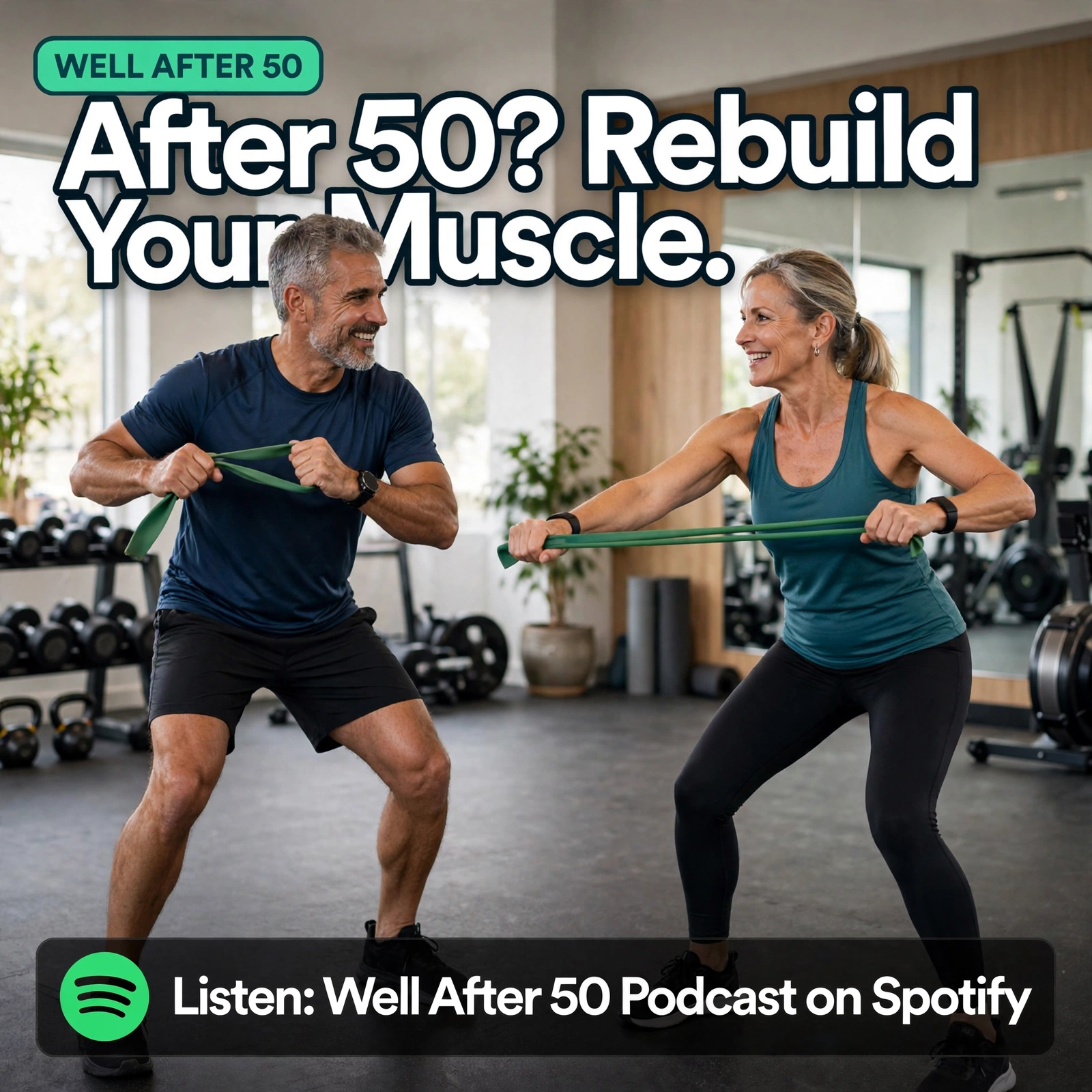
    Short answer: Yes, you can get muscle back, even in your 80s. Older adults who do resistance training gain strength, muscle and everyday function. Start with strength training two or more days a week, with one or two sets of about 8 to 12 slow reps, and eat enough protein to help your body repair and keep muscle.

    Getting up out of a chair shouldn’t feel like a workout. Carrying groceries shouldn’t leave you struggling. And climbing stairs shouldn’t make you wonder when everyday life got so much harder.

    If you’re over 50 and noticing changes like these, it’s worth paying attention. One possible reason is sarcopenia, the medical term for age-related loss of muscle strength and muscle mass. The encouraging news: people can improve strength at many ages, and practical habits can help protect mobility and independence.

    You don’t need to become a bodybuilder, spend a fortune on supplements, or live at the gym. A sensible strength routine, nutritious food, regular movement, and recovery are a useful place to start.

    Why Muscle Loss After 50 Deserves Your Attention

    Muscles change as we age. Muscle mass and strength can decline, although the pace varies from person to person. The concern isn’t simply how your arms and legs look in the mirror; it’s whether weakness begins to affect everyday life.

    Your muscles help you stand, walk, climb stairs, carry shopping bags, maintain balance, and respond to physical challenges. Significant declines in strength and function can make falls and independent living greater concerns.

    Muscle isn’t just about appearance. It’s part of what helps you remain capable, active, and independent. Aging doesn’t automatically mean becoming weak. Resistance training is an important way to improve strength and support physical function.

    For a medical overview, read the National Institutes of Health article Slowing Sarcopenia.

    The Science Says You Can Get Stronger — Even in Your 80s

    Older adults can respond to resistance training with improvements in strength, muscle mass, and physical function. Results vary, and exercise won’t reverse every cause of weakness, but age alone isn’t a reason to give up.

    Protein matters because your body uses it to maintain and repair muscle tissue. Getting enough protein alongside appropriate exercise can support muscle health. Be cautious of claims that one powder, pill, or supplement will solve muscle loss on its own.

    For additional background, see the International Clinical Practice Guidelines for Sarcopenia.

    Real People Are Showing That It’s Not Too Late to Get Stronger

    1. A woman who started lifting at 65

    Women’s Health featured Shelly Stettner, who began barbell training just before her 65th birthday. By age 73, she had become a competitive powerlifter and could squat 250 pounds. Her achievement is exceptional, and nobody needs to lift that much to benefit from strength training. The useful lesson is that she didn’t assume age meant she had to stop getting stronger.

    Read her story in Women’s Health.

    2. A fitness coach adapting his training after 50

    Men’s Health interviewed fitness coach Bryan Krahn about adapting training as the body ages. A good routine isn’t necessarily one that leaves you exhausted or encourages you to push through pain. Training should account for your experience, recovery, physical limitations, and goals.

    Read the Men’s Health interview.

    3. A personal account of getting stronger after 50

    The blog Muscle Log offers a personal perspective on pursuing strength after 50. Not everybody wants to compete in powerlifting. Success might mean carrying groceries more comfortably, feeling steadier on your feet, or finding that an everyday task has become easier.

    These stories don’t prove that everyone can reverse every form of muscle loss. They do show why it’s worth considering safe, realistic ways to keep building strength.

    Your Six-Step Action Plan to Fight Muscle Loss

    1. Start strength training two or more days a week

    You don’t need a gym membership to begin. Choose movements that challenge your muscles safely and can be adapted to your current ability.

    • Sit-to-stands: Stand up from a sturdy chair and sit down slowly. Use your hands for assistance if needed.
    • Wall push-ups: Place your hands against a wall and bend and straighten your elbows under control.
    • Resistance-band rows: Pull a securely anchored band toward your body.
    • Supported calf raises: Hold a sturdy support and slowly raise and lower your heels.
    • Light dumbbell exercises: Choose suitable movements for your major muscle groups.

    One or two sets of around 8–12 controlled repetitions may be a reasonable starting point for many people, depending on the exercise and their abilities. Increase resistance or repetitions gradually as exercises become easier. You don’t need to push to exhaustion. If you have balance problems, medical conditions, or are new to exercise, ask a healthcare professional about a safe starting plan.

    2. Eat protein throughout the day

    Protein provides building blocks your body uses to maintain and repair muscle. You can get it from everyday foods rather than relying on expensive powders.

    • Breakfast: Eggs, Greek yogurt, or cottage cheese.
    • Lunch: Chicken, tuna, beans, or lentils.
    • Dinner: Fish, turkey, tofu, lean meat, or beans.
    • Snacks: Yogurt, a hard-boiled egg, or nuts alongside other nutritious foods.

    Try to include a protein-rich food at each meal. The right amount depends on body size, activity, overall diet, and health. If you have kidney disease or have been advised to limit protein, ask your healthcare professional what is appropriate. More isn’t automatically better.

    3. Keep moving every day

    Walking, gardening, dancing, cycling, and other activities you enjoy support general health and mobility. Walking alone usually doesn’t provide the same muscle-building stimulus as resistance training, so include both when appropriate.

    For adults 65 and older, CDC guidance recommends at least 150 minutes of moderate-intensity aerobic activity weekly, muscle-strengthening activity on at least two days, and activities that improve balance. Adapt activity to your abilities and health conditions. Read the CDC guide to physical activity for older adults.

    4. Pay attention to balance

    Strength and balance work together to help you move safely. Practise near a sturdy support and don’t attempt challenging movements if you’re unsteady or at risk of falling. Gentle tai chi or supervised balance training may be options. If your balance has recently worsened or you’ve fallen, speak with a healthcare professional.

    5. Don’t ignore nutrition or vitamin D

    Vitamin D plays a role in bone and muscle function. Low levels can be associated with weakness, but taking extra vitamin D isn’t a guaranteed treatment for sarcopenia. Ask your healthcare professional whether testing or supplementation makes sense for your situation, and be cautious with supplements that may interact with medication.

    Been hearing folks talk about NMN supplements for energy and aging? I dug into what the studies really show here: Been Hearing About NMN Supplements? Would It Work for You After 50?

    6. Make sleep and recovery part of your plan

    Your body needs time to recover from exercise. Many adults do well aiming for around seven to nine hours of sleep, though individual needs vary. Allow recovery between challenging workouts and don’t keep increasing exercise if you’re persistently exhausted or in pain. Consistency over months matters more than one perfect week.

    Five Questions to Help You Check In With Yourself

    These questions aren’t a diagnostic test, but they may help you notice changes worth discussing with a healthcare professional.

    1. Has getting out of a chair become noticeably harder?
    2. Can you carry your usual groceries comfortably?
    3. Have walking or climbing stairs become more difficult?
    4. Are you eating enough nutritious food, including protein?
    5. Have you stopped doing strength-building activities? If so, could you safely begin a manageable routine?

    A chair-stand assessment can help trained professionals evaluate lower-body strength and physical function, but a simple home test cannot diagnose sarcopenia. If you have mobility or balance problems, don’t attempt a challenging test without suitable support.

    What If You’ve Already Lost a Lot of Muscle?

    Don’t panic, but don’t ignore significant changes. If you’ve become noticeably weaker, lost weight without trying, started falling, or found everyday activities increasingly difficult, make an appointment with your healthcare professional.

    Muscle loss can be related to inactivity or nutrition, but weakness can also result from medication effects, illness, nerve problems, and other medical conditions. A clinician can assess your strength and physical function and decide whether further evaluation is needed.

    The Bottom Line: Your Independence Is Worth Protecting

    Muscle loss after 50 isn’t something to be ashamed of, and it isn’t a reason to give up on yourself. You may not be able to prevent every change that comes with aging, but you can take meaningful steps to support strength and physical function.

    Train your muscles. Eat nutritious food. Stay active. Work on balance. Get enough recovery. Pay attention to changes that may need medical attention. You don’t have to spend a fortune or transform yourself overnight. Start with one manageable step and build from there.

    Getting older is inevitable. Giving up on your strength doesn’t have to be.

    What about you?

    Have you noticed changes in your strength since turning 50? Have you found an exercise or everyday habit that helped you feel stronger? Share your experience in the comments. Your story might help someone else take that first step.

    Medical disclaimer

    This article is for educational purposes and isn’t a substitute for individual medical advice, diagnosis, or treatment. If you have unexplained muscle loss, persistent weakness, repeated falls, or difficulty with everyday activities, speak with a healthcare professional before starting a new exercise programme.

    Written by Tom Green, creator of Sturdy Years

    Tom Green writes Sturdy Years. He was born in Pell City, Alabama, in 1962, and he’s a country boy and a true Southerner through and through. He’s just a regular, laid-back 64-year-old who keeps things simple. He shares what he learns about skincare, fitness and getting older, and what’s working for him. He’s also the author of A Practical Guide to Getting Older Without Giving Up on Yourself. Tom isn’t a doctor. He reads up on the research and passes along what’s useful, plain and simple.

    Sources and further reading

    Sturdy Years — Look better. Feel stronger. Age well.

    I’ve also mapped out some great tools on my new Tech for Independent Living After 50 page.
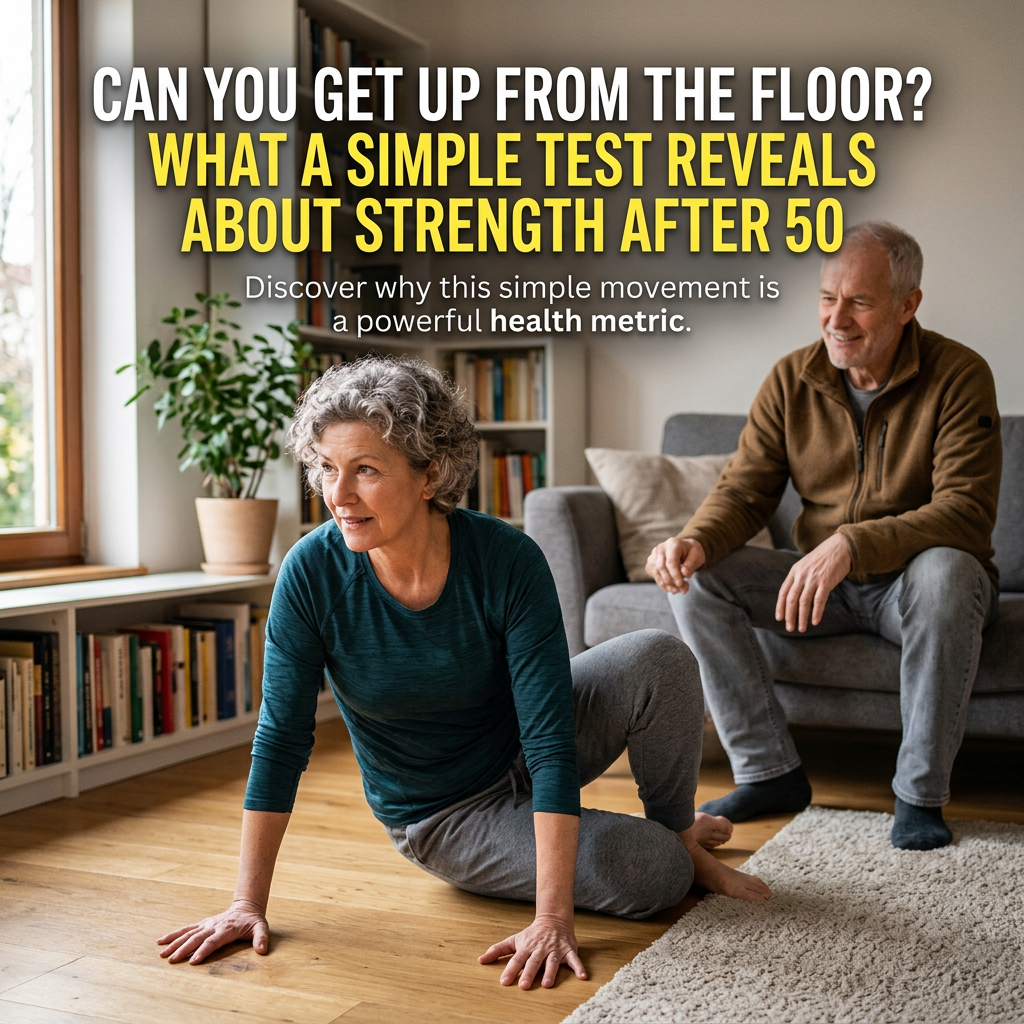
  • Can You Get Up From the Floor? What a Simple Test Reveals About Strength After 50

    Can You Get Up From the Floor? What a Simple Test Reveals About Strength After 50

    What is the sitting-rising test, and how is it scored?

    Short answer: The sitting-rising test checks whether you can sit down on the floor and get back up. It’s scored out of 10: up to 5 points for sitting and 5 for rising, and you lose a point each time you use a hand, knee or other support. A lower score is a reason to work on strength and balance, not a verdict on your health.

    I think about independence a lot when it comes to life after 50. It is not just about how we look or how many birthdays we have had. It is about being able to do the everyday things we count on—getting out of a chair, climbing steps, carrying the groceries, and moving around without feeling that our own bodies are holding us back. Those movements may seem ordinary until one of them becomes difficult. Then we realize how much strength, balance, and confidence are woven into daily life.

    And I want to be honest about something personal: I am 64, and I have fallen myself. It can happen, even when we think we are doing all right. Experiences like that make the subject of balance, strength, and staying independent feel real to me—not just something researchers write about. I am not sharing that to frighten anybody or to suggest that one fall tells us what the future holds. I share it because it is easy to take steady movement for granted, and a fall can remind us that looking after ourselves includes paying attention to how we move. A fall does not define you, and one movement test cannot tell your whole story, but it is a reminder to take our safety and strength seriously.

    That is why the sitting-rising test (SRT) caught my attention. This is a real assessment studied by exercise-medicine researchers—not a social-media trick. Brazilian physician and researcher Dr. Claudio Gil Soares de Araújo, the lead author of the major follow-up study, and his colleagues have investigated what our ability to sit on the floor and stand back up can reveal about physical fitness and long-term health. The movement brings together strength, balance, flexibility, and coordination. It is worth knowing about, but it is not a diagnosis, a guarantee of longevity, or a challenge everyone should try at home. For anyone worried about falling, the safer first step is to talk with a healthcare professional or physical therapist.

    What is the sitting-rising test?

    The idea is straightforward: a person lowers themselves to sit on the floor, then gets back to standing. The commonly used scoring system gives up to five points for sitting and five for rising, for a total of 10. Points are deducted for using a hand, knee, or other support, or for losing steadiness during the movement.

    Want the full scoring rules, the 10-second one-leg stand, and gentle ways to improve your results? See my newer article, The Floor Test That May Predict Longevity: How to Score It and Improve It.

    It sounds simple when you read it. In practice, it calls on several things at once: leg and core strength, balance, flexibility, coordination, and the ability to control your body as you move. You need to lower yourself with control, manage your weight as you change positions, and stand without losing your balance. That is one reason the test has attracted researchers’ interest: it combines several everyday physical abilities into one movement. But it is not a pure measure of strength. Mobility, joint comfort, body proportions, and familiarity with getting down to the floor can also affect performance.

    But a score is not a measure of your value, and it does not tell your whole health story. Pain, arthritis, past injuries, disability, body shape, and other conditions can affect how a person moves. Someone who avoids the floor for a good medical reason should not feel pressured to try this test.

    Watch the test demonstrated by the team that created it

    Dr. Claudio Gil Araújo, the physician who developed the sitting-rising test, kindly shared his team’s updated 2025 demonstration video for Sturdy Years readers. It shows how the test is done and how it is scored.

    CLINIMEX: Sitting-rising test (SRT), an updated 2025 video

    He also pointed readers to the full research article, which you can read for free: the sitting-rising test study in the European Journal of Preventive Cardiology (free full-text PDF).

    What did the study actually find?

    Here’s what the study reported. The peer-reviewed study included 4,282 adults ages 46–75 (68% were men) who volunteered for a medical evaluation between 1998 and 2023. Researchers followed them for a median of 12.3 years. During follow-up, 665 participants died from natural causes. The natural-death rate was 3.7% among people who scored 10 and 42.1% among those scoring 0–4. After statistical adjustment for age, sex, body mass index, and clinical factors, the lowest-scoring group had a 6.05-times higher relative risk of cardiovascular death than the perfect-score group (95% confidence interval 2.29–20.94). The adjusted relative risk of death from natural causes was 3.84 times higher (95% confidence interval 2.25–6.97). These are the study’s reported figures—not a prediction of what will happen to any individual.

    Those numbers are striking, but here is the important detail: the study found an association; it did not prove that a low score causes heart disease or that getting a higher score will prevent it. A relative-risk figure can sound alarming, but it compares groups; it is not a personal countdown or a statement that a particular reader faces the same risk. The study group also consisted of people who had volunteered for a fitness evaluation and did not have relevant limitations that would prevent them from completing the test. That matters when applying the findings to people with pain, disability, previous injuries, or different health circumstances. The sensible takeaway is to pay attention to physical function and overall health—not to diagnose yourself from a score or assume the test predicts your future.

    You can check the evidence yourself: read the original peer-reviewed study in the European Journal of Preventive Cardiology, or look up its abstract in the U.S. National Library of Medicine’s PubMed database. For a reader-friendly explanation, see Harvard Health Publishing’s coverage. These sources support the reported association, but they do not establish that the test diagnoses disease or that improving a score changes a person’s lifespan.

    Should you try it yourself?

    My advice is simple: do not turn a research finding into a risky challenge. If you have balance problems, dizziness, significant knee or hip pain, arthritis that limits movement, a recent injury or surgery, or any reason to worry you could fall or get stuck, skip the test. If you are unsure, ask your healthcare professional or a physical therapist before attempting it. If you can safely try the test, have another person nearby and use a flat, nonslip carpet or exercise mat. Use support whenever you need it; getting a perfect score is not worth a fall.

    There is no prize for proving you can get down on the floor. Your safety matters more than a number. You can work on strength and mobility in safer ways without doing this particular test at all.

    Practical ways to support strength after 50

    You do not need an extreme workout or a complicated program to get started. Think of this as building useful ability a little at a time, not proving how tough you are. Choose activities that match your current health and mobility, and ask a clinician or physical therapist for guidance if you have a condition, pain, or a history of falls. These are sensible starting points to discuss with a professional:

    • Practice chair stands if they are safe for you. Use a sturdy chair that will not slide. Keep a stable counter or support within reach, and stop if you feel pain, dizziness, or unsteadiness.
    • Build strength gradually. Appropriate resistance exercises can help maintain the muscles used in daily life. Start at a level you can manage with good control rather than pushing through pain.
    • Include balance work carefully. If you are at risk of falling, get professional advice and use appropriate support rather than practicing alone.
    • Keep up regular movement. Walking and other activities you enjoy can be part of a healthy routine, adjusted to your circumstances.
    • Ask for help when a movement gets harder. A physical therapist can assess what is limiting you and suggest a plan that fits your needs.

    The U.S. Centers for Disease Control and Prevention recommends that adults 65 and older include aerobic activity, muscle-strengthening activity, and balance activity in their weekly routine, adapted to their abilities and health. You can read its practical guidance here: CDC: Older Adult Activity. You do not have to start all at once. The important thing is to choose movement that is appropriate for you and build gradually.

    It is about staying capable—not chasing a perfect score

    For me, the useful takeaway is not that everyone 50+ needs to take a floor test. It is that strength, balance, and flexibility deserve attention alongside walking and cardio. These abilities can make a difference in the ordinary moments that help us feel independent: rising from a chair, stepping off a curb, turning to reach for something, or recovering our balance when we stumble. You do not have to be an athlete. The goal is to keep the movements you rely on as safe and manageable as possible.

    If getting up from a low chair has become harder, or you feel less steady than you used to, do not panic and do not judge yourself. Treat it as useful information to discuss with a healthcare professional. Ask what might be contributing and what kind of activity is appropriate for you; a physical therapist may be able to assess your movement and tailor exercises to your needs. Make changes gradually, use support when needed, and do not practice risky movements alone just to test yourself. There may be practical steps that can help you move more comfortably and confidently.

    Common questions

    Does the sitting-rising test diagnose heart disease?

    No. It is not a diagnostic test and cannot tell you whether you have heart disease. The research describes a relationship between test scores and health outcomes across a group of people; it cannot determine an individual’s personal risk.

    What does a score of 10 mean?

    In this scoring system, 10 means completing the sitting and rising movements without support deductions or loss of points for unsteadiness. It does not guarantee perfect health, and a lower score does not mean a person is destined to become ill.

    What if I cannot safely sit on the floor?

    Do not attempt the test. Ask your healthcare professional or a physical therapist about safer ways to assess and work on strength, balance, and mobility.

    Can exercise help me get stronger after 50?

    Appropriate exercise can help support strength and everyday function, but the best plan depends on your health, mobility, and starting point. Begin gradually, and get professional guidance if you have pain, a medical condition, or a fall risk.

    Keep reading

    For more practical guidance, read the CDC’s advice on adding physical activity as we get older. For another perspective on balance and fall prevention, see physical therapist Margaret Martin’s Fall Prevention Guide at MelioGuide. For everyday strength and mobility, physical therapist Kelly Sturm’s guide to functional-strength exercises at Verywell Health offers additional reading.

    Medical disclaimer: This article is for general educational purposes only. It is not medical advice, a diagnosis, or a substitute for care from a qualified healthcare professional. Do not attempt the sitting-rising test if it may be unsafe for you. Speak with your healthcare professional before changing your exercise routine, especially if you have a medical condition, pain, balance problems, or a recent injury or surgery.

    About the author: Tom Green writes Sturdy Years. He was born in Pell City, Alabama, in 1962, and he’s a country boy and a true Southerner through and through. He’s just a regular, laid-back 64-year-old who keeps things simple. He shares what he learns about skincare, fitness and getting older, and what’s working for him. He’s also the author of A Practical Guide to Getting Older Without Giving Up on Yourself. Tom isn’t a doctor. He reads up on the research and passes along what’s useful, plain and simple.

    I’ve also mapped out some great tools on my new Tech for Independent Living After 50 page.
  • Why You Keep Waking Up at 3 AM After 50

    Why You Keep Waking Up at 3 AM After 50

    Why do you keep waking up at 3 AM?

    Short answer: Waking at 3 AM after 50 is common and doesn’t automatically mean something’s wrong. Sleep gets lighter with age, and the usual causes are stress and a busy mind, alcohol or caffeine in the evening, hormone changes and night sweats, and getting up to use the bathroom. Fixing those habits often helps, but talk to your doctor if it keeps happening.

    Waking up at 3 AM can feel frustrating, especially when you’re tired but can’t seem to get back to sleep. If it happens regularly after 50, it doesn’t automatically mean something is seriously wrong—or that you simply have to accept poor sleep as part of aging.

    Sleep patterns can change with age, but repeated nighttime waking can also be connected to stress, alcohol, medication, pain, needing to urinate, hot flashes, or a sleep disorder. The useful first step is to look for a pattern rather than assume there is one single cause. Independent writer Jennifer Seven’s personal article about repeatedly waking at 3 a.m. explores how midlife sleep can be affected by stress, daily habits, and changing support needs.

    Why sleep can change after 50

    As we get older, sleep may become lighter and more easily interrupted. The National Institute on Aging explains how sleep changes with age, including more frequent nighttime waking. But frequent waking that leaves you tired during the day deserves attention; it should not automatically be dismissed as normal aging.

    Common culprit Why it may wake you A simple first step
    Late-day habits Caffeine can linger, and alcohol may fragment sleep later in the night. Try moving caffeine earlier and avoiding alcohol close to bedtime.
    A busy mind Quiet hours can make worries feel louder and keep you alert. Write down worries and one next step before bed.
    Physical disruptions Night sweats, pain, room temperature, or bathroom trips can interrupt sleep. Adjust the room for comfort and track recurring symptoms; ask a clinician about persistent problems.

    1. Stress and a busy mind

    Worries can seem louder in the middle of the night, when there are fewer distractions. You may wake and start thinking about family, money, work, health, or tomorrow’s responsibilities. That worry can make it harder to fall back asleep.

    Try writing down concerns and a short next step earlier in the evening. If you wake, remind yourself that you don’t have to solve everything at 3 AM. Keep the lights low and avoid checking the time repeatedly.

    2. Alcohol, caffeine, and evening habits

    Alcohol may make you feel sleepy at first, but it can fragment sleep later in the night. Caffeine can also linger for hours, so an afternoon coffee, tea, cola, or energy drink may affect some people at bedtime.

    Try reducing late-day caffeine and avoiding alcohol close to bedtime. Keep a simple sleep diary so you can compare what you drank and when with how you slept.

    3. Hormonal changes and night sweats

    Hormonal changes around menopause can contribute to hot flashes, night sweats, and disrupted sleep. The National Institute on Aging’s guidance on menopause and sleep explains why these symptoms can interfere with rest. Room temperature, bedding, and other symptoms may offer clues. If night sweats or hot flashes are regularly waking you, discuss treatment options with a healthcare professional.

    4. Getting up to urinate

    Waking to use the bathroom can interrupt sleep, and repeated trips may have several causes, including evening fluids, medications, or medical conditions. Try moving most fluids earlier in the day rather than becoming dehydrated. If the problem is new, persistent, or accompanied by other symptoms, ask your clinician about it instead of simply accepting it.

    5. Sleep apnea, pain, or medication effects

    Sleep apnea can cause repeated interruptions in breathing and sleep. Loud snoring, gasping, morning headaches, or strong daytime sleepiness are reasons to ask a clinician whether screening is appropriate. Pain, reflux, restless legs, and some medications can also disturb sleep. Do not stop prescribed medication on your own; ask your clinician or pharmacist whether timing or side effects could be involved.

    If it’s nighttime reflux or a sore shoulder from sleeping on your side that keeps waking you, how you’re propped up can make a difference. MedCline makes a wedge-and-pillow system for side sleepers that’s built with both of those in mind. (affiliate link)

    What to do when you wake up at 3 AM

    For a perspective that considers sleep problems in both women and men, physician Andrew Lenhardt, MD, shares his experience with repeated nighttime waking and approaches to persistent poor sleep in “Can’t Sleep? Start Here.” Men may also find a specifically male midlife perspective in The Midlife Male’s article about waking at 3 a.m. These are additional perspectives, not a diagnosis; the practical steps below can help you look for patterns that may be affecting your own sleep. If you are wide awake, the practical advice below is to keep things calm and avoid turning the middle of the night into a struggle.

    • Don’t keep checking the clock. Clock-watching can add pressure and make you more alert.
    • Keep things quiet and dim. Avoid bright lights, scrolling, and work messages.
    • If you’re wide awake, get out of bed briefly. Sit somewhere comfortable and do something calm in low light. Return to bed when sleepy.
    • Keep a steady wake-up time. A regular morning schedule helps anchor your body clock.
    • Make the bedroom comfortable. Keep it dark, quiet, and cool enough for you.
    • Track the pattern. Note bedtime, wake-ups, naps, caffeine, alcohol, medication timing, pain, and how rested you feel.

    When should you talk to a doctor?

    Speak with a healthcare professional if waking at night happens often, continues for weeks, affects your mood or daytime functioning, or comes with loud snoring, gasping, significant pain, frequent urination, or other new symptoms. Bring your sleep diary and a list of medicines and supplements.

    For ongoing insomnia, cognitive behavioral therapy for insomnia (CBT-I) is a recommended first-line treatment. The National Heart, Lung, and Blood Institute’s insomnia treatment guidance describes CBT-I as a key treatment option. It helps people change the patterns and thoughts that keep insomnia going. Sleeping pills and supplements are not automatically the best or safest answer, so get advice before starting them—especially if you take other medicines.

    The bottom line

    Waking up at 3 AM after 50 can have several causes, from stress and habits to health conditions that deserve treatment. Start with a steady schedule, less late-day caffeine and alcohol, a comfortable sleep environment, and a short sleep diary. If the problem keeps affecting your life, ask for help rather than assuming you must live with it.

    What about you? Do you find yourself waking up at the exact same time every night? What small habit has made the biggest difference in getting you back to sleep? Drop a comment below and share your experience—your tip might be exactly what someone else needs to read tonight!

    Common questions

    Is waking up during the night normal after 50?

    Brief awakenings can happen at any age, and sleep may become lighter with age. Frequent waking that leaves you exhausted or affects daily life is worth discussing with a healthcare professional.

    Why do I wake up at the same time every night?

    Your sleep schedule, habits, environment, stress, or a recurring symptom may contribute. The time alone does not identify the cause; look for patterns and other symptoms.

    Does waking at 3 AM mean my cortisol is too high?

    No. Waking at a particular time is not enough to diagnose a cortisol problem. Many factors can interrupt sleep, so avoid assuming a hormone imbalance without medical evaluation.

    What is the quickest way to fall back asleep?

    Keep the room dim, avoid clock-watching and your phone, and use a calm routine. If you remain wide awake, get up briefly for a quiet activity and return when sleepy.

    How much sleep do adults over 50 need?

    Most adults, including older adults, generally need about 7–9 hours of sleep per night, though individual needs vary.

    Should I take melatonin when I wake up at 3 AM?

    Melatonin is not the right answer for every sleep problem, and taking it in the middle of the night may not be appropriate for everyone. Ask a healthcare professional or pharmacist before using it, especially if you take other medicines or have ongoing health conditions.

    Related articles from independent writers

    Medical sources and further reading

    Medical disclaimer: This article is for general educational purposes and is not a substitute for individual medical advice, diagnosis, or treatment. Speak with a qualified healthcare professional about persistent sleep problems or new symptoms.

    About the author: Tom Green writes Sturdy Years. He was born in Pell City, Alabama, in 1962, and he’s a country boy and a true Southerner through and through. He’s just a regular, laid-back 64-year-old who keeps things simple. He shares what he learns about skincare, fitness and getting older, and what’s working for him. He’s also the author of A Practical Guide to Getting Older Without Giving Up on Yourself. Tom isn’t a doctor. He reads up on the research and passes along what’s useful, plain and simple.

    I’ve also mapped out some great tools on my new Tech for Independent Living After 50 page.
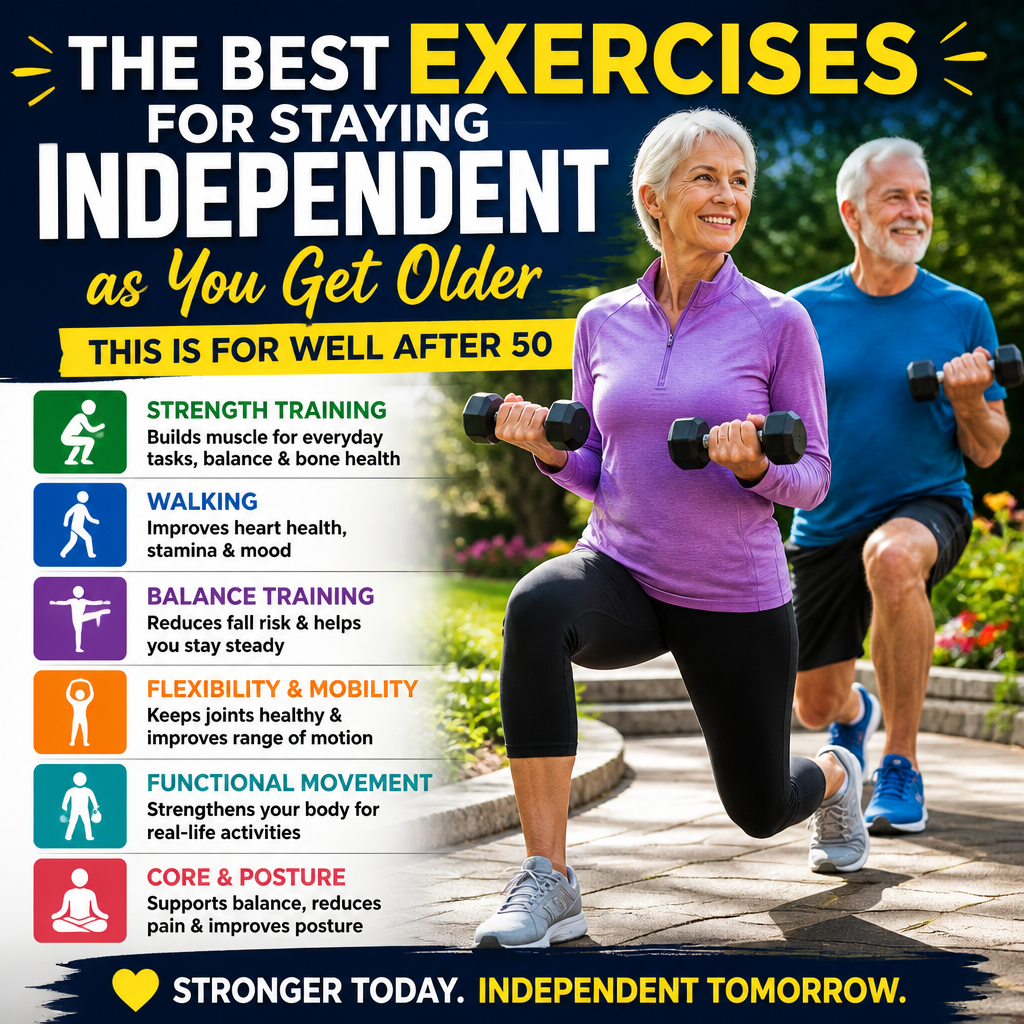
  • The Best Exercises for Staying Independent as You Get Older

    The Best Exercises for Staying Independent as You Get Older

    What are the best exercises for staying independent as you get older?

    Short answer: The best exercises for staying independent are the ones that train everyday life: strength training first, then practicing getting up and sitting down, walking, and balance work. Together they help you get up from the floor, climb stairs and carry your own groceries for years to come.

    There is a difference between getting older and feeling like your world is getting smaller.

    Maybe you have already noticed it in little ways. A flight of stairs feels different. Getting up from a low chair takes more effort. Carrying groceries from the car is not quite as easy as it used to be. You may not think of these things as fitness problems. They are really independence problems.

    That is why the best exercise after 50 is not necessarily the exercise that burns the most calories or makes you sweat the hardest.

    The best exercise is the kind that helps you keep doing your own life.

    Think about the life you want your body to handle

    Instead of asking, “What exercise should I do to look better?” try asking:

    • Can I get up from the floor if I need to?
    • Can I climb stairs without feeling defeated?
    • Can I carry my groceries?
    • Can I walk through an airport, museum or shopping center?
    • Can I get out of a chair without using my hands?
    • Can I keep traveling, working around the house and doing the things I enjoy?

    Those are not vanity questions. They are freedom questions.

    1. Strength training may be the most important place to start

    Muscle does not disappear simply because we reach a certain birthday, but muscle and strength can decline with age when we are inactive. The good news is that the body can respond to resistance training well into later life.

    You do not have to become a bodybuilder. Sit-to-stands, resistance bands, machines, dumbbells, wall push-ups and other simple movements can help.

    Think about training the muscles you use to live: legs, hips, back, chest, shoulders and arms.

    2. Practice getting up and sitting down

    This sounds almost too simple to count as exercise. It counts.

    Standing from a chair without pushing off with your arms trains the legs and hips in a movement you actually use. Start with a sturdy chair and use your hands if you need to. Over time, work toward smoother, stronger repetitions.

    3. Walk for the life outside the gym

    Walking is wonderfully unglamorous—and that is part of its strength. It is accessible, easy to repeat and useful for building endurance.

    You can walk around your neighborhood, inside a store, on a treadmill or with a friend. The goal is not to prove anything. The goal is to make movement part of ordinary life.

    4. Do not ignore balance

    Balance deserves attention because a strong body still needs to know where it is in space.

    Simple balance practice might include standing near a counter and briefly standing on one leg, walking heel-to-toe, or practicing controlled sit-to-stands. Use support when needed and do not turn balance work into a dare.

    5. Train your ability to push, pull, carry and reach

    Real life is full of awkward little strength tests. Opening a stubborn door. Lifting a bag. Reaching for something on a shelf. Carrying laundry. Moving a box.

    Your workout does not need to copy these tasks perfectly, but it should prepare your body for them.

    A simple week can be enough to make a difference

    • 2 days: strength training for the major muscle groups
    • Most days: some walking or other aerobic activity you enjoy
    • Several times a week: brief balance practice
    • Every day: look for opportunities to sit less and move more

    CDC guidance for adults 65+ recommends aerobic activity, muscle-strengthening activity at least two days a week, and balance activities. You do not have to jump straight into the full recommendation. Start from where you are and build gradually.

    The goal is not to become 30 again

    This may be the most important part.

    You are not exercising to erase your age. You are exercising so your age does not unnecessarily erase parts of your life.

    You want to be the person who can say yes when someone suggests a day trip. You want to carry your own bags. You want to get out of a chair without thinking about it. You want enough strength and balance to keep making your own choices.

    That is what fitness after 50 can really be about: keeping your world open.

    Common Questions

    What is the best exercise after 50?

    A combination of strength, aerobic activity and balance is more useful for healthy aging than relying on one type of exercise alone.

    Can I start strength training if I have never lifted weights?

    Yes. Start with manageable resistance, controlled movements and gradual progress. If you have a medical condition or significant physical limitation, ask your health professional what is appropriate.

    Do I have to exercise every day?

    No. Consistency matters more than perfection. Regular movement spread across the week is a practical goal.

    Can walking really help me stay independent?

    Walking can improve endurance and physical activity levels, while strength and balance work address other abilities needed for everyday independence.

    Keep Reading

    For more practical healthy-aging ideas, explore Sturdy Years.

    About Tom Green

    Tom Green writes Sturdy Years. He was born in Pell City, Alabama, in 1962, and he’s a country boy and a true Southerner through and through. He’s just a regular, laid-back 64-year-old who keeps things simple. He shares what he learns about skincare, fitness and getting older, and what’s working for him. He’s also the author of A Practical Guide to Getting Older Without Giving Up on Yourself. Tom isn’t a doctor. He reads up on the research and passes along what’s useful, plain and simple.

    Sources & Proof

    CDC: Older Adult Activity Guidelines
    National Institute on Aging: Health Benefits of Exercise and Physical Activity
    National Institute on Aging: Types of Exercise and Physical Ability

    Safety note: Start at a level appropriate for your current ability. Stop if you develop unusual pain, dizziness, chest pressure, severe shortness of breath or other concerning symptoms, and seek medical advice when appropriate.

    I’ve also mapped out some great tools on my new Tech for Independent Living After 50 page.

  • Medicare Open Enrollment 2026: Your Drug Plan Could Change. Check Before Dec. 7

    Medicare Open Enrollment 2026: Your Drug Plan Could Change. Check Before Dec. 7

    When is Medicare Open Enrollment 2026, and will your drug plan change?

    Short answer: Medicare Open Enrollment runs October 15 through December 7, 2026, and changes take effect January 1, 2027. Federal projections put the average standalone Part D drug plan premium at about $36 a month in 2027, up from $35.09, but your own plan could change more than that. Read your Annual Notice of Change and compare plans before December 7.

    Medicare Open Enrollment runs from October 15 through December 7, 2026. If you have Medicare, this is your opportunity to review your health and prescription coverage for 2027. Changes you make during this period generally take effect January 1, 2027. Start with the official Medicare Open Enrollment information.

    It can be tempting to keep the plan you already have, especially if it worked well this year. But premiums, prescription costs, covered medications, doctors, and plan benefits can change from one year to the next. Taking a little time to review your coverage could help you avoid an unwelcome surprise.

    Why Medicare Open Enrollment Matters This Year

    Your current plan may not offer exactly the same coverage in 2027. Read the Annual Notice of Change from your insurer carefully. It explains changes to your plan’s costs, benefits, and coverage rules.

    This is particularly important if you take prescription medications regularly or rely on specific doctors, specialists, or pharmacies. You do not have to switch plans just because enrollment arrives—but you should know what you are agreeing to for the coming year.

    1. The Part D Deductible Is Changing

    For 2027, the maximum standard Medicare Part D deductible is scheduled to rise from $615 in 2026 to $700 in 2027. Some plans may have a lower deductible or no deductible, so not everyone will pay the maximum.

    2. The Out-of-Pocket Drug Spending Threshold Is Rising

    The annual out-of-pocket threshold for covered Part D drugs is scheduled to increase from $2,100 in 2026 to $2,400 in 2027. Your actual costs depend on your coverage and circumstances. These figures are a reason to check your plan—not a prediction that everyone will spend these amounts.

    When comparing plans, look beyond the monthly premium. Consider the deductible, the price of each prescription you take, and the total you could pay over the whole year.

    3. Are Prescription Drug Plan Premiums Going Up?

    Federal projections put the average monthly premium for standalone Part D prescription drug plans at about $36 in 2027, compared with $35.09 in 2026. That is an average—not a promise about what your own plan will cost. Individual plans can cost more or less, so check your plan’s actual 2027 notice rather than assuming your premium will rise by a particular amount.

    Don’t Just Let Your Drug Plan Roll Over

    Here’s the catch with that $36 average. Juliette Cubanski and her team at KFF looked closer and found that if folks with standalone drug plans just stay put, their average premium could jump from about $34 to $51 a month in 2027. That’s a 50% raise. There also aren’t any $0-premium standalone drug plans next year. One of the big national plans, AARP Medicare Rx Preferred, is expected to average about $204 a month, up from $126. The good news is that most of that increase can be avoided by shopping around. That’s what this window is for.

    4. What About GLP-1 Weight-Loss Medicines?

    Medicare’s temporary GLP-1 Bridge program is separate from ordinary Part D coverage. Eligible beneficiaries may be able to access certain medicines through the program for a $50 monthly copayment during its announced period, which runs through December 31, 2027. Eligibility and covered medicines are limited, and the program’s copayment does not count toward the standard Part D deductible or out-of-pocket threshold. Do not assume every weight-loss medicine is covered for every person; check current official Medicare information for the rules that apply to you.

    5. Two Trustworthy Places to Get Help

    Medicare.gov: Visit Medicare.gov’s health and drug plan section to compare plans and review prescription coverage. Check whether your medicines, doctors, and preferred pharmacy fit the plan you are considering.

    SHIP—State Health Insurance Assistance Programs: Visit SHIPhelp.org to find free, unbiased Medicare counseling in your state. SHIP counselors can help you understand your choices and compare coverage without trying to sell you a particular plan. If you would rather speak with Medicare directly, call 1-800-MEDICARE (1-800-633-4227).

    6. Be Careful With Unexpected Medicare Calls

    Enrollment season can bring advertisements and calls from people offering insurance help. Some contacts may be legitimate, but be cautious if an unexpected caller pressures you to act immediately, asks for personal information, or claims you will lose benefits unless you respond right away.

    Do not share your Medicare number or financial information with an unverified caller. If you want to check an offer, contact Medicare using its official number or speak with a SHIP counselor. You can take your time and ask questions before making a decision.

    Your Medicare Open Enrollment Checklist

    • Read your Annual Notice of Change.
    • Make a list of your current prescriptions and check their 2027 costs.
    • Confirm that your doctors and preferred pharmacy are in the plan’s network.
    • Compare premiums, deductibles, prescription costs, and benefits for the full year.
    • Use Medicare.gov or contact SHIP if you need help.
    • Make any changes by December 7, 2026.

    You do not have to change plans if you have checked the details and your current coverage still meets your needs. The important thing is to make that decision with current information rather than simply assuming everything stayed the same.

    Check Your Plan’s Hearing Benefit

    Original Medicare doesn’t pay for hearing aids, but a lot of Medicare Advantage plans offer an allowance. Look at the exact dollar amount and which hearing provider you have to use. If your hearing’s slipping, I wrote about whether AirPods Pro can work as hearing aids for a lot less money.

    Common Questions About Medicare Open Enrollment

    When is Medicare Open Enrollment in 2026?

    It runs from October 15 through December 7, 2026. Changes generally take effect January 1, 2027.

    Do I have to change my Medicare plan?

    No. Review your upcoming costs, benefits, doctors, and medications, then decide whether your current plan still fits your needs.

    Where can I get free help comparing plans?

    Visit SHIPhelp.org to find free, unbiased counseling in your state, or compare options at Medicare.gov.

    What if I miss the December 7 deadline?

    Your options depend on your circumstances and whether you qualify for another enrollment period. Visit Medicare.gov or call 1-800-MEDICARE to understand your options.

    Disclaimer: This article provides general educational information, not individualized Medicare, insurance, or financial advice. Check official Medicare resources and your plan documents before making coverage decisions.

    About the AuthorTom Green writes Sturdy Years. He was born in Pell City, Alabama, in 1962, and he’s a country boy and a true Southerner through and through. He’s just a regular, laid-back 64-year-old who keeps things simple. He shares what he learns about skincare, fitness and getting older, and what’s working for him. He’s also the author of A Practical Guide to Getting Older Without Giving Up on Yourself. Tom isn’t a doctor. He reads up on the research and passes along what’s useful, plain and simple.

    I’ve also mapped out some great tools on my new Tech for Independent Living After 50 page.
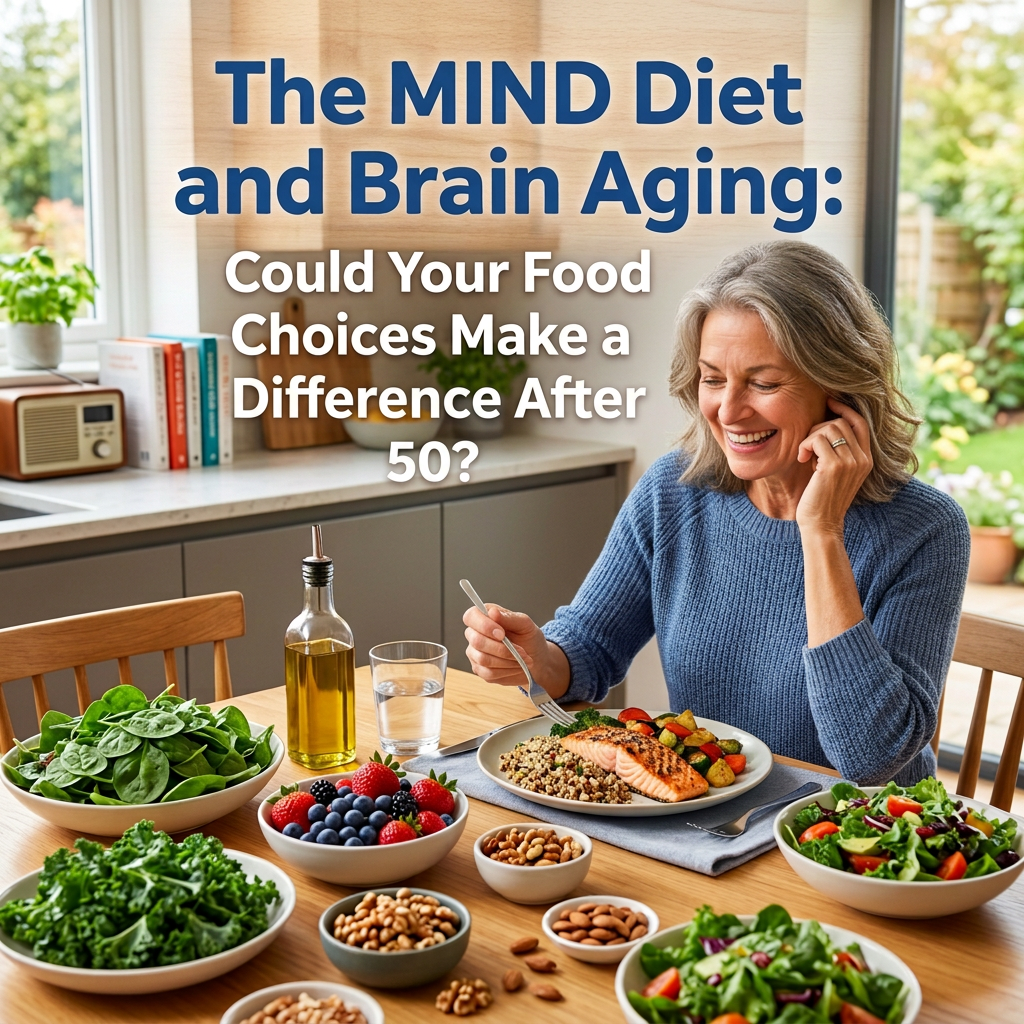
  • The MIND Diet and Brain Aging: Could Your Food Choices Make a Difference After 50?

    The MIND Diet and Brain Aging: Could Your Food Choices Make a Difference After 50?

    Can the MIND diet slow brain aging?

    Short answer: The MIND diet mixes the Mediterranean and DASH diets to help protect the brain. In a 2026 study of 1,647 adults followed for about 12 years, people who stuck closer to it lost brain gray matter more slowly. It doesn’t prove the diet prevents Alzheimer’s, but it’s a good reason to pay attention to what’s on your plate.

    What you eat may matter for your brain as you get older. A 2026 study gives us another reason to pay attention to the food on our plates—but the finding needs a little explanation.

    Researchers studying adults in the long-running Framingham Heart Study found that people who followed the MIND diet more closely experienced slower loss of gray matter over time. The difference associated with a three-point increase in their MIND diet score was estimated to be equivalent to about 2.5 years of age-related brain change over the study period.

    That is an interesting finding. But let’s keep it honest: the study does not prove that this diet makes your brain younger, prevents Alzheimer’s disease, or guarantees that your memory will stay sharp. It does give us a practical reason to look at how we eat—and a few changes that may be worth making after 50.

    What Is the MIND Diet?

    MIND stands for Mediterranean-DASH Intervention for Neurodegenerative Delay. The name is a mouthful, but the basic idea is simple. It combines elements of the Mediterranean and DASH eating patterns, with an emphasis on foods that fit into a generally healthy way of eating.

    You don’t need special powders, expensive supplements, or a refrigerator full of trendy products to understand it. The focus is on everyday foods:

    • Leafy green vegetables: spinach, kale, collards and other greens.
    • Other vegetables: add variety and color to your meals.
    • Berries: blueberries, strawberries and other berries.
    • Whole grains: oatmeal, brown rice and whole-grain bread.
    • Beans and legumes: beans, lentils and chickpeas.
    • Nuts: a small handful can be an easy snack.
    • Fish and poultry: practical sources of protein.
    • Olive oil: a useful replacement for some less healthful fats.

    The eating pattern also encourages limiting foods such as butter, fried foods, pastries, sweets, and large amounts of red meat and cheese. This isn’t about never eating a piece of cake again. It’s about what you do most of the time, not whether every meal is perfect.

    What Did the Researchers Find?

    The 2026 research examined 1,647 adults from the Framingham Heart Study Offspring cohort. Participants were followed for a median of about 12 years, and researchers used brain imaging to examine changes in brain structure over time.

    People with higher MIND diet scores tended to show slower loss of gray matter. Gray matter contains many of the brain’s nerve cell bodies and plays important roles in thinking, memory and other functions.

    The researchers estimated that each three-point increase in the MIND diet score was associated with a difference equivalent to about 2.5 years of age-related gray-matter change over the follow-up period.

    Here’s the important distinction: this was an observational study. Researchers observed people’s eating patterns and brain changes; they did not randomly assign participants to follow the diet and prove that the diet caused the difference. People who eat healthier diets may also differ in other ways, including exercise habits, sleep, income, education and general health. Researchers can account for some factors, but they cannot eliminate every possible explanation.

    So the finding is promising evidence of an association, not a guarantee of results. And a change in brain structure is not the same thing as proving better memory or preventing dementia.

    Berries and poultry stood out in the researchers’ analysis of individual foods. That doesn’t mean blueberries or chicken are miracle foods. The study looked at a broader dietary pattern, and its findings about individual foods should not be treated as proof that any one item independently slows brain aging.

    Still, both can fit easily into everyday meals. You could add berries to oatmeal at breakfast, have them with plain yogurt, or keep frozen berries on hand when fresh ones are expensive. Poultry can be part of a simple lunch or dinner alongside vegetables and a whole grain.

    You don’t have to buy organic berries, expensive specialty foods, or a stack of supplements to get started. Use foods you enjoy and can afford.

    You don’t have to overhaul your kitchen overnight. Start with one or two changes you can keep doing.

    If vegetables aren’t a regular part of lunch or dinner, start there. Frozen vegetables count, too. They’re convenient, often affordable and can save preparation time.

    Fresh berries are great, but frozen ones are useful when prices are high. Add a handful to oatmeal or yogurt, or eat them as a snack.

    Try oatmeal for breakfast, brown rice with dinner, or whole-grain bread for a sandwich. You don’t have to change everything at once.

    Beans and lentils can be inexpensive, filling sources of fiber and plant protein. Add them to soup, chili, salads or a side dish.

    A single meal won’t determine your future brain health. What matters more is the pattern you build over time. If you eat fried food today, that doesn’t mean you’ve failed. Make your next meal a reasonable one and keep going.

    Eating well matters, but it isn’t the only thing worth doing after 50. Regular physical activity, adequate sleep, social connection, and managing conditions such as high blood pressure and diabetes are also important parts of looking after your health.

    If you have concerns about memory or changes in thinking, talk with a qualified health professional rather than assuming food alone will solve the problem. Be wary of products that promise to reverse brain aging or prevent dementia. A promising study is not proof that a supplement, a single food, or a particular diet can deliver those results.

    My Takeaway

    I like research that gives us something practical to work with without pretending there’s a magic answer.

    The MIND diet study doesn’t mean we can turn back the clock on our brains. It does suggest that healthier eating patterns may be associated with more favorable changes in brain structure as we age.

    For me, the sensible approach is straightforward: eat more vegetables, include berries and beans when you can, choose whole grains more often, and pay attention to the overall pattern. Keep moving, get enough sleep, and look after your general health, too.

    If planning all those meals is the hard part, a meal kit can take a lot of the guesswork out of it. Marley Spoon sends the recipe and the ingredients right to your door, so getting more vegetables and good protein on the plate gets a whole lot easier. And if green tea is more your speed than coffee, More Than Matcha makes matcha you can stir up in about a minute. (affiliate links)

    You don’t have to eat perfectly. You just have to keep making reasonable choices.

    Getting older is part of life. Giving up on looking after yourself doesn’t have to be.

    Common Questions About the MIND Diet

    Does the MIND diet prevent Alzheimer’s disease?

    We cannot say that it does. Research has found associations between the MIND eating pattern and certain measures of brain health, but this study does not prove that the diet prevents Alzheimer’s disease or other forms of dementia.

    What does “2.5 years less brain aging” actually mean?

    It refers to an estimated difference in age-related gray-matter loss associated with a higher MIND diet score over the study period. It does not mean participants’ brains were literally rejuvenated by 2.5 years, nor does it guarantee better memory.

    Do I need to follow the MIND diet perfectly?

    No. Focus on the overall pattern of your eating rather than making every meal perfect. Start with changes that are affordable, enjoyable and realistic for you.

    Are blueberries the most important food for brain health?

    The study highlighted berries among the foods associated with favorable brain-imaging findings, but it did not establish blueberries as a miracle food. The overall eating pattern matters, and no single food guarantees protection.

    Is the MIND diet expensive?

    It doesn’t have to be. Frozen vegetables and berries, dried or canned beans, oatmeal, brown rice and other basic foods can help you build meals without relying on costly specialty products. Compare prices and choose what works for your budget.

    Research and Further Reading

    For another perspective on brain health and aging, explore the work of neuroscientist Dr. Lisa Mosconi, whose research and writing focus on the brain and women’s brain health. This is additional reading, not a claim that she reviewed or endorsed this article.

    MIND diet, cerebrovascular health, and cognition among community-dwelling older adults — Puja Agarwal and colleagues, Rush University. Alzheimer’s & Dementia, 2026. Studied 761 older adults without known dementia at the start (713 with complete diet, brain scan, and thinking-test data; average age 81). In plain words: older adults whose eating matched the MIND diet more closely had healthier small blood vessels in the brain — less hardening and narrowing — along with larger brain volume and fewer white spots on brain scans that are linked to dementia risk. They also scored better on thinking tests. The healthier blood vessels and larger brain size partly explained why better eating went along with better thinking. The link held even after accounting for exercise, weight, race, and existing vascular disease. This was an observational study, so it shows a link, not proof that the diet caused the difference. Link: Read the study

    Adherence to the MIND diet and longitudinal brain structural changes over a decade: evidence from the Framingham Heart Study Offspring cohort — Hui Chen and colleagues. Journal of Neurology, Neurosurgery & Psychiatry, 2026; 97(6):505–512. DOI: 10.1136/jnnp-2025-336957. Studied 1,647 middle-aged and older adults (average age about 60) from the Framingham Heart Study Offspring group, followed for about 12 years with repeated brain scans. In plain words: people whose eating matched the MIND diet more closely lost gray matter (brain tissue) more slowly over about 12 years. Each 3-point higher MIND score was linked to about 20% less age-related gray-matter loss — roughly equal to 2.5 years of delayed brain aging. Higher scores were also linked to slower widening of the brain’s fluid-filled spaces, about a 1-year delay. Berries and poultry showed the strongest favorable links, while sweets and fried fast food were tied to faster shrinkage in the memory area. This was an observational study, so it shows a link, not proof that the diet caused the difference. Link: Read the study

    Keep Reading

    About the Author

    Tom Green writes Sturdy Years. He was born in Pell City, Alabama, in 1962, and he’s a country boy and a true Southerner through and through. He’s just a regular, laid-back 64-year-old who keeps things simple. He shares what he learns about skincare, fitness and getting older, and what’s working for him. He’s also the author of A Practical Guide to Getting Older Without Giving Up on Yourself. Tom isn’t a doctor. He reads up on the research and passes along what’s useful, plain and simple.

    Health Disclaimer

    This article is for general educational purposes and is not a substitute for individual medical advice, diagnosis or treatment. Research findings do not guarantee individual results. Talk with a qualified health professional about dietary changes if you have medical conditions, special nutritional needs, or concerns about memory or thinking.

    I’ve also mapped out some great tools on my new Tech for Independent Living After 50 page.