Category: Health & Nutrition

Practical health and nutrition advice for 50+, covering protein, energy, sleep, healthy habits, and evidence-based ways to support healthy aging.

  • What Loneliness Does to Your Body After 55, and How to Turn It Around

    What Loneliness Does to Your Body After 55, and How to Turn It Around

    How does loneliness affect you physically after 55?

    Short answer: When loneliness hangs on, your body stays in a low hum of stress. Over time that can push your blood pressure up, stir up inflammation, break up your sleep and make it harder to fight off viruses. It’s also tied to higher odds of heart disease, stroke and dementia. The good news is the fix doesn’t cost a dime, and your body starts settling down once you get back around people you enjoy.

    Thanksgiving’s almost here, and for a lot of folks that means a full table and too much pie. For a lot of others it means a quiet house and the TV on for company. I’ve been reading up on what that second kind of holiday does to us, and I’ll be honest, it surprised me. Loneliness gets into your blood pressure, your blood work and even your sleep.

    Stick with me, though, because this one ends on a hopeful note. The same research that shows how hard loneliness is on the body also shows how much good company helps. And men and women both have a better shot at it in these years than most people think.

    How common is loneliness after 55?

    More common than folks let on. AARP surveyed about 3,300 Americans 45 and older and found that 4 in 10 are lonely, up from about a third in 2010 and 2018. For the first time, men came out lonelier than women, 42% to 37%. Men were also more likely to say they don’t have a single close friend.

    Now for the part I liked. In that same survey, loneliness was highest for folks in their late 40s and 50s, and it dropped after 60. AARP has seen that same pattern every time they’ve asked since 2010. So if you’re coming up on 60 or already past it, the odds are leaning your way.

    What does loneliness do to your body?

    Dr. Robert Waldinger explains it about as plain as anybody. He’s a Harvard psychiatrist who runs the Harvard Study of Adult Development, which has followed the same men and their families since 1938, and he co-wrote the bestseller The Good Life about what they learned.

    When something upsets you, your body goes into fight-or-flight. Your heart speeds up and your blood pressure climbs, which is normal. Most of the time you go home, talk it over with somebody who listens, and your body calms back down. Waldinger told the Harvard Gazette that when you don’t have anybody like that, your body can stay stuck in a low level of fight-or-flight. More stress hormones and more inflammation keep running through you, and little by little they wear on your whole system.

    The National Institute on Aging says it about the same way. The hurt of being lonely sets off the same stress response in your body that physical pain does. Let that go on long enough and it can lead to chronic inflammation and a weaker immune system.

    Can loneliness raise your blood pressure?

    It sure looks that way. The late John Cacioppo was a University of Chicago scientist who spent his whole career on loneliness and wrote a book on it called Loneliness. He and researcher Louise Hawkley followed 229 people ages 50 to 68 for five years. By year four, the loneliest folks had seen their top blood pressure number rise 14.4 points more than the people who were happiest with their social lives. That held up even after they accounted for age, weight, smoking and drinking.

    Hawkley pointed out something worth remembering. You can have a whole lot of people around and still be lonely if those relationships leave you empty, and you can live a quiet life and be just fine if the few people in it really matter to you. So what really counts is how connected you feel inside.

    Margaret Manning, who started Sixty and Me, one of the biggest sites for women over 60, draws that same line. She says there’s nothing wrong with being alone, and introverts need it to recharge their batteries. Loneliness is when you want real company and can’t find it. Gretchen Rubin, the bestselling author of The Happiness Project, goes a step further on her blog and lays out seven different kinds of loneliness, because she says you have to know why you feel lonely before you can fix it. The one that rang truest for me is what she calls quiet-presence loneliness. You’ve got friends and family, but you miss having somebody around the house to fix a cup of coffee with or sit beside on the sofa.

    High blood pressure doesn’t usually hurt, which is why it sneaks up on so many of us. If yours has been creeping up, it’s worth mentioning to your doctor how much company you’ve been keeping lately, right along with the salt and the exercise.

    Does loneliness weaken your immune system?

    This was the part that got me. Cacioppo teamed up with Steve Cole at UCLA to look inside the immune cells of lonely people, including adults in their 50s and 60s. In the loneliest folks, the genes that turn up inflammation were working overtime, while the genes that help fight off viruses were turned down.

    The researchers’ thinking makes a lot of sense to me. Way back, being cut off from your people meant real danger, so the body seems to treat loneliness like a threat and brace for the wrong kind of fight. That leaves lonely folks a little more open to the colds and bugs going around, which is no small thing heading into winter.

    Can loneliness mess with your sleep?

    It can. Cacioppo and Cole’s work found that lonely, isolated people wake up more during the night and spend less of their time in bed actually asleep. Anybody who’s laid there at 3 AM listening to a quiet house knows that feeling. Poor sleep then feeds right back into blood pressure, mood and your immune system, so it all piles on. If that 3 AM wake-up sounds familiar, I wrote a whole post on waking up at 3 AM.

    How does loneliness affect your heart and brain?

    The numbers get big when you look at the heart and brain. When Dr. Vivek Murthy was U.S. Surgeon General, he put out a national advisory on loneliness. It found that poor social connection is tied to a 29% higher risk of heart disease and a 32% higher risk of stroke. For older adults, it was tied to a 50% higher risk of developing dementia.

    Murthy then went on to co-chair a World Health Organization commission on the same subject. Their 2025 report found that about 1 in 6 people worldwide are lonely, and that loneliness is linked to more than 871,000 deaths a year. That works out to about 100 every hour.

    Now, in fairness, most of this research shows a strong link, and it can’t prove loneliness alone caused every one of those problems. Lonely folks also tend to move less, sleep worse and skip the doctor. But when study after study points the same direction, I’d rather pay attention than wait around for more proof.

    Why do friendships thin out in retirement?

    Arthur Brooks, the Harvard professor who writes the happiness column for The Atlantic, has a way of putting it that cleared it up for me. He says most of us have a lot of what he calls deal friends, the folks we’re friendly with because of work or because they’re handy to know. Then there are real friends, the ones you’d call with any silly thought. Deal friends are fine, but they tend to crowd out the real ones. And I reckon when the job ends, a lot of those deal friends go right along with it.

    Longevity doctor Peter Attia talked this over with Brooks on his podcast and came away with some good advice. If you look around and can only name deal friends, don’t panic. That part of your life just needs some time and effort, and real friendships grow best when you spend your free time together on something you both enjoy.

    Fellas, that’s exactly why so many retired guys are finding their way to Men’s Sheds, the community workshops I wrote about in Men’s Sheds: Where Retired Guys Go to Make Real Friends. Ladies, a lot of y’all already know this one by heart. The friend you walk with every Tuesday becomes the friend you call when the news is bad.

    How do you turn loneliness around?

    Start smaller than you think you need to. Waldinger told the Gazette that “our social life is a living system, and it needs maintenance too.” His advice is to sit and think about who you miss, or who you haven’t heard from in a while, and then send them a text or pick up the phone. He says people are amazed at how warmly folks answer back.

    That one tiny step is where I’d start, today, before supper. After that, go looking for something that repeats. A standing breakfast with your old buddies, the same walking group every week, a volunteer shift, choir practice or a card night. Seeing the same faces over and over is how strangers turn into friends, and the National Institute on Aging suggests most of the same things.

    For the lonely evenings when nobody’s around to call, Leo Babauta has some gentle advice. He writes Zen Habits, one of the best-known blogs on simple living, and he admits he gets lonely himself when his wife and kids are out of town. Instead of running from that feeling or covering it up with snacks and the TV remote, he suggests sitting with it a minute and getting curious about it. Then go find people at a class or a club and take a real interest in them. I like that, because it takes the shame out of feeling lonely in the first place.

    One more thing that doesn’t get talked about enough. If your hearing has slipped, get it checked. The NIA notes that folks who can’t hear well often pull back from people because they’re embarrassed about missing what’s being said. A hearing aid might do more for your social life than any new hobby.

    Does good company really help your health?

    It does, and this is my favorite finding of the whole bunch. When the Harvard researchers looked back at their men in their 80s, they expected the best predictor of who aged well to be something like cholesterol or blood pressure at age 50. It wasn’t. Waldinger said the best predictor of a happy and healthy life was how satisfied they were with their relationships.

    Think about that for a minute. The people you share a cup of coffee with may matter as much to your heart as anything your doctor prescribes. Like the old saying goes, if you want a friend, you’ve got to be one.

    Common Questions

    Can loneliness make you physically sick?

    It can raise your risk. Long-lasting loneliness keeps the body’s stress response switched on, which is linked to inflammation, higher blood pressure, poorer sleep and a weaker defense against viruses.

    Does loneliness raise blood pressure?

    In a University of Chicago study of adults 50 to 68, the loneliest people saw their systolic blood pressure rise 14.4 points more over four years than the least lonely people.

    Is being alone the same as being lonely?

    No. Loneliness is feeling less connected than you want to be. Some people live alone and feel fine, while others are surrounded by people and still feel lonely.

    Are men lonelier than women as they get older?

    In AARP’s latest survey of adults 45 and older, 42% of men were lonely compared with 37% of women, and men were more likely to have no close friends.

    How can I feel less lonely after 55?

    Reach out to one person you miss today, then join something that meets on a regular schedule so you see the same faces often. Get your hearing checked if conversations have gotten hard to follow.

    So who’s the one person you’ve been meaning to call? Tell me in the comments, then go call them. I’d love to hear how it went.

    Tom

    About Tom Green

    Tom Green writes Sturdy Years. He was born in Pell City, Alabama, in 1962, and he’s a country boy and a true Southerner through and through. He’s a regular, laid-back 64-year-old who keeps things simple and passes along what he learns about getting older. Tom isn’t a doctor. He reads up on the research and shares what’s useful, plain and simple. Read more about Tom.

    Health note: This article is for general education and isn’t medical advice. If loneliness or low moods have been hanging on for weeks, let your doctor know. It’s a real health concern, and help is out there.

    Research & Sources

    Advertisement

    Marley Spoon meal kits advertisement

    Marley Spoon Meal Kits (affiliate link)
  • Movember Men’s Health: The Checkup Too Many of Us Put Off

    Movember Men’s Health: The Checkup Too Many of Us Put Off

    What checkup should a man get this Movember?

    Short answer: Book a yearly checkup and take a short list with you. Ask about your blood pressure, cholesterol and blood sugar, colon cancer screening if you’re 45 to 75, the PSA test if you’re 55 to 69, a one-time belly ultrasound if you’re a man 65 to 75 who ever smoked, and which shots you’re due for. If you’ve had Medicare Part B for over a year, the Annual Wellness Visit costs you nothing when your doctor accepts Medicare.

    Every November you’ll see fellas walking around with brand new mustaches. Some of them look mighty proud. Some look like a caterpillar crawled up and took a nap on their lip. That’s Movember, and behind all the whiskers is a simple idea I can get behind: a man ought to look after himself before something breaks.

    I’m a 64-year-old country boy from Pell City, Alabama. A lot of us were raised on “rub some dirt on it and get back to work.” That’s fine advice for a skinned knee. It’s a poor plan for high blood pressure. I wrote a while back that I refuse to act my age, and part of staying in the game is knowing what’s going on under the hood. I’ve already been in for my checkup, so I’m not asking you to do anything I haven’t done myself. This Movember I’m asking the men reading this, and the women who love them, to do one thing. Get that checkup on the calendar.

    What is Movember, anyway?

    Back in 2003, two friends named Travis Garone and Luke Slattery were having a beer in Melbourne, Australia, and got to talking about how the mustache had gone plumb out of style. They decided to bring it back and hitch it to a good cause. They rounded up 30 guys that first year.

    Today Movember is a worldwide charity that raises money for prostate cancer, testicular cancer and men’s mental health, and it has funded more than 1,250 men’s health projects. Their big point is worth chewing on. On average, men die several years earlier than women, and a good share of that gap comes from problems that could have been caught early or headed off.

    Why do so many men put off going to the doctor?

    Cleveland Clinic asked about 1,174 men across the country that very question in 2019, and the answers made me laugh and wince at the same time. Seventy-two percent said they’d rather do chores, like scrubbing the bathroom or mowing the lawn, than go see a doctor. Only half said a yearly checkup was a regular part of taking care of themselves. About 1 in 5 owned up to not being completely honest with their doctor.

    Brett and Kate McKay at The Art of Manliness, one of the best-known men’s sites on the internet, put their finger on why. A lot of us were taught as boys that being a man means sucking it up when you’re sick or hurt, so walking into a doctor’s office can feel like admitting weakness.

    Our age group comes off better, though. When AARP wrote up that same survey, the older men in it were a whole lot better about it. Seventy-four percent of them said they get a yearly physical, compared with 43% of men 35 to 54. So if you’re in your 60s and still dodging the doctor, most of the fellas your age have already beat you to the waiting room.

    Why is catching things early such good news?

    Because most of what a checkup looks for can be treated when it’s found early. Take prostate cancer, one of Movember’s big causes. According to the American Cancer Society, when it’s found while it’s still inside the prostate, the five-year survival rate is over 99%. When it’s found after spreading to faraway parts of the body, that number drops to 38%. Same disease. What changed was when somebody caught it.

    Actor Ben Stiller found that out for himself. His internist gave him a “baseline” PSA test when he was about 46, even though he had no family history and no symptoms. His number kept creeping up, more tests followed, and in 2014 doctors found an aggressive prostate cancer. He got treated, and by 2016 he was cancer-free and wrote about it in a Medium essay called “The Prostate Cancer Test That Saved My Life.” His words: “Taking the PSA test saved my life. Literally.”

    Now, I’ll be straight with you. The PSA test isn’t a yes for everybody. It can turn up slow-growing cancers that never would have hurt you, and that can lead to biopsies and treatment you didn’t need. That’s why the U.S. Preventive Services Task Force says men 55 to 69 should talk it over with their doctor and decide together, and it recommends against routine PSA screening at 70 and up. Stiller himself said his essay was his own story, not a scientific one. The point is to have the talk.

    What should you ask for at your checkup after 60?

    Snap a picture of this with your phone and take it with you. It comes from the U.S. Preventive Services Task Force, the panel most doctors go by for screenings. Your doctor may add some or skip some depending on your health, and that’s how it ought to be.

    • Blood pressure. High blood pressure usually doesn’t feel like anything, and the checkup is the easy way to catch it.
    • Cholesterol and blood sugar. One blood draw covers both.
    • Colon cancer screening from 45 to 75. There’s more than one kind of test, including stool tests you do at home and mail in, so ask which one fits you.
    • The PSA talk if you’re 55 to 69.
    • A one-time belly ultrasound if you’re 65 to 75 and ever smoked. It looks for an abdominal aortic aneurysm, a weak, bulging spot in the body’s main blood vessel that usually gives no warning.
    • Lung cancer screening if you’re 50 to 80, smoked the equivalent of a pack a day for 20 years, and still smoke or quit within the last 15 years.
    • Your shots. Ask which ones you’re due for, like shingles and pneumonia.
    • How you’ve really been feeling. If you’ve been down or not yourself, say so. Your mind is part of your health, and Movember puts men’s mental health right up front for good reason.

    Does Medicare pay for a yearly checkup?

    Mostly, yes, with one catch worth knowing about. Once you’ve had Medicare Part B for more than 12 months, you get an Annual Wellness Visit once a year. According to Medicare.gov, you pay nothing for it as long as your doctor accepts Medicare assignment, and the Part B deductible doesn’t apply.

    The catch is that it isn’t a full head-to-toe physical. The visit covers things like your blood pressure, height and weight, a look at your medical and family history and your prescriptions, a quick memory check, and a written plan of the screenings and shots you need. If the doctor runs extra tests or works on a new problem that same day, you may owe something for that part. So when you call, say the words “Annual Wellness Visit.” In your first year on Medicare Part B, you’d book the “Welcome to Medicare” visit instead.

    Not on Medicare yet? Most private insurance plans cover a yearly preventive visit too, so call the number on the back of your card and ask. And if you’re sorting out your coverage right now, my post on Medicare open enrollment 2026 changes walks through what’s different this year.

    How do you get the man in your life to go?

    Ladies, this part’s for you, and for the sons, daughters and fishing buddies too. In a piece on Katie Couric’s website, Dr. Peter Attia, the longevity doctor who wrote the bestseller Outlive, said men do best when they keep up with their screenings and shots and build a relationship with a doctor they trust. Getting him in the door is the first step toward that.

    Nagging hardly ever works on a stubborn man. Making it easy does. Offer to make the phone call. Book your own checkup the same week and ride over together. And tell him plain that you’d like to keep him around a good long while. That lands a lot better than “you never listen.”

    Fellas, if you’re the one dragging your feet, think of it like changing the oil in your truck. You don’t wait for the engine to lock up before you take care of it. A stitch in time saves nine.

    Can you still get in on Movember this late?

    You sure can. Movember runs through November 30, and you can donate or sign up to fundraise at Movember.com. If your new mustache comes in gray, I reckon that just means you earned it. But the best thing you can do for Movember won’t cost you a dime. Pick up the phone and book that checkup before the month’s out.

    Then keep the good work going at home. Strong hands and strong legs go a long way, and my post on grip strength and a simple band routine is an easy place to start.

    Common Questions

    What is Movember?

    Movember is a men’s health charity that started in Melbourne, Australia, in 2003. Each November, people grow mustaches and raise money for prostate cancer, testicular cancer and men’s mental health.

    How often should a man over 60 get a checkup?

    Once a year is a good habit. Medicare covers one Annual Wellness Visit every 12 months at no cost if your doctor accepts Medicare assignment.

    Should men over 70 get a PSA test?

    The U.S. Preventive Services Task Force recommends against routine PSA screening at 70 and older. Talk with your doctor about your own health and history.

    What is the survival rate for prostate cancer caught early?

    When prostate cancer is found before it spreads beyond the prostate, the five-year relative survival rate is over 99%, according to the American Cancer Society.

    Does Medicare cover a yearly physical?

    Medicare covers a yearly Annual Wellness Visit, but not a routine head-to-toe physical. Extra tests done during the visit may cost you something.

    So fellas, when was your last checkup? And ladies, what finally got the man in your life through that doctor’s door? Tell me in the comments.

    Tom

    About Tom Green

    Tom Green writes Sturdy Years. He was born in Pell City, Alabama, in 1962, and he’s a country boy and a true Southerner through and through. He’s a regular, laid-back 64-year-old who keeps things simple and passes along what he learns about getting older. Tom isn’t a doctor. He reads up on the research and shares what’s useful, plain and simple. Read more about Tom.

    Health note: This article is for general education and isn’t medical advice. Which screenings you need depends on your own health and history, so talk with your doctor. If you notice a new symptom, don’t wait for a yearly visit to get it checked.

    Research & Sources

  • My 7-Step Winter Checklist: Less Inflammation, Better Mood

    My 7-Step Winter Checklist: Less Inflammation, Better Mood

    How can you calm inflammation, protect your immune system and keep your mood up through winter?

    Short answer: Stick with a handful of simple daily habits: get morning light, eat anti-inflammatory meals like soups, fish and vegetables, keep moving most days, sleep at least seven hours, ask your doctor about vitamin D, get the winter shots that fit your age, and stay in touch with people. None of it costs much, and the research behind each one is solid.

    Every year about this time it happens around here. The sun’s gone before supper. The porch gets too cold to sit on. My knees start talking to me in the morning, somebody at the store is coughing, and before I know it I’m on the couch with a bowl of something I had no business eating.

    Sound familiar? Winter has a way of sneaking up on all of us, men and women both. Less light, cold weather, more germs going around, holiday sweets and a lot more sitting. Put all that together and our bodies lean toward inflammation and catching every bug that comes through town, and our mood slides right along with it.

    Dr. Mark Hyman, the longevity doctor with the big podcast, just put out his own winter longevity checklist, and it got me thinking about mine. He calls winter a training block for your longevity, and I like that. So I dug into the research and what some of the best-known folks in health and happiness have to say, and here’s the list I’m following this winter. Pick two to start. You don’t have to do all seven by Monday.

    Why does winter make inflammation and mood worse?

    Mostly because winter knocks our habits off track. We get less daylight, which throws off our body clock and sleep. We move less, eat heavier and spend more time indoors around other folks’ germs. Inflammation is your body’s alarm system, and that’s a good thing when you’ve got a cut or a cold. The trouble is when that alarm stays on low all the time, and a lazy, dark winter is just the kind of thing that keeps it humming.

    The good news is that the fixes are simple. Here’s my checklist.

    1. Why is morning light first on the list?

    Because light in the morning sets your body clock for the whole day, and that clock runs your sleep, your energy and your mood. Gretchen Rubin, the bestselling author of The Happiness Project, says it’s really important to get early morning sunlight in the dark months, and she suggests even a 15-minute walk outside, cloudy day or not.

    Even a gray winter sky gives you a lot more light than your kitchen does. So I take my coffee out on the porch for a few minutes, coat and all, or I walk down to the mailbox the long way.

    If winter really pulls you down, a light box might be worth asking your doctor about. They’re the bright lamps made for seasonal depression, and according to Ohio State’s Wexner Medical Center, about six in ten people who use one for seasonal depression get real relief, usually sitting in front of it around 30 minutes in the morning. If you have eye trouble like macular degeneration, or bipolar disorder, check with your doctor first.

    2. What should you eat to calm inflammation in winter?

    Eat more of the anti-inflammatory foods: vegetables, fruit, beans, fish, nuts and good fats like olive oil, and go lighter on sugar, fried food and the processed stuff. Dr. Andrew Weil, the white-bearded doctor who made anti-inflammatory eating famous, gave his Anti-Inflammatory Food Pyramid its first big update in 20 years back in January. It calls for at least 4 to 5 servings of vegetables a day, fish a few times a week, and 2 to 4 cups of tea a day.

    The research on older folks points the same way. A review of studies on older adults found that eating the Mediterranean way was tied to lower levels of CRP, one of the main inflammation markers doctors check in your blood. The researchers said they’d like to see more long-term trials, which is fair, but it lines up with everything else we know.

    Here’s the part I like about winter: soup makes all of this easy. Suzy Karadsheh, who started The Mediterranean Dish back in 2014 and built it into one of the biggest Mediterranean recipe sites around, has a whole collection of soups and stews loaded with beans, greens, garlic and olive oil. A pot of lentil soup on Sunday feeds you half the week, and you’re eating anti-inflammatory without even trying.

    3. Does exercise really help you dodge colds?

    It sure looks that way. Researcher David Nieman followed about 1,000 adults ages 18 to 85 through fall and winter. The ones who did aerobic exercise five or more days a week, like brisk walking, had 43% fewer days with colds than the folks who exercised one day a week or less. Their colds were milder too.

    Notice that’s moderate exercise, not killing yourself in the gym. Overdoing it can actually work against your immune system. A brisk walk, a mall walk when it’s icy, a bike in the garage or a little strength work with dumbbells all count. If you’ve been off a while, ease back in, drink some water first, and stop and sit down if you ever feel dizzy or faint. That’s your body telling you to slow down, and it’s worth mentioning to your doctor.

    Psychologist Kari Leibowitz studied why folks way up north in Norway handle long, dark winters so well, and she talked about it on the Art of Manliness podcast with Brett McKay. One of her big tips is to dress for it and get outside anyway, because short winter walks usually feel better than you expect. Like the Norwegians say, there’s no such thing as bad weather, only bad clothing.

    4. How much sleep does your immune system need?

    Aim for seven to eight hours. Dr. Hyman puts it simple: if you don’t sleep, your immune system isn’t going to work well.

    One study really drove this home for me. Researchers at UC San Francisco tracked how 164 healthy adults actually slept for a week, then gave them a cold virus in nose drops and watched who got sick. The ones sleeping under six hours a night were about four times more likely to catch the cold than the ones getting more than seven. Sleep mattered more than their age, stress or whether they smoked.

    A few things that help me in winter: going to bed and getting up at the same time, even on weekends, keeping the bedroom cool and dark, and finishing supper a few hours before bed. If you keep waking up at 3 AM, I wrote a whole post on that.

    5. Should you take vitamin D in winter?

    Get your level checked first, then decide with your doctor. In a lot of the country the winter sun is too weak for your skin to make much vitamin D, and we make less of it as we get older anyway.

    I’ll be straight with you on the research, though. A big 2021 review found vitamin D cut the odds of catching a respiratory bug a little. But when the same research group updated it in 2025 with more than 61,000 people, that small benefit wasn’t clear anymore. So vitamin D isn’t a magic cold shield. It still matters for your bones, muscles and mood, and plenty of us run low.

    So get tested instead of guessing. Elise Christian over at Sixty and Me gives the same advice for the winter blues: ask your doctor whether a supplement is right for you, and stick to the dose they recommend. More isn’t better with vitamin D.

    6. Which winter shots make sense for older adults?

    A flu shot every year, and an RSV shot if you’re in the age group for it. Not the most exciting step, I know, but it might be the one that keeps you out of the hospital.

    • Flu: If you’re 65 or older, the CDC recommends one of the stronger flu shots made for older adults: high-dose, recombinant or adjuvanted. They give an older immune system more of a boost than the regular shot. Just ask for the “senior” flu shot at the pharmacy.
    • RSV: The CDC recommends one RSV shot for everybody 75 and older, and for folks 50 to 74 who have things like heart or lung disease or a weakened immune system. It’s a one-time shot for now, not every year, so if you already got it, you’re covered.

    Ask your doctor or pharmacist about COVID shots too, since what’s recommended depends on your health.

    7. Why does staying connected matter so much in winter?

    Because cold, dark days make it easy to hole up, and being lonely is hard on both your mood and your health. Dan Buettner, the National Geographic explorer behind the Blue Zones books, studied the places where the most people live to 100. He says folks who socialize regularly live about eight years longer than lonely folks. His words: “When we’re not connected, we don’t do well.”

    So put something on the calendar. Coffee with a buddy on Tuesdays. A Sunday phone call with your sister. Cards at the senior center, a church group, the gym, volunteering. Planning something to look forward to, like a trip or a visit, helps too, and I reckon that does more for the winter blues than just about anything.

    Here’s another trick from those Norwegian winters. Don’t think of winter as one long gray slog. Split it into early winter, deep winter and late winter, and give each one its own little traditions. It gives you something to look forward to all the way to spring.

    How do you make the checklist stick?

    Start small. Dr. Hyman’s advice is to pick the two steps that would make the biggest difference for you, practice them for a couple of weeks, then add another one. I think that’s exactly right. Here’s the whole list in one spot so you can print it and stick it on the fridge:

    1. Get 10 to 15 minutes of morning light, outside if you can.
    2. Eat anti-inflammatory: soups, beans, vegetables, fish and olive oil, with less sugar and junk.
    3. Move most days at a pace you can talk at.
    4. Sleep seven to eight hours on a steady schedule.
    5. Ask your doctor to check your vitamin D.
    6. Get your flu shot, plus RSV if it fits your age and health.
    7. Put people on the calendar every week.

    Winter doesn’t have to be something we just grit our teeth through. Treat it right and you can walk into spring feeling better than you did in the fall.

    Common Questions

    Does winter increase inflammation?

    Winter itself doesn’t cause it, but less light, poorer sleep, less movement and heavier eating can all push inflammation up. Getting those habits back on track helps.

    What are the best anti-inflammatory foods for winter?

    Vegetables, beans, lentils, fatty fish like salmon and sardines, nuts, olive oil, garlic, ginger and tea. Soups and stews make it easy to eat more of them in cold weather.

    Does lack of sleep make you catch colds?

    It can. In a UC San Francisco study, people sleeping under six hours a night were about four times more likely to catch a cold than those sleeping more than seven.

    Does vitamin D prevent colds and flu?

    Not clearly. A 2025 review of more than 61,000 people found no clear drop in respiratory infections. It’s still worth having your level checked, since many older adults run low.

    How do you beat the winter blues?

    Get morning light, move most days, keep a steady sleep schedule and stay in touch with people. If low moods last weeks or get in the way of daily life, talk to your doctor about seasonal depression.

    So which two are y’all starting with? Tell me in the comments. I’m starting with the morning light and getting my cards-and-coffee crew back together.

    — Tom

    About Tom Green

    Tom Green writes Sturdy Years. He was born in Pell City, Alabama, in 1962, and he’s a country boy and a true Southerner through and through. He’s a regular, laid-back 64-year-old who keeps things simple and passes along what he learns about getting older. Tom isn’t a doctor. He reads up on the research and shares what’s useful, plain and simple. Read more about Tom.

    Health note: This article is for general education and isn’t medical advice. Talk with your doctor before starting supplements, a light box or a new exercise routine, and about which vaccines are right for you. If low moods hang on for weeks, reach out to your doctor.

    Research & Sources

    Advertisement

    Marley Spoon meal kits advertisement

    Marley Spoon Meal Kits (affiliate link)
  • Medicare Open Enrollment 2026 Changes: Is Your Plan Ending Dec. 31?

    Medicare Open Enrollment 2026 Changes: Is Your Plan Ending Dec. 31?

    What’s changing in Medicare open enrollment for 2026?

    Short answer: Medicare open enrollment runs October 15 to December 7. KFF found 4.3 million people will have their Medicare Advantage or standalone drug plan shut down at the end of this year. Read the Annual Notice of Change your plan sent you, then compare plans free on Medicare Plan Finder or by calling 1-800-MEDICARE.

    When does Medicare open enrollment end in 2026? December 7. The plan has to get your request by that day, and your new coverage starts January 1, 2027.

    I already wrote about how your drug plan premium could jump 50 percent if you just let it roll over. But some of the biggest Medicare open enrollment 2026 changes have come out since then, and a few of them could hit folks who’ve had the same plan for years and never had to think about it. So here’s the rest of it, plain and simple, while there’s still time to fix things.

    Is your Medicare plan ending December 31?

    This is the big one. On October 27, KFF found that 4.3 million people will have their Medicare Advantage or standalone drug plan shut down at the end of this year. That’s about 3.1 million in Advantage plans with drug coverage and 1.2 million in standalone drug plans.

    Now don’t panic. You’re not losing Medicare. You’re losing that one plan. But you do need to pick a new one, and you shouldn’t count on being moved somewhere good automatically. If your Advantage plan ends and you don’t choose anything, you can end up back in Original Medicare without the drug coverage you’re used to.

    Here’s a bit of good news buried in there. When an Advantage plan drops you, you get a special right to buy a Medigap policy without being turned down for your health. Most folks don’t get that chance. So read the letter your plan sent you. It spells out your options and your deadlines.

    Medicare Part D 2027: what changed for your drugs

    The numbers this year depend on who you ask. CMS, the agency run by Dr. Mehmet Oz, says the average standalone drug plan premium goes from about $35 to $36 a month. KFF’s numbers say it could go from $34 to $51 if people stay in the same plan, partly because a temporary program that held premiums down is ending early.

    I’m not picking a side on which number is right. The honest point is that the average doesn’t tell you much about your own bill. Your premium depends on your plan and your drugs.

    One thing both sides agree on: there won’t be any $0-premium standalone drug plans in 2027 for folks who don’t get Extra Help. About 4 million people paid nothing this year. Juliette Cubanski, who studies Medicare at KFF, told AARP those folks “will all face higher premiums in 2027.”

    A few more changes to know:

    • The yearly cap on drug costs goes up from $2,100 to $2,400. Once you hit it, you pay nothing more for covered drugs the rest of the year. It doesn’t count your monthly premium, or drugs your plan doesn’t cover.
    • The highest deductible a plan can charge goes from $615 to $700.
    • Insulin stays at $35 for a month’s supply of each covered insulin, and the deductible doesn’t apply to it.

    Medicare star ratings 2027: why your plan’s stars may have changed

    The 2027 star ratings showed up on Plan Finder October 8, and Medicare changed how it grades plans. Two survey measures on whether members’ physical and mental health held up now count three times as much as before. Two new drug-safety measures were added too, one on mixing opioids with certain anxiety and sleep medicines, and one on stacking up drugs that can fog the mind in older folks.

    Only about 37 percent of Advantage drug plans earned 4 stars or better, down from about 44 percent last year.

    So a plan’s stars can drop because the yardstick changed, not because the care got worse. I’d use stars as a tie-breaker after you’ve checked your doctors, your drugs and your total cost. A 4-star plan that doesn’t cover your heart doctor is a worse deal for you than a 3.5-star plan that does.

    What to check before the Medicare open enrollment deadline

    • Read your Annual Notice of Change. Your plan had to send it by September 30. It lays this year next to next year: premium, deductible, copays, drug list, doctors and extras.
    • List every drug, dose and pharmacy. Put the whole list into Medicare Plan Finder. That’s what makes the cost estimate right. A drug that cost $15 can jump a tier or fall off the list.
    • Call your doctors. Ask, “Are you in network with this plan for 2027?” Online directories aren’t always up to date.
    • Add up the whole year, not just the premium. Premium plus deductible plus copays plus your drugs. A $0-premium plan can turn out to be the priciest one you’ve had.
    • Check if you qualify for help. Extra Help and Medicare Savings Programs help pay costs for folks with limited income, and plenty of people who qualify never apply.
    • Don’t wait till December 7. The plan has to get your request by then. Signing up online is quicker than mailing a paper form.

    Medicare Advantage vs. Original Medicare, the short version

    Original Medicare is run by the government. You can see any doctor or hospital in the country that takes Medicare, with no network and no referrals. Drug coverage isn’t included, so you add a Part D plan. There’s also no yearly cap on what you pay, which is why a lot of folks add a Medigap policy to cover most of those gaps.

    Medicare Advantage is run by a private insurance company. It usually includes drug coverage and often dental, vision and hearing, and it has a yearly cap on what you pay. For 2027, that in-network cap can go as high as $9,850. You’re in a network, and care outside it costs more or isn’t covered.

    One warning that matters a lot: December 7 isn’t a Medigap deadline. If you leave Advantage for Original Medicare, outside your first six months on Medicare most states let Medigap insurers ask health questions and turn you down or charge more. The exception is that special right I mentioned when your plan ends. So don’t drop anything until you know you can get the coverage you want.

    If you’re on an Advantage plan, check the hearing allowance while you’re at it. I wrote about whether AirPods can work as hearing aids for a lot less money.

    Where to get free Medicare help

    You don’t need to pay anybody for help with this, and you shouldn’t.

    • Medicare Plan Finder: put in your ZIP code, drugs, doses and pharmacy to compare plans side by side, and sign up right there.
    • 1-800-MEDICARE (1-800-633-4227): open 24 hours a day, 7 days a week.
    • SHIP, your State Health Insurance Assistance Program: free one-on-one counseling in every state from folks who don’t sell insurance and aren’t paid per sign-up. Call 1-877-839-2675 to find yours, and book early, because they get busy close to December 7.

    And watch out for the calls and ads. Medicare’s marketing rules got looser on October 1. Agents no longer have to tell you about the free SHIP counselors, and ads can toss around words like “best” more freely. Take your time. Medicare won’t call you out of the blue to sell you a plan or ask for your Medicare number. If somebody does, hang up.

    My take from the porch

    I’m not going to tell you which plan to pick. I can’t. It depends on your doctors, your drugs and where you live.

    What I will tell you, men and women both, is to take one evening this week and look. Read that notice, run your drugs through Plan Finder, and if it all feels like too much, call SHIP. It’s free, and it’s exactly what they’re there for. An hour at the kitchen table now beats a year of surprise bills, and I reckon that’s an hour well spent.

    This is general information only, not medical, insurance or financial advice. It’s no substitute for Medicare.gov, 1-800-MEDICARE or a SHIP counselor who can look at your actual plan and drugs.

    — Tom, Sturdy Years

    Sources

    Join the Conversation

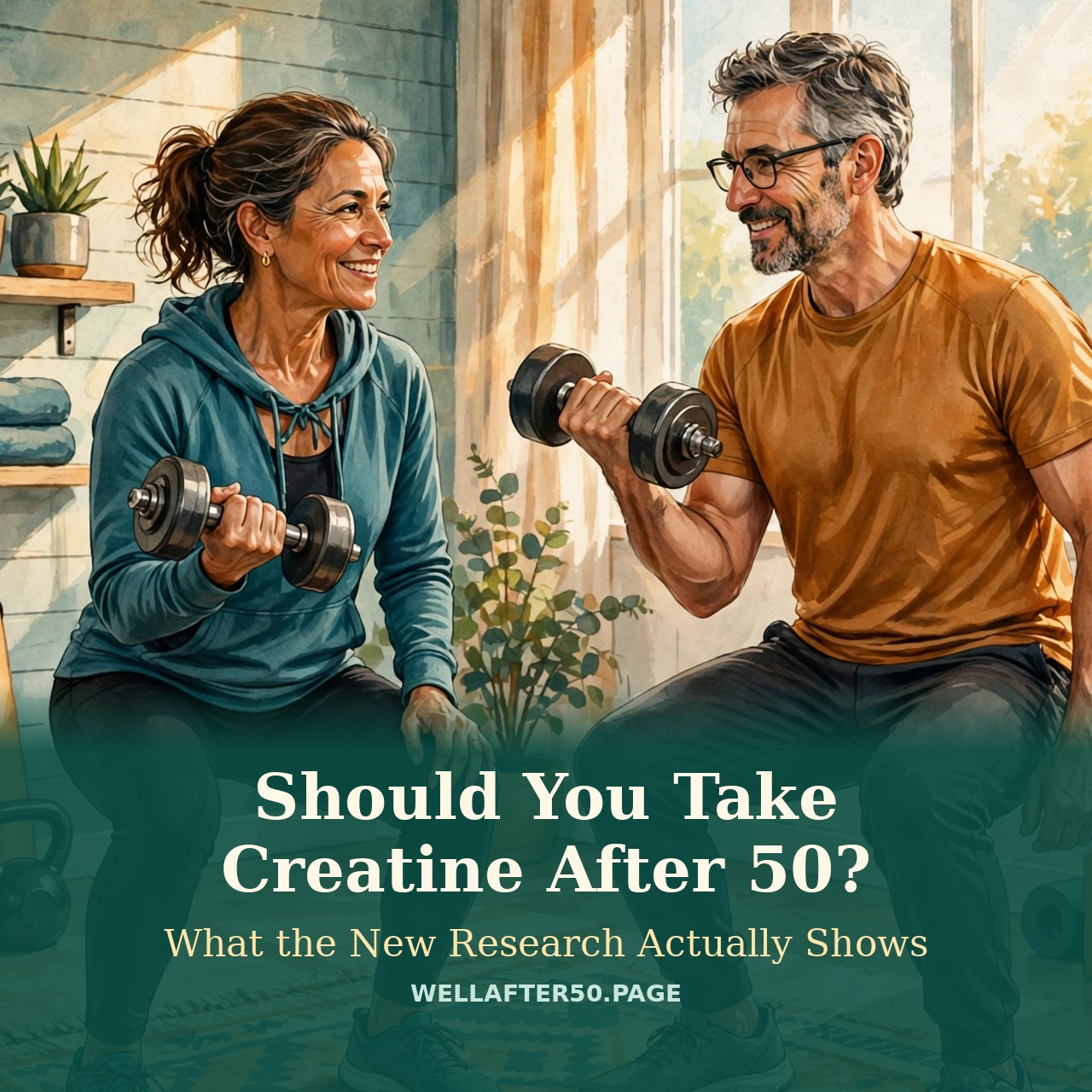
  • Should You Take Creatine After 50? What the New Research Actually Shows

    Should You Take Creatine After 50? What the New Research Actually Shows

    Should you take creatine after 50?

    Short answer: Creatine looks like a cheap, safe helper for keeping your strength after 50, for men and women both. In a review of 22 trials, older folks who took it and lifted weights two or three times a week gained more muscle and strength than those who just lifted. Most take 3 to 5 grams a day.

    Rather listen? Hit play.

    Seems like everybody over 50 is talking about creatine lately. Not just the young fellas at the gym, either. It’s all over the podcasts, the news and the comments I see from men and women our age. Then this fall a new study came out of Texas A&M, and the headlines said creatine works even if you don’t exercise. Well, that got my attention, so I sat down and dug into it to see what’s real and what’s just hype.

    Here’s the short of it before we go any further. Creatine looks like a cheap, safe little helper for keeping your strength after 50, for men and women both. But it’s a helper. It works best when you’re doing the lifting, and it won’t do the lifting for you.

    So What Is Creatine, Anyway?

    Creatine isn’t some lab-made steroid like a lot of us thought back in the day. Your own body makes some of it, and you get more from red meat and fish. Your muscles use it for quick bursts of energy, the kind you need to stand up out of a low chair, climb the stairs or lift a bag of dog food into the truck.

    The trouble is we lose muscle every year after 50 if we don’t fight for it. I wrote about that in After 50, You’re Losing Muscle Every Year. Creatine is one of the few supplements that has a good pile of research showing it can help with that fight.

    The New Texas A&M Study Everybody’s Sharing

    The study was run by Dr. Richard Kreider’s lab at Texas A&M. He’s been studying creatine for more than 30 years. They had 64 healthy adults between 45 and 65 take either 10 grams of creatine a day or a fake powder for 12 weeks. Some of them picked an exercise and diet program, and some didn’t exercise at all.

    According to Texas A&M, the folks who took creatine without exercising still gained about 2.4 pounds of lean tissue and got stronger on the leg press and bench press. The ones who exercised and took creatine did even better, gaining close to 3 pounds of lean tissue and losing more body fat than the ones on the fake powder. You can read the full study here if you like the details.

    Now here’s the part the headlines skipped. Creatine pulls water into your muscles, and the scan they used counts that water as lean tissue. So some of that 2.4 pounds is likely water, not brand-new muscle. Each of the no-exercise groups only had 13 people in it, and people chose their own groups. That’s a small study, so I’d call it good news worth keeping an eye on, not the last word.

    What the Bigger Picture Says

    One study is one study. What matters more is when you stack a bunch of them together. Phil Chilibeck, a kinesiology professor at the University of Saskatchewan, helped pull together a review of 22 trials with more than 700 men and women in their late 50s to 70s. People who took creatine and lifted weights two or three times a week gained more muscle and strength than people who did the same lifting without it.

    Teddy Amenabar dug into this for a piece that ran in the Daily Herald, and Chilibeck put it about as plain as you can. If you’re going to spend money on one supplement, he said, “I think it’s the one to choose.” That same article mentions a two-year study of 200 older women in Brazil, where creatine without weight training didn’t do a thing for their muscle. So the lesson keeps coming back around. The lifting is the main event.

    Dr. Darren Candow at the University of Regina in Canada is about as well known as it gets for creatine research in older folks. He’s said it’s not a miracle but it can give you some real benefits, and he and his team have written about how it may help with muscle loss, weaker bones and frailty as we age, especially when it’s paired with exercise.

    Ladies, This Part’s for You

    If you think creatine is just for big muscle guys, Dr. Stacy Sims would like a word with you. She’s an exercise scientist who has spent her whole career on how women’s bodies work differently, and she says she doesn’t recommend many supplements to everybody. In her words, “Creatine is one of them.”

    Her reasoning makes good sense. Women naturally carry a lot less creatine in their muscles than men do and tend to eat less of the foods that have it. When estrogen drops after menopause, holding on to muscle gets harder. In an interview with Maria Shriver’s Sunday Paper, she suggested starting small, around 1.5 grams, and working your way up to 5 grams over a couple of weeks.

    What About My Kidneys?

    That was the first thing I wondered, and I reckon it’s the first thing you wondered too. A group of top creatine researchers took on the biggest myths in a 2021 review. They found creatine is well tolerated in healthy adults at the usual 3 to 5 grams a day. The kidney scare traces way back to a single case from 1998, a man who already had kidney disease.

    One thing to know though. Creatine can bump up a number on your bloodwork called creatinine, and doctors use that number to check your kidneys. So tell your doctor you take it before you get blood drawn so nobody gets worried over nothing. And if you already have kidney trouble, diabetes, or take medicines that are hard on the kidneys, talk to your doctor before you start.

    Will It Help My Memory?

    Maybe someday, but don’t buy it for that yet. Your brain uses creatine too, and there are some small, interesting studies out there. But it hasn’t been proven to protect your memory or prevent dementia. If a label is promising you that, keep your money in your pocket.

    If You Want to Try It, Keep It Simple

    • Buy plain creatine monohydrate. It’s the kind used in nearly all the research, and it’s one of the cheapest supplements on the shelf. The fancy versions cost more and haven’t been shown to work any better. If you want an easy place to start, Nutricost Micronized Creatine Monohydrate Powder is plain monohydrate that’s just ground extra fine, so it stirs right into your coffee without clumping. (That’s an affiliate link, so I may earn a small commission at no extra cost to you.)
    • Look for a third-party seal like NSF Certified for Sport or Informed Sport, so you know what’s in the tub is what’s on the label.
    • Take 3 to 5 grams a day, every day, with a meal. Stir it into your coffee, oatmeal or a smoothie. If you’re making your mornings work harder for you, my protein coffee is a good place to add it.
    • Skip the “loading” phase. Dr. Candow has said you don’t need those big starting doses, and they’re more likely to upset your stomach.
    • Expect the scale to go up a pound or two the first couple of weeks. That’s water in your muscles, not fat.
    • Give it 8 to 12 weeks before you judge it, and keep lifting the whole time.

    Brad Schoenfeld, an exercise scientist at Lehman College, pointed out in that same Daily Herald article that some people just don’t respond much to creatine. If you eat a lot of meat and fish, your tank may already be pretty full. People who eat little or no meat tend to see the most benefit. So don’t feel bad if it doesn’t change much for you.

    My Take From the Porch

    Here’s how I see it. Creatine isn’t magic, it’s just a good tool for folks our age who want to stay strong enough to keep doing what we love. Working in the garden, picking up the grandkids if you’ve got them, carrying our own groceries for a lot more years. If you’re already doing some kind of strength work two or three times a week, it might be worth a try. If you aren’t yet, start there first. My guide on building muscle after 60 without getting hurt is a good easy place to begin, and don’t forget your protein too.

    There’s an old saying that you can’t plow a field by turning it over in your mind. Creatine’s kind of the same way. You do the work and it helps you get a little more out of it.

    Common Questions

    Is creatine safe to take after 50?

    For most healthy folks, yes. Researchers who reviewed the evidence in 2021 found it well tolerated at 3 to 5 grams a day. It can raise creatinine on your bloodwork, so tell your doctor you take it. If you have kidney trouble or diabetes, check with your doctor before you start.

    Does creatine work if you don’t exercise?

    A little, maybe. In the 2026 Texas A&M study, people 45 to 65 who took creatine without exercising gained some lean tissue and strength, but part of that gain was likely water. The groups were small too. You’ll get a whole lot more out of it if you lift weights two or three times a week.

    How much creatine should I take after 60?

    Most of the research uses 3 to 5 grams of plain creatine monohydrate a day, taken with a meal. You don’t need a big loading dose to start. Dr. Stacy Sims suggests women start around 1.5 grams and work up to 5 grams over a couple of weeks.

    Is creatine good for women over 50?

    It may be even more useful for women. Women carry less creatine in their muscles than men, and after menopause it gets harder to hold on to muscle. Dr. Stacy Sims, who has spent her career studying women’s bodies, says creatine is one of the few supplements she recommends across the board.

    Will creatine make me gain weight?

    You might see the scale go up a pound or two in the first couple of weeks. That’s water pulled into your muscles, not fat. If you keep lifting, the gains after that tend to be muscle, and that’s the kind of weight most of us could stand to carry a little more of.

    Have y’all tried creatine? I’d love to hear how it went for you down in the comments.

    This is general information, not medical advice. Talk with your doctor before starting any supplement, especially if you have kidney problems or take prescription medicines.

    About Tom Green

    Tom Green writes Sturdy Years. He was born in Pell City, Alabama, in 1962, and he’s a country boy and a true Southerner through and through. He’s just a regular, laid-back 64-year-old who keeps things simple. He shares what he learns about skincare, fitness and getting older, and what’s working for him. He’s also the author of A Practical Guide to Getting Older Without Giving Up on Yourself. Tom isn’t a doctor. He reads up on the research and passes along what’s useful, plain and simple. Read more about Tom.

    Research & Sources

  • Protein Coffee After 60: Make Your Morning Cup Work for Your Muscles

    Protein Coffee After 60: Make Your Morning Cup Work for Your Muscles

    Does protein coffee help you keep muscle after 60?

    Short answer: Yes, protein coffee can help you keep muscle after 60 – if it puts a real 25 to 30 grams of protein into your breakfast, and you pair it with strength work. The coffee alone does not do it. The protein and the lifting do.

    I learned that the hard way. I used to think a cup of coffee in the morning was enough to get me going. It woke me up, sure. But it did not do a thing for my muscles – and after 60, muscle is what starts to slip away if you are not paying attention.

    Not all at once. Just a little at a time. A jar that is harder to open. Stairs that feel steeper than they used to. Getting up from a low chair and needing a hand. That is muscle loss, and it happens to most of us.

    “It does not mean you are done. It means you need more protein than you used to, and you need to use your muscles on purpose.”

    Breakfast is where most of us come up short

    For a lot of us, breakfast is the weakest meal of the day for protein. Toast. Cereal. Coffee, black. Maybe an egg if you are feeling good about yourself. That is maybe 10 grams if you are lucky – and dinner ends up carrying the whole day.

    That is why protein coffee caught my eye. Not because it is magic. Because it is already in my hand in the morning. A full serving of protein in that cup, and I have won breakfast without cooking a big meal I do not want.

    Read the label like this: the numbers that matter

    Forget the fancy packaging. Turn the bottle or the tub around and check four numbers. These targets are the fact-checked version – what the research actually supports for people our age:

    CheckTargetWhy
    Protein25-30 g per meal; look for 20-30 g in the servingOlder muscle needs a bigger per-meal signal. Ten grams is not enough on its own; fifteen helps, but you will still need eggs or yogurt alongside it to reach 25-30 g.
    Daily protein1.0-1.2 g per kg of body weightThe PROT-AGE and ESPEN guidance for healthy adults over 65. For a 70 kg person, that is 70-84 g a day, spread across meals. The 2025-2030 Dietary Guidelines put the general adult range at 1.2-1.6 g/kg.
    Sugar0-2 gA lot of sweet coffee drinks are dessert in a bottle. If it tastes like a milkshake, check the sugar. You do not need that in the morning.
    CaffeineAbout 95 mg – one cup of coffeeThat is plenty for most of us. Treat 175-225 mg in one can or bottle as a caution: that is roughly two cups at once, and it can cost you sleep and push on blood pressure.

    One more thing: if it says protein coffee on the front, it should actually be coffee with protein in it. Not a yogurt drink. Not a flavored milk. Real coffee, with protein added.

    Please read this part – it matters

    This article is general information only. It is not medical advice, and it is not a substitute for your own clinician who knows your history.

    Kidney disease is the exception: if you have kidney disease, or you have ever been told to limit protein, do not raise your protein intake without talking to your clinician first. The same goes for raising caffeine if you watch your blood pressure or your sleep, and before you start strength training if you have not been active.

    When in doubt, ask first. That is not weakness – that is how you stay in the game.

    “If it tastes like a milkshake, check the sugar. You do not need dessert for breakfast.”

    How I make it: simple on purpose

    I keep it simple, because if it is complicated, I will not do it. Neither will you, if we are being honest.

    1. Make your regular coffee, the way you like it. Hot or iced – it does not matter.
    2. Add the protein. Stir in a scoop of unflavored or coffee-flavored protein powder, or pour in a ready protein shake instead of milk.
    3. Mix it well so it does not clump. A good shake or a thorough stir does it.
    4. Drink it in the morning. If that cup already carries 25-30 g, you have done the hard part. Add a piece of fruit or a handful of nuts if you want more.
    Protein coffee in a glass beside coffee beans
    Hot or iced, it is the same idea: your regular coffee, with protein mixed in well.

    Do not drink it late in the day if caffeine keeps you up. Morning is the time for this one.

    The part the coffee cannot do

    Here is the honest part, and I do not want to skip it. No drink builds muscle on its own. Not this one, not any of them. Muscle comes from using your muscles.

    Two days a week of strength work is the target most health groups give – and before you start, check with your clinician if you have not been active. It does not mean a gym membership or heavy weights:

    • Resistance bands at home, a few simple moves done well
    • Bodyweight work – getting up and down from a chair on purpose counts
    • Light dumbbells, and grip work to keep your hands strong

    “If it is complicated, I will not do it. So I do not make it complicated – in the kitchen, or in the workout.”

    Older man and woman exercising with resistance bands
    Strength work at home counts. Bands, bodyweight, light weights – it all tells your body to keep the muscle.

    “Protein is the material. Strength work is the signal that tells your body to use it. You need both.”

    If you only drink the coffee and never lift anything, you are just drinking expensive coffee. But the cup plus two honest sessions a week? That is a routine a regular person can actually keep – and keeping it is the whole game at our age.

    Older man drinking coffee from a mug
    Staying strong after 60 is not about extremes. It is about showing up, twice a week, on purpose.

    Start where you are

    You do not need to overhaul your life this week. Start with breakfast – one cup, done right. Add one short strength session, then a second. Small, kept promises beat big plans that last four days. I have tried both. I know which one is still standing a month later.

    That is the frame for everything on the next page, too: the people I learn from are not selling miracles. They are showing what steady work looks like after 60 – and in one case, after 70.

    People who helped me think about this

    I do not do this alone. I read people who know more about this than I do, and I like to pass them on:

    Bryan Krahn – training smarter after 50

    Bryan Krahn, C.S.C.S., is a veteran strength coach and the creator of Men’s Health Max Muscle at 50. He writes and coaches for regular people in their 50s and beyond, not just lifelong lifters – train hard, but train in a way your joints can keep doing. Start at bryankrahn.com.

    Shelly Stettner – proof it is not too late to start

    Shelly Stettner first picked up a barbell at 65. At the 2022 IPF World Masters Championships she won her Masters 4 (70+) class and set world records – a squat of 115 kg (about 254 lb) and a deadlift of 142.5 kg (about 314 lb). If you think you started too late, read her story first. Follow her at instagram.com/shelly_ann_28 and hear her interview at silveredgefitness.com/episode74.

    Dr. Lisa Mosconi – food, and the brain it feeds

    Dr. Lisa Mosconi is a neuroscientist at Weill Cornell Medicine, where she directs the Alzheimer’s Prevention Program. She is the author of Brain Food, The XX Brain, and The Menopause Brain – the clearest writing I know on why what we eat matters for more than our waistline. Find her at lisamosconi.com.

    “Strength, food, and staying sharp are not three separate projects after 60. They are the same project.”

    The bottom line

    Protein coffee works for me, not because it is trendy, but because it is practical: breakfast and coffee in one cup, and a real start on the protein I need, without a big fuss. Check the numbers – 25 to 30 grams of protein, low sugar, about one cup’s worth of caffeine – and then go use your muscles a couple of times a week. That is it. No magic. Just a morning cup that actually works for you.

    FROM MY BOOK

    A Practical Guide to Getting Older Without Giving Up on Yourself

    If this article helped, the book goes deeper on all of it – strength and staying active, food and protein, skin and appearance, staying engaged, and making the most of the years ahead. No hype. Just what has actually worked, written for people like us.

    Get the book on Amazon

    You can also find it – along with my other books, and the coffee and tea I actually drink – at Tom’s Coffee, Tea and Books Shop, right here: sturdyyears.com/books/

    One cup, done right, is a good place to start

    I am not going to tell you a cup of coffee changes your life. It does not. What changes your life after 60 is a handful of small things you actually do, most days, for a long time – eating enough protein, using your muscles, sleeping, staying curious, staying connected.

    Protein coffee just happens to be the easiest of those to start tomorrow morning. It is already in your hand. Make it count: check the label, hit your 25 to 30 grams, keep the sugar down and the caffeine sensible, and talk to your clinician if your kidneys, your blood pressure, or your history say you should.

    Then go do something with the strength you are keeping. Open the jar yourself. Take the stairs. Get up out of that low chair without a hand. That is what this is for – not a number on a tub, but a life you can keep living on your own terms.

    “No magic. Just a morning cup that actually works for you – and a body you keep using, on purpose.”

    Thank you for reading. If it helped, pass it to one friend still starting the day on black coffee and good intentions. We are all figuring this out together.

    – Thomas Green, Sturdy Years

    Affiliate disclosure: Sturdy Years may earn from qualifying purchases made through affiliate links, at no extra cost to you.

    About Tom Green

    Tom Green writes Sturdy Years. He was born in Pell City, Alabama, in 1962, and he’s a country boy and a true Southerner through and through. He’s just a regular, laid-back 64-year-old who keeps things simple. He shares what he learns about skincare, fitness and getting older, and what’s working for him. He’s also the author of A Practical Guide to Getting Older Without Giving Up on Yourself. Tom isn’t a doctor. He reads up on the research and passes along what’s useful, plain and simple.

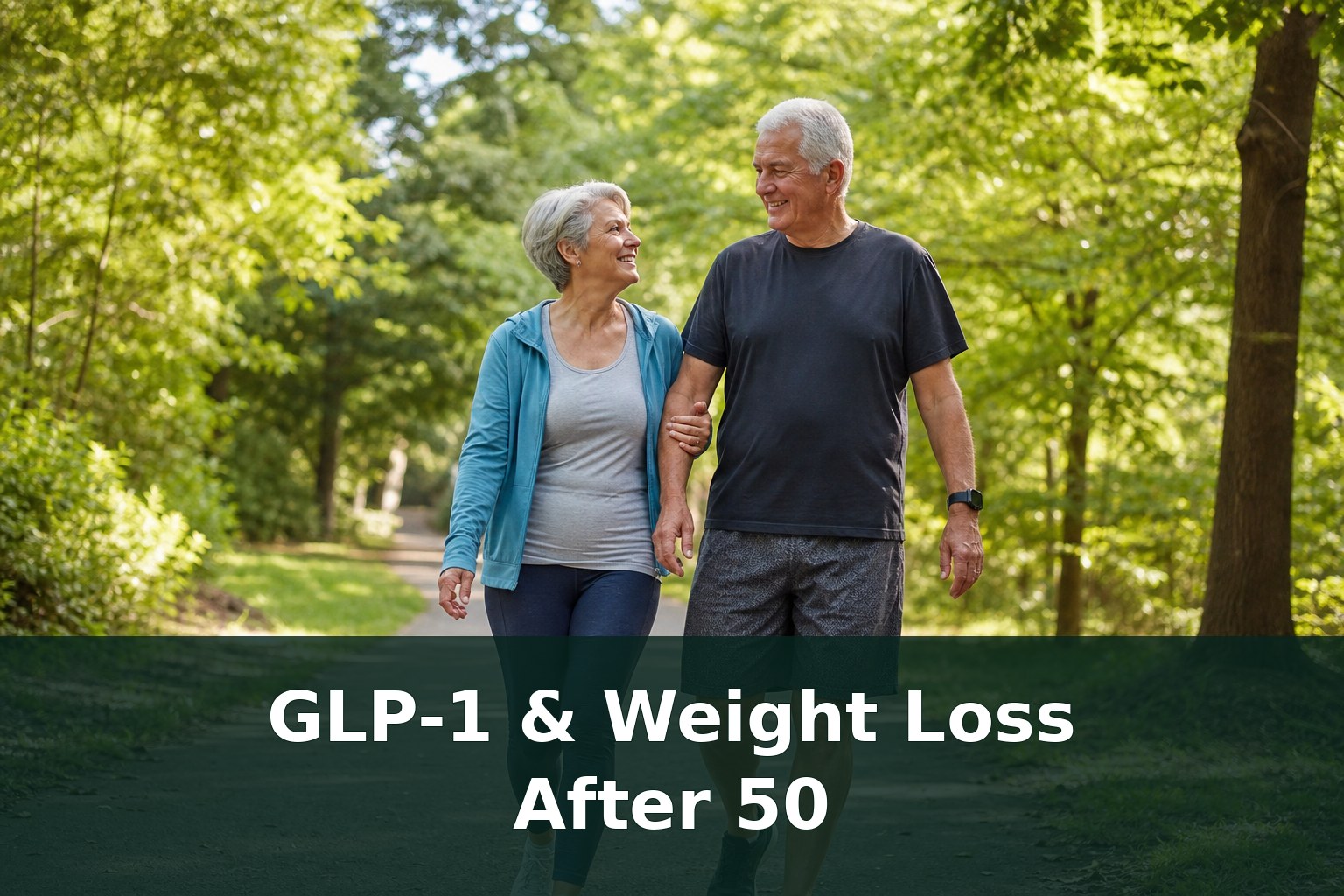
  • What Is GLP-1 — and How It Helps With Weight Loss After 50

    What Is GLP-1 — and How It Helps With Weight Loss After 50

    What is GLP-1, and how does it help with weight loss?

    Short answer: GLP-1 is a hormone your gut makes after you eat. It tells your brain you’re full, slows how fast food leaves your stomach, and helps keep your blood sugar steady. The weekly GLP-1 shots copy that hormone, which is why they can make weight loss after 50 feel more doable.

    Sturdy Years · Health

    You keep hearing the letters GLP-1. This post keeps it simple: what GLP-1 actually is, what it does in your body, and why it can make weight loss feel more doable after 50 — in plain words, no sales pitch.

    GLP-1 and weight loss after 50; older couple walking in a park
    Losing weight after 50 is not about looking twenty again. It is about moving easier, feeling steadier, and enjoying the years in front of you.

    GLP-1 is a hormone your own body makes. That is the first thing worth knowing, because the name sounds like something invented in a laboratory. It was not. Your gut releases GLP-1 every time you eat, and it is one of the signals that tells your body, “Food has arrived — here is what to do with it.”

    GLP-1 support for weight loss works by copying that natural signal, only stronger and longer-lasting than the brief signal a meal gives you on its own. It comes as a small shot you give yourself at home, just once a week. That is the whole idea — help your body’s own fullness and blood-sugar system do its job more steadily, so eating less stops feeling like a constant fight with yourself.

    What GLP-1 does in your body

    Think of GLP-1 as a messenger with three jobs, and all three matter for weight.

    1. It tells your brain you are full

    After you eat, GLP-1 helps send the “that’s enough” signal to your brain. When that signal is stronger, you feel satisfied on a smaller portion — not stuffed, not deprived, just done. Supper ends naturally instead of drifting into seconds and then something sweet an hour later because you never quite felt finished.

    2. It quiets the food noise

    So many of us over 50 describe the same thing: thinking about food all day long. What is in the fridge, when is lunch, what is that in the cupboard. That constant background chatter is sometimes called “food noise,” and it is exhausting — it is a big reason willpower runs out by evening. When GLP-1 is working, that chatter gets quieter for a lot of people. Food goes back to being food, not a full-time occupation. You eat when you are hungry and then you get on with your day.

    3. It slows your stomach down a little

    GLP-1 slows how quickly food leaves your stomach, so a meal keeps you full for longer. A normal breakfast carries you to lunch instead of wearing off by ten. That simple change — feeling full between meals — is what makes eating less sustainable. You are not white-knuckling your way from one meal to the next. You are just not that hungry yet.

    4. It helps your body handle blood sugar

    GLP-1 also helps your body release insulin when blood sugar rises after a meal, and eases back on the sugar your liver lets out. The result is steadier blood sugar — fewer sharp rises, fewer of the crashes that send you looking for a snack an hour later. Steady suits us. Most of us feel the difference in our energy when the day stops swinging between wired and wiped out.

    Why this matters more after 50

    Weight after 50 is a different game from weight at 30, and it is not because we got lazy. A few honest things change:

    • We lose muscle as we age, and muscle is what burns energy even at rest. Less muscle, slower burn — the same meals that suited us at 40 can quietly be too much at 60.
    • Weight settles around the middle. Belly weight is the stubborn kind, and it is also the kind most tied to blood sugar creeping up over the years.
    • Hunger and fullness signals get less reliable. The “I’m full” message can arrive late, and the “have a little something” message can arrive all day long.
    • We have dieted before — probably more than once. Losing and regaining teaches your body to defend the higher weight, so each fresh start feels harder than the last.

    That is exactly where GLP-1 helps. It does not ask you to win an argument with your own appetite every day. It turns the appetite down, steadies the blood sugar, and lets a smaller amount of food genuinely satisfy you. For a lot of people over 50, that is the first time weight loss has felt calm instead of like a battle — and calm is something you can keep up.

    What losing the weight can give you back

    Nobody over 50 I know is chasing a beach body. What people actually talk about is ordinary, everyday stuff — and it is not small stuff:

    • Getting up from a chair, the floor, or the garden without planning it first.
    • Knees, hips and backs that have an easier job to do all day.
    • Walking further, keeping up with grandkids, and still having something left in the evening.
    • Clothes fitting the way they used to, and feeling like yourself when you catch your reflection.
    • Sleeping more comfortably and waking up clearer.

    That is the real prize here. The number on the scale is just the measure. The point is a body that lets you do more of the life you want to live.

    Protect Your Strength After 50; older man exercising with hand weights
    Keeping your muscle while the weight comes off is the smartest move there is after 50. Light weights, bands, bodyweight — whatever you will actually do a few times a week.

    How the weekly shot fits into real life

    One of the reasons this suits people our age is how ordinary it is to live with. There is no daily routine to remember and no clinic trip every week. It starts with a health questionnaire you fill in online at home — your weight, your health history, the medicines you already take. A licensed clinician reviews what you have written, decides whether GLP-1 is a sensible fit for you, and only then is anything prescribed.

    If it is right for you, the medicine is shipped to your door, with everything you need in the kit. From there it is simply a once-a-week shot you do at home — a small, quick injection, the same day each week, that takes a moment and then you forget about it until the following week. Most people pick a quiet time, a Sunday evening or a Monday morning, and it just becomes part of the week like anything else.

    The amount starts low and builds up gradually over the first weeks, which gives your body time to get used to it. You are not left to figure it out alone, either — there are regular check-ins every few weeks, where you share how you are eating, how you are feeling and how the weight is moving, and the clinician adjusts things with you as you go. Refills are coordinated to arrive before you run out, so there is no scrambling and no gap in the middle of progress.

    That steady, guided rhythm is a big part of why it works for people over 50. You have support when you need it, a plan that adjusts as your body changes, and the rest of the week is just yours to live.

    Help it work: the over-50 basics

    GLP-1 does the appetite part. A few simple habits do the rest, and they matter more at our age than they ever did.

    Protect your muscle with protein

    When weight comes off, you want it to be fat that leaves, not muscle. Eating protein at every meal helps your body hold on to muscle while it lets go of fat. A simple guide: a palm-and-a-half of protein at each meal — eggs, Greek yogurt, chicken, fish, beans, whatever you enjoy — spread across the day rather than loaded into one big sitting.

    Protein and Nutrition After 50; woman enjoying a balanced meal
    Protein at every meal, in food you actually like. That is what feeds the muscle you are keeping.

    Use your muscles a few times a week

    Protein feeds muscle; using muscle keeps it. Strength work a few times a week — dumbbells at home, resistance bands, chair rises, a class at the gym — tells your body the muscle is still needed. Pair that with regular walking and you have the combination that keeps the weight-loss years feeling strong instead of frail.

    Eat slowly and stop at satisfied

    Because the fullness signal now arrives properly, give it time to arrive. Eat slowly, put the fork down now and then, and stop at comfortable rather than full. Smaller meals, eaten calmly, sit better and satisfy more than big ones bolted down.

    Keep the rest of life steady

    Sleep well, keep fluids up, and keep moving on the ordinary days — a walk after supper, the stairs when you can, the garden, the dog. None of this is dramatic, and that is the point. GLP-1 makes the eating part quieter, so these simple things finally get a chance to work.

    A few good questions to have in mind

    If you are curious whether GLP-1 could help you, these are the questions worth having ready when you fill in your health details and the clinician reviews them — and to keep asking at your check-ins as you go:

    • Given my weight, my blood sugar and my health history, would GLP-1 help me?
    • How does the weekly shot work, and how do we build the amount up gradually?
    • What is my plan for protein and strength work while the weight comes off?
    • How often will we check in, and how will I know it is working well for me?
    • What should I do on a day when I do not feel much like eating?

    The bottom line

    GLP-1 is not a gimmick and it is not magic. It is your own gut hormone, given a stronger, steadier voice — delivered as a once-a-week shot you do at home, with a clinician guiding the plan — so hunger quiets down, meals satisfy you sooner, and blood sugar stays on an even keel. After 50, when muscle, metabolism and appetite are all pulling in the wrong direction at once, that help lands exactly where it is needed.

    Add protein, keep your muscles working, walk most days, and let the weight come off at a pace your body can live with. That is how this helps people our age — not just lighter, but stronger, steadier, and more able to enjoy the years ahead.

    — Thomas Green, Sturdy Years

    About Tom Green

    Tom Green writes Sturdy Years. He was born in Pell City, Alabama, in 1962, and he’s a country boy and a true Southerner through and through. He’s just a regular, laid-back 64-year-old who keeps things simple. He shares what he learns about skincare, fitness and getting older, and what’s working for him. He’s also the author of A Practical Guide to Getting Older Without Giving Up on Yourself. Tom isn’t a doctor. He reads up on the research and passes along what’s useful, plain and simple.

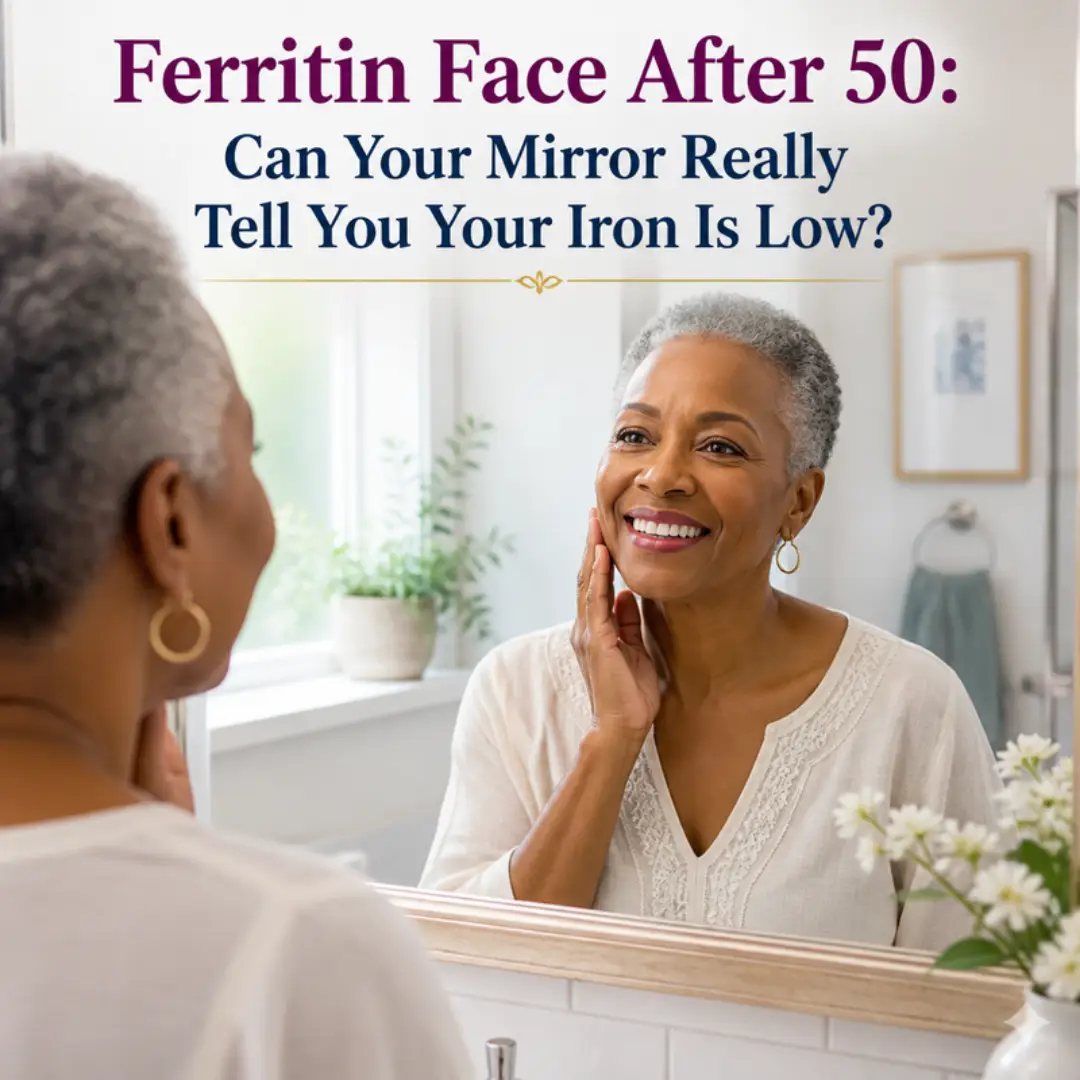
  • Ferritin Face After 50: Can Your Mirror Really Tell You Your Iron Is Low?

    Ferritin Face After 50: Can Your Mirror Really Tell You Your Iron Is Low?

    The TikTok trend everybody’s talking about, the real people behind it, and the simple test that gives you the actual answer

    By Tom Green | Sturdy Years

    Can ferritin face tell you your iron is low?

    Short answer: No, you can’t read low iron in the mirror. A tired look or thinning hair can come from sleep, stress, hormones or what you eat. The real answer is a simple, low-cost ferritin blood test, so if you’re worried, ask your doctor to check it.

    Nutrition lecturer Chloe Casey put it about as good as anybody could when she wrote, “The latest skincare trend taking over TikTok is a blood test.” She’s talking about “ferritin face,” and if you’ve been on TikTok or Facebook this fall you’ve probably seen it, folks holding their phones up close to show off their dark circles and pale skin and the hair in their brush and saying it all comes down to low iron. Vogue reported the hashtag has passed 16 million views and searches for it over in the UK have jumped 5,000 percent since October.

    I’d bet a lot of y’all took a long look in the mirror after hearing about it, I know I would have. So I spent some time reading what real people and real writers have been saying about it, and I came away feeling pretty good, because the real answer is a whole lot simpler and cheaper than anything you’ll see in those videos.

    Think of ferritin like a savings account

    Dr. Jen Gunter, who wrote The Menopause Manifesto and writes a newsletter called The Vajenda, explains it the best way I’ve heard. Ferritin is a protein that stores iron, and she says to think of it like a savings account for your iron. Your body makes withdrawals to build red blood cells and grow hair and keep your energy up, and when the account runs low you can start feeling it. She also points out that a regular blood count by itself isn’t enough to catch it, you need that ferritin number.

    That’s the part of the trend that’s true. You can be dragging around tired and finding more hair in the shower than you used to, and your regular blood work can still come back looking just fine.

    But you can’t read your iron in the mirror

    Chloe Casey made the point that low ferritin doesn’t give you some special look you can spot, because sleep and stress and hormones and what you eat can all make a face look tired. Dermatologist Dr. Regine Mathieu told Vogue that ferritin face isn’t even a real diagnosis, it’s just a name social media came up with. And Dr. Rachel Ho, who runs a skin clinic and writes a blog about skin and aging, wrote that dark circles come from things like blood vessels showing through, pigment and shadows, and you can have low iron and dark circles at the same time without one causing the other.

    After 50 the skin under our eyes gets thinner anyway, so most of us are going to see a little darkness there no matter what our iron is doing. I wrote a whole post about that one, why we get dark circles and puffy eyes after 50. Same thing goes for hair, low iron can cause shedding but so can stress and hormones and thyroid trouble, and I covered that side of it in my post on thinning hair after 50.

    You know the old saying, you can’t judge a book by its cover, and it turns out you can’t judge your iron by your face either.

    The stories that stuck with me

    Dr. Jeff Donovan is a hair loss doctor who answers reader questions on his blog, and one letter came from a healthy, fit woman in her mid-50s whose hair started falling out right around the time menopause showed up. She said it felt like she’d lost half her hair. Her ferritin turned out to be 15, and he told her straight that some women her age run 50 and some run 150 but 15 is low, and that it was worth fixing as long as she and her doctor also found out why it got that low. There was an answer for her, and it was one blood test away.

    Over in the comments on Dr. Gunter’s newsletter, one woman wrote that her doctor finally paid attention when she mentioned she’d been craving ice something fierce, and another said she went out and found a menopause specialist and asked for the test after reading about it. I love that, because that’s women speaking up for themselves and getting answers.

    Fellas, this part is for you too. A retired man on the Early-Retirement.org forum wrote that his routine blood test showed his ferritin was high, around 400, and his doctor didn’t think much of it because it was still inside the lab’s normal range. He started giving blood, and once his number came down under 200 he said the trouble he’d been having was basically gone. He was careful to say that’s just one man’s experience, but I like that his fix was helping somebody else at the blood bank at the same time.

    And a young blogger who goes by toska wrote about months of feeling worn out and losing hair before finally getting the low iron figured out and treated. The energy came back and so did the hair, and since running had to go on hold for a while, toska bought a bike, fell in love with cycling and now rides all over the city. Sometimes the detour turns out better than the road you were on.

    Why this is a little different after 50

    Most of those TikTok videos are young women, and young women who still have periods really do run low on iron a lot. After 50 the story changes. Once a woman is through menopause her body needs about the same small amount of iron a man does, and men don’t usually run low at all.

    So if a test does show your iron is low after 50, look at it like your body raising its hand. Your doctor is going to want to find out why, and catching things early is good news, not bad news.

    And please don’t go buy a bottle of iron pills because of a video. Chloe Casey warned that too much iron is toxic, and Mayo Clinic says iron pills usually aren’t recommended for women past menopause unless a test shows they need them. Older folks hang on to extra iron more easily since we’re not losing it like we used to, and some people carry a family trait that makes their body store too much, which usually doesn’t show itself until after 50. Iron pills are for when a blood test says you need them, not before.

    Now if your test does come back low and your doctor tells you to take iron, ask them which kind and how much. Iron bisglycinate is a form a lot of folks find easier on the stomach than the old-school iron pills. If your doctor’s good with it, THORNE Iron Bisglycinate 25 mg is one I’d look at. Just take it the way your doctor says, and get your ferritin checked again later so you know when you’ve got enough. (That’s an affiliate link, so I may earn a small commission at no extra cost to you.)

    What I’d do if I were wondering about my iron

    Quit studying your face and just ask for the test. Next time you’re at the doctor, ask for a ferritin test along with your regular blood work. It’s one small tube of blood and you’ll know for sure instead of guessing off a video.

    If you’ve been really tired for a while, or getting winded on the stairs, or finding a lot more hair in the drain than usual, go ahead and bring it up sooner instead of waiting on your next checkup.

    In the meantime, eat like your iron matters, because it does. Lean beef, chicken, fish, beans, lentils and greens like spinach are all good sources, and if you eat them with something that has vitamin C like tomatoes or peppers or a glass of orange juice, your body soaks up more of the iron.

    Here’s an old country trick that actually holds up, cooking in a cast iron skillet can add a little iron to your food, so if you’ve got one sitting in the cabinet go ahead and put it to work. And drink your coffee and tea between meals instead of with them, because they get in the way of your body taking in iron.

    The bottom line

    Ferritin face is a little bit of truth wrapped up in a whole lot of hype. Your iron really can affect how you feel and how your hair and skin look, but you’ll never find out by staring in the mirror. One simple blood test will tell you, your doctor can help you sort out what it means, and for most of us the fix is some good food and a little patience.

    So don’t let a TikTok video make you feel bad about the face looking back at you. Those lines and shadows have earned their keep.

    Have you had your ferritin checked, or did this trend get you wondering? Tell me about it in the comments, I’d love to hear from the ladies and the fellas both.

    About the Author

    Tom Green writes Sturdy Years. He was born in Pell City, Alabama, in 1962, and he’s a country boy and a true Southerner through and through. He’s just a regular, laid-back 64-year-old who keeps things simple. He shares what he learns about skincare, fitness and getting older, and what’s working for him. He’s also the author of A Practical Guide to Getting Older Without Giving Up on Yourself.

    Tom isn’t a doctor. He reads up on the research and passes along what’s useful, plain and simple.

    Medical Disclaimer

    This article is for educational purposes and is not a substitute for professional medical advice. Talk with your healthcare provider before taking iron or any new supplement, and ask your doctor about a ferritin test if you have symptoms you’re worried about.

    Research and Further Reading

    I’ve also mapped out some great tools on my new Tech for Independent Living After 50 page.

  • Clocks Fall Back November 1: How to Protect Your Sleep, Energy, and Daily Routine

    Clocks Fall Back November 1: How to Protect Your Sleep, Energy, and Daily Routine

    When did the clocks fall back, and how do you protect your sleep?

    Short answer: Daylight saving time ended Sunday, November 1, 2026, at 2 a.m., when clocks went back to 1 a.m. To protect your sleep, start shifting your bedtime a few days ahead, get some daylight early in the day, and go easy on the afternoon coffee and naps.

    That extra hour of sleep sounds wonderful. But changing the clock can throw more than your bedtime off. Here’s how to make the adjustment a little easier.

    Every fall, we turn our clocks back an hour, and everybody talks about getting an extra hour of sleep.

    Sounds pretty good, doesn’t it?

    But there’s something they don’t always tell you. Just because the clock says one thing doesn’t mean your body agrees.

    You might find yourself waking up at 4:30 in the morning, getting sleepy before supper, or wondering why you’re dragging around when you supposedly gained an hour.

    And then there’s the darkness. One day you’re enjoying daylight in the early evening, and the next it seems like somebody turned the lights off before you’ve even finished your day.

    I’ve always thought the older we get, the more important it becomes to pay attention to these little changes. Not because getting older means we can’t handle them, but because getting good sleep and having enough energy are worth protecting.

    So instead of just telling you to turn your clocks back, I want to share some things that can actually help you feel better during the change.

    First, When Do the Clocks Change?

    This year, daylight saving time ends on Sunday, November 1, 2026, at 2 a.m.

    At that moment, clocks go backward to 1 a.m.

    Most of the United States makes this change, although Hawaii and most of Arizona do not.

    Here’s what that means for your day:

    • You’ll have an extra hour on the clock overnight.
    • Sunrise will happen about an hour earlier by the clock.
    • Sunset will also happen about an hour earlier.
    • Your body may need a few days to adjust, even though you haven’t traveled anywhere.

    And while some people won’t notice much difference, others may experience earlier waking, tiredness, or changes in their usual sleep patterns.

    1. Start Getting Ready Before Sunday

    One of the easiest things you can do is start making small changes a few days before the clocks go back.

    You don’t have to change everything overnight.

    Try moving your bedtime and wake-up time about 15 minutes later each day, beginning Wednesday, October 28.

    DayWhat to do
    Wednesday, October 28Go to bed and wake up 15 minutes later
    Thursday, October 29Move both another 15 minutes later
    Friday, October 30Move another 15 minutes later
    Saturday, October 31Move another 15 minutes later

    For example, if you normally go to bed at 10 p.m., you’d aim for 10:15 on Wednesday, 10:30 on Thursday, 10:45 on Friday, and 11 p.m. on Saturday.

    After the clocks fall back, that 11 p.m. bedtime corresponds to 10 p.m. on the new clock.

    Why does this help?

    Your body follows an internal 24-hour clock that helps regulate when you feel sleepy and awake. Making small adjustments gives that system a chance to adapt without such an abrupt change.

    Sleep specialists recommend gradual schedule changes for people who have trouble adjusting.

    And don’t worry if you can’t follow the plan perfectly. Even a couple of small adjustments may help.

    2. Don’t Let That Extra Hour Throw Off Your Whole Week

    Here’s something that’s easy to do.

    You realize you’re getting an extra hour, so you stay up late Saturday night watching television, looking at your phone, or doing a little more around the house.

    Then Sunday morning comes, you sleep late, and Sunday night you aren’t tired.

    By Monday, you’re wondering why your sleep is all mixed up.

    The best approach is to keep a fairly regular schedule once the clocks change.

    Try getting up around the same time each morning, including weekends.

    If you normally wake at 7 a.m., aim to keep that 7 a.m. wake-up time on the new clock rather than drifting an hour earlier or later every day.

    And if you do sleep poorly one night, don’t feel like you’ve ruined anything. Get back to your usual routine the next day.

    One more thing: Don’t deliberately cut your sleep short just to make yourself tired. Most adults need at least seven hours of sleep, and many do best with seven to nine.

    3. Get Some Daylight — It Does More Than You Think

    This may be one of the simplest things on the whole list, and it doesn’t cost a penny.

    Get outside during the day.

    You don’t have to go for a long walk or start a new exercise program. Sit on the porch, walk to the mailbox, have your morning coffee outdoors, or spend a little time working in the yard.

    Natural light helps tell your brain when it’s daytime. That helps regulate your sleep-wake cycle.

    Morning daylight can be especially useful for establishing a regular wake-up routine, and daylight later in the day may help people who find themselves getting sleepy too early after the fall change.

    If walking is difficult, sitting outside is perfectly fine.

    And if the weather isn’t cooperating, open the curtains and spend time near a bright window. Outdoor light is generally stronger, but getting some daytime brightness is better than spending the whole day in a dim room.

    There’s another benefit, too. Shorter days can affect how energetic and cheerful we feel, so getting outside and staying active can be helpful for our mood.

    4. Those Dark Evenings Can Affect Your Mood

    Nobody talks about this enough.

    For some people, that early darkness is more difficult than the clock change itself.

    You finish a few chores, look outside, and it’s already getting dark. It can make the whole day feel shorter.

    And when it’s dark early, it’s tempting to sit down, turn on the television, and stay there for the rest of the evening.

    There’s nothing wrong with relaxing. But we don’t want those shorter days to take away the things that keep us feeling good.

    Here are a few things worth trying:

    • Schedule your walks, errands, or outdoor activities earlier while there’s still daylight.
    • Keep doing things you enjoy, even if it’s already dark outside.
    • Turn on the lights and enjoy your home instead of treating sunset like bedtime.
    • Stay connected with friends and family rather than spending every evening alone.
    • Keep some gentle physical activity in your day.

    If you notice that every fall brings ongoing sadness, a loss of interest in things you enjoy, or changes in sleep and appetite, mention it to your healthcare provider. Seasonal depression is real, and help is available.

    The important thing is not to let the darker evenings quietly take over your routine.

    5. Watch the Coffee and Afternoon Naps

    I know how tempting another cup of coffee can be when you’re dragging through the afternoon.

    But caffeine can stay in your system for hours, and that late cup may be part of the reason you’re still awake when you want to be sleeping.

    If you’re having trouble falling asleep, try keeping coffee and other caffeinated drinks to the morning or early afternoon.

    The same goes for naps.

    A short nap can be refreshing, but sleeping for an hour or two late in the afternoon can make it harder to fall asleep at night.

    If you need a nap, try keeping it around 20 to 30 minutes and taking it earlier in the day.

    And don’t make the mistake of thinking you have to stay awake at all costs. If you’re genuinely exhausted, rest. The goal is a healthier routine, not making yourself miserable.

    6. Make Your Bedroom Work for You

    You don’t need expensive bedding, sleep gadgets, or a cabinet full of supplements to get started.

    A few simple changes may help.

    Keep your bedroom cool and comfortable. Most people sleep better when the room isn’t overly warm.

    Comfortable goes for your pillow too. If you sleep on your side and keep waking up with a sore shoulder, MedCline makes a pillow system for side sleepers that’s designed to take the pressure off. (affiliate link)

    Block unwanted light. Streetlights, hallway lights, and glowing electronics can make a difference, especially if you’re already a light sleeper.

    Turn the television and phone down before bed. Bright screens and stimulating programs can keep your mind active when you’re trying to wind down.

    Give yourself a little quiet time. Read a few pages of a book, listen to peaceful music, or enjoy a warm shower.

    And here’s something people overlook: If you lie awake for a long time and start getting frustrated, get up for a little while and do something relaxing in dim light. Return to bed when you feel sleepy.

    Sometimes trying harder to sleep only makes it more difficult.

    7. Check Your Medications, Alarms, and Appointments

    This is one of those practical details that’s easy to forget.

    Your smartphone will usually change time automatically. Many computers and smartwatches will, too.

    But your microwave, stove, wall clock, car clock, and older alarm clocks may need to be changed manually.

    Take a few minutes Saturday evening to check them.

    And pay particular attention if you take medications at specific times.

    Don’t automatically move your medication schedule by an hour without checking.

    For most routine reminders, you can simply confirm they’re set correctly for the new time. But certain medications require more careful timing.

    If you take insulin, seizure medication, medication for Parkinson’s disease, or anything else that must be taken at precise intervals, ask your pharmacist or healthcare provider how to handle the change.

    Also check medical equipment with programmed schedules, such as some feeding pumps or medication devices.

    A little preparation can prevent a lot of confusion.

    8. Be Especially Careful Driving After Dark

    When the clocks change, your familiar evening drive may suddenly happen after sunset.

    That matters.

    Pedestrians, cyclists, animals, and other hazards are harder to see in low light, especially around intersections, parking lots, and roads without good lighting.

    A few reminders:

    • Clean the inside and outside of your windshield.
    • Make sure your headlights are working properly.
    • Slow down when visibility is poor.
    • Watch carefully for people crossing streets or walking through parking lots.
    • Avoid driving if you’re unusually sleepy.
    • Give yourself a little more time instead of rushing.

    As we get older, glare from oncoming headlights and changes in nighttime vision can become more noticeable. If night driving is getting difficult, bring it up at your next eye exam.

    There’s no shame in planning errands earlier in the day when visibility is better.

    9. What If You Already Have Trouble Sleeping?

    Some people are fortunate enough to sleep through just about anything.

    Others have a difficult time getting a good night’s rest even when the clocks aren’t changing.

    If that’s you, don’t feel like you need to follow every suggestion perfectly.

    Start with three things:

    1. Get up at roughly the same time each day.
    2. Spend some time outdoors during daylight hours.
    3. Give yourself a consistent, relaxing bedtime routine.

    If you regularly wake up exhausted, snore loudly, gasp during sleep, or have ongoing insomnia, don’t automatically blame age or daylight saving time.

    Those can be signs of sleep problems worth discussing with your doctor.

    Good sleep matters at every age, and poor sleep isn’t something we’re simply supposed to accept after 50.

    If you want to understand why sleep matters so much, Matthew Walker’s book Why We Sleep is worth a read. He’s a sleep scientist at UC Berkeley, and he explains in plain language what sleep does for your memory, your mood and your body. It might make you think twice about that late-night TV.

    Your Simple Weekend Clock-Change Checklist

    Before you head to bed Saturday night, here’s a quick list worth checking off:

    • Set your manual clocks back one hour.
    • Check your phone’s time-zone and automatic-time settings.
    • Make sure your alarms are set correctly.
    • Review medication reminders and any time-sensitive dosing instructions.
    • Check your Sunday appointments and activities.
    • Make a plan to get some daylight on Sunday.
    • Keep your bedtime and wake-up routine as steady as possible.
    • Prepare for darker evening driving.

    Nothing complicated. Just a few minutes of preparation.

    A Final Thought: Don’t Let One Hour Steal Your Energy

    Getting older teaches us something important: Sometimes the smallest changes in our daily routine can make a bigger difference than we expect.

    A good night’s sleep, a little sunshine, some movement, and a regular routine may not sound exciting. But they’re part of what helps us feel good enough to enjoy our lives.

    The clocks are going to change whether we like it or not.

    What we can do is make the adjustment easier on ourselves.

    So enjoy that extra hour if you can. Just remember that your body may need a little time to catch up.

    And if the darker evenings bother you, don’t let them convince you the day is over.

    There’s still plenty of life to enjoy after sunset.

    That’s what Sturdy Years is all about — finding practical ways to take care of ourselves and keep enjoying the years ahead.

    I’ve also mapped out some great tools on my new Tech for Independent Living After 50 page.

    About Tom Green

    Tom Green writes Sturdy Years. He was born in Pell City, Alabama, in 1962, and he’s a country boy and a true Southerner through and through. He’s just a regular, laid-back 64-year-old who keeps things simple. He shares what he learns about skincare, fitness and getting older, and what’s working for him. He’s also the author of A Practical Guide to Getting Older Without Giving Up on Yourself. Tom isn’t a doctor. He reads up on the research and passes along what’s useful, plain and simple.

  • Been Hearing About NMN Supplements? Would It Work for You After 50?

    Been Hearing About NMN Supplements? Would It Work for You After 50?

    Do NMN supplements work after 50?

    Short answer: Maybe, but don’t expect a miracle. NMN helps your body make NAD, which it uses to turn food into energy and repair cells. The human studies are few and small. Some found modest benefits, like walking a little farther or faster, and it looks safe in the short term, but it hasn’t been shown to build muscle or reverse aging.

    If you’ve been hearing about NMN lately, you’re not the only one. It’s in podcasts, it’s in ads, and it’s probably coming from a buddy who swears he’s got more pep since he started taking it. Some folks call it an anti-aging pill. Others say it’s just expensive hype.

    A lot of the buzz started with David Sinclair, a genetics professor at Harvard Medical School. His 2019 book Lifespan: Why We Age and Why We Don’t Have To got a lot of people curious, and he’s said he takes NMN himself. Worth knowing, though: he’s also helped start companies that work on NMN and other supplements, so he’s not exactly a neutral voice. (If you buy the book through my link, I may earn a small commission at no extra cost to you.)

    Lifespan: Why We Age and Why We Don't Have To book cover by David A. Sinclair

    I just started taking NMN myself, so I wanted straight answers, not a sales pitch. I dug into what the human studies say, what it costs, and how to keep from overpaying. Here’s what I found, plain and simple.

    The short answer

    • NMN is not a miracle. There is no proof it slows aging in people.
    • It does raise NAD levels in the blood. That part is well shown. Whether that makes you healthier is still being studied.
    • A few small studies found modest benefits, like walking a little farther or a little faster. Most were short and paid for by companies that sell NMN.
    • It looks safe in the short term. Nobody knows yet about taking it for years.
    • You don’t need to overpay. Good third-party tested brands cost about $10 to $25 a month. Fancy versions can run $65 to $120.

    What is NMN, anyway?

    NMN stands for nicotinamide mononucleotide. That is a mouthful, so here is the simple version.

    Your body uses something called NAD to turn food into energy and to repair itself. NAD levels drop as we get older. NMN is a building block your body uses to make NAD. The idea behind the supplement is simple: give your body more of the building block, and maybe you’ll have more NAD, like you did when you were younger.

    It’s a nice idea. The real question is whether it actually makes a difference you can feel.

    What the human studies actually found

    A lot of the excitement around NMN came from mouse studies. Mice are not people, so I focused on studies done in humans. There are only a handful, and they are small.

    Older men walked a bit faster

    In a 12-week study in Japan, men 65 and older took 250 mg of NMN a day or a placebo. The NMN group walked a little faster and had slightly better grip strength in one hand. But they did not gain muscle, and only 20 men were counted in the final results because of a supply mix-up. The company that made the NMN paid for the study. (Study summary)

    Middle-aged adults walked farther

    In a 60-day study of 80 healthy adults ages 40 to 65, people took 300, 600, or 900 mg a day. NAD levels in the blood went up, and the groups taking 600 and 900 mg walked farther in a six-minute walking test. The researchers thought 600 mg was the sweet spot, because 900 mg was not clearly better. This study was also paid for by companies that make NMN.

    Writer Arkadi Mazin at Lifespan.io made a fair point about this one: people weren’t told to change their activity, so some of the walking gains could simply come from people moving around more during the study. He concluded that the results are promising but not proof.

    Women’s muscles handled blood sugar a little better

    In a 10-week study at Washington University, 25 women past menopause with prediabetes took NMN or a placebo. Their muscles responded better to insulin, which helps manage blood sugar. But their blood sugar levels did not change, and their liver did not respond any differently. (NIH summary)

    My take on the research

    These results are interesting, but they’re small. We’re talking about dozens of people for a few weeks or months, not thousands of people for years. Nobody has shown that NMN helps people live longer or prevents disease. When companies that sell NMN pay for the studies, I want to see the results repeated by independent researchers before I get too excited.

    I’m not the only one who feels that way. Longevity doctor Peter Attia, author of the bestseller Outlive, talked about NMN and NR on the Huberman Lab podcast. His view was that there’s no clear evidence yet that raising NAD with supplements helps people live longer or healthier.

    NMN vs. NR: what’s the difference?

    You may also see NR, or nicotinamide riboside, sold as Tru Niagen and other brands. It’s a cousin of NMN. Both are used by the body to make NAD, and both raise NAD levels in the blood.

    Which is better? Honestly, nobody knows yet. You’ll find plenty of websites claiming one beats the other, but most of them are selling one of the two. For an everyday person, the difference probably matters less than whether you need either one at all.

    Is NMN safe?

    In the studies so far, NMN was well tolerated for a few weeks to a few months, including at doses up to 900 mg a day. Side effects were uncommon and mild. That is reassuring, but it does not tell us what happens if you take it for years.

    Talk to your doctor before trying NMN if you:

    • Have had cancer or are being treated for it. Researchers are still studying how raising NAD affects cancer cells.
    • Take several prescription medications.
    • Have diabetes or take blood sugar medicine.
    • Are dealing with kidney or liver problems.

    Is it even legal to sell?

    This part got confusing. In 2022 the FDA said NMN could not be sold as a supplement, and many listings disappeared from big online stores. In fall 2025 the FDA reversed that decision, and NMN is again allowed as a dietary supplement. (National Law Review)

    That does not mean the FDA checks that it works or that what’s in the bottle matches the label. Supplements are not tested the way medicines are.

    What it costs (and how not to overpay)

    NMN prices are all over the place. A 2026 price guide found premium brands running about $65 to $90 a month at 500 mg a day, and $95 to $120 for liposomal or under-the-tongue versions. You don’t have to pay that. Good, third-party tested capsules from mainstream brands cost a fraction of it.

    Here’s the catch with going too cheap, though: in 2022, testing of 21 popular NMN brands on Amazon reported by ConsumerLab found that 14 of them had less than 1% of the NMN on the label. A bottle with no NMN in it is no bargain at any price. That’s why I stick to known brands that say they’re third-party tested.

    3 budget-friendly, third-party tested NMN brands

    All three of these cost about $20 to $25 a bottle and are labeled third-party tested. Prices are approximate as of October 2026 and change often, so compare before you buy.

    1. Force Factor NMN (the one I started with)

    This is what I started with. I pick it up at Walmart for about $24 for 60 capsules, 250 mg each. Force Factor says its products are third-party tested, and it’s easy to find in stores, so you don’t have to gamble on an unknown online seller.

    2. BulkSupplements NMN capsules

    About $20 for 60 capsules of 500 mg, which works out to roughly $10 a month at one capsule a day. The company says it uses an accredited outside lab, and when Forbes Health writer Heidi Borst had it lab-tested, it came back clean for heavy metals and germs.

    3. Nutricost NMN

    About $22 for 60 capsules of 250 mg. At one capsule a day, that’s roughly $11 a month, and 250 mg is the same dose used in the Japan study. It’s labeled third-party tested and also passed the Forbes Health lab tests for heavy metals and germs.

    Simple ways to save money on NMN

    • Compare price per 250 mg, not price per bottle. A bottle that looks cheap can need two or three capsules a day.
    • Start low. Studies used 250 to 900 mg a day. Starting at 250 mg costs less, and you can talk to your doctor about going higher.
    • Skip the fancy versions. Liposomal, under-the-tongue and gummy NMN cost more, and there isn’t good proof they work better.
    • Avoid “blends.” “NAD booster blend” or “proprietary formula” can hide how little NMN you’re really getting.
    • Buy from known brands and stores. Skip no-name powders and sellers you can’t look up.

    Should you take NMN with resveratrol or TMG?

    Spend about five minutes reading up on NMN and somebody’s going to tell you to take it with resveratrol and TMG. So here’s what those two are, and what we really know.

    Resveratrol comes from red grape skins. Most of the talk about pairing it with NMN goes back to David Sinclair. He’s said he takes the two together. His thinking is NMN fills up your NAD, and resveratrol helps your body put it to work. Sounds good. But so far it’s mostly been tried on lab animals, not people. And not everybody’s sold on it. NAD researcher Charles Brenner has been one of the biggest doubters of the resveratrol research.

    TMG (trimethylglycine, also called betaine) is in beets, spinach and whole grains. When your body breaks down NMN, it uses up some of what TMG puts back. So folks take it to keep things even. Makes sense to me, but nobody’s tested it yet. One heads-up: too much TMG can bump your LDL cholesterol up a little.

    What I’m doing: I’m starting on Toniiq Elixr. It’s got NMN, resveratrol and TMG all in one. It runs about $35 a month on iHerb, which costs more than the cheaper brands up above. I didn’t pick it because it’s proven better. I just liked having all three in one bottle. I’ll let you know how it goes.

    If you’re shopping for a combo, look at how much NMN you’re getting. Some of them look like a good deal and only give you a little bit. One popular combo only has 150 mg of NMN per serving. Elixr has 500 mg.

    How to read an NMN label without getting fooled

    • How much NMN is in one serving. Not “per bottle,” and check whether a serving is one capsule or two.
    • Proof of testing. The best brands post a certificate of analysis, often called a COA, from an independent lab. If a brand only says “third-party tested,” you can email them and ask for the report.
    • Fancy words that don’t mean much. “Pharmaceutical grade,” “ultra-pure,” and “advanced formula” sound impressive, but they aren’t official standards.
    • Who made it and where. A real company name, a real address, and a way to contact them. If you can’t find those, keep shopping.

    Red flags in NMN ads

    • “Reverses aging” or “turns back the clock.” No human study has shown that. Anyone promising it is selling, not informing.
    • “Clinically proven” with no link to the study. If they had a great study, they’d show it to you.
    • A famous doctor or TV personality in the ad. Fake celebrity endorsements are common with supplements. Check the person’s own website before you believe it.
    • “Free trial, just pay shipping.” These often sign you up for monthly charges that are hard to cancel.
    • Countdown timers and “only 3 left.” A real product doesn’t need to rush you.

    A simple 90-day test if you decide to try it

    If you and your doctor decide NMN is worth a try, don’t just take it and hope. Make it a little experiment so you actually know if it’s doing anything for you.

    • Before you start, write down a few things. How’s your energy on a scale of 1 to 10? How long can you walk before you get tired? How are you sleeping? How do your joints feel in the morning?
    • Change only one thing. If you start NMN, a new workout, and a new diet all in the same week, you’ll never know which one helped.
    • Check in every month. Write the same notes again on the same day each month.
    • Be honest at the end. After about three months, compare your notes. If nothing really changed, you can stop and spend that money somewhere else, with no regrets.

    This protects you from the biggest supplement trap of all: spending money every month on something just because you’re afraid to stop.

    What to say to your doctor

    Some people feel a little silly bringing up supplements with their doctor. Don’t. Doctors would much rather know what you’re taking. You can keep it simple:

    “I’ve been hearing about NMN and I’m thinking about trying it. Is there any reason it wouldn’t be safe for me with my health history and the medicines I take?”

    Bring the bottle or a photo of the label so they can see exactly what’s in it. And if your doctor hasn’t heard much about NMN, that’s okay. It’s new, and the research is still thin.

    What probably helps more (and costs less)

    Before you spend money on NMN, make sure the basics are covered. These have much stronger evidence for energy and healthy aging after 50:

    Here’s something the ads don’t tell you: your body already makes NAD on its own, every day, from the food you eat. Vitamin B3, also called niacin, is one of its main building blocks, and you get it from everyday foods like chicken, turkey, tuna, salmon, peanuts, mushrooms, and whole grains. Research also suggests regular exercise helps your muscles keep their NAD levels up.

    One caution: don’t start taking high-dose niacin pills on your own to boost NAD. Large doses can cause flushing and, over time, liver problems. Food sources are the safe way to go.

    Common Questions

    Does NMN really slow aging?
    There’s no proof in people that NMN slows aging or helps you live longer. Small studies found modest benefits, like walking a little farther or faster.

    How long does NMN take to work?
    In studies, people took it for about 2 to 3 months. If you notice nothing after that, it may not be worth the money for you.

    How much NMN do people take?
    Studies used 250 to 900 mg a day. One study found 600 mg worked about as well as 900 mg. Ask your doctor what makes sense for you.

    What’s a good budget NMN?
    Force Factor, BulkSupplements and Nutricost are all labeled third-party tested and cost about $20 to $25 a bottle. Compare the price per 250 mg before you buy.

    Is NMN better than NR?
    Both raise NAD levels. There is no clear proof that one is better than the other for everyday people.

    Is NMN safe for people over 50?
    Short-term studies found it well tolerated, including in men over 65. Long-term safety isn’t known. Check with your doctor first, especially if you’ve had cancer or take medications.

    The bottom line

    NMN isn’t a scam, but it isn’t a fountain of youth either. It does raise NAD in your blood, and a few small studies found some modest gains. That’s about all we know so far.

    If you’re curious and your doctor’s fine with it, trying a tested, budget brand for a few months won’t break the bank. But if you’re deciding where to put your money and energy after 50, I reckon strength training, walking, protein and good sleep come first. Those have the best proof of anything.

    Your turn: Have you tried NMN, or are you thinking about it? Tell me in the comments. I’d like to hear how it’s going for y’all.

    I’m not a doctor or medical professional. This article is general information, not medical advice. Talk with your doctor before starting any supplement, especially if you have health conditions or take medications. Prices are approximate and change often.

    I’ve also mapped out some great tools on my new Tech for Independent Living After 50 page.