Category: Wellness & Lifestyle

  • Men’s Sheds: Where Retired Guys Go to Make Real Friends

    Men’s Sheds: Where Retired Guys Go to Make Real Friends

    What is a Men’s Shed, and why are retired guys joining them?

    Short answer: A Men’s Shed is a community workshop where mostly retired men, and plenty of women too, get together to build, fix and swap stories. The idea started in Australia in the 1990s, and Australia now has more than 1,300 of them. Men join for something to do with their hands and stay for the friends. In one Canadian survey, about a quarter of members said they felt isolated before joining, and fewer than 1 in 10 did afterward.

    When I was a boy, I spent my school breaks and holidays fishing. Some days it was the lake on my mama’s daddy’s farm. Other days it was Logan Martin Lake right there in Pell City, from daybreak to sundown, and I loved every minute of it. My daddy’s daddy knew everything under that water. He’d sawmilled the land down there before it ever became a lake.

    I started when I was just a tiny boy. My first fish was a big ole crappie, caught on a winter day in my granddad’s green aluminum boat, and I didn’t even know how to reel it in yet. Men have always done their best learning and their best talking side by side like that, in a boat or at a workbench. Somebody in Australia figured out that’s exactly what a lot of retired men are missing, and they built a whole movement around it called the Men’s Shed. It’s one of the happiest ideas I’ve run across in a long time. I spent my working years in design, making things with color and texture, so I know the good feeling of standing back and looking at something you made with your own two hands. It feels even better with a buddy standing next to you.

    Where did Men’s Sheds come from?

    The first one opened in 1993 in Goolwa, South Australia, at a day center for older folks. The coordinator, Maxine Chaseling, had noticed that the only thing that seemed to give her own father a sense of purpose was puttering in his shed. So she set one up for the men who came to her center. The first shed to actually go by the name “Men’s Shed” opened in Tongala, Victoria, in 1998, and from there the idea took off.

    Today the Australian Men’s Shed Association supports more than 1,300 sheds. Here’s a fact I love: that’s more sheds than there are McDonald’s restaurants in Australia. The UK has over 1,150 more, and Ireland, Canada and New Zealand caught on too.

    Their motto came from researcher Barry Golding, who has written two books on the movement. At a 2007 shed conference he told the crowd, “Men don’t talk face to face, they talk shoulder to shoulder.” Sheds all over the world use that line now, and I reckon any man who’s ever worked on a truck with his buddy knows it’s true.

    Why do men need a place like this?

    Because a lot of us let our friendships slide without ever meaning to. Pollster Daniel Cox, who runs the Survey Center on American Life, calls it a “friendship recession.” His research found the share of men with no close friends at all jumped from 3% in 1990 to 15%. That’s a big change in one lifetime.

    Retirement can make it worse. When the job goes, so do the guys you saw every day at work. And it matters for more than your mood. The U.S. Surgeon General’s advisory on loneliness said being cut off from people can be about as hard on your health as smoking up to 15 cigarettes a day. I covered the hopeful flip side of that in my post on the Yale study showing nearly half of us get better with age. Staying connected is a big part of how that happens.

    Boston Globe writer Billy Baker learned all this the hard way. His editor handed him an assignment on why middle-aged men don’t have friends, and he realized he’d lost touch with nearly all of his. He turned it into a book, We Need to Hang Out, and told NPR that men’s friendships are nearly always built around doing something together. One of his buddies told him golf is just a way to keep your hands busy while you talk. Baker said on The Art of Manliness podcast that the Men’s Shed idea of giving men somewhere to go, something to do and someone to talk to is what got him to finally go out and make new friends.

    Do Men’s Sheds really help?

    The early numbers look good. This spring, Raza Mirza of HelpAge Canada shared research on Canadian shed members. About a quarter of the men said they’d felt isolated before they joined, and fewer than 10% felt that way after. Sixty-seven percent said their life had gotten better since they became a “shedder,” according to Taproot Edmonton.

    The stories are even better than the numbers. Alison Biggar of the American Society on Aging wrote about the Honolulu Men’s Shed, where a member named Walt Miyashiro looked after another shedder going through bypass surgery. They’d had the same surgeon. The other fella wasn’t much of a talker in person, but he opened up to Walt over email. Up in Hopkins, Minnesota, when one member lost his wife suddenly, the whole shed gathered around him and carried him through it.

    Nobody signed up for a support group. They signed up to fix canoes and build porch swings, and the friendship snuck in the side door.

    What do people actually do at a Men’s Shed?

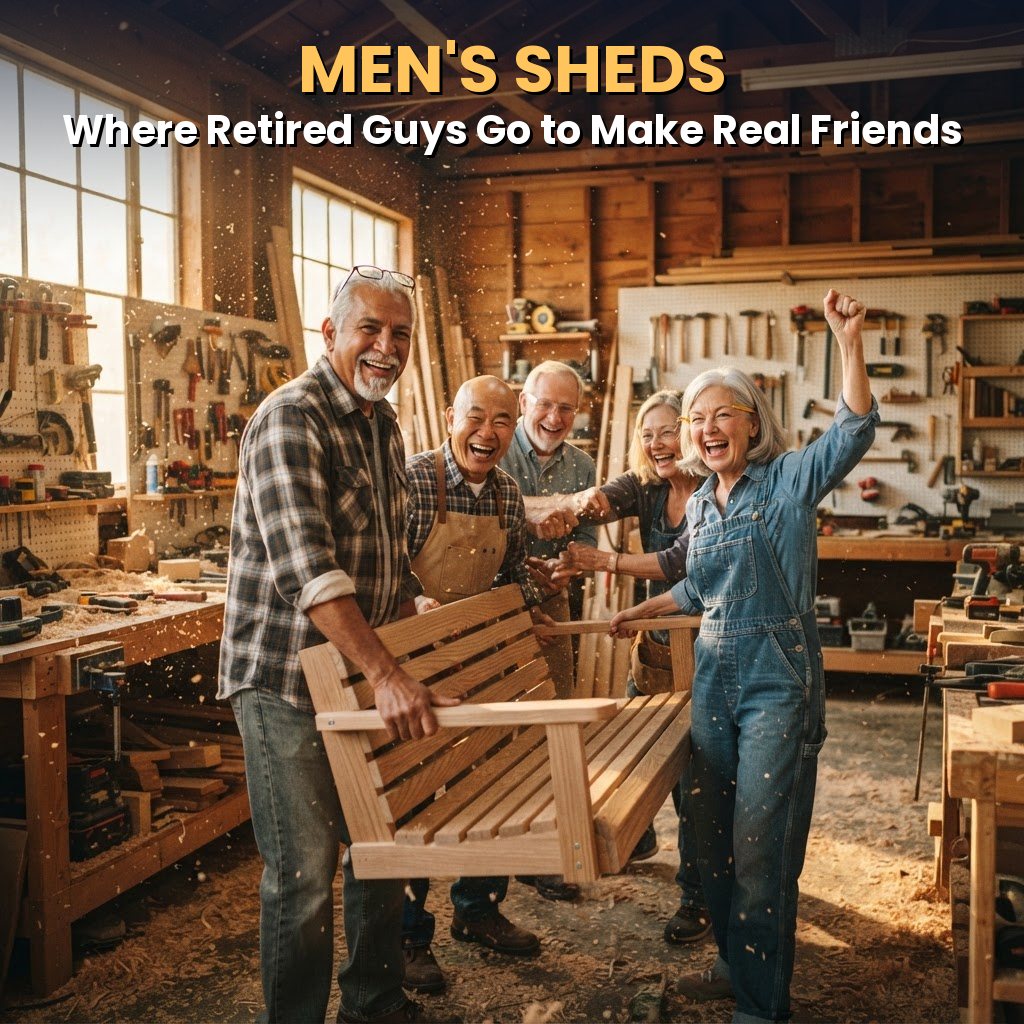
    Pretty much whatever the members want. Next Avenue visited a shed in Ruston, Louisiana, where members turn out porch swings, bird feeders and charcuterie boards, then donate them to local nonprofits or sell them to keep the lights on. The shed’s president, Tommy Folk, is a 77-year-old retired contractor who mostly sits back, lends a hand now and then, and visits with everybody.

    The North Palm Beach County shed in Florida does a lot less sawing. They’ve played bocce, gone fishing, toured a 911 call center and watched cooking demonstrations. The Honolulu crew works out of a 6,000-square-foot warehouse and restores old outrigger canoes.

    And if you’ve never held a hammer in your life, that’s fine too. Steve Werner of the US Men’s Sheds Association told Next Avenue that even a man who “doesn’t know what a screwdriver is” belongs there. Somebody will show you. Many hands make light work.

    Can women join a Men’s Shed?

    Yes, and plenty do. That Ruston shed is about half women. Some of them head for the craft room to sew and paint, and others are right out there doing woodworking with the men. The US Men’s Sheds Association says women have been key founders and leaders, and that everyone is welcome.

    Ladies, Werner gave y’all some credit too. He said that in a lot of cases, it’s the wives who “literally and figuratively will drive men to the sheds.” Honolulu’s shed only exists because founder Glenn Sears’s wife showed him an article about the sheds in Australia.

    How do you find or start a Men’s Shed?

    Start with the “Find a Shed” page on the US Men’s Sheds Association website. The movement is still young here, with only a few dozen sheds across the country, so there may not be one close to you yet.

    If there isn’t, you’re in good company. When Glenn Sears went looking in Honolulu, he couldn’t find a single shed anywhere in the country. So he called the folks in Australia, and they told him to start one. That shed has more than 100 members now.

    You don’t need a warehouse to get going. Billy Baker started his own crew by inviting about a dozen guys to a barn on a Wednesday night. He found that just sitting around talking got old fast, so the group needed what he calls a “velvet hook,” a soft excuse to keep showing up. For them it was a plan to build a dirt bike track. For you it might be fixing up lawn chairs for the senior center or building a little free library for the neighborhood. A garage, a coffee pot and a standing day of the week will do the rest.

    Your local senior center, library, church or VFW hall is a good place to ask about room to meet. And if you want something to do with your new friends besides sanding, my winter checklist has a whole section on why putting people on the calendar every week is good for you.

    Common Questions

    What is a Men’s Shed?

    A Men’s Shed is a community workshop or meeting place where mostly older and retired men gather to build, fix, learn and talk. The idea started in Australia in the 1990s.

    Do Men’s Sheds help with loneliness?

    Early research says yes. In a Canadian survey, about a quarter of shed members felt isolated before joining, compared with fewer than 10% after.

    Can women join a Men’s Shed?

    Yes. The US Men’s Sheds Association says everyone is welcome, and some sheds, like the one in Ruston, Louisiana, are about half women.

    Do you need woodworking skills to join a Men’s Shed?

    No. Many sheds also fish, cook, play games and take field trips, and members are happy to teach beginners.

    How do I find a Men’s Shed near me?

    Check the “Find a Shed” page on the US Men’s Sheds Association website. If none is nearby, the association can help you start one.

    So tell me in the comments: if your town opened a shed tomorrow, what’s the first thing you’d want to build? And if you’re already a shedder, I’d love to hear about your crew.

    Tom

    About Tom Green

    Tom Green writes Sturdy Years. He was born in Pell City, Alabama, in 1962, and he’s a country boy and a true Southerner through and through. He’s a regular, laid-back 64-year-old who keeps things simple and passes along what he learns about getting older. Tom isn’t a doctor. He reads up on the research and shares what’s useful, plain and simple. Read more about Tom.

    Health note: This article is for general education and isn’t medical advice. If loneliness or low moods have been hanging on for a while, let your doctor know. It’s a real health concern, and help is out there.

    Research & Sources

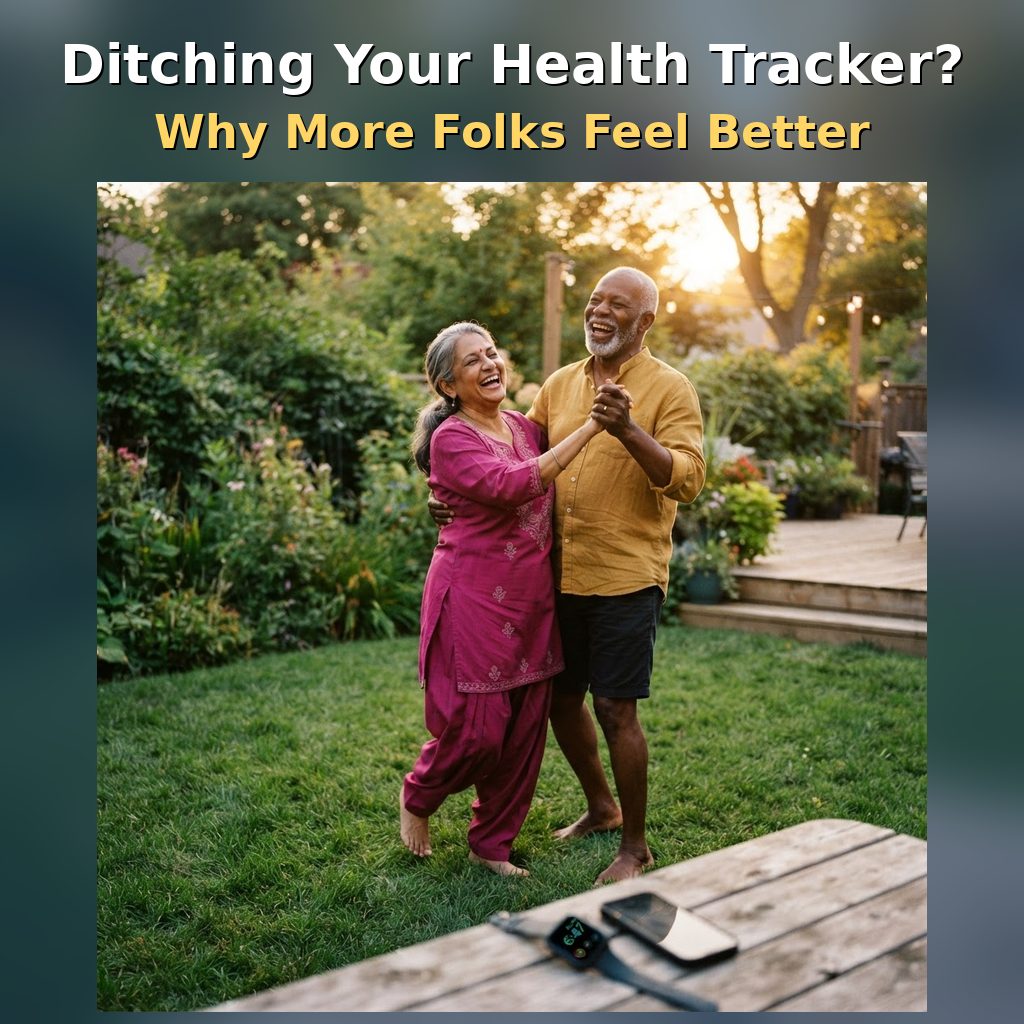
  • Ditching Your Health Tracker? Why More Folks Feel Better

    Ditching Your Health Tracker? Why More Folks Feel Better

    Is your fitness watch making you feel worse instead of better?

    Short answer: For a lot of folks, it is. Sleep trackers guess wrong a good bit, the famous 10,000 steps started out as a sales pitch, and fretting over scores can actually wreck your sleep. Keep the few numbers your doctor cares about, like blood pressure, and try a week without the rest. You might be surprised how good you feel.

    John Battelle helped start Wired magazine. If anybody on God’s green earth loves a gadget, it’s him.

    So listen to what happened this past summer. He’d worn an Oura ring every day for about a year. Sleep scores, calorie counts, daily goals, the whole works. Then he left the charger at home, and the ring went dead.

    He didn’t run out and buy a new charger. He just waited to see what would happen.

    What happened was, he felt better. On his blog, he wrote that he felt lighter and less anxious with the ring off, and he believes he’s sleeping better without it than he did with it. Last he said, he wasn’t sure he’d ever put it back on.

    Now, if a tech man like that can take the ring off and breathe easier, I reckon the rest of us can at least think about it.

    How can a bad sleep score make you feel tired?

    Picture this. You wake up feeling fine. Rested, even. You pour your coffee, glance at your wrist, and your watch says you scored a 62 on sleep.

    And just like that, you’re dragging.

    Nothing changed in your body. A little screen talked you out of a good morning. It happens so often that sleep doctors gave it a name: orthosomnia. That’s when chasing a perfect sleep score makes you sleep worse.

    Sleep psychologist Dr. Kelly Baron came up with that word back in 2017. She had patients who trusted their wristband more than a real sleep test done in a lab. Some stayed in bed longer just to bump their score up, which is about the worst thing you can do for sleep. She’s said she’s watched people develop insomnia from worrying over what their tracker told them.

    Here’s the kicker. According to the Sleep Foundation, one 2021 study found trackers only picked out deep sleep correctly about 59% of the time. So that 62 on your wrist? Could be nothing but a guess.

    What really helps sleep hasn’t changed one bit. Same bedtime, same wake-up time, a cool dark room. And if you snore hard or wake up gasping, ask your doctor about sleep apnea. I went deeper on that in Could Your Sleep Schedule Affect How Long You Live?

    Where did 10,000 steps a day even come from?

    This one tickled me. That 10,000 number didn’t come from a doctor. It came from a gadget sale.

    Back in 1965, a Japanese company put out one of the first pedometers and named it the manpo-kei, which means “10,000-step meter.” Harvard researcher Dr. I-Min Lee went digging, and she told Harvard Health the name was a marketing tool. She’s also said the Japanese character for 10,000 looks a little like a man walking. That’s it. That’s the whole science.

    So she tested it. Her team followed more than 16,000 women who averaged about 72 years old. The ones walking around 4,400 steps a day lived longer than the ones under 2,700, and the benefits topped out around 7,500.

    Then a big 2025 review out of the University of Sydney looked at 57 studies and more than 160,000 adults. Compared with folks taking about 2,000 steps a day, around 7,000 steps was tied to a 47% lower risk of dying early. Even 4,000 steps was tied to a 36% lower risk. Past about 7,000, the extra benefit mostly leveled off.

    Lead researcher Professor Melody Ding put it best: shift the focus “from perfection to progress.” For about 60 years, folks have felt like failures for missing a number somebody picked because it looked good on a box.

    Is your tracker helping you or running you?

    Quick gut-check. Be honest now:

    • Do you check your score before you check how you feel?
    • Has a bad number ever spoiled a day you felt fine about?
    • Have you ever walked laps around the kitchen at night just to close a ring?
    • Do you feel a little guilty when the watch comes off?
    • Have you skipped something fun because it would “mess up” your numbers?

    Two or more yeses, and that gadget might be holding the reins. No shame in it. It just means it’s time to take them back.

    Who else is telling folks to put the gadget down?

    Battelle’s got plenty of company. The Global Wellness Summit, which puts out one of the best-known wellness trend reports around, named “The Over-Optimization Backlash” a big trend for 2026. Writer Jessica Smith says all that health data leaves a lot of people overwhelmed instead of healthier.

    Bestselling author Brad Stulberg says one bad night or one missed walk isn’t the real problem. The problem is the worried spiral that comes after. In his essay “Optimization Culture is Making Us Fragile”, he’s got a line I’d put on a coffee mug: “Life isn’t meant to be optimized. It’s meant to be lived.”

    And Oliver Burkeman, who wrote the bestseller Four Thousand Weeks, says in Meditations for Mortals that if you keep optimizing everything, you can optimize away the very things that make life worth living.

    Our grandparents never counted a step in their lives. They knew when they were tired, hungry or needed to get up and move. Somewhere along the way, a lot of us handed that job to a gadget. I reckon it’s about time we took it back.

    What health numbers are still worth keeping?

    Now, I’m not telling you to fly blind. A few numbers really do matter:

    • Your blood pressure. The U.S. Preventive Services Task Force and the American Heart Association both recommend checking it at home. Use an upper-arm cuff that fits, sit quiet a few minutes first, and keep your feet flat on the floor.
    • Anything your doctor asks you to track, like blood sugar or your weight with heart failure. Don’t quit those.
    • Real changes in how you feel. New chest pain, shortness of breath, dizziness or a fall matter more than any score on your wrist. Call your doctor.

    And if your step counter is what gets you off the couch, keep it. A tool’s only a problem when it starts running you.

    How do you try life without a tracker?

    Do what Battelle did, just on purpose. Here’s a 7-day experiment. It costs nothing, and you can strap the watch back on next Sunday if you miss it.

    1. Day 1: Ask yourself first. Before you look at any score, ask “How do I feel?”
    2. Day 2: Kill the buzzing. Turn off the alerts, rings and daily scores.
    3. Day 3: Walk by the clock, not the count. Take a 20-minute walk and don’t check the steps.
    4. Day 4: Call somebody to walk with you. A friend beats any step goal, and you’ll actually show up.
    5. Day 5: Same bedtime. No score. Just a steady bedtime.
    6. Day 6: Take the watch off all day. Notice how you sleep, move and feel.
    7. Day 7: Look back. Worse, the same, or better? That’s the only score that counts.

    Like the old saying goes, a watched pot never boils. Some things just go better when you quit staring at them.

    Common Questions

    Can a fitness tracker make you feel worse?

    Yes, for some people. Worrying over sleep and activity scores can raise anxiety and even hurt sleep. Sleep experts call it orthosomnia.

    Where did the 10,000 steps a day goal come from?

    A 1965 Japanese pedometer called the manpo-kei, or “10,000-step meter.” Harvard researchers say the name was a marketing tool, not science.

    How many steps a day do you really need?

    About 7,000 steps a day was linked to a 47% lower risk of early death in a 2025 review of 57 studies. Even 4,000 steps helped.

    Are sleep trackers accurate?

    Not very for sleep stages. One 2021 study found trackers picked out deep sleep correctly only about 59% of the time.

    Should older adults check blood pressure at home?

    Yes. Home checks with a fitted upper-arm cuff are recommended by the U.S. Preventive Services Task Force and the American Heart Association.

    So tell me, y’all: does your tracker help you or just nag you? Try the 7-day experiment and come back and tell me how it went in the comments.

    — Tom

    About Tom Green

    Tom Green writes Sturdy Years. He was born in Pell City, Alabama, in 1962, and he’s a country boy and a true Southerner through and through. He’s a regular, laid-back 64-year-old who keeps things simple and passes along what he learns about getting older. Tom isn’t a doctor. He reads up on the research and shares what’s useful, plain and simple. Read more about Tom.

    Health note: This article is for general education and isn’t medical advice. Don’t stop tracking anything your doctor has asked you to monitor, and call your doctor about new symptoms instead of relying on a device.

    Research & Sources

  • Somatic Exercises for Beginners Over 50: 5 Easy Moves to Calm Stress

    Somatic Exercises for Beginners Over 50: 5 Easy Moves to Calm Stress

    You know the feeling. Your shoulders are hiked up around your ears. Your jaw’s clenched and you didn’t even notice till just now. You’re worn out, but when you lie down at night, your mind won’t hush.

    That’s your nervous system stuck in high gear. And trying to think your way out of it hardly ever works.

    That’s where somatic movement comes in. It’s not a workout, and it’s not about burning calories. It’s slow, gentle movement paired with easy breathing and paying attention to how your body feels. The whole point is to help your body shift out of “fight or flight” and back toward rest.

    I work out four days a week, but this is a different animal. It’s not about getting stronger. It’s about getting calmer, and that’s a skill most of us never got taught.

    Where “somatics” came from

    The word goes back to Thomas Hanna, a philosopher and movement teacher who coined the term “somatics” in 1976. Hanna had an idea I find pretty interesting for folks our age. He believed a lot of the stiffness and soreness we blame on getting older is really our muscles getting stuck in old habits from years of stress, and that we can teach them to let go again.

    You don’t have to buy all of that to get something out of it. But I reckon most of us have a spot or two that’s been tight so long we forgot it could feel any different.

    What the research says (and doesn’t)

    Here’s the part that impressed me. In 2023, Stanford researchers Dr. David Spiegel and Dr. Andrew Huberman ran a study with 111 people. Each person did five minutes a day of either a breathing exercise or mindfulness meditation for a month.

    Everybody felt better. But the breathing groups got a bigger boost in good mood than the meditation group, and the winner was a simple move called the cyclic sigh. I’ll show you how to do it below.

    Now, an honest word. You’ll see somatic workouts online promising to “release trauma stored in your muscles.” That goes past what the science shows. Peter Levine’s Somatic Experiencing is a real body-based approach that trauma therapists use, and a 2021 review in the European Journal of Psychotraumatology called the early results encouraging. But the researchers also said it needs better studies before anybody can make big claims.

    So here’s how I’d put it: this is for everyday stress. If you’re carrying real trauma, a trained therapist is the right call.

    Five “movement snacks” you can do at home

    Instead of one long session you never get around to, try short little breaks through the day. Most take five minutes or less. No equipment, no special clothes, no experience needed.

    1. Morning body scan and shoulder rolls (2 to 5 minutes)

    Sit on the edge of the bed when you wake up. Close your eyes and slowly notice your body from head to toe. What feels tight? Heavy? Warm? Don’t fix anything yet. Just notice. Then roll your shoulders slowly, tip your head gently side to side, and let out a long sigh.

    2. The cyclic sigh (5 minutes)

    This is the one from the Stanford study:

    • Breathe in through your nose until your lungs feel full.
    • Then sneak in one more short sip of air through your nose.
    • Let it all out slowly through your mouth, nice and long, till you’re empty.

    Keep that up for about five minutes. The long, slow breath out is what tells your body it’s okay to ease off.

    3. Desk or chair breaks (1 to 3 minutes, a few times a day)

    Roll your shoulders. Stretch your neck and open and close your hands. Sway a little side to side. Feel your feet flat on the floor and take a few breaths where the breath out is longer than the breath in. Small and often beats big and rare.

    4. Evening unwind (3 to 10 minutes)

    Lie on the floor or your bed with your knees bent. Scan your body again and let the leftover tension go where it can. Try some gentle rocking, a slow twist to each side, or just cross your arms and give yourself a hug. Some folks like a minute of loose, gentle shaking of the arms and legs. It feels sillier than it looks, and better than you’d expect.

    A warm mug in your hands afterward makes a nice way to close out the day. Azomalli Tea makes a cacao shell tea that tastes a lot like hot cocoa, and it’s caffeine-free, so it won’t keep you up. (affiliate link)

    5. The 4-7-8 wind-down (before bed)

    This one comes from Dr. Andrew Weil, the integrative medicine doctor. Breathe in quietly through your nose for a count of 4, hold for 7, then breathe out through your mouth for 8. Do four rounds. If you’ve been waking up at 3 AM, it’s worth keeping in your back pocket.

    One safety note: if you ever feel dizzy or overwhelmed, stop. Put a hand on your chest or belly, breathe normally, and look around the room till you feel settled.

    Three rules that make it work

    • Go slow. Slow movement is what your nervous system reads as “safe.”
    • Keep it painless. This isn’t a “no pain, no gain” deal. If it hurts, back off.
    • Pay attention to how it feels, not how it looks. Nobody’s grading you.

    Five minutes most days does more than one big hour on a Sunday. Over time, you’ll start noticing tension sooner, before it turns into a headache or a bad night. Like the old saying goes, an ounce of prevention is worth a pound of cure.

    If stiffness is part of your story, you might also like morning stiffness after 50: what helps and how posture can make you look older.

    Other voices worth following

    • Nancy L. Fitness: Nancy is a certified personal trainer who coaches folks over 50 on mobility and comfort, and her husband Roy covers strength for the fellas.
    • Sixty and Me: Margaret Manning’s big community site for women over 60. Her piece on finding your center at any age fits right in with this.
    • Essential Somatics: teaches movement based on Thomas Hanna’s work and offers a free beginner mini course if you want to go deeper.

    Common Questions

    What is somatic movement?
    Slow, gentle movement done with easy breathing and close attention to how your body feels. The goal is to calm your nervous system and ease tension, not to burn calories.

    Can somatic exercises help with stress after 50?
    They can help with everyday stress. A 2023 Stanford study found just five minutes a day of slow breathing, especially the cyclic sigh, improved mood more than meditation did.

    What is the cyclic sigh?
    Breathe in through your nose, take a second short sip of air on top, then breathe out slowly through your mouth. Repeat for about five minutes.

    Does somatic movement release trauma?
    That claim goes beyond the evidence. Body-based trauma therapy shows early promise, but for real trauma, work with a trained therapist.

    How long should I do somatic exercises each day?
    Five minutes most days is a good start. Short and regular works better than long and rare.

    You can’t think your way out of a stressed-out nervous system. But you can move and breathe your way toward calm, a few minutes at a time.

    If you missed last week’s post, I looked at retinal vs. retinol for mature skin. Next week wraps up this series: the best non-invasive alternatives to face fillers.

    Where do y’all carry your stress, shoulders, jaw, or somewhere else? Tell me in the comments.

    — Tom

    This is general wellness information, not medical advice. If you have a health condition, a history of trauma, or pain that worries you, talk with your doctor or a qualified professional before starting something new.

    About Tom Green

    Tom Green writes Sturdy Years. He was born in Pell City, Alabama, in 1962, and he’s a country boy and a true Southerner through and through. He’s just a regular, laid-back 64-year-old who keeps things simple. He shares what he learns about skincare, fitness and getting older, and what’s working for him. He’s also the author of A Practical Guide to Getting Older Without Giving Up on Yourself. Tom isn’t a doctor. He reads up on the research and passes along what’s useful, plain and simple. Read more about Tom.

    Advertisement

  • They Want Me to Act My Age. I Refuse.

    They Want Me to Act My Age. I Refuse.

    Do you have to act your age after 60?

    Short answer: No. There’s no deadline and no right way to get older. You can still want good food, strength, closeness, your own money and your own home, and you can start new things at any age. There’s only your way, and you get to choose it.

    They want me to act my age. I refuse.

    I am 64. I have been in recovery for more than 25 years. I started Sturdy Years because I was tired of being talked to like I was already done. Tired of being told to slow down, to be careful, to act my age, to be grateful for what I have left.

    I am not done. I am not grateful to be quiet. I am not here to be a sweet old man in a cardigan who tells you to eat your vegetables and take a nice walk.

    I still want things. I want good food, and I want to enjoy it. I want to be strong, and I want to look good doing it. I want to laugh loud. I want to be close to someone. I want to have a life that feels alive, not just safe.

    And yes, I will say the part most people will not say out loud after 60. I still want sex. I still want to be wanted. I still want to touch and be touched, and I do not think that stops because you turn 60, or 70, or 80. If that shocks you, that says more about how you see older people than it does about me.

    Let me be clear about what I mean by that, because I am not talking about being reckless. I am talking about being human. I am talking about holding hands, and kissing, and waking up next to someone and feeling like you matter. I am talking about not being treated like that part of your life ended the day you got your first gray hair, or the day you retired, or the day you became a grandparent.

    I have heard people say, at our age, you should be past all that. Past what? Past wanting to feel alive in your own body? Past wanting to be close to another person? I am not past that, and I do not think you are either, even if you have been told to be quiet about it for years.

    I also want my money to be mine. I worked for it. I am not a bank for my family. I am not a free babysitter, a free nurse, a free housekeeper. I love my family, but I am not giving up my life so they can have an easier one. I spent too many years giving myself away. I am not doing that again.

    I know how that sounds to some people. Selfish. Ungrateful. But let me ask you this. When was the last time someone asked you what you wanted, instead of what you could do for them? When was the last time you spent money on yourself, just because it made you happy, and did not feel guilty about it for a week after?

    I have watched people my age save every penny, skip every trip, say no to every good meal, because they were afraid to spend what they had saved. Afraid the kids would need it. Afraid something bad would happen. Afraid to enjoy it. I do not want to live like that. I want to enjoy what I worked for, while I am still here to enjoy it.

    I want to live in my own home, on my own terms. I do not want to move in with someone just because I am older. I do not want to merge my money, my house, my life, just to prove I love someone. I can love someone and still keep my own front door key.

    I know couples who live apart, and love each other deeply, and see each other when they want to, not because they have to share a bathroom and a bank account. I know people who got divorced at 60, at 65, at 70, and found a better life on the other side, not a smaller one. I know widows and widowers who started dating again, and were told they were moving on too fast, as if grief had a deadline.

    There is no deadline. There is no right way to do this. There is only your way, and you get to choose it.

    I want to start new things. I started this page after 50, when most people told me I was too late. I was not too late. I am still starting things. I am still learning. I am still making mistakes, and I am still here.

    I did not start Sturdy Years to be an expert. I started it because I was living it, and I wanted to write about it honestly. About strength, and food, and skin, and staying engaged, and making the most of the years ahead. Not as a guide from above, but as a person in the middle of it, trying to figure it out like everyone else.

    I have been in recovery for more than 25 years. That taught me something most people never learn. It taught me that starting over is possible, at any age, and that one day at a time is not just a saying, it is a way to live. I did not get sober once and then stay sober forever. I stayed sober one day, and then another, and then another, for years. That is how you build a new life. Not all at once. One day at a time.

    That is how I am doing this too. One post at a time. One walk at a time. One good meal at a time. One honest conversation at a time.

    This is not a guide. This is not advice. This is me telling you the truth about what it feels like to be 64 and still hungry for life, when the world keeps handing you a rocking chair and telling you to sit down.

    If you feel the same way, if you are tired of being told to act your age, then you are my people. We are not done. We are just getting started, on our own terms.

    So here is my question for you, and I really want to hear your answer. What are you refusing to give up? Is it your independence? Your money? Your love life? Your dreams? Your right to start over?

    Tell me in the comments. Tell me what you are holding on to, even when everyone else tells you to let it go. I will read every one.

    Thomas Green, Sturdy Years

    Join the Conversation

  • Too Old to Start Over After 50? Grandma Moses Didn’t Think So

    Too Old to Start Over After 50? Grandma Moses Didn’t Think So

    Are you too old to start over after 50?

    Short answer: No, you’re not too old to start over after 50. Grandma Moses didn’t take up painting seriously until her late 70s and kept painting into her 100s. Laura Ingalls Wilder was in her 60s when her first Little House book came out. Start small, like ten pages, ten minutes or one phone call.

    Ever catch yourself thinking, “I’m too old to start over”? Every so often somebody tells me, “I should’ve done this years ago.”

    Maybe it’s a trip they never took. A guitar sitting in the closet. A garden they keep meaning to plant. A book they’ve been “fixing to write” since the kids were little.

    And then right behind it comes the real question: At my age, what’s the point?

    I reckon the point is that you’re still here. The years you’ve already lived don’t disqualify you from the ones still coming.

    I Started This Site at 64

    I’ll tell you straight: I started Sturdy Years at 64. I didn’t know much about websites. I made plenty of mistakes, and some of them I’m still cleaning up. But I’m glad I didn’t wait for the “right time,” because the right time wasn’t coming. It was just going to keep being later.

    I’m not telling you that to brag. I’m telling you so you know the fellow writing this is in the same boat as a lot of y’all.

    Some Folks Who Didn’t Get Going Until Later

    When I start thinking I’m too old for something, I think about these people:

    • Grandma Moses (Anna Mary Robertson Moses) didn’t take up painting seriously until she was in her late 70s, after arthritis made her embroidery too hard. She kept painting into her 100s, and her farm scenes ended up in museums. (Wikipedia)
    • Frank McCourt taught high school in New York for about 30 years. He published his first book, Angela’s Ashes, at 66, and it won the Pulitzer Prize. (NPR)
    • Laura Ingalls Wilder was in her 60s when her first Little House book came out. (United Methodist Communities)

    There’s a whole website full of stories like these called Later Bloomer, and it’s worth a look on a day you’re feeling behind. Larry Potter over at Last Best Bite wrote a good piece on this too, “After All, You’re Never Too Old for a First Time.”

    None of them knew how it would turn out when they started. They just started.

    You’re Not Starting From Scratch

    Starting something after 50 feels different because you know how fast time goes. But you also bring something you didn’t have at 20: experience.

    You know what matters and what doesn’t. You’ve made mistakes and lived through things you weren’t sure you would. That’s not baggage. That’s the stuff you get to carry into whatever comes next.

    Arthur Brooks, a Harvard professor, wrote a whole book about this called From Strength to Strength. His point is that some of our smarts fade as we get older, like quick thinking and raw speed, but another kind keeps growing: the know-how and judgment that come from years of living. That’s the kind that makes you good at teaching, advising and seeing the big picture. In other words, the second half isn’t just leftovers. It’s a different kind of strong.

    Being Bad at It Is Part of the Deal

    This is where a lot of us quit too soon.

    The first painting looks like a kid made it. The first exercise class leaves you sore and a little embarrassed. The first try at anything new feels like everybody else got the instructions but you.

    Well, they probably have been at it longer. You’re comparing your first page to their twentieth chapter. That’s not a fair fight, so don’t pick it.

    Your first job isn’t to be good. Your first job is to show up.

    Try the One-Hour Rule

    You don’t need to plan the rest of your life. That’s too much pressure for anybody.

    Just ask yourself: What would I enjoy trying for one hour this week?

    An hour can be a class at the library, a walk somewhere you’ve never been, a new recipe, a beginner video, or a phone call to somebody who already does the thing you’re curious about.

    If you like it, give it another hour. If you don’t, you’ve got your answer, and that’s not failure either. You’re allowed to say, “Tried it. Not for me. What’s next?”

    Make It Easy on Yourself

    1. Make the first step almost silly-small. Ten pages, ten minutes, one phone call.
    2. Put it on the calendar. If it doesn’t have a day and time, “someday” turns into never.
    3. Find the beginner version. The intro class, the easy trail, the “for dummies” book. No shame in it.
    4. Expect it to feel awkward. Awkward doesn’t mean wrong. It means new.
    5. Give it more than one try. The first time is usually the worst it’ll ever be.

    If you want to dig a little deeper, James Clear’s book Atomic Habits is a good one. His whole idea is that tiny changes, done over and over, add up to big results, and that you’ll stick with a new habit a lot longer if you make it easy to start. He calls it the two-minute rule: shrink the new thing down until it takes two minutes or less.

    You Don’t Have to Impress Anybody

    This may be the best part of getting older. You don’t have to turn your new thing into a business, win a ribbon or post it online. You can paint because you like colors, or walk because you like being outside. You can take a class just to get out of the house and meet somebody new.

    Not everything worth doing has to be an accomplishment.

    And if the people around you don’t understand why you want to do it? They don’t have to. Like the old saying goes, you can’t plow a field by turning it over in your mind.

    Common Questions

    Am I too old to start over at 50 or 60?

    No. People learn new skills, pick up hobbies and start new work well into their 60s, 70s and beyond. You don’t have to become an expert for it to be worth doing.

    Is 60 too old to start a new career?

    Not necessarily. Plenty of people switch to part-time work, consulting, teaching or a small business in their 60s. Start by using skills you already have, and test the idea small before you jump in with both feet.

    What if I don’t know what I want to try?

    Think about what you used to enjoy as a kid, what you catch yourself reading about, or what you’ve always said “I’d like to try that someday” about. Start there.

    What if I start and then quit?

    Then you learned something about yourself. That still counts.

    What if it’s something physical?

    Start at a beginner level, and if you’ve got a health concern, check with your doctor first. For a safe place to start on strength, see How to Build Muscle After 60 Without Getting Hurt.

    Try This This Week

    Grab a piece of paper and write down three things you’re curious about. Not things you should do, but things that make you think, “I’ve always wondered what that’d be like.”

    Circle one. Take the smallest first step this week.

    If you want more ideas, I put together 9 ways to start a new chapter after 50 and 10 hobbies that don’t cost much.

    What Would You Start?

    If you could begin one new thing this year, what would it be? Tell me in the comments. Somebody reading might need the nudge.

    You’re not behind. Starting at 50, 60, 70 or beyond still counts.

    — Tom

    I’ve also mapped out some great tools on my new Tech for Independent Living After 50 page.

    About Tom Green

    Tom Green writes Sturdy Years. He was born in Pell City, Alabama, in 1962, and he’s a country boy and a true Southerner through and through. He’s just a regular, laid-back 64-year-old who keeps things simple. He shares what he learns about skincare, fitness and getting older, and what’s working for him. He’s also the author of A Practical Guide to Getting Older Without Giving Up on Yourself. Tom isn’t a doctor. He reads up on the research and passes along what’s useful, plain and simple.

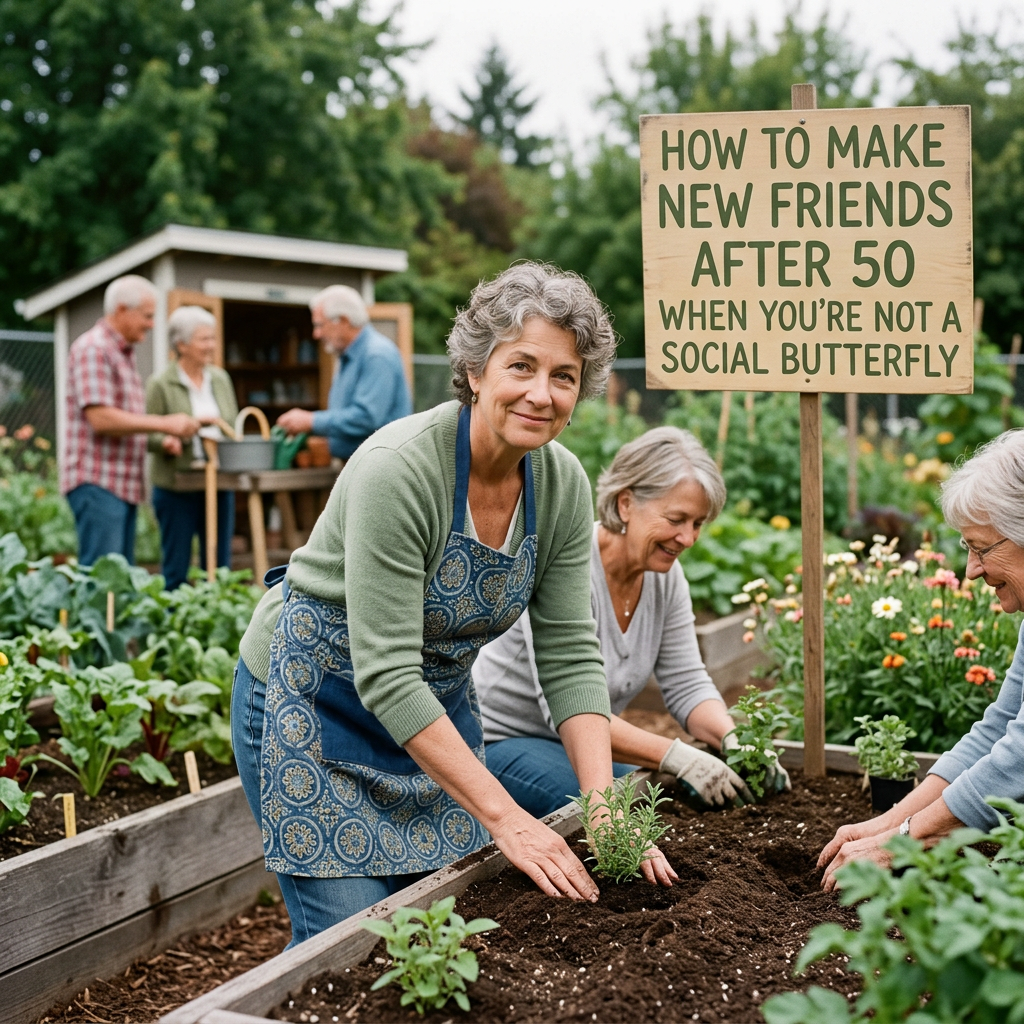
  • How to Make New Friends After 50 When You’re Not a Social Butterfly

    How to Make New Friends After 50 When You’re Not a Social Butterfly

    How do you make new friends after 50 if you’re not a social butterfly?

    Short answer: Don’t go looking for a best friend. Look for one person you enjoy talking to, and go where the same people show up week after week, so faces turn into friends. When someone seems interesting, stay one extra minute, then invite them to something small, like coffee.

    You do not have to become a social butterfly to make a new friend.

    You do not have to walk into a crowded room and work the crowd. You do not have to become someone who loves small talk.

    And you certainly do not have to pretend you are younger than you are.

    You just need a reason to cross paths with the same people often enough for something real to grow.

    Friendship after 50 can be different

    When we are younger, friendship often happens automatically. School. Work. Neighbors. Children. Sports. Shared schedules.

    After 50, some of those built-in connections disappear. Retirement, divorce, moving, children leaving home and losing touch with old friends can quietly change a person’s social world.

    You can be surrounded by people and still feel alone.

    1. Stop looking for “a best friend”

    That goal is too big.

    Look for one person you enjoy talking to. One person you could have coffee with. One person who makes you laugh. One person you would like to see again.

    Friendship usually grows through small repetitions, not one dramatic meeting.

    2. Go where the same people go

    If you attend a different event every week, you meet lots of people but rarely have enough repeated contact to build familiarity.

    Try something recurring: the same walking group, class, volunteer shift, church activity, book club, gym time, community event or hobby group.

    Familiarity is one of friendship’s quiet ingredients.

    3. Use the “one extra minute” rule

    If someone seems interesting, stay one extra minute.

    Ask one question. Give one compliment. Mention something you have in common.

    You do not have to perform. You are simply leaving the door open.

    4. Invite people to something small

    “Want to grab coffee sometime?” can feel surprisingly big.

    Try something more specific:

    • “I’m going to walk Saturday morning. Want to come?”
    • “I’m grabbing lunch after this. Want to join me?”
    • “I’m going to that market next weekend. Want to go?”

    Small invitations are easier to accept and easier to decline without embarrassment.

    Or keep it close to home. A pot of good coffee on the porch is about as easygoing an invitation as there is. If you want to make it a little special, Hula Daddy sells Kona coffee grown in Hawaii that gives folks something to talk about. (affiliate link)

    5. Do not take every “no” personally

    Adults have complicated lives. Someone may be busy, tired, caring for family, working or simply not ready to expand their social circle.

    One no does not mean you are unlikeable.

    6. Let friendship be imperfect

    A new friend does not have to agree with everything you believe. They do not have to share your entire history. They do not have to be available every day.

    Sometimes a good friendship is simply two people who enjoy being around each other.

    Why this matters more than people realize

    The National Institute on Aging notes that loneliness and social isolation can affect physical, mental and cognitive health. That does not mean everyone needs a huge social calendar. It means meaningful connection matters.

    So if you have been telling yourself, “I’m just not a people person,” consider changing the sentence.

    Maybe you are not a crowd person. That is different.

    A challenge for this week

    Do not promise yourself you will make five new friends.

    Instead, start one conversation. Return to one place. Say yes to one invitation. Invite one person to do something simple.

    That is enough.

    Common Questions

    Is it harder to make friends after 50?

    It can be because some natural sources of connection change, but adults can absolutely form new friendships later in life.

    What if I am shy?

    Choose low-pressure settings with repeated contact. You do not need to become outgoing to become connected.

    Where can I meet people after 50?

    Try recurring activities such as volunteering, classes, walking groups, hobbies, community organizations, faith communities or places you already enjoy.

    What if someone does not respond to my invitation?

    Do not automatically interpret it as rejection. Keep meeting people and leave room for friendships to develop naturally.

    Keep Reading

    Find more practical ideas for living a fuller life after 50 at Sturdy Years.

    About Tom Green

    Tom Green is the creator of Sturdy Years, sharing practical ideas for healthier, happier and more meaningful life after 50. He was born in Pell City, Alabama, in 1962, and he’s a country boy and a true Southerner through and through.

    Sources & Proof

    National Institute on Aging: Loneliness and Social Isolation
    National Institute on Aging: Staying Connected

    Note: If loneliness is accompanied by persistent sadness, hopelessness or loss of interest in normal activities, consider talking with a healthcare professional.

    A Book Worth Picking Up

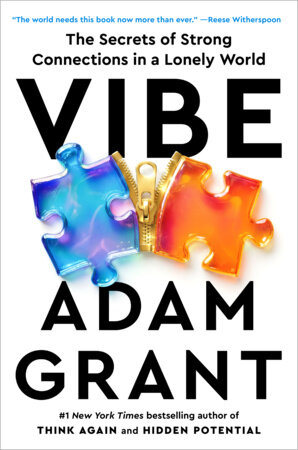
    Vibe: The Secrets of Strong Connections in a Lonely World book cover

    If this post spoke to you, here is a book that goes deeper. In Vibe: The Secrets of Strong Connections in a Lonely World, Adam Grant looks at the science of how closeness actually forms, and why building meaningful ties feels so hard right now. What I like best is that Grant starts from his own experience as a shy introvert, so this is not advice from someone who never struggled to connect. It is a practical, encouraging read for anyone who wants stronger friendships without pretending to be someone they are not. You can find Vibe on Amazon.

    Disclosure: Purchases through affiliate links may earn Sturdy Years a commission at no additional cost to the reader.

    I’ve also mapped out some great tools on my new Tech for Independent Living After 50 page.

  • How to Enjoy Life After 50: 4 Simple Habits That Make the Years Better

    How to Enjoy Life After 50: 4 Simple Habits That Make the Years Better

    How can you enjoy life more as you get older?

    Short answer: Joyspan is how much you actually enjoy your life as you get older. Gerontologist Dr. Kerry Burnight of the UC Irvine School of Medicine came up with the word, and she says four habits build it: grow, connect, give and adapt.

    Most of us have spent years thinking about how long we’ll live. Then the doctors started talking about how many of those years we’ll stay healthy. Fair enough.

    But here’s a question nobody asks you at your checkup: Are you still enjoying it?

    Turns out there’s a word for that. It’s called joyspan, and I reckon it might be the number that matters most.

    Where the word came from

    Dr. Kerry Burnight came up with it. She’s a gerontologist, which is a doctor who studies aging, and she teaches at the UC Irvine School of Medicine. She spent 16 years working with older folks who’d been neglected and mistreated. After seeing the worst side of growing old, she went looking for the other side: what makes people thrive later in life.

    That search turned into her 2025 book, Joyspan: The Art and Science of Thriving in Life’s Second Half. It became a New York Times bestseller.

    Her idea is simple. Joyspan is how much you actually enjoy your life as you get older. Not how many pills you take or how many steps your watch counts. Just whether you still wake up glad to be here.

    Here’s the part I like best. You don’t have to be in perfect shape to have a long joyspan. Bad knees, stiff back and all, you can still have a good one.

    The four things that build it

    Dr. Burnight boils it down to four habits: grow, connect, give, and adapt. Harvard Health wrote about them too. Here’s how I look at each one.

    1. Grow

    Keep learning something. Doesn’t have to be big. A new recipe. A trail you’ve never walked. Finally figuring out what all those buttons on the TV remote do.

    For me, it’s been this website. Some days I’ve wanted to toss the computer out in the yard. But every time I finally figure something out, I feel about ten years younger. That’s what growing does for you.

    2. Connect

    Stay close to people. This one has a lot of science behind it.

    Yvette Francino is a retired coach who writes a blog called Living Life to the Fullest. After she read the book, she wrote about what keeps her own joy going. One of the biggest? She calls her mom every single night.

    Now, you might think that’s her doing her mom a favor. But Yvette says she gets just as much out of those calls as her mom does. A few minutes on the phone, a few laughs, and they both go to bed a little happier.

    That’s what connection looks like. It doesn’t have to be a big family reunion. It just has to happen.

    And the experts back her up. In the 2026 U.S. News Healthy Aging Survey, 59% of the 63 health experts they asked named loneliness and isolation as the most overlooked thing that speeds up aging.

    Easy start: call one person this week you haven’t talked to in a while. Just to see how they’re doing.

    3. Give

    Help somebody. Drive a neighbor to an appointment. Teach a grandkid to fish. Share what you’ve learned the hard way. Helping somebody you know does more for you than you’d think, and we’ve all got something worth passing on.

    4. Adapt

    Things change. Our bodies change, people we love pass on, plans fall through. Dr. Burnight treats those hard times as a normal part of life, not a sign that the good part is over.

    Helen Williams writes about getting older on her Substack, and she shared a story about her grandparents that I can’t stop thinking about.

    Her grandfather walked everywhere. Swam every day. Kept up with his friends. He stayed in the game right up until illness finally made him stop.

    Her grandmother went the other way. One by one, she found reasons to quit the things she loved.

    Same family. Same generation. Two very different later years. And a lot of that difference came down to little choices, made one day at a time. Like the old saying goes, you can’t change the wind, but you can adjust your sails.

    Quick check: What’s your joyspan?

    Grab a pencil or just keep count in your head. Give yourself a score from 1 to 5 on each one. A 1 means “not me at all.” A 5 means “that’s me all day long.”

    1. Grow: I’ve learned or tried something new in the last month.
    2. Connect: I talk with somebody I care about most days.
    3. Give: I’ve helped somebody this week, even in a small way.
    4. Adapt: When things don’t go my way, I find a way to keep going.

    Now add them up:

    • 16 to 20: You’re doing great. Keep it up, and maybe share what’s working with a friend.
    • 10 to 15: Pretty good, with some room to grow. Look at your lowest score and start there.
    • 4 to 9: No shame in that. It just means you’ve got the most to gain. Pick one area and do one small thing this week.

    This is just for fun, not a medical test. It’s a way to see where you stand today.

    A few small ways to start this week

    Jane Woods is a blogger over in England. She’s closing in on 70, taking care of her husband, and still chasing her own goals. She gave Joyspan five stars on her blog Changing People, and she pointed out something I’d never really thought about.

    Joy and happiness aren’t the same thing.

    You can be going through a rough patch, not happy at all, and still catch a moment of joy. A grandbaby’s laugh. A good cup of coffee on a cool morning. Joy lives in the little moments, if you slow down long enough to notice them.

    So here are a few easy ways to catch more of them. None of them cost a dime.

    • Slow down for the good stuff. That first cup of coffee, a sunset, and a song you love. Actually notice it.
    • Take a “joy snapshot” every day. Before bed, think of one moment that made you smile.
    • Volunteer. Church, food bank, library, or wherever fits you.
    • Tend your friendships. They’re like a garden. They need a little water now and then.
    • Get moving outside. A walk in fresh air does more than you’d think.

    How it fits with everything else

    That same U.S. News survey found the experts put plain old exercise and good food at the top of the list, way ahead of trendy supplements and gadgets. (I looked at one of those trendy supplements in my post on NMN.)

    Joyspan is the other half of that. Exercise and good food help you get more years. Joy is the reason you want them.

    If you want to dig deeper, Dr. Burnight’s book Joyspan is a good place to start. It’s a good one to keep on the nightstand.

    Common Questions

    What is joyspan?
    Joyspan is a word coined by gerontologist Dr. Kerry Burnight. It means how much joy and satisfaction you get out of life as you get older, not just how many years you have.

    How is joyspan different from lifespan and healthspan?
    Lifespan is how long you live. Healthspan is how many of those years you’re healthy. Joyspan is how much you enjoy them.

    What are the four parts of joyspan?
    Grow, connect, give, and adapt. Keep learning, stay close to people, help others, and roll with the changes life brings.

    Can you raise your joyspan after 60?
    Yes. Dr. Burnight treats joyspan as a habit, not luck, and says the best time to start is now. Small steps, like calling a friend or trying something new, count.

    Do you have to be healthy to have a long joyspan?
    No. Plenty of folks with aches, health problems, or hard seasons still find real joy. It’s more about how you live your days than how perfect your body is.

    One question to sit with

    What did you enjoy this week?

    If the answer comes quick, good for you. If it comes slow, pick one of the four, grow, connect, give, or adapt, and do one small thing with it before Sunday.

    Y’all let me know in the comments which one you’re working on. I’d like to hear it.

    — Tom

    I’ve also mapped out some great tools on my new Tech for Independent Living After 50 page.

  • How to Save Money Without Making Life Miserable After 50

    How to Save Money Without Making Life Miserable After 50

    How can you save money without making life miserable?

    Short answer: Saving money after 50 doesn’t mean giving up everything you enjoy. Start by looking at where your money actually goes, then cut forgotten subscriptions and other recurring bills before you cut the things that make life good. Give yourself a guilt-free spending amount, and wait 24 hours before buying anything you don’t need.

    There is a strange idea about saving money after 50: that the answer is to stop enjoying yourself.

    No more dinners out. No little treats. No trips. No hobbies. No replacing something you actually need.

    That is not a life plan. That is a punishment plan.

    Saving money should give you more freedom—not make you afraid to spend a dollar.

    Start by deciding what is worth paying for

    Before cutting anything, make two lists.

    On the first list: things that genuinely make your life better.

    On the second: things you spend money on mostly because you are on autopilot.

    The second list is where the savings usually hide.

    1. Look at where your money actually goes

    The Consumer Financial Protection Bureau recommends getting a realistic picture of current spending rather than creating a budget based on what you think you “should” be spending.

    Look at your bank and credit-card history. Find the recurring charges. Notice the little purchases that repeat. Do not judge yourself. You are collecting information.

    If you find a lot of last-minute takeout in there, or groceries that went bad before you used them, a meal kit might be worth a look. Marley Spoon sends just the ingredients each recipe calls for, so less food ends up in the trash and dinner’s already planned. (affiliate link)

    2. Cut recurring expenses before cutting joy

    A forgotten subscription can cost you month after month. An insurance policy may deserve comparison. A phone plan may have options you are not using.

    Look for expenses that repeat without making you happier.

    Then leave alone the inexpensive things that genuinely give you pleasure.

    3. Give yourself a guilt-free spending category

    This sounds backward, but it can work.

    Set aside an amount you can afford for fun. When the money is spent, you stop until the next period. When you use it, you do not need to feel guilty because you planned for it.

    A budget that contains no fun is often a budget people eventually abandon.

    4. Use the 24-hour rule for nonessential purchases

    See something you want? You do not have to say no.

    Say, “Not today.”

    Wait 24 hours. If you still want it and it fits your budget, buy it. If the excitement disappears, you just saved yourself money without feeling deprived.

    5. Spend more carefully on the things you use every day

    Cheap is not always inexpensive if you have to replace something twice.

    Look at durability, warranties, quality and how often you will actually use the item. The goal is value—not simply the lowest sticker price.

    6. Save automatically if you can

    Even a modest automatic transfer can make saving easier because it removes the need to make the decision every payday.

    Start with an amount that does not make the rest of the month miserable. A habit you can keep is more useful than a heroic amount you cannot maintain.

    7. Save money for something—not just “someday”

    A savings goal becomes more motivating when it has a name.

    “Vacation.” “Car repair.” “Emergency cushion.” “Christmas.” “Freedom fund.”

    Money becomes easier to protect when you know what it is protecting.

    The best money-saving question after 50

    Instead of asking, “How can I spend less?” try asking:

    “How can I waste less money so I have more for what matters?”

    That is a completely different mindset.

    Common Questions

    Should I stop spending on things I enjoy?

    No. A realistic plan should make room for enjoyment while reducing spending that does not add much value.

    What should I cut first?

    Start with recurring expenses, unused subscriptions, avoidable fees and purchases made mostly out of habit.

    How much should I save each month?

    There is no single amount that works for everyone. Start with an amount that fits your income, expenses and goals, then build the habit.

    Does budgeting mean I cannot have fun?

    No. A good spending plan tells your money where to go while leaving room for things you enjoy.

    Keep Reading

    For more practical life-after-50 ideas, visit Sturdy Years.

    About Tom Green

    Tom Green writes Sturdy Years. He was born in Pell City, Alabama, in 1962, and he’s a country boy and a true Southerner through and through. He’s just a regular, laid-back 64-year-old who keeps things simple. He shares what he learns about skincare, fitness and getting older, and what’s working for him. He’s also the author of A Practical Guide to Getting Older Without Giving Up on Yourself. Tom isn’t a doctor. He reads up on the research and passes along what’s useful, plain and simple.

    Sources & Proof

    Consumer Financial Protection Bureau: Assess Your Spending
    Consumer Financial Protection Bureau: Budgeting
    Consumer Financial Protection Bureau: Automatic Saving

    Money note: This is general educational information, not individualized financial advice. Your best choices depend on your income, debt, savings, taxes and other circumstances.

    I’ve also mapped out some great tools on my new Tech for Independent Living After 50 page.

  • The Best Things About Fall When You’re 50+

    The Best Things About Fall When You’re 50+

    What are the best things about fall when you’re older?

    Short answer: Fall gives you cooler air, changing leaves, quieter evenings and permission to slow down. After 50 you’ve stopped trying to prove yourself, so simple things like coffee on the porch, a drive in the country or a walk in the leaves can make an ordinary day a good one.

    There is a point in life when you start appreciating fall for reasons that have nothing to do with pumpkin spice. The cooler air, changing leaves, quieter evenings and simple feeling that you do not have to rush quite so much.

    Getting older has its challenges, but it also gives you perspective. You start to understand which things deserve your energy and which things do not.

    Fall makes ordinary things feel special

    A cup of coffee on the porch. A drive through the country. A walk when the leaves are changing. A good meal with somebody you enjoy. None of these things are complicated, but they can make an ordinary day feel like a good one.

    And if you want to make that porch coffee a little special this fall, Hula Daddy sells Kona coffee grown right on the slopes in Hawaii. It’s a nice treat for a cool morning. (affiliate link)

    More of a tea drinker, or want something warm in the evening without the caffeine? Azomalli Tea makes a cacao shell tea that tastes a lot like hot cocoa, and it’s caffeine-free, so you can sip a mug on a chilly fall night and still sleep fine. (affiliate link)

    You can stop proving yourself

    One of the best parts of being over 50 can be caring less about impressing everybody. You know yourself better. You know what you like. You also know that some opinions simply are not worth arguing with.

    There is still plenty to look forward to

    Age does not cancel curiosity. Learn something. Take a trip. Start exercising. Try a new restaurant. Redecorate a room. Call someone you have not talked to in a while. Make plans simply because you want to.

    Enjoy your own pace

    Fall is a good reminder that not everything has to happen immediately. Some of the best things take time, and some days are valuable simply because they are peaceful.

    I think that is one of the underrated pleasures of life after 50. You can finally learn to recognize a good day while you are actually living it.

    Make room for the season

    Put on a comfortable sweater. Go outside. Watch the leaves change. Have the coffee. Take the picture. Call the friend. You do not need a special occasion to enjoy your life.

    Common Questions

    What makes fall enjoyable after 50?
    Cooler weather, seasonal activities, outdoor walks, comfortable routines, and more opportunities to slow down can all make fall appealing.

    Is fall a good season to stay active after 50?
    Yes. Comfortable temperatures can make walking and other outdoor activities easier for many people.

    What are simple fall activities for people 50+?
    Walking, visiting fall events, cooking seasonal meals, gardening, photography, and spending time with friends or family are easy options.

    Can fall be a good time to start a new hobby?
    Yes. A seasonal change can be a natural time to try something new or return to an activity you enjoyed before.

    How can I enjoy fall without spending a lot of money?
    Take walks, visit free local events, cook at home, enjoy outdoor scenery, or spend time with people you care about.

    Can getting outside in fall help your mood?
    Outdoor activity and daylight can be enjoyable parts of a healthy daily routine, although mood changes have many possible causes.

    What should I do if cooler weather makes me less active?
    Have an indoor backup plan so a cold or rainy day does not completely stop your movement routine.

    How can I make the most of fall after 50?
    Choose a few seasonal things you genuinely enjoy instead of trying to fill every day with activities.

    Is it too late to start enjoying new experiences after 50?
    No. Age does not prevent you from learning, exploring, meeting people, or trying something different.

    What is the best thing about fall after 50?
    It can be a reminder that you do not need to rush through life to enjoy it.

    Practical takeaway: Keep the ideas from this post simple enough to use consistently. Small, repeatable habits usually work better than trying to change everything at once.

    A gentle health note: This post provides general information, not personalized medical advice. If you have persistent, severe, or unusual symptoms, or are making a major change to exercise or health routines, discuss it with a qualified healthcare professional.

    Affiliate Disclosure: Some links in this post may be affiliate links. If you purchase something through one of these links, Sturdy Years may earn a small commission at no extra cost to you. This helps support the site and allows us to continue creating helpful content.

    Written by Tom Green, creator of Sturdy Years

    Tom Green writes Sturdy Years. He was born in Pell City, Alabama, in 1962, and he’s a country boy and a true Southerner through and through. He’s just a regular, laid-back 64-year-old who keeps things simple. He shares what he learns about skincare, fitness and getting older, and what’s working for him. He’s also the author of A Practical Guide to Getting Older Without Giving Up on Yourself. Tom isn’t a doctor. He reads up on the research and passes along what’s useful, plain and simple.

    I’ve also mapped out some great tools on my new Tech for Independent Living After 50 page.

  • When You Don’t Recognize Yourself Anymore: How to Make Peace With Aging After 50

    When You Don’t Recognize Yourself Anymore: How to Make Peace With Aging After 50

    How do you make peace with aging when you don’t recognize yourself?

    Short answer: Making peace with aging starts with not letting the mirror be the judge. There’s nothing wrong with wanting to look good, but maybe the goal isn’t to look younger. Your body is for living, not just for being looked at, so stop inspecting yourself so closely and give yourself grace on the hard days.

    There can be a strange moment in the aging process when you look in the mirror and realize something has changed.

    Maybe it is the lines around your eyes.

    Maybe your face looks thinner or softer than it used to. Your neck has changed. Your hair is different. Your body doesn’t look quite the way it did ten, twenty or thirty years ago.

    And sometimes the hardest part isn’t the wrinkle itself.

    It’s realizing that the person looking back at you doesn’t look like the person you still feel like inside.

    If you’ve ever had that experience, you’re not being vain.

    You’re being human.

    Aging changes our appearance, but it can also change the way we think about ourselves.

    And learning to live with that may be one of the less-discussed challenges of getting older.

    You can know you’re aging and still be surprised by it

    Most of us understand intellectually that we’re going to get older.

    We know our hair may turn gray. Skin loses some of its elasticity. Muscle mass becomes harder to maintain. Facial features change. Our bodies don’t necessarily respond to exercise, food or lack of sleep the way they once did.

    But knowing something is coming doesn’t necessarily prepare you emotionally for seeing it.

    That’s especially true when the change happens gradually.

    You don’t wake up one morning twenty years older.

    Instead, you notice little things.

    • A photograph.
    • A reflection in a store window.
    • A video someone took when you weren’t expecting it.
    • A shirt that fits differently.
    • A face in the mirror that suddenly looks older than you feel.

    And you may find yourself thinking:

    When did that happen?

    The mirror can become more powerful than it deserves to be

    Our appearance isn’t just about appearance.

    It can become tied to identity.

    For decades, you may have received messages—directly and indirectly—that looking young meant looking attractive, energetic, successful or desirable.

    Advertising certainly hasn’t helped.

    The beauty industry has built an enormous market around the idea that every visible sign of aging is something that should be corrected.

    And social media can make the comparison even harder.

    Research published in 2025 found associations between appearance-focused social media use, self-objectification and body-image concerns. The researchers also identified self-compassion as a potentially protective factor.

    There’s nothing wrong with wanting to look good

    This is important.

    Accepting aging does not mean you have to stop caring about your appearance.

    • You can still enjoy skincare.
    • You can color your hair if you want to.
    • You can exercise because you like the way a stronger body looks.
    • You can dress well.
    • You can take care of your teeth, skin and hair.
    • You can use products that make you feel better about yourself.

    And if you choose a cosmetic treatment after understanding its risks and benefits, that is your decision.

    The problem begins when taking care of yourself turns into being at war with yourself.

    There’s a big difference between:

    “I want to look my best.”

    and

    “I can’t stand the person I’m becoming.”

    The first can be healthy.

    The second can become exhausting.

    Maybe the goal isn’t to look younger

    This may be one of the most useful changes in thinking after 50.

    Instead of asking:

    “How can I look younger?”

    try asking:

    “How can I look healthy, cared for, confident and like myself?”

    Those aren’t the same goal.

    You may never get your 35-year-old face back.

    None of us does.

    But you can become the 50-, 60-, 70- or 80-year-old version of yourself who looks like she takes care of herself, stands tall, smiles easily and still has somewhere she wants to go.

    That’s a different kind of beauty.

    And arguably a more interesting one.

    Your body isn’t only something other people look at

    This is where aging can offer an unexpected opportunity.

    For much of our younger lives, we’re taught to think about our bodies from the outside.

    • How do I look?
    • Am I thin enough?
    • Do I look attractive?
    • Do other people notice me?
    • Do I look younger than my age?

    But eventually, many people begin to appreciate something different.

    What can my body still do for me?

    • Can I walk around the neighborhood?
    • Carry groceries?
    • Get up from the floor?
    • Travel?
    • Play with grandchildren?
    • Lift weights?
    • Garden?
    • Dance?
    • Climb stairs without stopping?
    • Go somewhere new?

    Those things may not show up in a selfie.

    But they can become far more important than a selfie.

    There is actually research behind this shift

    A 2026 study involving adults ages 60 to 80 found that greater body appreciation was associated with greater life satisfaction, and self-acceptance helped explain that relationship.

    That doesn’t mean you have to suddenly love every part of your body.

    That’s not realistic.

    You can dislike a particular wrinkle.

    You can wish your waist were smaller.

    You can miss your old hair.

    You can wish your skin were firmer.

    Acceptance doesn’t require pretending everything is perfect.

    It means learning not to let the things you dislike become the entire story about yourself.

    What if you stopped inspecting yourself so closely?

    Here’s an experiment worth trying.

    For a week, stop looking for flaws.

    • Don’t stand in front of the bathroom mirror examining your neck.
    • Don’t repeatedly pull the skin under your eyes.
    • Don’t take five photographs looking for the “bad side.”
    • Don’t zoom in on every line in a picture.

    Take care of yourself normally.

    Then step back.

    Look at the whole person.

    • How do you carry yourself?
    • Do you look healthy?
    • Do your eyes look alive?
    • Are you smiling?
    • Does your clothing fit?
    • Does your hair make you feel good?
    • Do you look like someone who is participating in life?

    Sometimes we become so focused on individual imperfections that we completely miss the person.

    And yes, there will be days when you don’t feel good about yourself

    That’s normal too.

    You don’t have to turn aging into a positive-thinking exercise every morning.

    Some days you may look in the mirror and think:

    “I really don’t like what I see today.”

    That’s okay.

    You don’t have to argue with yourself.

    You can simply say:

    “This is how I look today. I’m still going to have a good day.”

    That’s a powerful distinction.

    Your appearance doesn’t have to improve before you’re allowed to enjoy your life.

    Be careful about who gets inside your head

    Pay attention to the people and accounts you follow.

    If every photograph makes you feel older, heavier, less attractive or less successful, ask yourself why you’re continuing to look at it.

    You don’t have to hate social media.

    You don’t even have to stop following beauty accounts.

    But you can choose more carefully.

    Follow people who make you feel inspired rather than inadequate.

    Follow women who are active, funny, stylish, interesting and honest about getting older.

    Follow people who remind you that life doesn’t end when your face changes.

    Your feed becomes part of your environment.

    Choose an environment that helps you.

    Don’t confuse acceptance with giving up

    This may be the biggest misconception of all.

    Accepting your age doesn’t mean giving up.

    It can actually make it easier to take good care of yourself.

    You can say:

    “My skin is changing, so I’m going to take good care of it.”

    Not:

    “My skin is changing, so I need to fight it every day.”

    You can say:

    “I’m losing some muscle as I get older, so I’m going to strength train.”

    Not:

    “My body isn’t what it used to be, so what’s the point?”

    You can say:

    “I don’t look 40 anymore, but I still want to look my best.”

    Not:

    “If I can’t look 40, I don’t want to look at all.”

    That difference matters.

    Maybe growing older requires a new definition of beautiful

    When we’re young, beauty can be largely about symmetry, smooth skin, hair, body shape and looking desirable.

    Later, something else begins to show.

    • Character.
    • Confidence.
    • Humor.
    • Kindness.
    • Strength.
    • Curiosity.
    • How you treat people.
    • How you carry yourself.
    • Whether you still get excited about something.
    • Whether you have something to look forward to.
    • Whether you’ve learned how to survive difficult things without becoming bitter.

    None of those things erase wrinkles.

    They make wrinkles less important.

    You don’t have to love every change

    Maybe that’s the most honest place to end.

    You don’t have to celebrate every gray hair.

    You don’t have to love every wrinkle.

    You don’t have to pretend you never miss your younger face.

    You don’t have to stop wanting to look attractive.

    And you don’t have to apologize for caring about yourself.

    But you also don’t have to spend the rest of your life trying to defeat a process that every human being eventually faces.

    Take care of your appearance. Take care of your body. Take care of your health. But don’t forget to take care of the person underneath all of it.

    Because there is still a person in that mirror who has somewhere to go, people to love, things to learn and experiences that haven’t happened yet.

    And perhaps that’s the part of aging we don’t talk about enough.

    You may look different than you once did.

    But you’re not finished becoming who you’re going to be.

    A Final Thought

    The goal after 50 doesn’t have to be looking like the person you were twenty years ago.

    Maybe the goal is to look in the mirror and eventually say:

    “Yes. This is me now. And I still like where I’m going.”

    That may be a much better definition of aging well.

    For another thoughtful perspective on emotional well-being and finding your footing in later life, you may enjoy Sixty and Me, founded by Margaret Manning, which explores life transitions and personal growth.

    Common Questions

    Is it normal to struggle with changes in appearance after 50?

    Yes. Changes in appearance can affect how people think and feel about themselves, and research suggests that body dissatisfaction and concerns about aging appearance don’t simply disappear with age.

    Does accepting aging mean I shouldn’t care about how I look?

    No. Acceptance and self-care can exist together. You can enjoy skincare, exercise, clothing, hair care and other ways of looking after yourself without making youthfulness the only measure of your worth.

    Can social media make aging and body image harder?

    It can. Research has linked appearance-focused social media use with self-objectification and body-image concerns. Choosing what you consume online—and practicing more self-compassion—may help.

    What is a healthier goal than trying to look younger?

    Try aiming to look healthy, cared for, confident and like yourself. You can still improve things you want to improve without making your entire identity about reversing age.

    Can accepting my changing appearance actually make me feel better?

    Research in older adults has found an association between body appreciation, self-acceptance and greater life satisfaction.

    A Note From Tom Green

    At Sturdy Years, I don’t think getting older means giving up on yourself. I think it means figuring out what is worth improving, what is worth accepting and what is worth letting go.

    You can still care about how you look.

    You can still work on your health.

    You can still get stronger.

    You can still take pride in yourself.

    But you don’t have to spend your life apologizing for getting older.

    Tom Green

    Sturdy Years

    Medical & Wellness Note

    This article discusses general experiences and research related to aging, appearance and body image. It is not medical or mental-health advice. If concerns about your appearance are causing significant distress or interfering with your daily life, consider talking with a qualified healthcare or mental-health professional

    Sources & Further Reading

    Keep Reading

    About the Author

    Tom Green writes Sturdy Years. He was born in Pell City, Alabama, in 1962, and he’s a country boy and a true Southerner through and through. He’s just a regular, laid-back 64-year-old who keeps things simple. He shares what he learns about skincare, fitness and getting older, and what’s working for him. He’s also the author of A Practical Guide to Getting Older Without Giving Up on Yourself. Tom isn’t a doctor. He reads up on the research and passes along what’s useful, plain and simple.

    I’ve also mapped out some great tools on my new Tech for Independent Living After 50 page.