Category: Wellness & Lifestyle

  • When You Don’t Recognize Yourself Anymore: How to Make Peace With Aging After 50

    When You Don’t Recognize Yourself Anymore: How to Make Peace With Aging After 50

    How do you make peace with aging when you don’t recognize yourself?

    Short answer: Making peace with aging starts with not letting the mirror be the judge. There’s nothing wrong with wanting to look good, but maybe the goal isn’t to look younger. Your body is for living, not just for being looked at, so stop inspecting yourself so closely and give yourself grace on the hard days.

    There can be a strange moment in the aging process when you look in the mirror and realize something has changed.

    Maybe it is the lines around your eyes.

    Maybe your face looks thinner or softer than it used to. Your neck has changed. Your hair is different. Your body doesn’t look quite the way it did ten, twenty or thirty years ago.

    And sometimes the hardest part isn’t the wrinkle itself.

    It’s realizing that the person looking back at you doesn’t look like the person you still feel like inside.

    If you’ve ever had that experience, you’re not being vain.

    You’re being human.

    Aging changes our appearance, but it can also change the way we think about ourselves.

    And learning to live with that may be one of the less-discussed challenges of getting older.

    You can know you’re aging and still be surprised by it

    Most of us understand intellectually that we’re going to get older.

    We know our hair may turn gray. Skin loses some of its elasticity. Muscle mass becomes harder to maintain. Facial features change. Our bodies don’t necessarily respond to exercise, food or lack of sleep the way they once did.

    But knowing something is coming doesn’t necessarily prepare you emotionally for seeing it.

    That’s especially true when the change happens gradually.

    You don’t wake up one morning twenty years older.

    Instead, you notice little things.

    • A photograph.
    • A reflection in a store window.
    • A video someone took when you weren’t expecting it.
    • A shirt that fits differently.
    • A face in the mirror that suddenly looks older than you feel.

    And you may find yourself thinking:

    When did that happen?

    The mirror can become more powerful than it deserves to be

    Our appearance isn’t just about appearance.

    It can become tied to identity.

    For decades, you may have received messages—directly and indirectly—that looking young meant looking attractive, energetic, successful or desirable.

    Advertising certainly hasn’t helped.

    The beauty industry has built an enormous market around the idea that every visible sign of aging is something that should be corrected.

    And social media can make the comparison even harder.

    Research published in 2025 found associations between appearance-focused social media use, self-objectification and body-image concerns. The researchers also identified self-compassion as a potentially protective factor.

    There’s nothing wrong with wanting to look good

    This is important.

    Accepting aging does not mean you have to stop caring about your appearance.

    • You can still enjoy skincare.
    • You can color your hair if you want to.
    • You can exercise because you like the way a stronger body looks.
    • You can dress well.
    • You can take care of your teeth, skin and hair.
    • You can use products that make you feel better about yourself.

    And if you choose a cosmetic treatment after understanding its risks and benefits, that is your decision.

    The problem begins when taking care of yourself turns into being at war with yourself.

    There’s a big difference between:

    “I want to look my best.”

    and

    “I can’t stand the person I’m becoming.”

    The first can be healthy.

    The second can become exhausting.

    Maybe the goal isn’t to look younger

    This may be one of the most useful changes in thinking after 50.

    Instead of asking:

    “How can I look younger?”

    try asking:

    “How can I look healthy, cared for, confident and like myself?”

    Those aren’t the same goal.

    You may never get your 35-year-old face back.

    None of us does.

    But you can become the 50-, 60-, 70- or 80-year-old version of yourself who looks like she takes care of herself, stands tall, smiles easily and still has somewhere she wants to go.

    That’s a different kind of beauty.

    And arguably a more interesting one.

    Your body isn’t only something other people look at

    This is where aging can offer an unexpected opportunity.

    For much of our younger lives, we’re taught to think about our bodies from the outside.

    • How do I look?
    • Am I thin enough?
    • Do I look attractive?
    • Do other people notice me?
    • Do I look younger than my age?

    But eventually, many people begin to appreciate something different.

    What can my body still do for me?

    • Can I walk around the neighborhood?
    • Carry groceries?
    • Get up from the floor?
    • Travel?
    • Play with grandchildren?
    • Lift weights?
    • Garden?
    • Dance?
    • Climb stairs without stopping?
    • Go somewhere new?

    Those things may not show up in a selfie.

    But they can become far more important than a selfie.

    There is actually research behind this shift

    A 2026 study involving adults ages 60 to 80 found that greater body appreciation was associated with greater life satisfaction, and self-acceptance helped explain that relationship.

    That doesn’t mean you have to suddenly love every part of your body.

    That’s not realistic.

    You can dislike a particular wrinkle.

    You can wish your waist were smaller.

    You can miss your old hair.

    You can wish your skin were firmer.

    Acceptance doesn’t require pretending everything is perfect.

    It means learning not to let the things you dislike become the entire story about yourself.

    What if you stopped inspecting yourself so closely?

    Here’s an experiment worth trying.

    For a week, stop looking for flaws.

    • Don’t stand in front of the bathroom mirror examining your neck.
    • Don’t repeatedly pull the skin under your eyes.
    • Don’t take five photographs looking for the “bad side.”
    • Don’t zoom in on every line in a picture.

    Take care of yourself normally.

    Then step back.

    Look at the whole person.

    • How do you carry yourself?
    • Do you look healthy?
    • Do your eyes look alive?
    • Are you smiling?
    • Does your clothing fit?
    • Does your hair make you feel good?
    • Do you look like someone who is participating in life?

    Sometimes we become so focused on individual imperfections that we completely miss the person.

    And yes, there will be days when you don’t feel good about yourself

    That’s normal too.

    You don’t have to turn aging into a positive-thinking exercise every morning.

    Some days you may look in the mirror and think:

    “I really don’t like what I see today.”

    That’s okay.

    You don’t have to argue with yourself.

    You can simply say:

    “This is how I look today. I’m still going to have a good day.”

    That’s a powerful distinction.

    Your appearance doesn’t have to improve before you’re allowed to enjoy your life.

    Be careful about who gets inside your head

    Pay attention to the people and accounts you follow.

    If every photograph makes you feel older, heavier, less attractive or less successful, ask yourself why you’re continuing to look at it.

    You don’t have to hate social media.

    You don’t even have to stop following beauty accounts.

    But you can choose more carefully.

    Follow people who make you feel inspired rather than inadequate.

    Follow women who are active, funny, stylish, interesting and honest about getting older.

    Follow people who remind you that life doesn’t end when your face changes.

    Your feed becomes part of your environment.

    Choose an environment that helps you.

    Don’t confuse acceptance with giving up

    This may be the biggest misconception of all.

    Accepting your age doesn’t mean giving up.

    It can actually make it easier to take good care of yourself.

    You can say:

    “My skin is changing, so I’m going to take good care of it.”

    Not:

    “My skin is changing, so I need to fight it every day.”

    You can say:

    “I’m losing some muscle as I get older, so I’m going to strength train.”

    Not:

    “My body isn’t what it used to be, so what’s the point?”

    You can say:

    “I don’t look 40 anymore, but I still want to look my best.”

    Not:

    “If I can’t look 40, I don’t want to look at all.”

    That difference matters.

    Maybe growing older requires a new definition of beautiful

    When we’re young, beauty can be largely about symmetry, smooth skin, hair, body shape and looking desirable.

    Later, something else begins to show.

    • Character.
    • Confidence.
    • Humor.
    • Kindness.
    • Strength.
    • Curiosity.
    • How you treat people.
    • How you carry yourself.
    • Whether you still get excited about something.
    • Whether you have something to look forward to.
    • Whether you’ve learned how to survive difficult things without becoming bitter.

    None of those things erase wrinkles.

    They make wrinkles less important.

    You don’t have to love every change

    Maybe that’s the most honest place to end.

    You don’t have to celebrate every gray hair.

    You don’t have to love every wrinkle.

    You don’t have to pretend you never miss your younger face.

    You don’t have to stop wanting to look attractive.

    And you don’t have to apologize for caring about yourself.

    But you also don’t have to spend the rest of your life trying to defeat a process that every human being eventually faces.

    Take care of your appearance. Take care of your body. Take care of your health. But don’t forget to take care of the person underneath all of it.

    Because there is still a person in that mirror who has somewhere to go, people to love, things to learn and experiences that haven’t happened yet.

    And perhaps that’s the part of aging we don’t talk about enough.

    You may look different than you once did.

    But you’re not finished becoming who you’re going to be.

    A Final Thought

    The goal after 50 doesn’t have to be looking like the person you were twenty years ago.

    Maybe the goal is to look in the mirror and eventually say:

    “Yes. This is me now. And I still like where I’m going.”

    That may be a much better definition of aging well.

    For another thoughtful perspective on emotional well-being and finding your footing in later life, you may enjoy Sixty and Me, founded by Margaret Manning, which explores life transitions and personal growth.

    Common Questions

    Is it normal to struggle with changes in appearance after 50?

    Yes. Changes in appearance can affect how people think and feel about themselves, and research suggests that body dissatisfaction and concerns about aging appearance don’t simply disappear with age.

    Does accepting aging mean I shouldn’t care about how I look?

    No. Acceptance and self-care can exist together. You can enjoy skincare, exercise, clothing, hair care and other ways of looking after yourself without making youthfulness the only measure of your worth.

    Can social media make aging and body image harder?

    It can. Research has linked appearance-focused social media use with self-objectification and body-image concerns. Choosing what you consume online—and practicing more self-compassion—may help.

    What is a healthier goal than trying to look younger?

    Try aiming to look healthy, cared for, confident and like yourself. You can still improve things you want to improve without making your entire identity about reversing age.

    Can accepting my changing appearance actually make me feel better?

    Research in older adults has found an association between body appreciation, self-acceptance and greater life satisfaction.

    A Note From Tom Green

    At Sturdy Years, I don’t think getting older means giving up on yourself. I think it means figuring out what is worth improving, what is worth accepting and what is worth letting go.

    You can still care about how you look.

    You can still work on your health.

    You can still get stronger.

    You can still take pride in yourself.

    But you don’t have to spend your life apologizing for getting older.

    Tom Green

    Sturdy Years

    Medical & Wellness Note

    This article discusses general experiences and research related to aging, appearance and body image. It is not medical or mental-health advice. If concerns about your appearance are causing significant distress or interfering with your daily life, consider talking with a qualified healthcare or mental-health professional

    Sources & Further Reading

    Keep Reading

    About the Author

    Tom Green writes Sturdy Years. He was born in Pell City, Alabama, in 1962, and he’s a country boy and a true Southerner through and through. He’s just a regular, laid-back 64-year-old who keeps things simple. He shares what he learns about skincare, fitness and getting older, and what’s working for him. He’s also the author of A Practical Guide to Getting Older Without Giving Up on Yourself. Tom isn’t a doctor. He reads up on the research and passes along what’s useful, plain and simple.

    I’ve also mapped out some great tools on my new Tech for Independent Living After 50 page.
  • 10 Hobbies After 50 That Make Life More Interesting (Even on a Budget)

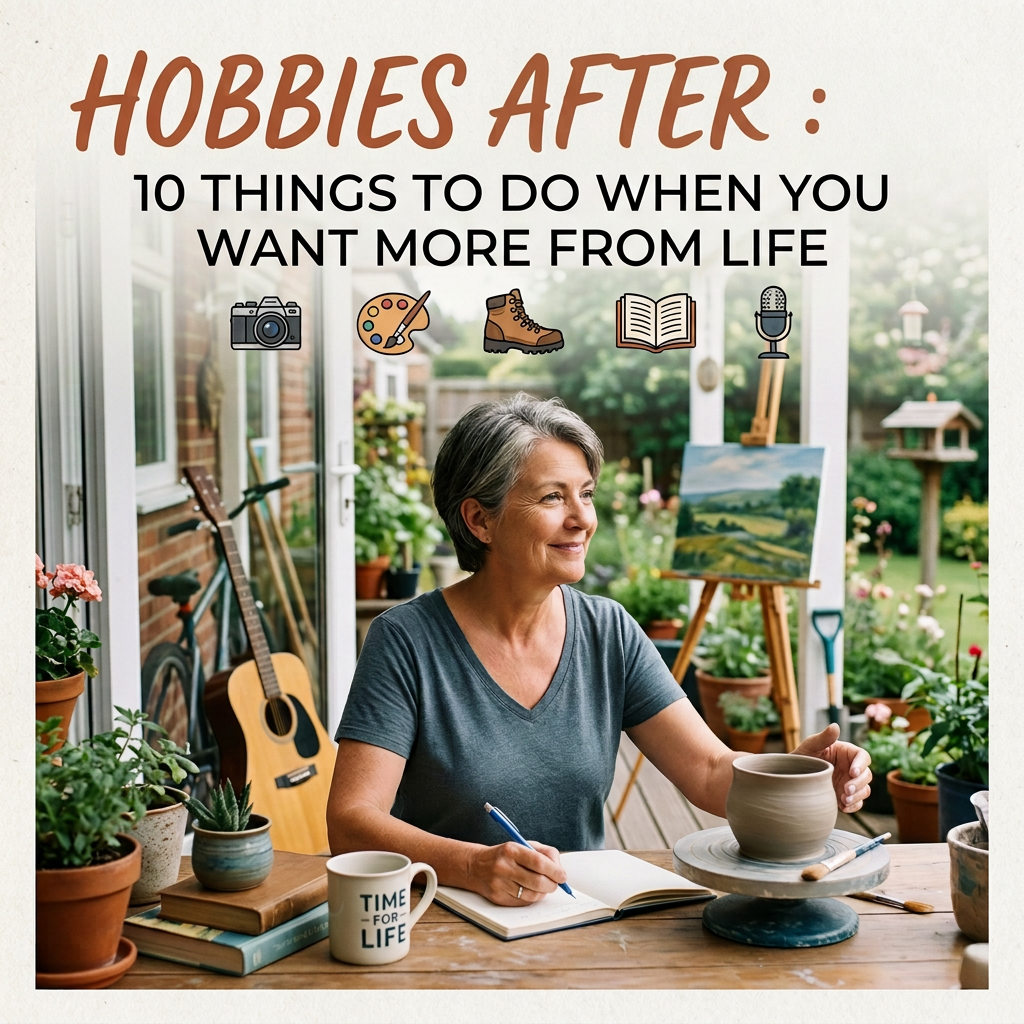
    10 Hobbies After 50 That Make Life More Interesting (Even on a Budget)

    What are good hobbies after 50 that don’t cost much?

    Short answer: Some of the best hobbies after 50 cost little or nothing: photography with the phone you already have, gardening, cooking something new, learning an instrument, writing, painting or drawing, tracing your family history, traveling close to home, volunteering, or finally learning something you’ve always put off.

    I’ve learned that getting older isn’t just about the things you start doing differently. It’s also about the things you finally have time to do. For years, life can be about work, raising a family, paying bills, taking care of other people, and simply getting through the week. You put off the things you’re curious about because there always seems to be something more important. Then you reach 50+ and something changes. Maybe you have more free time. Maybe the kids have moved on. Maybe you’re working less, retired, or simply realizing that you don’t want the rest of your life to be nothing but work and responsibilities. That’s when a hobby can become much more than something to pass the time. It can give you something to look forward to. Something to learn. Something to get excited about. And it doesn’t have to be complicated. You don’t have to become an expert. You don’t have to spend a lot of money. You don’t even have to be particularly good at whatever you choose. You just need to find something that makes you think, “I enjoy doing this.” Here are 10 hobbies for adults 50+ that can be fun, useful, and rewarding — and maybe one of them will give you an idea for something you’ve been putting off for years.

    1. Photography

    You don’t need an expensive camera to get started. Your phone can be all you need. Try photographing nature, interesting buildings, food, family gatherings, pets, or places you visit.

    Why it’s good and fun

    Photography gives you a reason to look at the world differently. Instead of simply walking through a park or visiting a new place, you start noticing colors, details, light, wildlife, and interesting little moments. It can also give you something to do when you’re traveling or taking a walk. And there’s a satisfying feeling when you take a picture and think, “I really like that.” You can keep your favorite photographs, share them with family, or gradually learn more advanced photography techniques.

    2. Gardening

    Gardening can be as simple as growing a few herbs in containers or as ambitious as creating an entire backyard garden. You can grow flowers, vegetables, herbs, or even indoor plants.

    Why it’s good and fun

    Gardening gives you something living to take care of and watch grow. There’s a special satisfaction in planting something, caring for it, and eventually seeing flowers bloom or vegetables appear. It also gets you outside and gives you a reason to spend time in your yard or on a patio. You don’t need a huge garden. A few pots can be enough to discover whether you enjoy it. And every season gives you something new to try.

    3. Cooking Something New

    If you already cook, turn cooking into a hobby instead of another chore. Choose one type of food you’ve always wanted to learn about. Try homemade bread, international dishes, soups, seafood, or healthier versions of old favorites.

    Why it’s good and fun

    Cooking becomes much more enjoyable when you’re experimenting instead of simply trying to get dinner on the table. You get to discover new flavors, learn new techniques, and occasionally surprise yourself with something that turns out really well. It’s also a hobby that produces something useful. You can enjoy what you make yourself or share it with family and friends. And you don’t have to become a gourmet cook. Sometimes finding one great new recipe is enough to make the hobby worthwhile. If cooking is the hobby that’s calling your name, a meal kit is an easy way to get your feet wet. Marley Spoon sends everything you need along with a recipe card, so you can try new dishes without a long grocery list. (affiliate link)

    4. Learning an Instrument

    It’s never too late to learn an instrument. A guitar, keyboard, harmonica, or ukulele can give you a completely new challenge.

    Why it’s good and fun

    Learning music gives your brain something completely different to work on. At first, even getting a few notes or chords right can feel like an accomplishment. Then something interesting happens: a song that once seemed impossible starts becoming familiar. You don’t have to perform for anyone. Learning a few songs you actually enjoy can give you a hobby you can return to for years. And there’s something satisfying about being able to sit down and make music yourself.

    5. Writing

    Writing can be surprisingly rewarding after 50. You could keep a personal journal, write short stories, record family memories, start a blog, or simply write about subjects that interest you.

    Why it’s good and fun

    Writing gives you a place to capture experiences, ideas, memories, and opinions. You have decades of experiences that younger people simply haven’t had yet. You might enjoy writing about your childhood, places you’ve lived, lessons you’ve learned, funny stories, or things you’ve discovered along the way. You don’t have to consider yourself a writer. You don’t even have to show anyone what you write. Sometimes the enjoyment comes simply from putting your thoughts into words.

    6. Painting, Drawing, or Other Creative Work

    You don’t need artistic talent to enjoy making art. Try watercolor, acrylic painting, sketching, coloring, woodworking, pottery, sewing, or another hands-on creative activity.

    Why it’s good and fun

    Creative hobbies let you make something instead of simply consuming something. That’s a nice change from spending another evening watching television or scrolling through your phone. There’s also no requirement that your work be perfect. You can experiment with colors, materials, shapes, and ideas without worrying about whether someone else thinks it’s good. And when you’re finished, you have something you actually made. That can be surprisingly satisfying.

    7. Exploring Your Family History

    Genealogy can turn into a fascinating long-term hobby. You can research old family records, organize photographs, interview relatives, and create a family tree.

    Why it’s good and fun

    Family history can turn ordinary names and old photographs into real stories. You may discover where relatives lived, what they did for a living, how your family moved from one place to another, or things you never knew about people you’ve heard about all your life. It can also give you a reason to talk with older relatives while you still can. And what you discover isn’t just for you. You can organize the information and photographs into something future generations of your family can enjoy.

    8. Travel — Even Close to Home

    You don’t need to fly across the country to make travel a hobby. Pick a town you’ve never explored. Visit a museum, historical site, small restaurant, local market, park, or interesting road nearby.

    Why it’s good and fun

    Exploring somewhere new can break up the routine. You don’t have to spend a lot of money or take a week off work. Sometimes an afternoon in a town you’ve never visited can feel like a mini vacation. Make a list of places within an hour or two of home and start working your way through it. You may discover restaurants, parks, shops, historic buildings, or interesting local attractions that you’ve driven past for years without noticing.

    9. Volunteering

    Volunteering can be a hobby with a purpose. You might help at an animal shelter, food pantry, library, community organization, school, church, or another local group.

    Why it’s good and fun

    Volunteering can give you something that many hobbies don’t: a feeling that what you’re doing matters to someone else. It can also introduce you to people you might never have met otherwise. If you’re retired or your social circle has become smaller, volunteering can add some structure to your week and give you somewhere to go. And you don’t have to commit to every day. Even helping occasionally can be worthwhile if you find something you genuinely care about.

    10. Learn Something You’ve Always Put Off

    This may be the most exciting hobby of all. Think about something you’ve said for years: “I’d love to learn how to do that someday.” Maybe it’s a language. Maybe it’s history, astronomy, computers, painting, cooking, music, woodworking, or something completely different.

    Why it’s good and fun

    Learning something new gives you the chance to be a beginner again. That can be both challenging and exciting. You don’t have to worry about being the best. You simply get to discover something you’ve never known before. And you may find that one new subject leads to another. A curiosity about history could lead to genealogy. Photography could lead to travel. Cooking could lead to learning about different cultures. You never know where a new interest will take you.

    You Don’t Need Ten Hobbies

    The point isn’t to fill your calendar with activities. You only need one thing that makes you want to do it again. A good hobby can give your week some structure. It can introduce you to new people, keep your mind engaged, give you a creative outlet, or simply make an ordinary Tuesday more interesting. And if your first choice doesn’t work, that’s perfectly fine. Try something else. There is no rule that says you have to be good at a hobby, stick with it forever, or explain to anyone why you enjoy it.

    Your Life After 50 Is Still Being Written

    Getting older doesn’t mean you’ve run out of things to discover. In many ways, 50+ can be a great time to experiment because you know yourself better than you did when you were younger. You may finally have the freedom to ask a simple question: What would I enjoy doing if I didn’t have to do it for anyone else? That’s a pretty good place to start.

    What Hobby Will You Try?

    You don’t need expensive equipment, a huge amount of free time, or a special talent. Choose something that interests you. Start small. Give it a little time. You might discover that the next chapter of your life has room for something you never expected. For more inspiration, the National Institute on Aging’s activity guide includes low-cost ways to learn, connect, volunteer, and have fun.

    How to Pick a Hobby You’ll Actually Enjoy

    Here’s something I’ve learned: a hobby shouldn’t feel like another job you have to be good at. You can enjoy photography without becoming a photographer. You can grow three plants without having a perfect garden. And you can love music without performing for anyone.

    Ask yourself three questions: Do I want to be around people or have quiet time? Do I want to make something, learn something, or move more? How much money and physical energy can I comfortably give it? Your answers will narrow a long list of possibilities to something that genuinely fits.

    Seven Days to Try Something New—Without Spending a Fortune

    1. Day one: Choose one hobby that sounds fun, not impressive.
    2. Day two: See what you already own or can borrow.
    3. Day three: Find a free guide, library event, community class, or club.
    4. Day four: Spend twenty minutes trying it. Ten minutes counts, too.
    5. Day five: Notice whether you felt curious or merely obligated.
    6. Day six: If it involves other people, look for a friendly local or online group.
    7. Day seven: Decide whether to try again. You’re allowed to change your mind.

    If money is tight, try your public library, free museum days, community gardening, birdwatching from a park bench, smartphone photography, or borrowing a book about something you’ve always wanted to learn.

    What Researchers and Writers Say About Having Interests Later in Life

    The National Institute on Aging recommends meaningful activities such as creative hobbies, volunteering, and social groups as part of healthy aging. The emphasis is on enjoyment and participation, not collecting accomplishments.

    In Harvard Health, Matthew Solan reports on research suggesting that combining different mental and physical activities may support thinking in older adults with mild cognitive impairment. That isn’t a promise that a hobby prevents dementia, but it’s a good reason to stay interested in life.

    The NIA also discusses loneliness and social isolation: a book club, class, or volunteer shift can be a natural way to meet people regularly, without the pressure of making instant best friends.

    What if a Hobby Doesn’t Stick?

    Then you learned something about yourself. Give it a fair try, but don’t turn leisure into guilt. Sometimes what you thought you’d enjoy isn’t your thing, and a different activity will fit better. That isn’t failure. It’s part of finding out what makes this chapter of life interesting.

    Common Questions

    Why are hobbies important after 50? Hobbies can add enjoyment, creativity, social connection, and a sense of purpose to everyday life. Is it too late to start a new hobby after 50? Not at all. Trying something new can be a great way to break up routines and discover interests you didn’t have time to explore earlier in life. What are some good hobbies for people 50+? Walking, gardening, photography, cooking, reading, woodworking, crafts, music, volunteering, and learning new skills are just a few possibilities. Can hobbies help with loneliness after 50? They can. Hobbies that involve clubs, classes, volunteer groups, or other people can create regular opportunities for social interaction. Do hobbies have to be expensive? No. Many enjoyable hobbies can be started with little or no money, including walking, reading, writing, gardening, birdwatching, and learning through free resources. How do I choose a hobby I’ll actually stick with? Start with something you’re genuinely curious about rather than something you think you should do. Give it a few tries before deciding whether it’s for you.

    Keep Reading

    Tom Green writes Sturdy Years. He was born in Pell City, Alabama, in 1962, and he’s a country boy and a true Southerner through and through. He’s just a regular, laid-back 64-year-old who keeps things simple. He shares what he learns about skincare, fitness and getting older, and what’s working for him. He’s also the author of A Practical Guide to Getting Older Without Giving Up on Yourself. Tom isn’t a doctor. He reads up on the research and passes along what’s useful, plain and simple.

    I’ve also mapped out some great tools on my new Tech for Independent Living After 50 page.

  • How to Build Muscle After 60 Without Getting Hurt

    How to Build Muscle After 60 Without Getting Hurt

    Can you still build muscle after 60 without getting hurt?

    Short answer: Yes. Lift twice a week with a rest day between, warm up for 5 to 10 minutes first, and pick a weight you can lift with smooth form while finishing each set with about two good reps left in the tank. Add weight only in small steps, and let recovery, sleep and protein do their part.

    Building muscle after 60 is possible, but I do not think the smartest approach is pretending you are 25. The goal is to challenge your muscles enough to adapt while giving the rest of your body, your joints, tendons and back, time to keep up.

    I’m in my 60s, and I work out to feel like a healthier me as I age. The fastest way to lose progress at this age is not skipping a workout. It is getting hurt and missing six weeks. So this guide is about one thing: how to start, or start again, in a way that keeps you training for years.

    The short version

    • Train at least 2 days a week. That is what the CDC recommends for older adults, and it is plenty to get started.
    • Start lighter than you think. End every set with about two good reps left in the tank.
    • Add a little at a time. One more rep or a small bump in weight, not big jumps.
    • Rest a day between hard sessions. Muscle is built while you recover.
    • Sharp pain means stop. Effort is fine. Pain in a joint is not.

    Why it is worth doing now

    We slowly lose muscle as we age, and that loss shows up in everyday life: getting out of a low chair, carrying groceries, climbing stairs, catching yourself when you trip. The good news is that muscle still responds to training at 60, 70 and beyond. If you want to understand what you are up against, I wrote about it in why muscle isn’t the only thing you lose with age.

    The “two reps in the tank” rule

    The right starting weight is not the heaviest weight you can move once. It is a weight you can lift with smooth, controlled form for your target reps, and when you finish the set you feel like you could have done about two more good ones.

    That one rule handles most of the safety problem. If you have to swing, jerk or twist to finish the set, the weight is asking more from your joints than from the muscle you are trying to train. Drop it a little and own every rep.

    Warm up for 5 to 10 minutes first

    Cold joints do not like heavy work. A few minutes on a bike or treadmill, then one light “practice” set of your first exercise, gets blood moving and lets you check how everything feels that day. Some days you will feel great. Some days you will want to go a little lighter, and that is fine.

    A simple 2-day starter plan

    Do this twice a week with at least one rest day in between, for example Monday and Thursday. Start with 2 sets of 10 to 12 reps for each exercise, using the two-reps-in-the-tank rule.

    1. Legs: leg press, or sit-to-stands from a sturdy chair if you are training at home.
    2. Push: machine chest press, or wall push-ups at home.
    3. Pull: seated cable row or a resistance band row.
    4. Back of the body: glute bridges, or a back extension machine.
    5. Upper back: lat pulldown, or a band pulldown anchored over a door.
    6. Core: a short plank against a counter or bench, or a slow dead bug on the floor.

    That is a full-body workout in about 30 to 40 minutes. You can add arm work or calves later. For the first couple of months, these six cover what matters most.

    Your first 8 weeks

    • Weeks 1 and 2: Learn the movements. Keep it light and focus on form. You should leave feeling like you could have done more.
    • Weeks 3 and 4: Add a third set to the exercises that feel good.
    • Weeks 5 to 8: When you can do all your reps with good form and still have two in the tank, add the smallest weight increase the machine allows.

    Write down each exercise, the weight and the reps. A simple notebook works. After a few weeks those notes show you progress your memory will miss, and they keep you from jumping the weight too fast.

    Joint-friendly swaps

    If an exercise bothers a joint, you usually do not have to skip that muscle. You just need a different way to train it.

    • Cranky knees: use a shorter, comfortable range on the leg press, or squat down to a box or chair instead of going deep.
    • Touchy shoulders: use a machine press or a palms-facing (neutral) grip instead of a straight barbell, and skip pressing behind the head.
    • Sensitive lower back: choose machines that support your back over heavy barbell lifts, and keep bridges and back extensions slow and controlled.

    Machines can be a very good tool

    I like machines for some exercises because they provide stability and let me concentrate on producing force with the intended muscles. Free weights can also work well. The best tool is the one that lets you train consistently and appropriately.

    Warning signs to respect

    Training safely does not mean training timidly. It means knowing the difference between hard work and a warning. Normal: muscles that feel worked, some mild soreness for a day or two. Stop and rethink if you notice:

    • Sharp or stabbing pain during a rep
    • Joint pain that is still there or worse the next day
    • Dizziness, chest pain or unusual shortness of breath
    • Soreness that never clears before your next workout

    Recovery is part of muscle building

    The workout is the stimulus. Recovery is when your body has an opportunity to respond. Sleep, enough food, enough protein and rest between hard sessions all matter. More workouts are not automatically more muscle. If performance keeps falling and soreness never clears, look at recovery before adding more training.

    What you do on the other five days of the week matters too. I put those everyday habits, protein, walking, carrying, balance and sleep, in a separate post: 7 Strength Habits That Matter More After 60.

    For another perspective on staying active and building healthy habits later in life, Journey to Fifty Plus shares personal experiences and ideas around fitness and wellness after 50.

    Common Questions

    Can you still build muscle after 60?
    Yes. Adults can build strength and muscle after 60 with consistent resistance training, adequate recovery and good nutrition.

    How often should you strength train after 60?
    The CDC recommends muscle-strengthening activities at least 2 days a week for older adults, with rest between challenging sessions.

    How heavy should you lift after 60?
    Heavy enough that the last couple of reps feel challenging, but light enough that you finish with about two good reps left and never lose your form.

    What exercises are best for building muscle after 60?
    Start with the big movements: a leg exercise, a push, a pull, a hip or back exercise, and some core work. Machines are a great way to learn them safely.

    How quickly should you increase weights after 60?
    Only when you can complete all your reps with good form and still have a couple left in the tank. Then make the smallest increase available.

    Is it normal to be sore after strength training after 60?
    Mild muscle soreness for a day or two is normal, especially when you start. Sharp pain or joint pain that lingers is not, and is a reason to back off.

    A gentle health note: If you’re new to strength training, have significant joint or muscle pain, dizziness, balance problems, or a medical condition that affects exercise, consider talking with a healthcare professional before starting or substantially increasing your workouts. Stop an exercise that causes sharp or unusual pain.

    My bottom line

    After 60, I still want challenging workouts. I just want those workouts to move me forward instead of keeping me injured. Start lighter than your ego wants, add a little at a time, recover, and keep showing up. Two days a week, done well, beats five days that leave you hurting.

    Your turn: Are you just getting started, or getting back into it? Tell me in the comments which exercise gives you the most trouble and I’ll try to help.

    Exercise should be adapted to your health, injuries and abilities. This is general fitness information, not individualized medical advice.

    About Tom Green

    Tom Green writes Sturdy Years. He was born in Pell City, Alabama, in 1962, and he’s a country boy and a true Southerner through and through. He’s just a regular, laid-back 64-year-old who keeps things simple. He shares what he learns about skincare, fitness and getting older, and what’s working for him. He’s also the author of A Practical Guide to Getting Older Without Giving Up on Yourself. Tom isn’t a doctor. He reads up on the research and passes along what’s useful, plain and simple.

    Keep Reading

    I’ve also mapped out some great tools on my new Tech for Independent Living After 50 page.

  • Life After 50 With a Dog: The Joys, the Benefits—and the Reality

    Life After 50 With a Dog: The Joys, the Benefits—and the Reality

    Is getting a dog good for you after 50?

    Short answer: A dog can make life after 50 better. Dogs get you moving every day, make ordinary days more interesting, help you meet people, and don’t care how old you look. Just be honest about the time, money and energy a dog needs before you bring one home.

    Life after 50 can bring more freedom, but it can also bring quieter days, new routines, and a body that does not always want to move the way it once did. A dog has a way of pulling your attention back to the present: the leash waiting by the door, the happy greeting, the ridiculous thing they just did, and the simple fact that someone is counting on you. A dog is not a miracle cure for loneliness or a substitute for human connection. But for the right person, a dog can add movement, affection, structure, and a little everyday comedy to life. Those small things deserve more credit than they often get. Dogs do not care about your birthday. They care about whether you are ready for a walk, whether there is something interesting happening in the kitchen, and whether you have time for them.

    Dogs Keep You Moving

    One of the simplest benefits of having a dog is that they give you a reason to get up and move. A walk around the neighborhood may not feel like a workout, but regular movement adds up. There are also all the little movements that come with caring for a dog—feeding them, letting them outside, playing, cleaning up and getting down on the floor when they decide that is where they want you.

    They Make Ordinary Days More Interesting

    After 50, routines can become comfortable. That is not necessarily a bad thing, but a dog can interrupt the routine in ways that are usually good for you. A funny expression, an unexpected burst of energy or the simple excitement of seeing you walk through the door can make an ordinary day feel different.

    Dogs Can Keep You Connected

    Walking a dog can also create opportunities for casual conversations with neighbors and other dog owners. Sometimes a simple hello is enough to make a day feel a little less isolated.

    They Do Not Care How Old You Look

    This may be one of my favorite things. Your dog is not looking at your wrinkles, gray hair or whether you look tired today. You are simply their person.

    Getting Older Does Not Mean Stopping

    Having a dog does not magically make every day easy. Older dogs may need more care, and your own abilities may change over time. But there is something valuable about continuing to have reasons to move, laugh and get outside. For me, a dog is a good reminder that getting older is not the same thing as checking out of life.

    What Research Says About Dogs and Healthy Aging

    There is research behind some of these everyday benefits, although it is important not to promise more than the evidence can show. The Centers for Disease Control and Prevention (CDC) notes that pets can create opportunities to exercise, get outside, and socialize, and that companionship may help some people manage loneliness. The CDC also points out that pets can carry germs, so good hygiene and appropriate veterinary care matter. A 2022 systematic review published in Social Psychiatry and Psychiatric Epidemiology examined 24 studies on pet ownership, loneliness, and social isolation. The findings were mixed: some studies found associations with less isolation or loneliness, while others did not. The honest takeaway is that a pet may be a meaningful source of companionship, but it will not make everyone feel less lonely. You can read the full review on PubMed Central. There is also a measurable connection between dog walking and activity. In a 2017 study published in Innovation in Aging, researchers followed 86 adults ages 65 to 81 and used activity monitors. The dog owners averaged about 31 minutes a day walking at a moderate pace, compared with 11 minutes among the adults without dogs; they also took more steps on average. The study was relatively small, so it does not prove that a dog will make every owner more active. But it is a useful reminder that a daily walk can become a habit when another living creature is counting on you. Read the study summary at PubMed Central.

    Small Ways to Make Dog Ownership Work Better After 50

    • Make the walk fit your body. Two short, comfortable walks may work better than one long outing. If balance, joint pain, breathing, or stamina is a concern, ask a healthcare professional what level of activity is appropriate.
    • Let the dog sniff. A walk does not have to be a race or a step-count competition. Safe sniffing time gives your dog enrichment and gives you a reason to slow down and notice the neighborhood.
    • Build a rainy-day routine. A few minutes of gentle indoor play, simple training, or hide-and-seek with a toy can keep you connected when weather or mobility makes a walk difficult.
    • Make the home safer for both of you. Keep leashes and toys out of walkways, use good lighting, and consider whether a dog that pulls hard on the leash could throw you off balance. Training and a well-fitted harness may help.
    • Plan for care before you need it. Identify a backup walker, pet sitter, or trusted person who can help if you are sick, traveling, or recovering from an injury.
    • Protect your budget. Food, routine veterinary visits, dental care, medications, grooming, and unexpected emergencies can add up. A realistic pet budget is part of responsible ownership, not a lack of love.

    The Part People Do Not Always Mention: Dogs Need Care, Too

    It is easy to talk about what a dog brings into our lives and forget the work involved. Some dogs need more exercise than their owners can comfortably provide. Older dogs may need medication, help with stairs, or more frequent veterinary visits. Puppies can be exhausting, and a strong dog that pulls on a leash can be a genuine fall risk. If you are thinking about adopting a dog after 50, choose for temperament, size, energy level, and care needs—not just a cute face. An adult dog with a known personality may be a better fit than a high-energy puppy for some households. A shelter or rescue can help you ask the right questions. And if a dog is not a realistic fit right now, helping a neighbor walk their dog, pet-sitting occasionally, or volunteering with an animal organization may offer some of the connection without the full-time responsibility.

    A Simple Reminder: You Do Not Need a Perfect Day

    Some days the walk will be short. Some days you will be tired. Some days your dog will stop to investigate one patch of grass as if it contains the secrets of the universe. That is part of the charm. Healthy aging is not about turning every moment into a performance. It is about finding manageable reasons to move, connect, laugh, and take part in the day. If a dog gives you one more reason to step outside, speak to a neighbor, keep a routine, or smile at something silly, that is worthwhile—even if it never shows up on a fitness tracker.

    Sources and Further Reading

    Before You Bring a Dog Home, Ask These Five Questions

    There is something wonderful about being greeted at the door by a dog who thinks you’re the best thing in the world. But I wouldn’t want anyone to adopt on a lonely afternoon without thinking about the next ten years.

    1. Can I comfortably handle this dog’s size and energy? A calm adult dog may be a better fit than a large, excitable puppy.
    2. Can I afford routine and unexpected vet care? Include food, medication, preventive care, and emergencies—not just the adoption fee.
    3. Who helps if I get sick? Have a backup person or local boarding plan before you need one.
    4. What does this individual dog actually need? Temperament, training, grooming, and exercise differ more than advertisements suggest.
    5. Am I ready for the commitment? If not, fostering, volunteering, or visiting a friend’s dog can still add joy.

    The American Veterinary Medical Association’s pet-selection advice makes the responsibility clear: choose thoughtfully and plan for a dog’s social, physical, and veterinary needs. You aren’t just choosing a companion; you’re agreeing to care for a living animal.

    What the Research Actually Says About Loneliness

    It’s easy to see why pet stories are popular. But a dog isn’t a guaranteed treatment for loneliness. A systematic review of 24 studies found mixed results: some studies linked pet ownership with less isolation, while evidence on loneliness was inconsistent. I think that’s a more useful message than telling someone a pet will fix everything.

    The National Institute on Aging stresses the importance of human connection, too. A dog can be a wonderful part of a life that also includes friends, neighbors, family, or community.

    Make the First Month Easier

    Keep the dog’s routine simple: regular meals, short walks or play suited to its needs, quiet rest, and a vet appointment. Put a leash by the door, keep fresh water available, and resist the urge to expect perfect behavior in a week. Like the rest of us, a new companion needs time to settle in.

    Common Questions

    Can having a dog help you stay active after 50? A dog can encourage regular walking and everyday movement, although the amount of activity depends on the dog and your own abilities. Can dogs help with loneliness after 50? Pets can provide companionship and routine, and walking a dog can create opportunities for social interaction. Do dogs care about your age? Not in the way people do. Dogs generally respond to the relationship, attention, routine, and care you provide. Is having a dog good for your mental well-being? Companionship, routine, physical activity, and the simple responsibility of caring for another living thing can be meaningful parts of daily life. What if you are not able to walk a dog very far? Dogs and people have different needs. Short walks, play, time outside, and other forms of interaction can still provide activity and companionship. Can a dog give you more purpose after 50? Caring for a pet can add structure and responsibility to the day, which some people find meaningful. What is one of the best things about having a dog after 50? A dog can give you a reason to get up, move around, laugh, and pay attention to the present moment. Practical takeaway: Getting older does not mean life has to become smaller. A dog can be one simple reason to keep moving, stay connected, and enjoy ordinary days. A gentle well-being note: Pets are a personal choice, and caring for one should fit your health, living situation, finances, and ability to provide appropriate care.

    Keep Reading

    Written by Tom Green, creator of Sturdy Years Tom Green writes Sturdy Years. He was born in Pell City, Alabama, in 1962, and he’s a country boy and a true Southerner through and through. He’s just a regular, laid-back 64-year-old who keeps things simple. He shares what he learns about skincare, fitness and getting older, and what’s working for him. He’s also the author of A Practical Guide to Getting Older Without Giving Up on Yourself. Tom isn’t a doctor. He reads up on the research and passes along what’s useful, plain and simple.

    I’ve also mapped out some great tools on my new Tech for Independent Living After 50 page.

  • Retirement and Mental Health: 7 Ways to Build a Life You Actually Enjoy

    Retirement and Mental Health: 7 Ways to Build a Life You Actually Enjoy

    How do you stay happy and mentally healthy in retirement?

    Short answer: Retirement can feel strange because it takes away your routine, coworkers and daily reasons to get out the door. Replace your routine before you miss it, put people on your calendar, find a reason to be needed, keep learning and keep moving. If you feel down for weeks, reach out for help.

    Retirement is supposed to feel freeing. So why can it sometimes feel surprisingly strange?

    Leaving a job can mean more time, but it can also remove routines, coworkers, goals and daily reasons to get out the door. That transition can affect your mood and sense of purpose.

    1. Replace the routine before you miss it

    You don’t need to recreate your working life. But having a reason to get up, get dressed and go somewhere can make a big difference. Build a loose morning and weekly rhythm that gives your days some shape.

    2. Put people on your calendar

    Don’t wait until you feel lonely to call somebody. Schedule coffee, walks, lunch, game nights, volunteer work or regular phone calls. Social connection is an important part of healthy aging.

    3. Find a reason to be needed

    Purpose doesn’t have to mean a new career. Helping a neighbor, mentoring someone, caring for a garden, volunteering or contributing to a community can give your week meaning.

    4. Give yourself something to learn

    Take a class. Learn photography. Try a language. Learn to cook something you’ve never made. Pick up an instrument. Your retirement years don’t have to be a period of standing still.

    5. Keep moving

    Physical activity can support mood, sleep, physical function and overall quality of life. It can also become a social activity when you walk with a friend or join a group.

    6. Watch for the signs that you need help

    Feeling unsettled during a major life change is normal. But persistent sadness, loss of interest, isolation or other troubling changes deserve attention. Talking with a doctor or mental-health professional can be a useful next step.

    7. Don’t make retirement smaller than your working life

    This may be the first time in decades when you have more freedom to decide what belongs in your life. You can change your schedule, meet different people, explore new places and finally make room for things you postponed.

    Your retirement reset

    • One thing that gets you moving.
    • One person you make time for.
    • One activity that challenges your brain.
    • One thing you do simply because you enjoy it.

    Retirement doesn’t have to be an empty space where work used to be. It can become a life with a different rhythm—and one that feels more like your own.

    Common Questions

    Can retirement affect your mental health?
    Yes. Retirement can bring more freedom, but it can also change your daily routine, social connections, sense of purpose, and identity.

    How can I stay mentally healthy after retiring?
    Keeping a regular routine, staying physically active, maintaining relationships, learning new things, and having activities you look forward to can all support well-being.

    Why can retirement feel lonely?
    Leaving the workplace can reduce everyday social interaction. Building new connections through hobbies, volunteering, clubs, classes, or community activities can help.

    Do you need a purpose after retirement?
    Having things that give your days meaning can make retirement more satisfying. Purpose can come from family, hobbies, volunteering, learning, work, creativity, or simply pursuing interests you’ve put off.

    How can I enjoy retirement if I don’t know what I want to do?
    Start small. Try different activities without expecting yourself to find one perfect passion immediately. Pay attention to what leaves you feeling interested, useful, or energized.

    When should I ask for help with my mental health?
    If sadness, anxiety, loneliness, loss of interest, or other emotional difficulties persist or interfere with everyday life, consider talking with a healthcare professional or mental-health professional.

    Question for you: What did retirement give you that you didn’t expect?

    Tom Green writes Sturdy Years. He was born in Pell City, Alabama, in 1962, and he’s a country boy and a true Southerner through and through. He’s just a regular, laid-back 64-year-old who keeps things simple. He shares what he learns about skincare, fitness and getting older, and what’s working for him. He’s also the author of A Practical Guide to Getting Older Without Giving Up on Yourself. Tom isn’t a doctor. He reads up on the research and passes along what’s useful, plain and simple.

    I’ve also mapped out some great tools on my new Tech for Independent Living After 50 page.

  • Menopause After 50: Natural Ways to Manage Symptoms

    Menopause After 50: Natural Ways to Manage Symptoms

    How can you manage menopause symptoms naturally?

    Short answer: You don’t have to just suffer through menopause. Natural ways to manage it include cooling tricks for hot flashes, taking sleep seriously, strength training, eating well, looking after your heart, and lowering stress. Take vaginal and urinary symptoms seriously, and be skeptical of “hormone-balancing” supplements.

    Menopause after 50 can feel less like one big change and more like somebody quietly changed the rules while you were busy living your life.

    Maybe sleep suddenly became unreliable. Maybe you are warmer at night, more tired during the day, or wondering why your body seems to be doing things it never did before. And then there are the endless promises online: teas, supplements, hormone-balancing powders and miracle routines.

    Here is the good news: you do not need a cabinet full of expensive products to start taking better care of yourself.

    There are practical, natural habits that can support your health and make some menopause symptoms easier to manage. They are not magic cures, and they will not work exactly the same way for every woman. But they are sensible places to start.

    First: natural does not mean you have to suffer

    Wanting a natural approach is perfectly reasonable. But “natural” should not become another word for “put up with everything.”

    Menopause can bring hot flashes, night sweats, sleep problems, mood changes, vaginal dryness, urinary symptoms, changes in body composition and other symptoms. Some women have only a few mild changes. Others find that symptoms interfere with work, relationships, exercise or simply enjoying the day.

    The goal is not to prove how much discomfort you can tolerate. The goal is to feel as well and capable as possible.

    1. Make hot flashes easier to live with

    You may not be able to control when a hot flash arrives, but you can make your surroundings work in your favor.

    • Keep the bedroom cool at night.
    • Wear lightweight layers that are easy to remove.
    • Keep a fan nearby if it helps.
    • Notice whether alcohol, spicy foods, hot drinks or stressful situations seem to trigger symptoms for you.
    • Keep water nearby, especially if night sweats leave you feeling overheated.

    Do not get discouraged if one popular “trigger list” does not match your experience. Your triggers are personal. A simple symptom note for a couple of weeks can be more useful than trying to avoid everything at once.

    2. Stop treating poor sleep like it is just part of getting older

    Sleep can take a beating during menopause. Night sweats are an obvious culprit, but they are not the only one. Changes in stress, sleep habits and other health conditions can also play a role.

    Start with the boring basics because boring basics often work:

    • Go to bed and get up at roughly the same time.
    • Keep the bedroom dark, quiet and comfortably cool.
    • Limit caffeine later in the day if it keeps you awake.
    • Give yourself a short wind-down period instead of going straight from television or scrolling to bed.
    • Get regular daytime movement and natural light.

    If insomnia becomes persistent, do not assume you simply have to live with it. Cognitive behavioral therapy for insomnia, often called CBT-I, is an evidence-based approach that can be very useful for ongoing sleep problems.

    And if you snore loudly, wake up gasping, or are unusually sleepy during the day, talk with a healthcare professional. Not every sleep problem after 50 is caused by menopause.

    3. Strength training deserves a place in your 50+ routine

    If there is one habit I would hate for women to overlook after menopause, it is strength training.

    You do not have to become a bodybuilder. You do not need to lift enormous weights. The point is to give your muscles a reason to stay strong.

    Strength training can help support muscle, bone health, balance, mobility and everyday function. Those benefits become increasingly valuable as we get older.

    Start with movements you can perform with good control. Machines, resistance bands, dumbbells and body-weight exercises can all have a place in a sensible program. Increase the challenge gradually rather than trying to prove something on day one.

    Walking and other aerobic activity matter too. Think of your routine as a team: strength for muscle and bone, aerobic movement for heart and fitness, and balance and mobility work for staying capable.

    4. Eat for the woman you want to be at 60, 70 and beyond

    There is no single “menopause diet” that makes every symptom disappear.

    A better strategy is to build meals around foods that support your long-term health. Think protein, vegetables, fruit, beans, whole grains, healthy fats and enough fluids.

    Protein deserves particular attention after 50 because maintaining muscle becomes more important with age. Spread protein across meals rather than trying to cram it all into dinner.

    Bone health matters too. Calcium-rich foods and adequate vitamin D are important parts of a healthy eating pattern, although individual needs vary.

    And please do not let social media convince you that you need to eliminate half the foods in your kitchen because they supposedly “destroy your hormones.” If a diet is so restrictive that you hate every meal, it is probably not a practical long-term plan.

    5. Give your heart and blood vessels some attention

    Menopause is not only about hot flashes. Midlife is also a good time to pay attention to the things that quietly influence long-term health.

    Regular activity, nutritious food, not smoking, adequate sleep and keeping up with recommended health checks all matter. Know your blood pressure and discuss cholesterol, blood sugar and other risk factors with your healthcare professional when appropriate.

    You do not need to turn your life into a laboratory. A handful of consistent habits can do more for your future than chasing a new wellness trend every Monday.

    6. Take vaginal and urinary symptoms seriously

    This is one of the most important parts of menopause that does not get enough honest conversation.

    Vaginal dryness, irritation, discomfort during sex and urinary changes can occur as estrogen levels change. They are common, but common does not mean you have to ignore them.

    Vaginal moisturizers can help with ongoing dryness, while lubricants can make sexual activity more comfortable. Gentle, fragrance-free products are often preferable around sensitive skin.

    If symptoms continue or are affecting your quality of life, talk with a healthcare professional. There are treatments specifically for these symptoms, including local therapies that may be appropriate for some women.

    7. Be skeptical of “hormone-balancing” supplements

    This is where I would slow down before spending money.

    The word natural on a bottle is not a guarantee that a product is safe, effective or right for you.

    Black cohosh, herbal blends, DHEA, magnesium and other supplements are marketed heavily to women in menopause. The evidence is not equally strong for all of them, and supplements can interact with medications or be inappropriate with certain medical conditions.

    If you are considering a supplement, show the exact product and dose to your doctor or pharmacist. That is especially important if you take prescription medications or have a significant medical history.

    8. Lower stress without turning wellness into another job

    There is a funny thing about modern wellness: sometimes the cure for stress is presented as a 14-step morning routine that requires a spreadsheet.

    You do not need that.

    A daily walk. Ten quiet minutes. Time with a friend. Reading something you enjoy. Gardening. Music. Deep breathing. Prayer or meditation if that is meaningful to you. Getting outside.

    The best stress-management habit is often the one you will actually keep doing.

    9. Keep moving even on the days when you do not feel your best

    Some days after 50, the perfect workout is not going to happen. That does not mean the day is a failure.

    Walk around the neighborhood. Stretch while watching television. Do a shorter strength session. Take the stairs when it makes sense. Get up from the chair more often.

    Consistency beats perfection.

    10. Know when “natural” is no longer enough

    This may be the most important advice in the article.

    If menopause symptoms are seriously affecting your sleep, work, relationships, exercise or quality of life, you do not get extra points for suffering through them.

    Hormone therapy can be very effective for certain menopause symptoms, but it is not appropriate for everyone. Nonhormonal prescription treatments are also available. Whether a treatment makes sense depends on your symptoms, age, timing, medical history and personal circumstances.

    There is also a difference between a symptom that is uncomfortable and a symptom that needs evaluation. For example, unexpected bleeding after menopause should be discussed with a healthcare professional rather than simply blamed on menopause.

    A simple 50+ menopause reset

    If everything above feels like too much, forget the giant checklist. Start with these five things:

    1. Move every day. Walk, exercise or simply stay physically active.
    2. Strength train regularly. Give your muscles and bones a reason to stay strong.
    3. Build better meals. Prioritize protein, plants, fiber and nutrient-rich foods.
    4. Protect your sleep. Make your bedroom and evening routine work for you.
    5. Get help when you need it. Lifestyle changes are valuable, but they are not a test you have to pass before discussing treatment.

    Common Questions

    Can menopause symptoms still happen after 50?

    Yes. Some women continue to experience symptoms after 50, and symptoms can change over time. Hot flashes, sleep problems, vaginal symptoms and other changes can persist for years in some women.

    What are the best natural ways to manage menopause symptoms?

    Helpful foundations include regular physical activity, strength training, a balanced diet, good sleep habits, stress management and avoiding personal triggers when you identify them. These habits support overall health even when they do not eliminate every symptom.

    Can exercise reduce hot flashes?

    Exercise is excellent for overall health during and after menopause, but it should not be presented as a guaranteed cure for hot flashes. Some women find that regular activity helps them feel better overall, while significant hot flashes may require additional treatment.

    What should women eat after menopause?

    There is no single perfect menopause diet. A practical pattern includes adequate protein, vegetables, fruit, beans, whole grains, healthy fats and foods that provide nutrients important for bones and overall health.

    Does strength training help after menopause?

    Yes. Regular resistance exercise can help maintain muscle and support bone strength, balance, mobility and everyday function. Start at a level you can control and increase gradually.

    Are menopause supplements safe because they are natural?

    No. Natural products can have side effects and can interact with medications. Some menopause supplements also have limited or mixed evidence. Ask a healthcare professional or pharmacist about a specific product before taking it regularly.

    What can help with menopause-related vaginal dryness?

    Vaginal moisturizers can help with ongoing dryness, and lubricants can improve comfort during sexual activity. Persistent symptoms should be discussed with a healthcare professional because additional treatments are available.

    When should I talk with a doctor about menopause?

    Talk with a healthcare professional when symptoms are severe, persistent, interfere with daily life, or concern you for any reason. Unexpected bleeding after menopause should be evaluated rather than automatically attributed to menopause.

    Do I have to use hormone therapy if natural approaches do not work?

    No. Treatment decisions are personal. Hormone therapy is one option for appropriate patients, and nonhormonal treatments are also available. A healthcare professional can help you weigh the options based on your symptoms and medical history.

    The Bottom Line

    Menopause after 50 does not have to become a battle between you and your body.

    Start with the things that make sense: move your body, build and protect muscle, eat nourishing food, take sleep seriously, make yourself comfortable, manage stress in a realistic way and do not ignore symptoms that are affecting your life.

    And remember this: choosing a natural approach does not mean refusing medical help. Good health is not about proving how tough you are. It is about finding what helps you live well.

    Health note: This article is for general information, not individual medical advice. Menopause symptoms vary widely, and some symptoms can have causes unrelated to menopause. Talk with a qualified healthcare professional about persistent, severe or unusual symptoms and before starting supplements or changing prescribed treatment.

    About Tom Green

    Tom Green writes Sturdy Years. He was born in Pell City, Alabama, in 1962, and he’s a country boy and a true Southerner through and through. He’s just a regular, laid-back 64-year-old who keeps things simple. He shares what he learns about skincare, fitness and getting older, and what’s working for him. He’s also the author of A Practical Guide to Getting Older Without Giving Up on Yourself. Tom isn’t a doctor. He reads up on the research and passes along what’s useful, plain and simple.

    Keep Reading


    I’ve also mapped out some great tools on my new Tech for Independent Living After 50 page.

  • Why Am I So Tired After 50? 7 Habits and Medical Causes

    Why Am I So Tired After 50? 7 Habits and Medical Causes

    Why are you so tired after 50?

    Short answer: Being tired after 50 is common, but it isn’t something you just have to accept. The usual culprits are irregular sleep, too little movement, uneven eating, late caffeine and stress. If you’re still worn out after fixing those for a couple of weeks, see your doctor. Anemia, thyroid problems, sleep apnea, medications and low mood are common causes that are easy to check.

    If you are tired after 50, the answer isn’t necessarily age. Sleep quality, medication side effects, anemia, thyroid conditions, mood and daily habits can all matter. Here’s a practical way to sort out which changes you can make—and which symptoms deserve a medical check.

    Being tired after 50 is easy to blame on age. Sometimes getting older does change sleep, recovery and energy. But “I’m just getting old” can also become an excuse for ignoring habits—or symptoms—that deserve attention.

    If your energy has changed, I think it is worth looking at the ordinary things first. They are not glamorous, but they are often the things we can actually change.

    1. Inconsistent sleep

    Going to bed and waking up at wildly different times can make it harder to feel rested. One bad night is not a disaster, but a pattern of poor sleep can affect how you feel and function.

    2. Sitting most of the day

    It sounds strange, but being inactive can leave you feeling sluggish. You do not have to turn every day into a workout. Short walks, standing breaks and regular movement can help break up long periods of sitting.

    3. Skipping meals and then overeating

    Long gaps without food can leave some people feeling drained and then reaching for whatever is easiest later. A more consistent pattern of nutritious meals may make energy easier to manage.

    4. Not eating enough protein or overall nutrition

    Protein matters for maintaining muscle, but energy also requires enough total food and a balanced diet. If you are trying to lose weight by eating very little, feeling exhausted may be a sign that the approach needs reconsideration.

    5. Caffeine too late

    Caffeine can be useful, but using it late to compensate for poor sleep can create a cycle: tired during the day, caffeine later, worse sleep, tired again tomorrow.

    6. Training harder than you can recover from

    Exercise is valuable, but more is not automatically better. If every workout leaves you exhausted for days, the program may be asking for more recovery than you can provide.

    7. Carrying stress without real downtime

    Your body does not know that you planned to relax “someday.” Constant stress and constant stimulation can make it difficult to feel recovered even when you technically have free time.

    5 Energy Fixes You Can Try Today

    • Get outside in the morning. Ten minutes of daylight helps wake up your body clock.
    • Drink a glass of water first. Mild dehydration can feel a lot like fatigue.
    • Put protein in your breakfast. Eggs, Greek yogurt or cottage cheese keep energy steadier than a pastry.
    • Take a 10-minute walk after lunch. It beats the afternoon slump better than another coffee.
    • Set a coffee cutoff around 2 p.m. Better sleep tonight means more energy tomorrow.

    Sleep timing matters more than most people realize. I dug into the research in could your sleep schedule affect how long you live after 50.

    Don’t automatically call fatigue aging

    Persistent, unexplained, severe or worsening fatigue can have medical causes. If tiredness interferes with normal life or comes with other concerning symptoms, talk with your healthcare professional rather than trying to solve it with supplements.

    Three Experts Who Explain Why Fatigue Is Not Just Aging

    Family physician Dr. Jared Ankerman explains that ongoing fatigue can differ from an ordinary sleepy afternoon and may point toward anemia, thyroid problems, mood disorders or other underlying conditions. If rest isn’t making a difference, don’t assume another energy supplement will fix it.

    Sleep specialist Dr. Alicia Roth points out that you can spend plenty of hours in bed but still wake up worn out when conditions such as sleep apnea or restless legs interrupt sleep. That’s an important distinction when a regular bedtime alone isn’t helping.

    Endocrinologist Dr. Marwan Hamaty cautions against a fashionable but unsupported diagnosis offered as the explanation for every case of fatigue. Real causes vary, and a careful medical history and targeted evaluation matter more than buying an unproven remedy.

    A Seven-Day Energy Check Without Buying Anything

    For one week, note roughly when you sleep and wake, whether you snore or wake gasping, what medications you take, when you use caffeine, what meals you skip, and whether fatigue gets worse after activity. Rate your energy morning, afternoon and evening. Bring the pattern—not just the word ‘tired’—to your healthcare appointment.

    Keep changes simple: aim for a fairly regular sleep schedule, daylight or safe movement during the day, adequate meals and fluids, and a caffeine cutoff that protects your sleep. Don’t push through an illness or unexplained exercise intolerance just to hit a step goal.

    See a Doctor Soon If Your Tiredness Comes With…

    • Shortness of breath, chest pain or a racing heart
    • Unexplained weight loss or loss of appetite
    • Loud snoring, gasping at night or falling asleep during the day
    • Feeling cold all the time, hair thinning or dry skin (possible thyroid)
    • Pale skin, feeling dizzy or out of breath easily (possible anemia)
    • Low mood, losing interest in things you enjoy, or feeling hopeless
    • Fatigue that lasts more than a few weeks or keeps getting worse

    If chest pain or trouble breathing comes on suddenly, call 911.

    What Your Clinician May Want to Rule Out

    The National Institute on Aging’s fatigue guide lists anemia, sleep apnea, thyroid disease, diabetes, medication effects, chronic illness and mood conditions among potential contributors. Depending on symptoms and history, a clinician may review medicines, arrange blood tests or evaluate sleep. Don’t start iron or thyroid supplements without evidence of a need.

    Get prompt medical attention if fatigue comes with chest pain, difficulty breathing, fainting, new confusion or other severe symptoms. Persistent unexplained fatigue lasting weeks warrants an appointment even when it isn’t an emergency.

    Related: Why You Keep Waking Up at 3 AM After 50 and How Much Protein Do You Need After 50?.

    Common Questions

    Why am I still tired after 50?
    Everyday habits such as poor sleep, too little movement, dehydration, an unbalanced diet, and too much stress can contribute to feeling tired.

    What everyday habits can drain your energy after 50?
    Poor sleep habits, sitting too much, skipping nutritious meals, not drinking enough water, excessive alcohol, too much screen time, and chronic stress can all play a role.

    Can lack of sleep make you tired after 50?
    Yes. Poor-quality or insufficient sleep can leave you feeling tired even after spending enough time in bed.

    Can sitting too much make you feel tired after 50?
    It can. Long periods of inactivity may leave you feeling sluggish, while regular movement can help you stay more energized.

    Can what you eat affect your energy after 50?
    Yes. Meals built around protein, fiber-rich foods, fruits and vegetables, and other nutritious foods can provide more consistent energy than a diet dominated by highly processed foods.

    Can dehydration make you tired after 50?
    Yes. Not getting enough fluids can contribute to fatigue and feeling sluggish.

    Can stress drain your energy after 50?
    Yes. Ongoing stress can interfere with sleep, concentration, mood, and your overall sense of energy.

    What is the simplest way to improve energy after 50?
    Start with the basics: sleep well → drink enough water → move regularly → eat nutritious meals → manage stress → limit habits that interfere with sleep.

    When should tiredness after 50 be checked by a doctor?
    If fatigue is persistent, worsening, unusually severe, or comes with symptoms such as unexplained weight changes, shortness of breath, chest pain, weakness, or major changes in sleep or mood, talk with a healthcare professional.

    Practical takeaway: Before assuming you’re simply getting older, look at your everyday habits. A few small changes to sleep, movement, food, hydration, and stress may make a meaningful difference.

    My approach

    I think of energy as something I manage rather than something I am entitled to have unlimited amounts of. Sleep, food, movement, recovery and stress management all count.

    The goal is not to feel 25 again. It is to have enough energy for the life you actually want to live.

    General information and personal experience, not medical advice.

    About Tom Green

    Tom Green writes Sturdy Years. He was born in Pell City, Alabama, in 1962, and he’s a country boy and a true Southerner through and through. He’s just a regular, laid-back 64-year-old who keeps things simple. He shares what he learns about skincare, fitness and getting older, and what’s working for him. He’s also the author of A Practical Guide to Getting Older Without Giving Up on Yourself. Tom isn’t a doctor. He reads up on the research and passes along what’s useful, plain and simple.

    I’ve also mapped out some great tools on my new Tech for Independent Living After 50 page.

  • Self-Care After 50: A Simple Daily Routine That Actually Helps

    Self-Care After 50: A Simple Daily Routine That Actually Helps

    What’s a simple self-care routine that actually helps?

    Short answer: Self-care after 50 doesn’t have to cost a fortune. Start your day by moving your body, eat like your body still matters, keep skincare simple, make sleep a priority, keep the doctor’s appointments you’ve been putting off, and protect your mind and your relationships. Fellas, this goes for you too.

    Self-care gets made to sound much more complicated than it needs to be. After 50, you can spend a fortune on products, appointments and wellness gadgets and still overlook the things that make the biggest difference in how you feel every day.

    For me, a useful self-care routine is less about pampering and more about maintenance. Take care of your body. Take care of your skin. Give your mind some breathing room. And don’t keep putting off the health stuff because it is inconvenient.

    The good news is that none of this requires a perfect schedule. You need a routine you can actually repeat.

    Start Your Day With Your Body

    You don’t have to wake up at 5 a.m. and complete a ten-step wellness routine. Start with movement.

    A walk, some light mobility work, a workout or simply getting up and moving around regularly can help keep your body from becoming increasingly sedentary. If strength training is appropriate for you, it deserves a place in the routine too because maintaining muscle becomes increasingly important as we get older.

    The goal isn’t to punish yourself for getting older. It is to keep giving your body a reason to stay capable.

    Eat Like Your Body Still Matters

    This sounds obvious, but it is easy to get careless with food when life gets busy. Skipping meals, living on snacks or relying on highly processed convenience foods can leave you feeling like you have no energy.

    Try to build meals around foods that actually give you something: adequate protein, vegetables and fruit, whole grains or other high-fiber foods, and healthy sources of fat. You don’t have to eat perfectly. Consistency matters more than chasing a flawless diet.

    Don’t Treat Skincare Like a Beauty Emergency

    Skin changes after 50. It can become drier, thinner and less forgiving when you overdo products. That doesn’t mean you need an entire shelf of anti-aging treatments.

    A simple routine can be enough for many people: gentle cleansing, moisturizer when you need it, and sun protection during the day. If you use active ingredients such as retinoids or exfoliating acids, introduce them thoughtfully rather than piling everything on at once.

    And remember that skincare isn’t just for women. Men deal with dryness, sun damage, wrinkles and changing skin too.

    Make Sleep Part of Self-Care

    Sleep is one of those things people often sacrifice first and try to fix with coffee the next morning.

    A regular sleep schedule, a reasonably comfortable sleep environment and a wind-down period can help. If you regularly have trouble sleeping or feel exhausted despite getting enough time in bed, that’s worth discussing with a healthcare professional rather than simply buying another supplement.

    Take Care of the Appointments You’ve Been Avoiding

    This may be the least glamorous part of self-care, but it matters.

    Keep up with recommended health screenings and routine appointments for your age and personal health history. Get persistent symptoms checked instead of deciding they are simply part of aging. Stay on top of dental and vision care too.

    Self-care is not only about how you look in the mirror. It is also about paying attention when something changes.

    Protect Your Mind, Too

    There is a difference between being busy and feeling fulfilled. After 50, it can be easy to let work, family obligations, responsibilities and other people’s expectations consume all the available space.

    Make room for things you actually enjoy. Call a friend. Spend time outside. Read. Listen to music. Work on a hobby. Take the dog for a walk. Whatever gives you a genuine break from the constant list of things that need doing.

    You don’t have to justify every enjoyable thing by making it productive.

    Self-Care Includes Relationships

    Staying connected matters. That doesn’t mean you need a huge social circle. A few people you can laugh with, talk honestly with or simply spend time around can be more valuable than hundreds of online connections.

    If you have been withdrawing because life has gotten busy, make one small effort to reconnect. Send the text. Make the call. Have coffee with someone.

    Men Need Self-Care Too

    Self-care is sometimes presented as if it means spa days, beauty treatments and a collection of skincare products. There is nothing wrong with any of those things, but they are not the definition of self-care.

    Men over 50 need the same basics: movement, adequate nutrition, sleep, grooming, social connection, preventive care and attention to changes in their health.

    Taking care of yourself isn’t vanity. It is maintenance.

    A Simple Weekly Reset

    If you want something practical, pick one day each week and take 20 minutes to check in with yourself.

    • What did I do this week that made me feel better?
    • Did I move enough?
    • Did I get enough sleep?
    • Have I been eating reasonably well?
    • Is there an appointment or health issue I’ve been avoiding?
    • What is one thing I can do next week just because I enjoy it?

    You don’t need to overhaul your life every Sunday. One or two small adjustments can be enough.

    The Routine That Actually Works

    The best self-care routine isn’t the most expensive one or the one that looks impressive on social media. It is the routine you can keep doing when life gets messy.

    Move your body. Eat reasonably well. Protect your skin. Get enough sleep. Stay connected. Keep up with appropriate healthcare. And leave yourself some room to enjoy being alive.

    That is a pretty good self-care routine at any age—and especially after 50.

    A Realistic Daily Self-Care Routine After 50

    Morning (10–20 minutes): Get up at a reasonably consistent time, drink water if thirsty, take prescribed medications as directed, eat a breakfast with some protein if you’re hungry, and get outdoors or move in a way you can safely manage. You don’t need to complete every item before 8 a.m.

    During the day: Build in a walk or other movement, a nutritious meal, and one brief social interaction. If you work at a desk or sit a lot, stand and move regularly when possible. Even a short phone call counts as a deliberate connection.

    Evening: Set yourself up for sleep with a calming wind-down, basic skincare if you use it, and a moment to prepare tomorrow’s medications or appointments. If insomnia persists, a clinician can help address underlying causes.

    The Three Expert Perspectives I Think Are Most Useful

    Researcher Dr. Julianne Holt-Lunstad has helped bring the health consequences of social isolation into public discussion. Her work is a reminder that reaching out to people is not a luxury add-on to self-care. See also her published paper on social-connection guidelines.

    Geriatrician Dr. Carla Perissinotto coauthored a New England Journal of Medicine perspective with Holt-Lunstad about social isolation and loneliness as medical issues. That doesn’t mean everyone needs a large circle of friends; it means persistent isolation deserves attention, just as poor sleep or poor nutrition might.

    Exercise researcher Maren Fragala led a published position statement on resistance training for older adults. The practical message: strength and function can benefit from a thoughtfully progressed exercise program, not just walking. If you’re new to exercise or have significant conditions, adapt the plan with professional guidance.

    A Weekly Reset You Can Actually Finish

    Choose one 20-minute slot: check upcoming appointments and prescriptions; plan a few affordable, nutritious meals; schedule two strength sessions if appropriate; and send one message to someone you want to stay connected with. You are planning a manageable week, not auditing your worth as a person.

    If time or money is tight, start smaller still: a brief walk or chair movement, one call, and one meal that provides protein and vegetables. The point is repetition, not perfection.

    When Ordinary Self-Care Isn’t Enough

    Ongoing depressed mood, major fatigue, chest symptoms, persistent pain or significant sleep problems warrant medical attention. No morning routine or supplement should be presented as a substitute for diagnosis and care.

    See our guides to getting enough protein after 50 and building muscle after 60.

    Common Questions

    What is a simple self-care routine for men and women 50+?
    Focus on the basics: regular movement, nutritious food, enough sleep, skincare, time to relax, and staying connected with other people.

    Why is self-care important after 50?
    Self-care can help you stay active, support your overall well-being, and make everyday life more enjoyable.

    What should a daily self-care routine include after 50?
    A practical routine might include movement, hydration, nutritious meals, basic skincare, adequate sleep, and something you genuinely enjoy.

    Can exercise be part of self-care after 50?
    Absolutely. Walking, strength training, stretching, and other activities you enjoy can support physical function and overall wellness.

    How important is sleep for self-care after 50?
    Very important. Consistent, restorative sleep supports energy, mood, concentration, and physical recovery.

    Should men and women 50+ have different self-care routines?
    The basics are similar. Individual needs may differ based on health, fitness, skin type, lifestyle, and personal goals.

    Can skincare be part of self-care after 50?
    Yes. A simple routine of gentle cleansing, moisturizer, and daily sunscreen can be an easy way to care for your skin.

    What can you do for your mental well-being after 50?
    Make time for hobbies, friends, family, outdoor activities, relaxation, and activities that give you a sense of purpose.

    Do you need a lot of time for self-care after 50?
    No. Even small habits—such as a walk, a few minutes of stretching, a good night’s sleep, or time away from screens—can become useful parts of a routine.

    What is the simplest self-care routine after 50?
    Move your body → eat well → hydrate → care for your skin → sleep well → stay connected → make time for something you enjoy.

    Practical takeaway: Self-care after 50 doesn’t have to be expensive, complicated, or time-consuming. The small things you consistently do for yourself can add up.

    A gentle health note: Self-care isn’t a substitute for medical care. Persistent pain, major changes in energy or mood, sleep problems, or other concerning symptoms should be discussed with a healthcare professional.

    This article reflects my personal perspective and general healthy-aging research. I’m not a doctor or healthcare professional, and this isn’t medical advice. Your needs can be different, so talk with a qualified healthcare professional about personal health concerns.


    About Tom Green

    Tom Green writes Sturdy Years. He was born in Pell City, Alabama, in 1962, and he’s a country boy and a true Southerner through and through. He’s just a regular, laid-back 64-year-old who keeps things simple. He shares what he learns about skincare, fitness and getting older, and what’s working for him. He’s also the author of A Practical Guide to Getting Older Without Giving Up on Yourself. Tom isn’t a doctor. He reads up on the research and passes along what’s useful, plain and simple.

    I’ve also mapped out some great tools on my new Tech for Independent Living After 50 page.