Tag: strength training for seniors

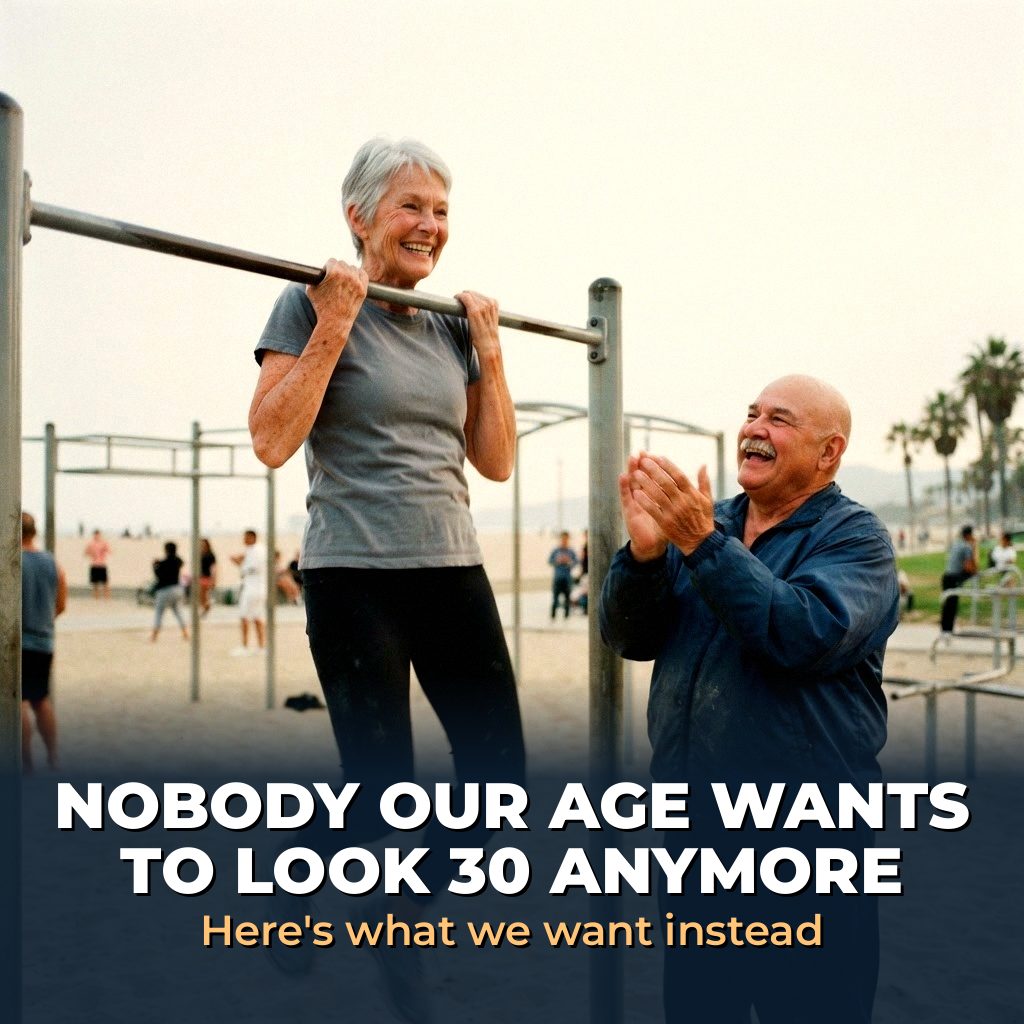
  • Nobody Our Age Wants to Look 30 Anymore. Here’s What We Want Instead.

    Nobody Our Age Wants to Look 30 Anymore. Here’s What We Want Instead.

    What is functional longevity?

    Short answer: Functional longevity means staying strong and steady enough to keep running your own life as the years pile on. Getting up off the floor without help, carrying in the groceries, climbing the stairs, lifting your own bag into the overhead bin. More and more folks our age care about that a whole lot more than looking younger, and the good news is you can start building it at any age.

    Somewhere along the way, a lot of us quit caring whether we look 30. Ask around and you’ll hear the same thing from men and women alike. Nobody’s losing sleep over a few crow’s feet. What they don’t want is to need help getting out of a low chair, or to sit out the beach trip because the walk from the parking lot is too far.

    Turns out that shift has a name now. The Global Wellness Institute put it at the top of its 2026 list of aging trends and called it functional longevity. Their take is that “anti-aging” is losing steam with people past 50, and strength, balance, a clear head and independence are what folks want now. I’d say most of us figured that out on our own a while back.

    Why does functional longevity matter more than looking younger?

    Because a smooth face won’t get you up off the kitchen floor. Dr. Peter Attia, the longevity doctor who wrote the bestseller Outlive, puts it in plain everyday terms. He has his patients make a list of the physical things they want to still be doing in their last ten years of life, and he calls it the Centenarian Decathlon.

    His own list isn’t fancy. He wants to be able to get up off the floor using just one arm, lift a 30-pound carry-on over his head into the overhead bin, climb out of a pool without the ladder, and walk up three flights of stairs with ten pounds of groceries in each hand. When patients make their own list, he says they almost always want the same kind of things. Hike a mile and a half. Carry their own groceries. Pick up a great-grandbaby. Get back up if they fall.

    You’ll notice “look 30” didn’t make anybody’s list.

    Sahil Bloom, the bestselling author of The 5 Types of Wealth, liked the idea so much he wrote up his own version on his blog and called it The 80-Year-Old Life Decathlon. His list has things on it like chasing the grandkids around the yard for 15 minutes and carrying the heavy suitcases and groceries in from the car. He’s a young fella, but he’s planning for the same thing we’re living right now.

    Is it too late to start at 70?

    Joan MacDonald would laugh at that question. At 70, the Ontario grandmother was overweight, had high blood pressure and painful arthritis, and had a hard time getting up a flight of stairs. Her doctor told her she’d need more blood pressure medicine. That news got her down, so she called her daughter Michelle, who happens to be a strength coach.

    Michelle treated her mama like any other new client and started her at the very beginning. Joan wasn’t good with computers, so Michelle printed out her workouts for her. Her first weights were about two pounds. Four years later, David Stewart at the AGEIST magazine sat down with her and found a 74-year-old doing weighted pull-ups and 200-pound hip thrusts. Along the way she lost 62 pounds and got off her medications, with her doctor in the loop.

    Joan turns 80 this year. Over a million people follow her as @trainwithjoan on Instagram, and she wrote a book called Flex Your Age. What I like most about her is how she talks about it. She’s always liked building things, and now she says she’s building herself.

    What if your health already isn’t great?

    Then meet Charles Mammay. Back in 2014, a heart checkup turned up atrial fibrillation, and doctors told him he might only have a couple of years if it wasn’t fixed. He wears a pacemaker now. He’s also 83, lives in Oak Island, North Carolina, and built an obstacle course in his front yard.

    Most mornings he starts out with stretching, dumbbells and somewhere between 50 and 80 push-ups, and he trains others for free. He was once the oldest man to compete on American Ninja Warrior. When the South China Morning Post asked him about it, he kept it short: “Even with a bad heart, I keep going.”

    Now, nobody needs to train four hours a day like Charles does. The point is he didn’t let a scary diagnosis talk him into sitting down for good. If you’ve got a heart condition or anything else going on, get your doctor’s okay first, then start where you are.

    How small should you start?

    Smaller than you’d think. Ginny MacColl in Virginia set herself one goal at 61. She wanted to do five pull-ups, and she couldn’t do a single one. She hired a trainer, and it took her a whole year to get that first pull-up.

    She kept going anyway. Her daughter is a well-known competitor on American Ninja Warrior, and Ginny ended up competing on the show herself three times in her 60s and 70s. At 71 she earned a Guinness World Record as the oldest female ninja competitor in the world.

    Christina Daves, who hosts the show Living Ageless and Bold and featured Ginny’s story, summed it up better than I can. “Anything is possible. You just start small.” One pull-up a year sounds slow, but a year goes by whether you start or not.

    How do you build functional longevity at home?

    Start by borrowing Attia’s idea and making your own list. Sit down with a pencil and think about the next 20 years. What do you want to keep doing? Maybe it’s working in the garden, getting down on the floor with the grandkids, taking that trip out West, or just carrying your own laundry basket up the stairs. Write down what matters to you, because that list is your workout plan.

    Then practice the real thing, or something close to it. If getting up off the floor is on your list, practice sitting down and getting back up a few times a day, using a sturdy chair at first if you need to. If it’s carrying groceries, carry a couple of loaded bags or jugs of water around the yard and build up a little each week. If it’s stairs, take the stairs. It’s about as simple as it gets, and you don’t need a gym membership for most of it.

    Strength is the thread that runs through every one of those things, so lifting something heavy a couple of times a week is worth it. I wrote more about that in How to Build Muscle After 60 Without Getting Hurt. And if you want to see where you stand right now, try the floor test that may predict longevity. It takes about a minute.

    Every one of the folks in this post started with something small and stuck with it. Joan started with two-pound weights. Ginny started with zero pull-ups. I reckon you can start with getting up off the floor tomorrow morning.

    Common Questions

    What does functional longevity mean?

    It means keeping the strength, balance, stamina and clear thinking you need to live on your own terms as you age, instead of focusing on looking younger.

    What is the Centenarian Decathlon?

    It’s a planning idea from Dr. Peter Attia. You list about ten everyday physical tasks you want to still do late in life, like getting up off the floor or carrying groceries, and then train now so you can keep doing them.

    Can you really get stronger after 70?

    Yes. Joan MacDonald started strength training at 70 with two-pound weights and was doing weighted pull-ups by 74. Check with your doctor first, start light and build up slowly.

    What’s a good first exercise for functional longevity?

    Practice getting down to the floor and back up, using a sturdy chair for support if you need it. It builds leg strength and balance and gives you confidence that you can get up if you ever fall.

    So what’s the first thing on your list? Tell me in the comments. I’d love to see what y’all are training for.

    Tom

    About Tom Green

    Tom Green writes Sturdy Years. He was born in Pell City, Alabama, in 1962, and he’s a country boy and a true Southerner through and through. He’s a regular, laid-back 64-year-old who keeps things simple and passes along what he learns about getting older. Tom isn’t a doctor. He reads up on the research and shares what’s useful, plain and simple. Read more about Tom.

    Health note: This article is for general education and isn’t medical advice. Talk with your doctor before starting a new exercise routine, especially if you have a heart condition, joint problems or a history of falls.

    Research & Sources

    Advertisement

    Marley Spoon meal kits advertisement

    Marley Spoon Meal Kits (affiliate link)
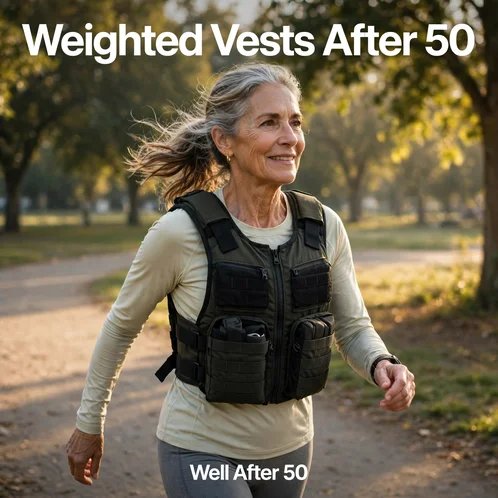
  • Weighted Vest Benefits After 50: Does It Really Help Bone Density?

    Weighted Vest Benefits After 50: Does It Really Help Bone Density?

    Does a weighted vest help bone density after 50?

    Short answer: Not on its own, it doesn’t. I wanted the answer to be yes as bad as anybody, but the best study we’ve got says no pretty plain. A vest only helps while you’re up and moving in it, and heavy lifting plus impact work does more for your bones. There are some real weighted vest benefits, though, and I’ll get to those.

    You’ve seen them too. Folks walking the neighborhood in a vest that looks like something off a SWAT team, folks at the gym, folks online swearing it’ll save their bones. It sounds so simple. Strap on a little extra weight, go for your walk, and your bones get stronger while you’re at it.

    So I went and looked at what the research really says about weighted vests, bone density and osteoporosis. Some of it surprised me, and some of it’s good news if you already own one.

    The year-long study that put weighted vests and bone density to the test

    The best test of this idea is the INVEST trial, led by Dr. Kristen Beavers at Wake Forest. It ran a full year with 150 older adults, average age 66, about three out of four of them women. All of them were living with obesity and losing weight on purpose, which matters, because losing weight tends to cost you some bone too.

    They split folks into three groups. One just did the diet. One did the diet and wore a weighted vest during the busiest part of the day, with weight added to the vest as they lost pounds. The third did the diet plus supervised strength training three times a week.

    And the vest people stuck with it. They wore it a little over 7 hours a day on average and carried about 78 percent of the weight they’d lost right there in the vest.

    After a year, all three groups had lost some hip bone, somewhere between 1.2 and 1.9 percent. The vest group did no better than diet alone, and the strength group didn’t either, at least not in this setting. Dr. Beavers said in the Wake Forest announcement that these strategies “alone may not be enough.”

    Now here’s the part the headlines skipped. She also said it’s no reason to quit using a vest, and more than half the people in the study said they didn’t mind wearing one. So it’s not a bad tool. It’s just not a bone treatment all by itself.

    Walking with a weighted vest: you’ve got to be up and moving

    Earlier this year, Dr. Jason Fanning and the same research team took a second look at those vest wearers. They’d had everybody wear a little tracker, and it turned out the vest folks who spent more time standing and stepping had better hip bone results than the ones who mostly sat.

    Fanning put it about as simple as you can in Wake Forest’s write-up: a vest can be a great tool, but “it’s not going to do the work for you.”

    That makes good sense to me. Sitting in a vest loads the chair, not your hips. It only does your skeleton any good while you’re up on your feet in it.

    The real weighted vest benefits

    There’s some good news here. In August, a review in Osteoporosis International pulled together nine trials with 368 middle-aged and older adults. People who exercised in a vest did better on bone density at the hip and spine, and trimmed more body fat, than people who just went about their usual day.

    But when they stacked vest-plus-exercise against the same exercise with no vest, there wasn’t enough good evidence to say the vest added anything extra. So a lot of the credit likely goes to the exercise itself.

    That lines up with what Dr. Len Kravitz wrote for the American College of Sports Medicine. The main weighted vest benefits are that it’s a handy, hands-free way to make a walk burn more calories and work your legs harder. He also says walking in one doesn’t do much for bone density, and he points folks to impact work and strength training for that.

    One more thing worth knowing: more weight on your frame isn’t free. In the INVEST trial, the vest group reported 17 muscle and joint complaints and the strength group 19, against just 6 for the diet-only group.

    Writer Jolene Edgar, who wrote about weighted vests for Allure and talked with Dr. Beavers while the trial was still running, made a fair point on her Substack, Aesthetics Unfiltered. Some folks online took the results as proof vests are worthless, and that’s not right either. Vests aren’t magic, but they’re not junk.

    Can a weighted vest help osteoporosis? The old study everybody points to

    If you’ve read up on vests, you’ve probably run across a 2000 study from Christine Snow’s bone lab at Oregon State. Nine women past menopause did vest exercises plus jumping three times a week, most of the year, for five years. They held onto their hip bone. Nine other active women who didn’t do the program lost around 4 percent.

    That’s real, but it was a tiny group, and you can’t pull the vest apart from the jumping. My guess is the jumping did a good share of the work.

    What works better for bone density after 50

    Bone answers to load that’s heavy and quick, like lifting and landing a little jump. A slow, steady walk just doesn’t push it that hard, even with a vest on.

    The study that changed a lot of minds is the LIFTMOR trial out of Australia, led by Professor Belinda Beck. Researchers took 101 women past menopause, average age 65, who already had low bone mass. Half did supervised heavy lifting and impact work, things like deadlifts, squats, overhead presses and jumping, for 30 minutes twice a week for eight months.

    Their spine bone density went up 2.9 percent while the comparison group lost 1.2 percent. At the top of the thigh bone by the hip, they held steady while the others lost 1.9 percent. Those women were screened carefully and coached the whole way, so this isn’t something to try heavy on your own. Find a trainer or physical therapist who knows bone health.

    If you’re starting from scratch, my post on getting back the muscle you lose after 50 and the one on building muscle after 60 without getting hurt are good places to begin.

    And don’t forget what actually breaks most hips, which is a fall. Balance work is what cuts falls, and I laid out a simple kitchen-counter routine in Does Walking Prevent Falls After 65?

    How to start walking with a weighted vest safely

    I’m not telling you to throw yours in the closet. If it gets you out the door and makes your walk a little harder, that’s a win. Here’s how the experts say to go about it.

    • Start light. Both Dr. Sharon Hame at UCLA Health and the ACSM say begin around 5 percent of your body weight. That’s about 7 or 8 pounds if you weigh 150.
    • Start short. The ACSM suggests about 10 minutes of weighted walking at first. Dr. Hame says keep a weighted walk to less than half the length of your usual walk when you’re starting out.
    • Build up slow. Add a little weight or a little time as you get stronger. Trying to do too much too soon is how folks get hurt.
    • Wear it for the walk, not all day. The ACSM warns that all the twisting and turning of a whole day in a vest can strain your muscles and joints.
    • Get a good fit. Look for padding and snug straps, with the weight spread front and back. If it shifts around when you move, it doesn’t fit right. Weighted Vest
    • Watch your form. If you catch yourself hunching, leaning forward or shortening your stride, or you can barely finish your walk, take some weight out.

    And talk to your doctor first if you’ve got back or neck trouble, arthritis in your hips, knees or ankles, osteoporosis or a past fracture, balance problems, or heart trouble. If something starts hurting, take it off and get it checked.

    My take from the porch

    I’m not buying a vest to save my hips. I’ll keep walking, I’ll keep doing my strength work, and I’ll keep holding onto that kitchen counter for my balance work, because that’s what the research backs up.

    If you like your vest, I reckon keep wearing it, men and women both. Just wear it while you’re moving, start light, and don’t count on it to do the heavy lifting for you. Think of it as a helper, not a cure.

    This is general information only, not medical advice, and it’s no substitute for your own doctor who knows your history. If you’ve fallen, feel unsteady or have a condition that affects your bones or balance, talk to your doctor before starting a new exercise routine.

    — Tom, Sturdy Years

    Sources

    Join the Conversation

  • Grip Strength Predicts How You Age. Can a Band Routine Change Yours?

    Grip Strength Predicts How You Age. Can a Band Routine Change Yours?

    Can a resistance band routine build grip strength as you age?

    Short answer: Yes, a simple band routine can build grip strength. In a 2026 study, 82 women who averaged 75 years old did chair-based resistance band exercises for 12 weeks. The ones who trained three times a week built a lot more grip strength than the ones who trained twice, though they also did 50% more exercise each week.

    A surprising study shows what resistance bands can do for grip strength—and how a simple routine could help you stay stronger.

    Now here’s something worth knowing if you’ve got a resistance band stuck in a drawer somewhere, or you’ve been thinking about picking one up.

    Researchers worked with a group of women who averaged 75 years old. The ones who used resistance bands three times a week built a whole lot more grip strength than the ones who did it twice.

    And I don’t mean just a little bit more.

    Grip strength is one of those plain, simple things that says a good bit about how we’re aging. So let’s sit a spell and look at what they found, and what it might mean for the rest of us.

    The Study, in Plain English

    Published in 2026 in the European Review of Aging and Physical Activity, the study involved older women at geriatric centers in Serbia. Eighty-two women completed the 12-week program of chair-based resistance-band exercises.

    Both groups followed the same basic routine, targeting the hips, knees, shoulders, and trunk. The difference? One group exercised twice a week. The other exercised three times.

    After 12 weeks, both groups improved in several areas, including chair stands, arm curls, endurance, and flexibility. Both also reduced total and LDL cholesterol.

    But two results really stood out:

    • Grip strength increased 28% in the three-day group, compared with 7% in the twice-weekly group.
    • HDL (good) cholesterol increased 9% in the three-day group, compared with 1% in the twice-weekly group.

    Fasting glucose and triglycerides didn’t change much. Still, not bad for a chair and a few stretchy bands!

    One Important Thing to Remember

    Now before y’all go adding another workout day, there’s one thing worth knowing.

    The three-day group also performed 50% more exercise each week. That means researchers couldn’t determine whether the greater improvements came from exercising more frequently or simply doing more total work.

    And because there wasn’t a no-exercise comparison group, this study alone can’t tell us how much improvement was directly caused by the program.

    Still, the results are encouraging. Twice a week is a good place to start. If you’re comfortable adding a third session, it may offer additional benefits.

    Why Grip Strength Deserves Your Attention

    Think about how often you use your hands throughout the day: opening jars, carrying groceries, working in the garden, pushing yourself out of a chair, or grabbing something to steady yourself.

    We don’t always appreciate how important these everyday movements are until they become difficult. Researchers use grip strength as a quick, inexpensive way to assess aspects of overall muscle and nerve health.

    The landmark PURE study, published in The Lancet in 2015, followed approximately 140,000 adults across 17 countries. Researchers found that every 5-kilogram decrease in grip strength was associated with a 16% higher risk of death from any cause and a 17% higher risk of cardiovascular death.

    Those numbers will make you sit up, won’t they? But remember, grip strength is a health marker, not a crystal ball. A strong grip won’t promise you a longer life. What counts is keeping your muscles strong enough to stay active and keep doing for yourself.

    A Simple Resistance-Band Routine

    Want to give resistance bands a try? You don’t need anything complicated. Here’s a practical routine inspired by the study:

    1. Choose two or three nonconsecutive days a week. Monday, Wednesday, and Friday work nicely if you’re ready for three sessions.
    2. Warm up for 10 minutes. Try gentle marching in place, shoulder rolls, or easy movements.
    3. Aim for two sets of 12–15 repetitions using light-to-moderate resistance, with about a minute of rest between sets.
    4. Work your whole body. Try chair stands, seated rows, chest presses, biceps curls, band pull-aparts, hip hinges, triceps extensions, and side steps.
    5. Start with a light band. Increase resistance gradually as movements become easier.
    6. Finish with gentle stretching.

    You don’t have to master everything on the first day. Start with what feels comfortable, learn the movements, and build from there.

    A quick safety reminder: Inspect your bands for wear before using them. Stop if you experience sharp pain or dizziness. If you have arthritis, carpal tunnel syndrome, recent surgery, or balance difficulties, check with your healthcare professional before beginning.

    The original study used a supervised chair-based program, so this home routine is an adaptation rather than an exact copy.

    What You Need

    One basic set of resistance bands is enough to get started. Choose a set with several resistance levels so you can gradually increase the challenge. If flat bands are uncomfortable to grip, bands with handles may be easier to use.

    If you enjoy following a book, another option is Resistance Band Workout for Seniors by Fit Forever. It offers low-impact exercise ideas designed for older adults, with options for different experience levels.

    Resistance Band Workout for Seniors book cover

    Take a Look at Resistance Band Workout for Seniors

    Track Your Progress With Sturdy Years

    One of the most encouraging things about exercise is looking back and realizing how far you’ve come. Maybe you’re completing a few more repetitions. Maybe that light resistance band doesn’t feel quite so challenging anymore.

    That’s exactly the kind of progress our upcoming Sturdy Years Strength & Fitness app is being developed to help you track. The app is intended to help you record exercises, sets, and repetitions so you can follow your progress over time.

    It’s not available for purchase yet, but you can explore what’s coming on our Sturdy Years Apps & Store page.

    A Final Thought

    Here’s what I like most about this one. These women weren’t young athletes. They were regular folks averaging 75 years old, and they got measurably stronger just by showing up and doing the work.

    That’s good news at any age. You don’t have to jump in at three workouts a week or push past what feels right.

    Two sessions a week is a fine place to start. And if you add a third down the road, I reckon you might surprise yourself. Sometimes getting stronger starts with something as simple as picking up a resistance band.

    Other Voices Worth Following

    SilverSneakers — Offers fitness classes focused on strength, endurance, and fall prevention, including chair-based and resistance-tubing options.

    Kris Herbert, featured in Tom’s Guide — Shares a 15-minute resistance-band routine designed for adults over 70.

    Chris Tiley of Never Too Old To Lift — Offers practical advice and resistance-band exercises for older adults who want to build strength at home.

    Research Sources

    Purchases made through affiliate links on this page may earn Sturdy Years a commission at no additional cost to you.

    Keep Reading

    Your Turn

    Have you tried resistance bands, or would you give them a try? Do you prefer working out at home or at the gym? Tell me in the comments—I’d love to hear what works for you.

    About the Author

    Tom Green writes Sturdy Years. He was born in Pell City, Alabama, in 1962, and he’s a country boy and a true Southerner through and through. At 64, he shares practical research and everyday experiences about staying active, living well, and making the most of life after 50. He believes it’s never too late to keep learning and getting stronger.

    Tom is not a doctor or medical professional. This article is for general education, not personal medical advice. Check with your healthcare professional before starting a new exercise program, especially if you have an injury or health condition.

    I’ve also mapped out some great tools on my new Tech for Independent Living After 50 page.

  • After 50, You’re Losing Muscle Every Year. Here’s How to Get It Back.

    After 50, You’re Losing Muscle Every Year. Here’s How to Get It Back.

    Can you get back muscle you’ve lost with age?

    Short answer: Yes, you can get muscle back, even in your 80s. Older adults who do resistance training gain strength, muscle and everyday function. Start with strength training two or more days a week, with one or two sets of about 8 to 12 slow reps, and eat enough protein to help your body repair and keep muscle.

    Getting up out of a chair shouldn’t feel like a workout. Carrying groceries shouldn’t leave you struggling. And climbing stairs shouldn’t make you wonder when everyday life got so much harder.

    If you’re over 50 and noticing changes like these, it’s worth paying attention. One possible reason is sarcopenia, the medical term for age-related loss of muscle strength and muscle mass. The encouraging news: people can improve strength at many ages, and practical habits can help protect mobility and independence.

    You don’t need to become a bodybuilder, spend a fortune on supplements, or live at the gym. A sensible strength routine, nutritious food, regular movement, and recovery are a useful place to start.

    Why Muscle Loss After 50 Deserves Your Attention

    Muscles change as we age. Muscle mass and strength can decline, although the pace varies from person to person. The concern isn’t simply how your arms and legs look in the mirror; it’s whether weakness begins to affect everyday life.

    Your muscles help you stand, walk, climb stairs, carry shopping bags, maintain balance, and respond to physical challenges. Significant declines in strength and function can make falls and independent living greater concerns.

    Muscle isn’t just about appearance. It’s part of what helps you remain capable, active, and independent. Aging doesn’t automatically mean becoming weak. Resistance training is an important way to improve strength and support physical function.

    For a medical overview, read the National Institutes of Health article Slowing Sarcopenia.

    The Science Says You Can Get Stronger — Even in Your 80s

    Older adults can respond to resistance training with improvements in strength, muscle mass, and physical function. Results vary, and exercise won’t reverse every cause of weakness, but age alone isn’t a reason to give up.

    Protein matters because your body uses it to maintain and repair muscle tissue. Getting enough protein alongside appropriate exercise can support muscle health. Be cautious of claims that one powder, pill, or supplement will solve muscle loss on its own.

    For additional background, see the International Clinical Practice Guidelines for Sarcopenia.

    Real People Are Showing That It’s Not Too Late to Get Stronger

    1. A woman who started lifting at 65

    Women’s Health featured Shelly Stettner, who began barbell training just before her 65th birthday. By age 73, she had become a competitive powerlifter and could squat 250 pounds. Her achievement is exceptional, and nobody needs to lift that much to benefit from strength training. The useful lesson is that she didn’t assume age meant she had to stop getting stronger.

    Read her story in Women’s Health.

    2. A fitness coach adapting his training after 50

    Men’s Health interviewed fitness coach Bryan Krahn about adapting training as the body ages. A good routine isn’t necessarily one that leaves you exhausted or encourages you to push through pain. Training should account for your experience, recovery, physical limitations, and goals.

    Read the Men’s Health interview.

    3. A personal account of getting stronger after 50

    The blog Muscle Log offers a personal perspective on pursuing strength after 50. Not everybody wants to compete in powerlifting. Success might mean carrying groceries more comfortably, feeling steadier on your feet, or finding that an everyday task has become easier.

    These stories don’t prove that everyone can reverse every form of muscle loss. They do show why it’s worth considering safe, realistic ways to keep building strength.

    Your Six-Step Action Plan to Fight Muscle Loss

    1. Start strength training two or more days a week

    You don’t need a gym membership to begin. Choose movements that challenge your muscles safely and can be adapted to your current ability.

    • Sit-to-stands: Stand up from a sturdy chair and sit down slowly. Use your hands for assistance if needed.
    • Wall push-ups: Place your hands against a wall and bend and straighten your elbows under control.
    • Resistance-band rows: Pull a securely anchored band toward your body.
    • Supported calf raises: Hold a sturdy support and slowly raise and lower your heels.
    • Light dumbbell exercises: Choose suitable movements for your major muscle groups.

    One or two sets of around 8–12 controlled repetitions may be a reasonable starting point for many people, depending on the exercise and their abilities. Increase resistance or repetitions gradually as exercises become easier. You don’t need to push to exhaustion. If you have balance problems, medical conditions, or are new to exercise, ask a healthcare professional about a safe starting plan.

    2. Eat protein throughout the day

    Protein provides building blocks your body uses to maintain and repair muscle. You can get it from everyday foods rather than relying on expensive powders.

    • Breakfast: Eggs, Greek yogurt, or cottage cheese.
    • Lunch: Chicken, tuna, beans, or lentils.
    • Dinner: Fish, turkey, tofu, lean meat, or beans.
    • Snacks: Yogurt, a hard-boiled egg, or nuts alongside other nutritious foods.

    Try to include a protein-rich food at each meal. The right amount depends on body size, activity, overall diet, and health. If you have kidney disease or have been advised to limit protein, ask your healthcare professional what is appropriate. More isn’t automatically better.

    3. Keep moving every day

    Walking, gardening, dancing, cycling, and other activities you enjoy support general health and mobility. Walking alone usually doesn’t provide the same muscle-building stimulus as resistance training, so include both when appropriate.

    For adults 65 and older, CDC guidance recommends at least 150 minutes of moderate-intensity aerobic activity weekly, muscle-strengthening activity on at least two days, and activities that improve balance. Adapt activity to your abilities and health conditions. Read the CDC guide to physical activity for older adults.

    4. Pay attention to balance

    Strength and balance work together to help you move safely. Practise near a sturdy support and don’t attempt challenging movements if you’re unsteady or at risk of falling. Gentle tai chi or supervised balance training may be options. If your balance has recently worsened or you’ve fallen, speak with a healthcare professional.

    5. Don’t ignore nutrition or vitamin D

    Vitamin D plays a role in bone and muscle function. Low levels can be associated with weakness, but taking extra vitamin D isn’t a guaranteed treatment for sarcopenia. Ask your healthcare professional whether testing or supplementation makes sense for your situation, and be cautious with supplements that may interact with medication.

    Been hearing folks talk about NMN supplements for energy and aging? I dug into what the studies really show here: Been Hearing About NMN Supplements? Would It Work for You After 50?

    6. Make sleep and recovery part of your plan

    Your body needs time to recover from exercise. Many adults do well aiming for around seven to nine hours of sleep, though individual needs vary. Allow recovery between challenging workouts and don’t keep increasing exercise if you’re persistently exhausted or in pain. Consistency over months matters more than one perfect week.

    Five Questions to Help You Check In With Yourself

    These questions aren’t a diagnostic test, but they may help you notice changes worth discussing with a healthcare professional.

    1. Has getting out of a chair become noticeably harder?
    2. Can you carry your usual groceries comfortably?
    3. Have walking or climbing stairs become more difficult?
    4. Are you eating enough nutritious food, including protein?
    5. Have you stopped doing strength-building activities? If so, could you safely begin a manageable routine?

    A chair-stand assessment can help trained professionals evaluate lower-body strength and physical function, but a simple home test cannot diagnose sarcopenia. If you have mobility or balance problems, don’t attempt a challenging test without suitable support.

    What If You’ve Already Lost a Lot of Muscle?

    Don’t panic, but don’t ignore significant changes. If you’ve become noticeably weaker, lost weight without trying, started falling, or found everyday activities increasingly difficult, make an appointment with your healthcare professional.

    Muscle loss can be related to inactivity or nutrition, but weakness can also result from medication effects, illness, nerve problems, and other medical conditions. A clinician can assess your strength and physical function and decide whether further evaluation is needed.

    The Bottom Line: Your Independence Is Worth Protecting

    Muscle loss after 50 isn’t something to be ashamed of, and it isn’t a reason to give up on yourself. You may not be able to prevent every change that comes with aging, but you can take meaningful steps to support strength and physical function.

    Train your muscles. Eat nutritious food. Stay active. Work on balance. Get enough recovery. Pay attention to changes that may need medical attention. You don’t have to spend a fortune or transform yourself overnight. Start with one manageable step and build from there.

    Getting older is inevitable. Giving up on your strength doesn’t have to be.

    What about you?

    Have you noticed changes in your strength since turning 50? Have you found an exercise or everyday habit that helped you feel stronger? Share your experience in the comments. Your story might help someone else take that first step.

    Medical disclaimer

    This article is for educational purposes and isn’t a substitute for individual medical advice, diagnosis, or treatment. If you have unexplained muscle loss, persistent weakness, repeated falls, or difficulty with everyday activities, speak with a healthcare professional before starting a new exercise programme.

    Written by Tom Green, creator of Sturdy Years

    Tom Green writes Sturdy Years. He was born in Pell City, Alabama, in 1962, and he’s a country boy and a true Southerner through and through. He’s just a regular, laid-back 64-year-old who keeps things simple. He shares what he learns about skincare, fitness and getting older, and what’s working for him. He’s also the author of A Practical Guide to Getting Older Without Giving Up on Yourself. Tom isn’t a doctor. He reads up on the research and passes along what’s useful, plain and simple.

    Sources and further reading

    Sturdy Years — Look better. Feel stronger. Age well.

    I’ve also mapped out some great tools on my new Tech for Independent Living After 50 page.

  • 7 Strength Habits That Matter More After 60

    7 Strength Habits That Matter More After 60

    What strength habits matter most after 60?

    Short answer: Most strength after 60 is built or lost outside the gym. Practice getting up from a chair without your hands, carry things on purpose, walk every day and take the stairs, eat some protein at every meal, practice balance, keep your grip strong, and protect your sleep.

    Getting stronger after 60 is absolutely possible. But here is something I wish more people talked about: most of your strength is not built or lost in the gym. It is built or lost in the other 23 hours of the day.

    I’m in my 60s, and I work out to feel like a healthier me as I age. Workouts matter, and I wrote a whole guide on how to build muscle after 60 without getting hurt. This post is about the everyday habits that make those workouts pay off and keep you capable in real life: getting out of a chair, carrying groceries, climbing stairs, traveling, working around the house.

    The 7 habits at a glance

    1. Get up from a chair without using your hands
    2. Carry things on purpose
    3. Walk every day, and take the stairs when you can
    4. Eat some protein at every meal
    5. Practice your balance while you do something else
    6. Keep your grip strong
    7. Protect your sleep and your recovery

    1. Get up from a chair without using your hands

    Standing up from a chair is one of the most important strength moves you will ever do, and you do it all day. Next time you get up, cross your arms or keep your hands off the armrests and stand using your legs. Sit back down slowly instead of dropping.

    Want to make it a habit? Do five slow sit-to-stands every time a commercial comes on, or before each meal. If it is hard right now, use a higher chair or a cushion and work your way down.

    2. Carry things on purpose

    Carrying works your grip, shoulders, core and legs all at once, and it is exactly what life asks of you. Carry the grocery bags in instead of using the cart all the way to the door. Carry the laundry basket up the stairs. Split heavy loads evenly in both hands, stand tall and walk steadily.

    Keep it to a weight you can carry without hunching or holding your breath. The goal is to make everyday carrying feel easier, not to strain.

    3. Walk every day, and take the stairs when you can

    Walking keeps your legs used to working, and stairs add a little strength training without calling it a workout. Park farther away, take one flight instead of the elevator, walk after dinner. The CDC recommends older adults get at least 150 minutes of moderate activity a week, and brisk walking counts. If you want to know how much is enough at your age, I break it down in how many steps or minutes of exercise you need in your 50s, 60s and 70s.

    4. Eat some protein at every meal

    Muscle needs raw material. A lot of us eat a light breakfast, a light lunch and most of our protein at dinner. Spreading it out gives your body a steadier supply through the day.

    Simple ways to do it: eggs or Greek yogurt at breakfast, chicken, tuna, beans or cottage cheese at lunch, and fish, meat, tofu or lentils at dinner. Protein needs vary from person to person, so if you have kidney problems or another health condition, ask your doctor what is right for you.

    5. Practice your balance while you do something else

    Strong legs help you balance, and good balance helps you use that strength safely. The CDC includes balance activities in its guidelines for older adults for a reason.

    The easiest habit I know: stand on one foot while you brush your teeth, then switch at the halfway point. Stay next to the counter so you can grab it if you need to. Once that feels easy, try it while you wait for the coffee to brew.

    6. Keep your grip strong

    Your grip is what opens jars, carries bags and catches a railing when you slip. Researchers often use grip strength as a simple measure of overall strength as we age. You do not need special equipment. Carrying (habit 2) helps a lot, and so does squeezing a tennis ball for a few seconds at a time while you watch TV.

    7. Protect your sleep and your recovery

    Your workout and your daily habits are the stimulus. Sleep is when your body does the repair work. Try to keep a regular bedtime and wake time, and do not stack hard days on top of each other. If you are constantly worn out, more effort is not automatically the answer. Sometimes better rest is. I wrote more about that in sleep and longevity after 50.

    A simple daily strength checklist

    Print this or keep it on your phone. You do not need all of it every day. Checking off four or five is a good day.

    • ☐ 10 hands-free sit-to-stands
    • ☐ Carried something heavy-ish (groceries, laundry, a bag)
    • ☐ A walk, or at least one flight of stairs
    • ☐ Protein at breakfast, lunch and dinner
    • ☐ One-foot balance while brushing teeth
    • ☐ In bed at a regular time
    • ☐ Strength workout (2 days a week)

    For another perspective on strength and movement after 50, Journey to Fifty Plus shares fitness, wellness, and personal experiences focused on staying strong and active.

    Common Questions

    Can you get stronger after 60 without a gym?
    Yes. Everyday habits like sit-to-stands, carrying, stairs and balance practice all build useful strength at home. Adding two short strength workouts a week makes them work even better.

    What is the most important strength habit after 60?
    If I had to pick one, it is getting up from a chair without your hands. It trains the legs you rely on for almost everything else.

    How much exercise do older adults need?
    The CDC recommends at least 150 minutes of moderate activity a week, at least 2 days of muscle-strengthening activities, and activities that improve balance.

    Does protein really matter for strength after 60?
    Your muscles need protein to repair and grow. Spreading it across your meals is an easy way to make sure you are getting enough. Talk to your doctor if you have kidney disease or a condition that affects your diet.

    How do I make these habits stick?
    Tie each one to something you already do: balance while brushing teeth, sit-to-stands before meals, a walk after dinner. Habits attached to routines last.

    A gentle health note: Start at a level appropriate for your fitness and experience. If you have significant pain, balance problems, or a medical condition that affects exercise, consider talking with a healthcare professional before starting a new routine.

    My take after 60

    I still want my workouts to challenge me. But I have come to believe the small things, how you get out of a chair, whether you carry the bags, what you eat at breakfast, add up to more than any single workout. Strength after 60 is a long game, and these habits are how you play it every day.

    Getting older changes some of the rules. It does not mean you stop getting stronger.

    Your turn: Which of these seven do you already do, and which one are you going to start this week? Tell me in the comments.

    This article is general fitness information, not medical advice. If you have an injury, medical condition, or significant pain, talk with a qualified healthcare professional about exercise that is appropriate for you.

    Strong After Sixty book cover

    Strong After Sixty: The Complete Strength and Fitness Guide for Men Over 60

    by Dr Robert Dalton (Author)

    Check here: https://amzn.to/47yDK8t

    Affiliate Disclosure: Some links in this post may be affiliate links. If you purchase something through one of these links, Sturdy Years may earn a small commission at no extra cost to you. This helps support the site and allows us to continue creating helpful content.

    Written by Tom Green, creator of Sturdy Years

    Tom Green writes Sturdy Years. He was born in Pell City, Alabama, in 1962, and he’s a country boy and a true Southerner through and through. He’s just a regular, laid-back 64-year-old who keeps things simple. He shares what he learns about skincare, fitness and getting older, and what’s working for him. He’s also the author of A Practical Guide to Getting Older Without Giving Up on Yourself. Tom isn’t a doctor. He reads up on the research and passes along what’s useful, plain and simple.

    I’ve also mapped out some great tools on my new Tech for Independent Living After 50 page.

  • How to Build Muscle After 60 Without Getting Hurt

    How to Build Muscle After 60 Without Getting Hurt

    Can you still build muscle after 60 without getting hurt?

    Short answer: Yes. Lift twice a week with a rest day between, warm up for 5 to 10 minutes first, and pick a weight you can lift with smooth form while finishing each set with about two good reps left in the tank. Add weight only in small steps, and let recovery, sleep and protein do their part.

    Building muscle after 60 is possible, but I do not think the smartest approach is pretending you are 25. The goal is to challenge your muscles enough to adapt while giving the rest of your body, your joints, tendons and back, time to keep up.

    I’m in my 60s, and I work out to feel like a healthier me as I age. The fastest way to lose progress at this age is not skipping a workout. It is getting hurt and missing six weeks. So this guide is about one thing: how to start, or start again, in a way that keeps you training for years.

    The short version

    • Train at least 2 days a week. That is what the CDC recommends for older adults, and it is plenty to get started.
    • Start lighter than you think. End every set with about two good reps left in the tank.
    • Add a little at a time. One more rep or a small bump in weight, not big jumps.
    • Rest a day between hard sessions. Muscle is built while you recover.
    • Sharp pain means stop. Effort is fine. Pain in a joint is not.

    Why it is worth doing now

    We slowly lose muscle as we age, and that loss shows up in everyday life: getting out of a low chair, carrying groceries, climbing stairs, catching yourself when you trip. The good news is that muscle still responds to training at 60, 70 and beyond. If you want to understand what you are up against, I wrote about it in why muscle isn’t the only thing you lose with age.

    The “two reps in the tank” rule

    The right starting weight is not the heaviest weight you can move once. It is a weight you can lift with smooth, controlled form for your target reps, and when you finish the set you feel like you could have done about two more good ones.

    That one rule handles most of the safety problem. If you have to swing, jerk or twist to finish the set, the weight is asking more from your joints than from the muscle you are trying to train. Drop it a little and own every rep.

    Warm up for 5 to 10 minutes first

    Cold joints do not like heavy work. A few minutes on a bike or treadmill, then one light “practice” set of your first exercise, gets blood moving and lets you check how everything feels that day. Some days you will feel great. Some days you will want to go a little lighter, and that is fine.

    A simple 2-day starter plan

    Do this twice a week with at least one rest day in between, for example Monday and Thursday. Start with 2 sets of 10 to 12 reps for each exercise, using the two-reps-in-the-tank rule.

    1. Legs: leg press, or sit-to-stands from a sturdy chair if you are training at home.
    2. Push: machine chest press, or wall push-ups at home.
    3. Pull: seated cable row or a resistance band row.
    4. Back of the body: glute bridges, or a back extension machine.
    5. Upper back: lat pulldown, or a band pulldown anchored over a door.
    6. Core: a short plank against a counter or bench, or a slow dead bug on the floor.

    That is a full-body workout in about 30 to 40 minutes. You can add arm work or calves later. For the first couple of months, these six cover what matters most.

    Your first 8 weeks

    • Weeks 1 and 2: Learn the movements. Keep it light and focus on form. You should leave feeling like you could have done more.
    • Weeks 3 and 4: Add a third set to the exercises that feel good.
    • Weeks 5 to 8: When you can do all your reps with good form and still have two in the tank, add the smallest weight increase the machine allows.

    Write down each exercise, the weight and the reps. A simple notebook works. After a few weeks those notes show you progress your memory will miss, and they keep you from jumping the weight too fast.

    Joint-friendly swaps

    If an exercise bothers a joint, you usually do not have to skip that muscle. You just need a different way to train it.

    • Cranky knees: use a shorter, comfortable range on the leg press, or squat down to a box or chair instead of going deep.
    • Touchy shoulders: use a machine press or a palms-facing (neutral) grip instead of a straight barbell, and skip pressing behind the head.
    • Sensitive lower back: choose machines that support your back over heavy barbell lifts, and keep bridges and back extensions slow and controlled.

    Machines can be a very good tool

    I like machines for some exercises because they provide stability and let me concentrate on producing force with the intended muscles. Free weights can also work well. The best tool is the one that lets you train consistently and appropriately.

    Warning signs to respect

    Training safely does not mean training timidly. It means knowing the difference between hard work and a warning. Normal: muscles that feel worked, some mild soreness for a day or two. Stop and rethink if you notice:

    • Sharp or stabbing pain during a rep
    • Joint pain that is still there or worse the next day
    • Dizziness, chest pain or unusual shortness of breath
    • Soreness that never clears before your next workout

    Recovery is part of muscle building

    The workout is the stimulus. Recovery is when your body has an opportunity to respond. Sleep, enough food, enough protein and rest between hard sessions all matter. More workouts are not automatically more muscle. If performance keeps falling and soreness never clears, look at recovery before adding more training.

    What you do on the other five days of the week matters too. I put those everyday habits, protein, walking, carrying, balance and sleep, in a separate post: 7 Strength Habits That Matter More After 60.

    For another perspective on staying active and building healthy habits later in life, Journey to Fifty Plus shares personal experiences and ideas around fitness and wellness after 50.

    Common Questions

    Can you still build muscle after 60?
    Yes. Adults can build strength and muscle after 60 with consistent resistance training, adequate recovery and good nutrition.

    How often should you strength train after 60?
    The CDC recommends muscle-strengthening activities at least 2 days a week for older adults, with rest between challenging sessions.

    How heavy should you lift after 60?
    Heavy enough that the last couple of reps feel challenging, but light enough that you finish with about two good reps left and never lose your form.

    What exercises are best for building muscle after 60?
    Start with the big movements: a leg exercise, a push, a pull, a hip or back exercise, and some core work. Machines are a great way to learn them safely.

    How quickly should you increase weights after 60?
    Only when you can complete all your reps with good form and still have a couple left in the tank. Then make the smallest increase available.

    Is it normal to be sore after strength training after 60?
    Mild muscle soreness for a day or two is normal, especially when you start. Sharp pain or joint pain that lingers is not, and is a reason to back off.

    A gentle health note: If you’re new to strength training, have significant joint or muscle pain, dizziness, balance problems, or a medical condition that affects exercise, consider talking with a healthcare professional before starting or substantially increasing your workouts. Stop an exercise that causes sharp or unusual pain.

    My bottom line

    After 60, I still want challenging workouts. I just want those workouts to move me forward instead of keeping me injured. Start lighter than your ego wants, add a little at a time, recover, and keep showing up. Two days a week, done well, beats five days that leave you hurting.

    Your turn: Are you just getting started, or getting back into it? Tell me in the comments which exercise gives you the most trouble and I’ll try to help.

    Exercise should be adapted to your health, injuries and abilities. This is general fitness information, not individualized medical advice.

    About Tom Green

    Tom Green writes Sturdy Years. He was born in Pell City, Alabama, in 1962, and he’s a country boy and a true Southerner through and through. He’s just a regular, laid-back 64-year-old who keeps things simple. He shares what he learns about skincare, fitness and getting older, and what’s working for him. He’s also the author of A Practical Guide to Getting Older Without Giving Up on Yourself. Tom isn’t a doctor. He reads up on the research and passes along what’s useful, plain and simple.

    Keep Reading

    I’ve also mapped out some great tools on my new Tech for Independent Living After 50 page.