Tag: menopause

  • Books of the Month: October – 3 Bestsellers for Staying Strong After 50

    Books of the Month: October – 3 Bestsellers for Staying Strong After 50

    What are the best books for staying strong this October?

    Short answer: This month’s three bestsellers are Protocols by Stanford neuroscientist Dr. Andrew Huberman, a reference on sleep, energy, mood and strength; Heal Your Cells by Dr. Josh Axe and Dr. Will Cole, a food-first plan for feeling less worn out; and Unbreakable by orthopedic surgeon Dr. Vonda Wright, a strength plan for women going through and past menopause.

    Every month I pick three books worth your time. This month all three are about the same thing we talk about here: staying strong, sharp and independent as we get older. They’re all on the bestseller lists right now.

    Book cover of Protocols: An Operating Manual for the Human Body by Andrew Huberman

    1. Protocols: An Operating Manual for the Human Body by Andrew Huberman, PhD

    If you’ve listened to podcasts at all in the last few years, you’ve probably heard of Dr. Huberman. He’s a Stanford neuroscientist, and his health podcast is one of the most popular in the world. Protocols is his first book, and it’s built around one simple idea: small daily habits, done consistently, change how you feel.

    He covers the basics that matter most at our age, including sleep, energy, mood and stress, and he includes protocols for getting stronger and leaner at any age. For each one he explains the science in plain language, then tells you exactly what to do.

    It’s a big book at over 500 pages, but you don’t have to read it front to back. Pick the chapter you need most, probably sleep, and start there.

    Great for: anyone who wants one solid reference book on the shelf for all-around health.

    Find Protocols here →

    Book cover of Heal Your Cells by Dr. Josh Axe and Dr. Will Cole

    2. Heal Your Cells by Dr. Josh Axe and Dr. Will Cole

    Ever feel like you’re doing everything right, eating well, taking your vitamins, getting your walks in, and you still feel worn out? That’s the question this book tries to answer. The authors argue that tiredness, brain fog, gut trouble and hormone changes are all early signs that our cells aren’t working the way they should.

    The book walks you through foods that support your cells, like bone broth, pomegranate and fermented foods, along with ideas about meal timing. There’s also a quiz that tries to show whether one part of your body is aging faster than the rest.

    One honest note from me: Dr. Axe comes from the natural and functional medicine world, and some of what he suggests, like supplements and fasting, is worth running by your own doctor first, especially if you take medications. The food advice, though, is something most of us can use right away.

    Great for: readers who feel tired all the time and want a food-first plan to try.

    Find Heal Your Cells here →

    Book cover of Unbreakable: A Woman's Guide to Aging with Power by Dr. Vonda Wright

    3. Unbreakable: A Woman’s Guide to Aging with Power by Dr. Vonda Wright

    Ladies, this one is for you. Dr. Wright is an orthopedic surgeon who has spent over 20 years helping people stay active as they age. Her message is simple: getting older doesn’t have to mean getting weaker.

    She explains how menopause speeds up the loss of muscle and bone, which is what leads to falls, broken bones and losing your independence later on. Then she gives you a plan to fight back, covering nutrition, exercise and lifestyle, with a six-week exercise program, the blood and mobility tests worth asking your doctor about, and twenty easy anti-inflammatory recipes.

    If you’ve read my posts on building muscle after 60, you know how much I believe in strength training. This book makes that case better than almost anything I’ve read.

    Great for: any woman over 50, and honestly any man who wants to understand what his wife or sister is going through.

    Find Unbreakable here →

    Disclosure: The book links in this post are Amazon affiliate links. As an Amazon Associate, Sturdy Years earns from qualifying purchases, at no extra cost to you.

    What are you reading this month?

    Tell me in the comments or in our Facebook group. I’m always looking for the next good one.

    About the Author

    Tom Green writes Sturdy Years. He was born in Pell City, Alabama, in 1962, and he’s a country boy and a true Southerner through and through. He’s just a regular, laid-back 64-year-old who keeps things simple. He shares what he learns about skincare, fitness and getting older, and what’s working for him. He’s also the author of A Practical Guide to Getting Older Without Giving Up on Yourself.

    Tom isn’t a doctor. He reads up on the research and passes along what’s useful, plain and simple.

    I’ve also mapped out some great tools on my new Tech for Independent Living After 50 page.

  • 📚 4 Award-Winning Books for Healthy Aging After 50 (This Month’s Book Choices)

    📚 4 Award-Winning Books for Healthy Aging After 50 (This Month’s Book Choices)

    What are the best award-winning books on healthy aging?

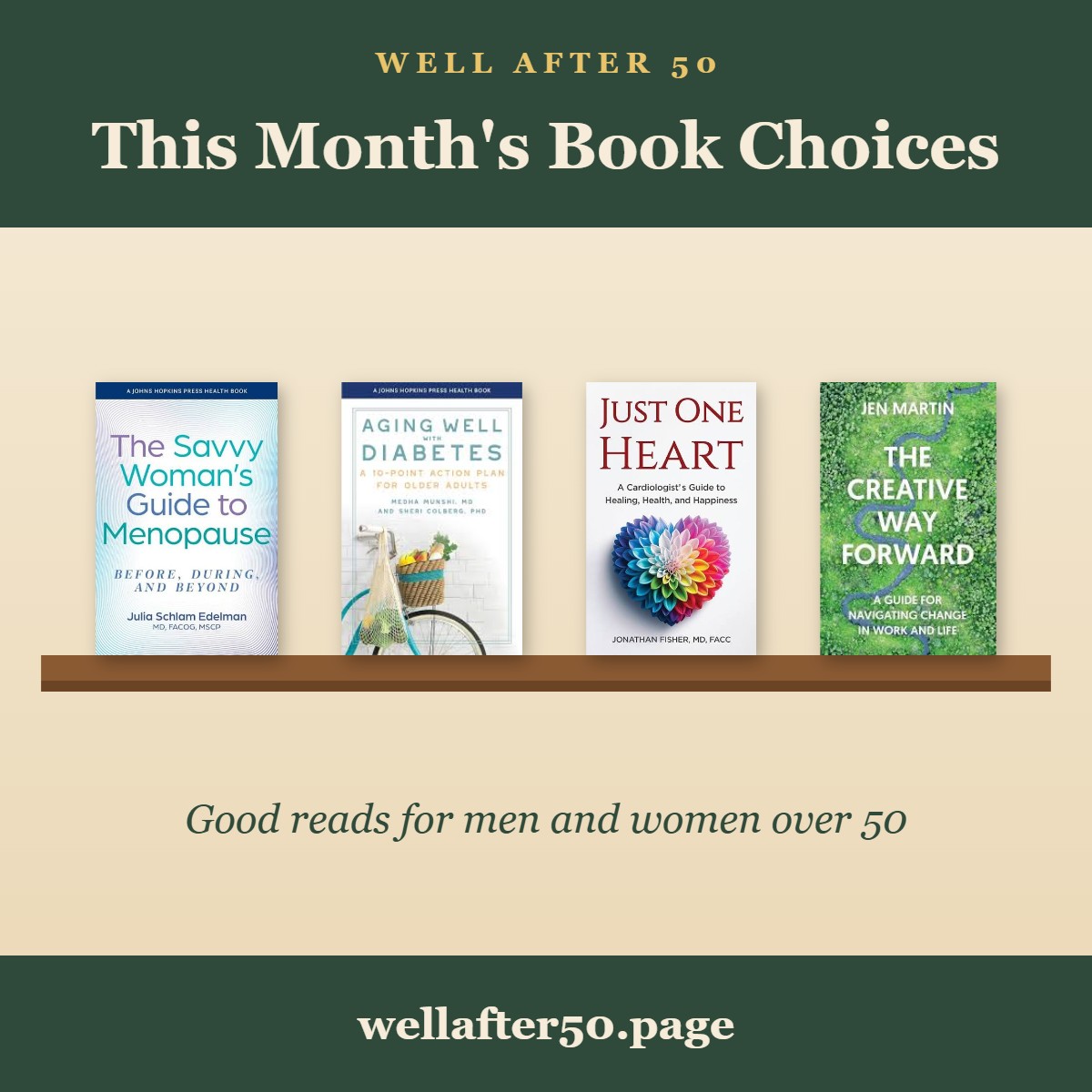
    Short answer: This month’s four picks are Savvy Woman’s Guide to Menopause by Dr. Julia Schlam Edelman, a 2026 IBPA Gold winner; Aging Well with Diabetes by Dr. Medha Munshi and Dr. Sheri Colberg, a 2026 IBPA Silver winner; Just One Heart by cardiologist Dr. Jonathan Fisher; and The Creative Way Forward by coach Jen Martin, a 2025 IBPA Gold winner.

    Welcome to our monthly Book Choices post!

    Each month, we’ll share a few books that might be interesting, useful, inspiring, or just enjoyable to read.

    This month, I’d also like to hear from you.

    What are you reading right now — or what book would you recommend to someone 50+?

    Share the title in the comments and tell us a little about why you liked it.

    You never know who might discover their next favorite book because of your recommendation! 📖

    Let’s build our Sturdy Years reading list together.

    Savvy Woman's Guide to Menopause book cover, a healthy aging book for women over 50

    Savvy Woman’s Guide to Menopause

    by Julia Schlam Edelman (Author) Format: Paperback

    🏆 2026 IBPA Gold Winner — Health & Fitness Excellent fit for our menopause, wellness, nutrition, and healthy-aging discussions. The book is specifically described as evidence-based and covers lifestyle, hormonal and non-hormonal approaches.

    A practical guide to getting through menopause, before, during and after the change, and doing well on the other side.

    Dr. Julia Schlam Edelman has spent more than 30 years as a gynecologist and menopause doctor. She trained at Yale, Columbia and Harvard, she’s a Menopause Society Certified Practitioner, and she also wrote the earlier book Menopause Matters. In this one she takes all that experience and puts it in plain words for the rest of us.

    She walks you through all three stages, perimenopause, menopause and postmenopause, and covers the body, the mind and the feelings that come with each. She doesn’t push one answer. She lays out the choices, from lifestyle changes to hormone and non-hormone treatments to other remedies, and explains the evidence behind them so you can talk it over with your own doctor.

    Here’s what the book covers:

    • Hot flashes, poor sleep, mood swings and memory slips, and practical ways to handle each one
    • Hormone and non-hormone treatments, other remedies, and care tailored to you
    • Lifestyle and medical steps to lower your risk of heart trouble, bone loss, diabetes and cancer
    • Why menopause looks different from one woman to the next, and how that can change your treatment options

    Why I picked it: A lot of women go through menopause with hardly any straight answers, and some get told to just wait it out. This book is the straight answers, from a doctor who’s been doing this work for three decades. It also won the 2026 IBPA Gold Award for Health & Fitness, which tells you other folks think highly of it too.

    Great for: any woman in her 40s, 50s or 60s, whether you’re just starting to notice changes or you’re years past it and want to protect your heart and bones. And fellas, if your wife or sister is going through it, this one will help you understand what’s going on.

    Disclosure: Some of the books mentioned on Sturdy Years may include affiliate links. If you purchase through one of these links, I may earn a small commission at no additional cost to you. I only recommend books I believe may be genuinely useful or interesting to people 50+.

    Aging Well with Diabetes book cover, award-winning healthy aging book for older adults

    Aging Well with Diabetes: A 10-Point Action Plan for Older Adults (A Johns Hopkins Press Health Book)

    by Medha Munshi (Author), Sheri Colberg (Author) Format: Paperback

    4.0 4.0 out of 5 stars (2)

    An essential guide to navigating diabetes for older adults and their caregivers.

    Silver Winner of the 2026 IBPA Book Award for Health & Fitness

    In Aging Well with Diabetes, Dr. Medha Munshi and Dr. Sheri Colberg provide practical advice to redefine living with diabetes in later life. As experts in geriatric care and diabetes management, they introduce a clear and accessible 10-step action plan to help you manage diabetes effectively while enhancing your overall vitality and independence.

    Each step in the action plan is detailed with achievable goals, making it a crucial toolkit for anyone living with diabetes or caring for someone who does. The authors discuss:

    • Comprehensive health management, including dietary adjustments, physical activity, medication management, and more
    • How aging and diabetes interact, detailing the physiological changes and challenges that come with managing diabetes at an older age
    • The diversity of experiences among older adults with diabetes and the importance of personalized treatment plans
    • Practical tips and strategies, such as modifying exercises to prevent falls and dietary tips that accommodate older digestive systems
    • Guidance for caregivers and health care providers on how to support older adults with diabetes

    Whether you’re newly diagnosed or a long-time diabetic, this guide will empower you to take control of your health and manage your diabetes with confidence and grace as you age.

    Disclosure: Some of the books mentioned on Sturdy Years may include affiliate links. If you purchase through one of these links, I may earn a small commission at no additional cost to you. I only recommend books I believe may be genuinely useful or interesting to people 50+.

    Just One Heart book cover by cardiologist Jonathan Fisher, a heart health book after 50

    Just One Heart: A Cardiologist’s Guide to Healing, Health, and Happiness

    by Jonathan Fisher M.D. | Apr 16, 2024

    A multiple award-winning, evidence-based guide to healing and strengthening the heart—from the inside out

    Our hearts are under strain—physically, emotionally, socially, and spiritually.

    Stress, anxiety, loneliness, and disconnection don’t just affect how we feel.

    They change how our hearts function.

    In Just One Heart, Dr. Jonathan Fisher, a Harvard-trained cardiologist and mindfulness teacher, offers a clear, science-grounded path to restoring health, resilience, and meaning through the heart–mind connection.

    Drawing on the latest research from medicine, psychology, and neuroscience—and integrating time-tested wisdom from contemplative traditions—this book translates complex science into practical, everyday tools to help you:

    • Reduce stress and calm the nervous system
    • Build emotional steadiness and resilience
    • Support heart health beyond numbers and tests
    • Reconnect with purpose, connection, and what matters most

    Part I explores the science of the heart–mind connection and the hidden drivers of modern heart disease, stress, and burnout.

    Part II offers guided practices to cultivate the Seven Timeless Traits of the Heart:

    steadiness, wisdom, openness, wholeness, courage, lightness, and warmth.

    Interwoven throughout are reflections from Dr. Fisher’s own journey through anxiety and burnout, moving patient stories, and insights from more than fifty leaders in mind–body medicine and human flourishing.

    Whether you’re a healthcare professional, a leader under pressure, or someone seeking greater clarity, calm, and wholeness, Just One Heart shows how caring for the heart—fully and wisely—can transform both health and life.

    Just One Heart

    Disclosure: Some of the books mentioned on Sturdy Years may include affiliate links. If you purchase through one of these links, I may earn a small commission at no additional cost to you. I only recommend books I believe may be genuinely useful or interesting to people 50+.

    The Creative Way Forward book cover by Jen Martin, a guide to starting over after 50

    The Creative Way Forward: A Guide for Navigating Change in Work and Life

    by Jen Martin (Author) Format: Paperback

    2025 IBPA Book Awards Gold Winner: Self-Help
    2025 IBPA Book Awards Silver Winner: Best New Voice, Nonfiction
    2025 Axiom Awards Gold Medalist in Personal Development

    2024 Foreword INDIES Book Awards Bronze Winner: Career (Adult Nonfiction)
    2024 American Book Fest Award Winner – Self-Help: General
    2024 American Book Fest Award Finalist – Business: Motivational


    “Martin’s well-researched and thoughtfully crafted book provides a road map for staying resilient, adaptable, and true to yourself in the face of life’s challenges.”
    -Daniel H. Pink, New York Times best-selling author of The Power of Regret and Drive

    Learn How to Creatively Adapt, Improvise Solutions, and Embrace Change

    Change is inevitable. If there’s one thing we can plan on, it’s that nothing will stay the same. Yet change can also be challenging, especially when it’s unexpected. In times of disruption when we most need to be creative, we’re often reactive. We hang on to what we know instead of being open to the vast possibilities of what’s next. Professional coach and consultant Jen Martin shows us another way: how to build your creative capacity and ability to improvise forward, even during life’s biggest twists and turns.For those navigating any type of change—whether at work or in life—Jen shares research-backed practices and tools to help you strengthen your agility and adaptability. In this book, you will learn:

    • The four-part Change Curve for navigating transitions
    • How to regulate your nervous system to be creative versus reactive
    • Why knowing “what’s core for you” is critical for being adaptive
    • Three powerful ways to reframe your perspective
    • The type of curiosity you’ll need in order to embrace what’s next
    • How to creatively navigate detours and setbacks on the journey


    This book is a beautiful reminder that while the future is inherently uncertain, it’s precisely when we don’t have all the answers that we often come up with the most interesting ideas and discover the creative way forward.

    Want to Hear More Before You Pick One?

    I like to hear an author talk before I buy a book. If Just One Heart caught your eye, Dr. Kevin Pho had Dr. Jonathan Fisher on The Podcast by KevinMD, and it’s a good listen while you’re out walking.

    And if you’re still looking after these four, Margaret Manning’s site Sixty and Me has a nice list of inspirational books for women over 60. Fellas, don’t skip The Creative Way Forward up above. Change at work and in life hits all of us, and I reckon that one’s worth your time too.

    How We Choose Our Books

    We don’t choose books simply because they’re popular. We look for books that offer something worthwhile for people 50+.

    When putting together our monthly Book Choices, we consider:

    • Useful information — Does the book teach, explain, or offer something readers can actually use?
    • Quality and credibility — Is the author knowledgeable and does the book have substance behind it?
    • Reader response — We look at reviews and what readers consistently say about the book.
    • Relevance to life after 50 — Does it speak to health, wellness, relationships, personal growth, aging, or simply enjoying life more?
    • Different kinds of books — We try to include a mix rather than recommending the same type of book every month.
    • Overall value — Would we feel comfortable suggesting the book to a friend?

    The goal isn’t to find the “perfect” book. It’s to find books that might make your month a little more interesting, useful, or enjoyable.

    Affiliate Disclaimer: Sturdy Years may earn a small commission when you purchase products through links on this site, at no additional cost to you. I only share products I believe may be helpful to my readers. Your support helps keep Sturdy Years going. Thank you!

    Written by Tom Green, creator of Sturdy Years

    Tom Green writes Sturdy Years. He was born in Pell City, Alabama, in 1962, and he’s a country boy and a true Southerner through and through. He’s just a regular, laid-back 64-year-old who keeps things simple. He shares what he learns about skincare, fitness and getting older, and what’s working for him. He’s also the author of A Practical Guide to Getting Older Without Giving Up on Yourself. Tom isn’t a doctor. He reads up on the research and passes along what’s useful, plain and simple.

    I’ve also mapped out some great tools on my new Tech for Independent Living After 50 page.

  • What Natural Remedies Work for Menopause After 50?

    What Natural Remedies Work for Menopause After 50?

    What natural remedies work for menopause?

    Short answer: No single natural remedy works for everyone. The most practical, low-risk options are staying active, cooling tricks for hot flashes, yoga, tai chi or meditation, and some soy from food. Supplements like black cohosh and red clover are heavily marketed, but the evidence is weaker than the ads make it sound, so check with your doctor or pharmacist first.

    Menopause advice is everywhere, but “natural” doesn’t automatically mean effective or safe. If you’re looking for natural ways to manage menopause symptoms after 50, it helps to focus on approaches that are practical, low-risk, and supported by at least some research.

    1. Keep Your Body Moving

    Regular physical activity can support overall health during menopause. Walking, strength training, cycling, swimming, dancing, and activities such as yoga can all be useful ways to stay active.

    Exercise is not a magic cure for hot flashes, but staying active can support your physical and emotional well-being during this stage of life.

    2. Try Cooling Strategies for Hot Flashes

    If hot flashes are bothering you, simple cooling strategies may make them easier to manage.

    • Wear lightweight layers you can remove easily.
    • Keep your bedroom cool.
    • Use a fan if it helps.
    • Keep cool water nearby.
    • Pay attention to personal triggers.
    • Choose breathable bedding and clothing.
    • 3. Don’t Ignore Sleep
    • Sleep can become more difficult during menopause, especially when night sweats or hot flashes interrupt the night.

    A regular bedtime, a cool bedroom, daytime activity, and relaxation practices may help create better conditions for sleep.

    4. Consider Yoga, Tai Chi or Meditation

    Mind-body practices such as yoga, tai chi, and meditation may be useful for relaxation, stress management, and overall well-being. They may not eliminate menopause symptoms, but they can be practical additions to a healthy routine.

    5. Get Some Soy From Food

    Foods such as tofu, edamame, tempeh, miso, and soy milk contain soy isoflavones. Some research suggests they may modestly reduce the frequency or severity of hot flashes, although the evidence is inconsistent.

    6. What About Menopause Supplements?

    This is where I would be especially careful. Supplements such as black cohosh, red clover, dong quai, and evening primrose are often promoted for menopause symptoms, but the evidence is less impressive than the marketing can make it sound..

    7. What About Flaxseed and Red Clover?

    Flaxseed and red clover are also sometimes promoted for menopause symptoms. Research has been mixed and inconsistent, so I would not count on either one as a guaranteed solution.

    A Note About Your Health

    This article is for general educational purposes and is not medical advice. New, severe, or unusual symptoms should be discussed with a qualified healthcare professional. Talk with your doctor or pharmacist before taking menopause supplements, especially if you take medications or have medical conditions or a history of hormone-sensitive cancer. Natural does not automatically mean safe.

    The Bottom Line After 50

    There is no single natural remedy that works for everyone. Regular exercise, good sleep habits, staying cool, eating a nutritious diet, and managing stress are practical places to start.

    Soy foods may help some women with hot flashes, and mind-body practices may be useful for relaxation and overall well-being. The important thing is to look at the research rather than relying on marketing claims.

    Sources & Further Reading

    NCCIH: Menopausal Symptoms and Complementary Health Approaches

    NCCIH: Black Cohosh

    NCCIH: Soy

    Systematic review and meta-analysis of ERr 731

    For a personal, midlife-focused perspective on creating a more grounded approach to wellbeing, Forward After the Pause writes about life after menopause, everyday wellness, and moving into a new chapter. Natural approaches can be part of self-care, but it’s still worth checking safety and evidence before trying supplements or herbs.

    Common Questions About Natural Remedies for Menopause After 50

    What natural remedies may help menopause symptoms?

    Exercise, cooling strategies, healthy sleep habits, stress management, mind-body practices, and soy foods are practical options to consider.

    Are natural menopause remedies always safe?

    No. Natural products can have side effects or interact with medications. Natural does not automatically mean safe.

    Can soy help with hot flashes?

    Some research suggests soy may modestly reduce hot flashes, but results have been inconsistent.

    What about black cohosh for menopause?

    Black cohosh is widely promoted, but the evidence for menopause symptoms is mixed.

    Can exercise help during menopause?

    Exercise supports overall health and well-being during menopause, although it is not a guaranteed treatment for hot flashes.

    Are yoga and meditation useful for menopause?

    They may help with relaxation, stress management, and overall well-being.

    Should I talk with my doctor before taking a menopause supplement?

    Yes, especially if you take medications, have medical conditions, or have a history of hormone-sensitive cancer.

    What is the most practical place to start?

    Start with the basics: regular activity, good sleep habits, staying cool, nutritious food, and stress management.

    Keep Reading

    Menopause After 50: Natural Ways to Manage Symptoms

    7 Things to Know About Collagen Supplements and Menopause

    Hormone Changes After 50: What’s Normal, What Can Change, and When to Ask Questions

    About Tom Green

    Tom Green writes Sturdy Years. He was born in Pell City, Alabama, in 1962, and he’s a country boy and a true Southerner through and through. He’s just a regular, laid-back 64-year-old who keeps things simple. He shares what he learns about skincare, fitness and getting older, and what’s working for him. He’s also the author of A Practical Guide to Getting Older Without Giving Up on Yourself. Tom isn’t a doctor. He reads up on the research and passes along what’s useful, plain and simple.

    I’ve also mapped out some great tools on my new Tech for Independent Living After 50 page.

  • Getting Older and Watching Your Hormones Change

    Getting Older and Watching Your Hormones Change

    How do your hormones change as you get older?

    Short answer: Hormones do change as you age, but not every symptom is a hormone problem. Testing can help when a doctor looks at it in context. Don’t let the internet sell you a hormone shortcut, because sleep, movement, good food and regular checkups still matter most.

    Hormones are one of those subjects that can make getting older sound much more mysterious than it really is. One article says everything is caused by a hormone being “low.” Another promises that a supplement, cream or treatment will restore the person you were at 30. Real life is more complicated—and that is actually useful to understand. Hormone levels change with age, but so do sleep, activity, body composition, nutrition, stress, medications and many other parts of health. A change in how you feel does not automatically tell you which hormone is responsible.

    What Can Change as We Get Older?

    People may notice changes in energy, sleep, body composition, muscle and recovery, sexual function, temperature regulation or mood. Some of these changes can involve hormones. Others have nothing to do with hormones. For women, menopause brings major changes in ovarian hormone production. For men, testosterone levels generally decline gradually rather than switching off at a particular age. Either way, the individual picture matters.

    Symptoms Don’t Come With a Hormone Label Attached

    This is where online checklists can get misleading. Feeling tired can have many causes. So can gaining weight, sleeping poorly, losing strength, having less interest in sex or feeling different emotionally. A symptom may deserve attention without proving what caused it. That is why I think it is better to tell a healthcare professional what changed, when it changed and what else was happening at the time than to walk in convinced that one particular hormone is the answer.

    Testing Can Help, But Context Matters

    When hormone testing is appropriate, a lab result is only one piece of the picture. Timing, the specific test, medications, symptoms and the person’s overall health can affect how results are interpreted. A single number pulled out of context can create more confusion than clarity. Your clinician can decide whether testing makes sense and what the results mean for you.

    Don’t Let the Internet Sell You a Hormone Shortcut

    There is a huge market built around the idea of reversing aging. Some products use words such as “balance,” “reset,” “boost” or “restore” without giving you a clear explanation of what problem they are actually treating. That doesn’t mean every hormone treatment is inappropriate. Some treatments have legitimate medical uses. It means the reason for using one should be clear, and the risks and benefits should be discussed with a qualified professional.

    The Basics Still Matter

    Before turning every change into a hormone problem, I would pay attention to the basics:
    • Sleep: Give it enough time and take persistent problems seriously.
    • Strength training: Resistance exercise can help maintain muscle and physical function.
    • Regular movement: Walking and other activity count.
    • Nutrition: Eat enough protein and a varied diet rather than chasing miracle foods.
    • Stress: Find realistic ways to reduce the load when you can.
    • Routine care: Keep appropriate checkups and discuss persistent changes.

    There Is No Single “Normal” Way to Get Older

    Two people the same age can feel completely different. Their medical histories, medications, sleep, activity, genetics, diet and life circumstances can all be different. That is why I don’t think aging should be treated like a scorecard. Notice what has changed, take reasonable care of yourself and get help when something doesn’t seem right.

    What I Think Is Worth Paying Attention To

    I’m much more interested in whether I can stay active, keep building or maintaining strength, sleep reasonably well, enjoy my life and deal with health changes intelligently than I am in trying to make every number look like it did decades ago. Aging is not a failure of your body. It is a process. The goal is to understand what is changing without letting every change scare you into buying something. For a midlife-focused perspective on changing routines and wellbeing after menopause, Forward After the Pause writes about life after menopause, everyday wellness, and moving into a new chapter. For symptoms that concern you, a qualified clinician is still the right person to help interpret what your own hormone changes may mean.

    Common Questions

    What happens to your hormones as you get older? Hormone levels and patterns can change with age. The changes differ between men and women and can affect things such as sleep, energy, muscle, mood, and sexual health. Do hormones change after 50? Yes. Hormonal changes are a normal part of aging, although the timing and degree vary from person to person. Why do hormones change as you age? Hormone production and regulation naturally change over time as part of the aging process. Can changing hormones affect your energy after 50? They can. Changes in hormones may be one factor affecting energy, but sleep, nutrition, physical activity, medications, stress, and health conditions can also play important roles. Can hormone changes affect muscle after 50? Yes. Age-related hormonal changes can contribute to changes in muscle mass and strength, which is one reason regular resistance exercise and adequate nutrition become important. Can hormone changes affect sleep after 50? They can. Hormonal changes may contribute to sleep changes, although many other factors can also affect sleep as you get older. Do men and women experience hormonal changes differently? Yes. The specific hormones involved, timing, and symptoms can differ significantly between men and women. Does feeling tired always mean your hormones are changing? No. Fatigue has many possible causes. Persistent or unusual tiredness shouldn’t automatically be blamed on aging or hormones. Can lifestyle habits help you manage changes that come with aging? Regular exercise, nutritious food, adequate sleep, stress management, and maintaining healthy habits can support overall health as hormone patterns change. When should you talk with a doctor about hormone changes? If you have persistent or concerning symptoms such as major changes in energy, mood, sleep, sexual function, or other unexplained changes, discuss them with a healthcare professional. Practical takeaway: Hormone changes are part of getting older, but they aren’t the whole story. Focus on the things you can control—exercise, nutrition, sleep, stress, and regular healthcare. This article is general information and reflects my personal perspective. Hormone-related symptoms and treatments are individual medical questions; talk with a qualified healthcare professional about your situation. Written by Tom Green, creator of Sturdy Years Tom Green writes Sturdy Years. He was born in Pell City, Alabama, in 1962, and he’s a country boy and a true Southerner through and through. He’s just a regular, laid-back 64-year-old who keeps things simple. He shares what he learns about skincare, fitness and getting older, and what’s working for him. He’s also the author of A Practical Guide to Getting Older Without Giving Up on Yourself. Tom isn’t a doctor. He reads up on the research and passes along what’s useful, plain and simple.

    Keep Reading

    I’ve also mapped out some great tools on my new Tech for Independent Living After 50 page.

  • Hormone Changes After 50: What’s Normal, What Can Change, and When to Ask Questions

    Hormone Changes After 50: What’s Normal, What Can Change, and When to Ask Questions

    What hormone changes are normal after 50?

    Short answer: Hormone changes around menopause can bring hot flashes, sleep changes, mood changes and shifts in weight. After menopause, women become more prone to osteoporosis and heart disease, so bone health, activity, good food and regular checkups matter more. Don’t assume every symptom is just menopause, and talk to your doctor about whether hormone therapy fits you.

    Hormone changes after 50 can make your body feel unfamiliar. Sleep may change. Your weight may shift. You may notice hot flashes, changes in your periods, mood changes, or a difference in how your body stores fat.

    For women, many of these changes are connected with the menopausal transition. But not every new symptom should automatically be blamed on hormones.

    What happens to hormones around menopause?

    During the menopausal transition, production of estrogen and progesterone declines substantially. The transition commonly begins between ages 45 and 55, although timing varies. Menopause itself is confirmed after 12 months without a menstrual period.

    Changes you may notice

    • Hot flashes or night sweats
    • Changes in sleep
    • Irregular periods during the transition
    • Changes in body shape or fat distribution
    • Changes in bone density and physical function
    • Vaginal or sexual changes

    What can actually help?

    Start with the basics that support health at any age: regular physical activity, nutritious food, adequate sleep, and staying socially connected. Exercise that includes muscle strengthening is especially useful for maintaining strength and physical function.

    Don’t assume every symptom is “just menopause.”

    Some symptoms overlap with other health conditions, medications, or normal changes that are not directly caused by menopause. If something is new, severe, persistent, or worrying you, bring it up with your healthcare professional.

    One important change after menopause

    After menopause, women become more vulnerable to conditions including osteoporosis and cardiovascular disease. That makes this a good time to pay attention to bone health, physical activity, nutrition, and regular medical care rather than focusing only on hot flashes.

    What about hormone therapy?

    Hormone therapy is a medical decision, not a one-size-fits-all solution. The benefits and risks depend on your health history, symptoms, age, and other factors. If symptoms are interfering with your life, discuss your options with a qualified healthcare professional.

    Hormone changes can be frustrating—but understanding what is happening can make the next step much less confusing.

    Question: What change surprised you most after 50?

    For more perspectives on menopause and navigating midlife changes, you can also explore Forward After the Pause, which focuses on menopause and midlife well-being.

    Common Questions

    Do hormone levels normally change after 50?
    Yes. Hormone production changes naturally with age, although the timing and degree of change vary from person to person.

    What hormone changes are common after 50?
    Changes in estrogen, progesterone, testosterone, thyroid hormones, and other hormones can occur with aging. The specific changes depend on factors such as sex, health, medications, and life stage.

    What symptoms can hormone changes cause?
    Depending on the hormone involved, people may notice changes in sleep, energy, mood, body composition, sexual function, temperature regulation, or other aspects of health. These symptoms can also have many causes besides hormones.

    Does feeling tired after 50 always mean your hormones are changing?
    No. Fatigue can have many possible causes, including poor sleep, stress, medications, nutritional issues, and medical conditions. Persistent or unexplained fatigue is worth discussing with a healthcare professional.

    Should everyone have their hormones tested after 50?
    Not necessarily. Hormone testing is generally most useful when there are symptoms or other reasons for a healthcare professional to investigate a possible hormone-related problem.

    When should I ask a doctor about hormone changes?
    If symptoms are persistent, bothersome, sudden, or affecting your daily life, bring them up with your healthcare professional. They can help determine whether hormones—or something else—could be contributing.

    Written by Tom Green, creator of Sturdy Years

    Practical takeaway: You do not need to overhaul your life to make a useful change. Start with one realistic step, give it time, and build from there.

    A gentle well-being note: This article is for general information and is not a substitute for professional medical advice. If you have persistent, severe, or worsening symptoms, talk with a qualified healthcare professional.

    Keep Reading

    Written by Tom Green, creator of Sturdy Years

    Tom Green writes Sturdy Years. He was born in Pell City, Alabama, in 1962, and he’s a country boy and a true Southerner through and through. He’s just a regular, laid-back 64-year-old who keeps things simple. He shares what he learns about skincare, fitness and getting older, and what’s working for him. He’s also the author of A Practical Guide to Getting Older Without Giving Up on Yourself. Tom isn’t a doctor. He reads up on the research and passes along what’s useful, plain and simple.

    I’ve also mapped out some great tools on my new Tech for Independent Living After 50 page.

  • Menopause After 50: Natural Ways to Manage Symptoms

    Menopause After 50: Natural Ways to Manage Symptoms

    How can you manage menopause symptoms naturally?

    Short answer: You don’t have to just suffer through menopause. Natural ways to manage it include cooling tricks for hot flashes, taking sleep seriously, strength training, eating well, looking after your heart, and lowering stress. Take vaginal and urinary symptoms seriously, and be skeptical of “hormone-balancing” supplements.

    Menopause after 50 can feel less like one big change and more like somebody quietly changed the rules while you were busy living your life.

    Maybe sleep suddenly became unreliable. Maybe you are warmer at night, more tired during the day, or wondering why your body seems to be doing things it never did before. And then there are the endless promises online: teas, supplements, hormone-balancing powders and miracle routines.

    Here is the good news: you do not need a cabinet full of expensive products to start taking better care of yourself.

    There are practical, natural habits that can support your health and make some menopause symptoms easier to manage. They are not magic cures, and they will not work exactly the same way for every woman. But they are sensible places to start.

    First: natural does not mean you have to suffer

    Wanting a natural approach is perfectly reasonable. But “natural” should not become another word for “put up with everything.”

    Menopause can bring hot flashes, night sweats, sleep problems, mood changes, vaginal dryness, urinary symptoms, changes in body composition and other symptoms. Some women have only a few mild changes. Others find that symptoms interfere with work, relationships, exercise or simply enjoying the day.

    The goal is not to prove how much discomfort you can tolerate. The goal is to feel as well and capable as possible.

    1. Make hot flashes easier to live with

    You may not be able to control when a hot flash arrives, but you can make your surroundings work in your favor.

    • Keep the bedroom cool at night.
    • Wear lightweight layers that are easy to remove.
    • Keep a fan nearby if it helps.
    • Notice whether alcohol, spicy foods, hot drinks or stressful situations seem to trigger symptoms for you.
    • Keep water nearby, especially if night sweats leave you feeling overheated.

    Do not get discouraged if one popular “trigger list” does not match your experience. Your triggers are personal. A simple symptom note for a couple of weeks can be more useful than trying to avoid everything at once.

    2. Stop treating poor sleep like it is just part of getting older

    Sleep can take a beating during menopause. Night sweats are an obvious culprit, but they are not the only one. Changes in stress, sleep habits and other health conditions can also play a role.

    Start with the boring basics because boring basics often work:

    • Go to bed and get up at roughly the same time.
    • Keep the bedroom dark, quiet and comfortably cool.
    • Limit caffeine later in the day if it keeps you awake.
    • Give yourself a short wind-down period instead of going straight from television or scrolling to bed.
    • Get regular daytime movement and natural light.

    If insomnia becomes persistent, do not assume you simply have to live with it. Cognitive behavioral therapy for insomnia, often called CBT-I, is an evidence-based approach that can be very useful for ongoing sleep problems.

    And if you snore loudly, wake up gasping, or are unusually sleepy during the day, talk with a healthcare professional. Not every sleep problem after 50 is caused by menopause.

    3. Strength training deserves a place in your 50+ routine

    If there is one habit I would hate for women to overlook after menopause, it is strength training.

    You do not have to become a bodybuilder. You do not need to lift enormous weights. The point is to give your muscles a reason to stay strong.

    Strength training can help support muscle, bone health, balance, mobility and everyday function. Those benefits become increasingly valuable as we get older.

    Start with movements you can perform with good control. Machines, resistance bands, dumbbells and body-weight exercises can all have a place in a sensible program. Increase the challenge gradually rather than trying to prove something on day one.

    Walking and other aerobic activity matter too. Think of your routine as a team: strength for muscle and bone, aerobic movement for heart and fitness, and balance and mobility work for staying capable.

    4. Eat for the woman you want to be at 60, 70 and beyond

    There is no single “menopause diet” that makes every symptom disappear.

    A better strategy is to build meals around foods that support your long-term health. Think protein, vegetables, fruit, beans, whole grains, healthy fats and enough fluids.

    Protein deserves particular attention after 50 because maintaining muscle becomes more important with age. Spread protein across meals rather than trying to cram it all into dinner.

    Bone health matters too. Calcium-rich foods and adequate vitamin D are important parts of a healthy eating pattern, although individual needs vary.

    And please do not let social media convince you that you need to eliminate half the foods in your kitchen because they supposedly “destroy your hormones.” If a diet is so restrictive that you hate every meal, it is probably not a practical long-term plan.

    5. Give your heart and blood vessels some attention

    Menopause is not only about hot flashes. Midlife is also a good time to pay attention to the things that quietly influence long-term health.

    Regular activity, nutritious food, not smoking, adequate sleep and keeping up with recommended health checks all matter. Know your blood pressure and discuss cholesterol, blood sugar and other risk factors with your healthcare professional when appropriate.

    You do not need to turn your life into a laboratory. A handful of consistent habits can do more for your future than chasing a new wellness trend every Monday.

    6. Take vaginal and urinary symptoms seriously

    This is one of the most important parts of menopause that does not get enough honest conversation.

    Vaginal dryness, irritation, discomfort during sex and urinary changes can occur as estrogen levels change. They are common, but common does not mean you have to ignore them.

    Vaginal moisturizers can help with ongoing dryness, while lubricants can make sexual activity more comfortable. Gentle, fragrance-free products are often preferable around sensitive skin.

    If symptoms continue or are affecting your quality of life, talk with a healthcare professional. There are treatments specifically for these symptoms, including local therapies that may be appropriate for some women.

    7. Be skeptical of “hormone-balancing” supplements

    This is where I would slow down before spending money.

    The word natural on a bottle is not a guarantee that a product is safe, effective or right for you.

    Black cohosh, herbal blends, DHEA, magnesium and other supplements are marketed heavily to women in menopause. The evidence is not equally strong for all of them, and supplements can interact with medications or be inappropriate with certain medical conditions.

    If you are considering a supplement, show the exact product and dose to your doctor or pharmacist. That is especially important if you take prescription medications or have a significant medical history.

    8. Lower stress without turning wellness into another job

    There is a funny thing about modern wellness: sometimes the cure for stress is presented as a 14-step morning routine that requires a spreadsheet.

    You do not need that.

    A daily walk. Ten quiet minutes. Time with a friend. Reading something you enjoy. Gardening. Music. Deep breathing. Prayer or meditation if that is meaningful to you. Getting outside.

    The best stress-management habit is often the one you will actually keep doing.

    9. Keep moving even on the days when you do not feel your best

    Some days after 50, the perfect workout is not going to happen. That does not mean the day is a failure.

    Walk around the neighborhood. Stretch while watching television. Do a shorter strength session. Take the stairs when it makes sense. Get up from the chair more often.

    Consistency beats perfection.

    10. Know when “natural” is no longer enough

    This may be the most important advice in the article.

    If menopause symptoms are seriously affecting your sleep, work, relationships, exercise or quality of life, you do not get extra points for suffering through them.

    Hormone therapy can be very effective for certain menopause symptoms, but it is not appropriate for everyone. Nonhormonal prescription treatments are also available. Whether a treatment makes sense depends on your symptoms, age, timing, medical history and personal circumstances.

    There is also a difference between a symptom that is uncomfortable and a symptom that needs evaluation. For example, unexpected bleeding after menopause should be discussed with a healthcare professional rather than simply blamed on menopause.

    A simple 50+ menopause reset

    If everything above feels like too much, forget the giant checklist. Start with these five things:

    1. Move every day. Walk, exercise or simply stay physically active.
    2. Strength train regularly. Give your muscles and bones a reason to stay strong.
    3. Build better meals. Prioritize protein, plants, fiber and nutrient-rich foods.
    4. Protect your sleep. Make your bedroom and evening routine work for you.
    5. Get help when you need it. Lifestyle changes are valuable, but they are not a test you have to pass before discussing treatment.

    Common Questions

    Can menopause symptoms still happen after 50?

    Yes. Some women continue to experience symptoms after 50, and symptoms can change over time. Hot flashes, sleep problems, vaginal symptoms and other changes can persist for years in some women.

    What are the best natural ways to manage menopause symptoms?

    Helpful foundations include regular physical activity, strength training, a balanced diet, good sleep habits, stress management and avoiding personal triggers when you identify them. These habits support overall health even when they do not eliminate every symptom.

    Can exercise reduce hot flashes?

    Exercise is excellent for overall health during and after menopause, but it should not be presented as a guaranteed cure for hot flashes. Some women find that regular activity helps them feel better overall, while significant hot flashes may require additional treatment.

    What should women eat after menopause?

    There is no single perfect menopause diet. A practical pattern includes adequate protein, vegetables, fruit, beans, whole grains, healthy fats and foods that provide nutrients important for bones and overall health.

    Does strength training help after menopause?

    Yes. Regular resistance exercise can help maintain muscle and support bone strength, balance, mobility and everyday function. Start at a level you can control and increase gradually.

    Are menopause supplements safe because they are natural?

    No. Natural products can have side effects and can interact with medications. Some menopause supplements also have limited or mixed evidence. Ask a healthcare professional or pharmacist about a specific product before taking it regularly.

    What can help with menopause-related vaginal dryness?

    Vaginal moisturizers can help with ongoing dryness, and lubricants can improve comfort during sexual activity. Persistent symptoms should be discussed with a healthcare professional because additional treatments are available.

    When should I talk with a doctor about menopause?

    Talk with a healthcare professional when symptoms are severe, persistent, interfere with daily life, or concern you for any reason. Unexpected bleeding after menopause should be evaluated rather than automatically attributed to menopause.

    Do I have to use hormone therapy if natural approaches do not work?

    No. Treatment decisions are personal. Hormone therapy is one option for appropriate patients, and nonhormonal treatments are also available. A healthcare professional can help you weigh the options based on your symptoms and medical history.

    The Bottom Line

    Menopause after 50 does not have to become a battle between you and your body.

    Start with the things that make sense: move your body, build and protect muscle, eat nourishing food, take sleep seriously, make yourself comfortable, manage stress in a realistic way and do not ignore symptoms that are affecting your life.

    And remember this: choosing a natural approach does not mean refusing medical help. Good health is not about proving how tough you are. It is about finding what helps you live well.

    Health note: This article is for general information, not individual medical advice. Menopause symptoms vary widely, and some symptoms can have causes unrelated to menopause. Talk with a qualified healthcare professional about persistent, severe or unusual symptoms and before starting supplements or changing prescribed treatment.

    About Tom Green

    Tom Green writes Sturdy Years. He was born in Pell City, Alabama, in 1962, and he’s a country boy and a true Southerner through and through. He’s just a regular, laid-back 64-year-old who keeps things simple. He shares what he learns about skincare, fitness and getting older, and what’s working for him. He’s also the author of A Practical Guide to Getting Older Without Giving Up on Yourself. Tom isn’t a doctor. He reads up on the research and passes along what’s useful, plain and simple.

    Keep Reading


    I’ve also mapped out some great tools on my new Tech for Independent Living After 50 page.