Tag: Mediterranean diet

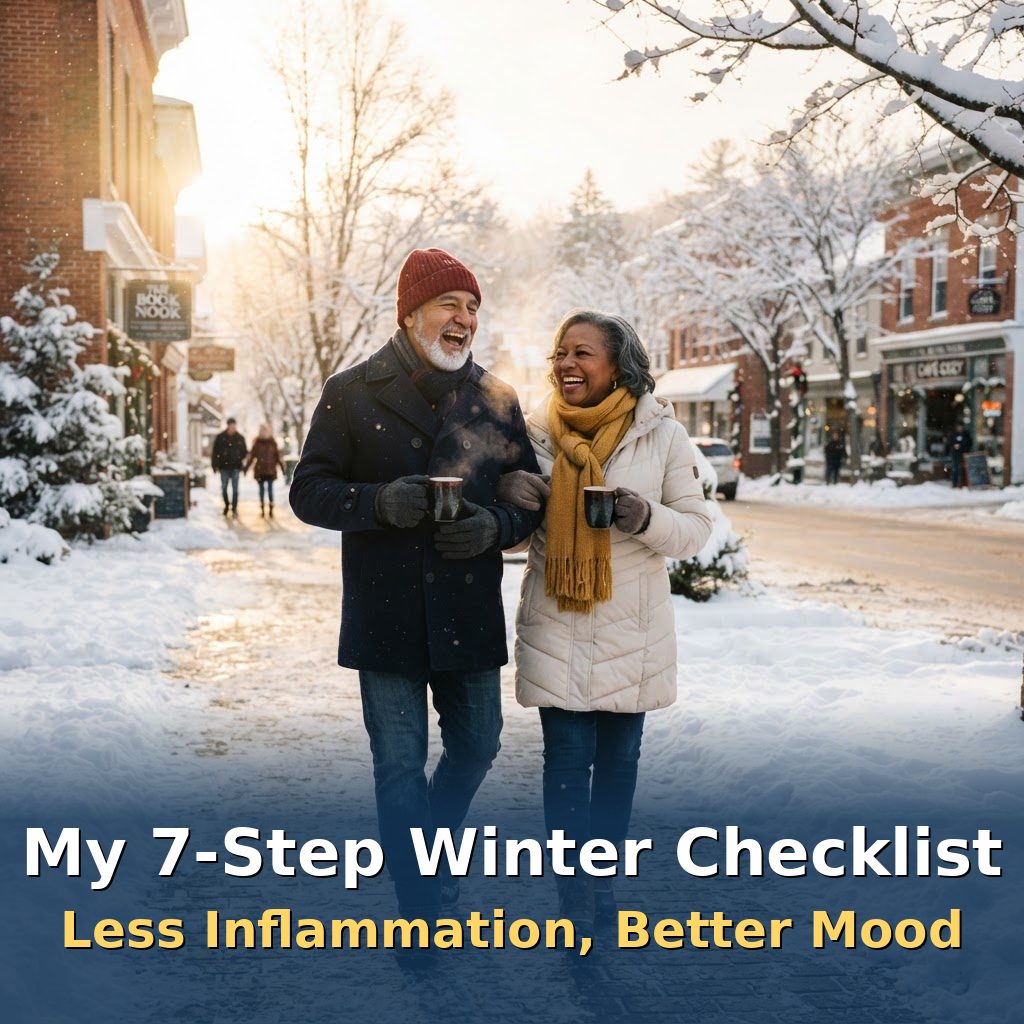
  • My 7-Step Winter Checklist: Less Inflammation, Better Mood

    My 7-Step Winter Checklist: Less Inflammation, Better Mood

    How can you calm inflammation, protect your immune system and keep your mood up through winter?

    Short answer: Stick with a handful of simple daily habits: get morning light, eat anti-inflammatory meals like soups, fish and vegetables, keep moving most days, sleep at least seven hours, ask your doctor about vitamin D, get the winter shots that fit your age, and stay in touch with people. None of it costs much, and the research behind each one is solid.

    Every year about this time it happens around here. The sun’s gone before supper. The porch gets too cold to sit on. My knees start talking to me in the morning, somebody at the store is coughing, and before I know it I’m on the couch with a bowl of something I had no business eating.

    Sound familiar? Winter has a way of sneaking up on all of us, men and women both. Less light, cold weather, more germs going around, holiday sweets and a lot more sitting. Put all that together and our bodies lean toward inflammation and catching every bug that comes through town, and our mood slides right along with it.

    Dr. Mark Hyman, the longevity doctor with the big podcast, just put out his own winter longevity checklist, and it got me thinking about mine. He calls winter a training block for your longevity, and I like that. So I dug into the research and what some of the best-known folks in health and happiness have to say, and here’s the list I’m following this winter. Pick two to start. You don’t have to do all seven by Monday.

    Why does winter make inflammation and mood worse?

    Mostly because winter knocks our habits off track. We get less daylight, which throws off our body clock and sleep. We move less, eat heavier and spend more time indoors around other folks’ germs. Inflammation is your body’s alarm system, and that’s a good thing when you’ve got a cut or a cold. The trouble is when that alarm stays on low all the time, and a lazy, dark winter is just the kind of thing that keeps it humming.

    The good news is that the fixes are simple. Here’s my checklist.

    1. Why is morning light first on the list?

    Because light in the morning sets your body clock for the whole day, and that clock runs your sleep, your energy and your mood. Gretchen Rubin, the bestselling author of The Happiness Project, says it’s really important to get early morning sunlight in the dark months, and she suggests even a 15-minute walk outside, cloudy day or not.

    Even a gray winter sky gives you a lot more light than your kitchen does. So I take my coffee out on the porch for a few minutes, coat and all, or I walk down to the mailbox the long way.

    If winter really pulls you down, a light box might be worth asking your doctor about. They’re the bright lamps made for seasonal depression, and according to Ohio State’s Wexner Medical Center, about six in ten people who use one for seasonal depression get real relief, usually sitting in front of it around 30 minutes in the morning. If you have eye trouble like macular degeneration, or bipolar disorder, check with your doctor first.

    2. What should you eat to calm inflammation in winter?

    Eat more of the anti-inflammatory foods: vegetables, fruit, beans, fish, nuts and good fats like olive oil, and go lighter on sugar, fried food and the processed stuff. Dr. Andrew Weil, the white-bearded doctor who made anti-inflammatory eating famous, gave his Anti-Inflammatory Food Pyramid its first big update in 20 years back in January. It calls for at least 4 to 5 servings of vegetables a day, fish a few times a week, and 2 to 4 cups of tea a day.

    The research on older folks points the same way. A review of studies on older adults found that eating the Mediterranean way was tied to lower levels of CRP, one of the main inflammation markers doctors check in your blood. The researchers said they’d like to see more long-term trials, which is fair, but it lines up with everything else we know.

    Here’s the part I like about winter: soup makes all of this easy. Suzy Karadsheh, who started The Mediterranean Dish back in 2014 and built it into one of the biggest Mediterranean recipe sites around, has a whole collection of soups and stews loaded with beans, greens, garlic and olive oil. A pot of lentil soup on Sunday feeds you half the week, and you’re eating anti-inflammatory without even trying.

    3. Does exercise really help you dodge colds?

    It sure looks that way. Researcher David Nieman followed about 1,000 adults ages 18 to 85 through fall and winter. The ones who did aerobic exercise five or more days a week, like brisk walking, had 43% fewer days with colds than the folks who exercised one day a week or less. Their colds were milder too.

    Notice that’s moderate exercise, not killing yourself in the gym. Overdoing it can actually work against your immune system. A brisk walk, a mall walk when it’s icy, a bike in the garage or a little strength work with dumbbells all count. If you’ve been off a while, ease back in, drink some water first, and stop and sit down if you ever feel dizzy or faint. That’s your body telling you to slow down, and it’s worth mentioning to your doctor.

    Psychologist Kari Leibowitz studied why folks way up north in Norway handle long, dark winters so well, and she talked about it on the Art of Manliness podcast with Brett McKay. One of her big tips is to dress for it and get outside anyway, because short winter walks usually feel better than you expect. Like the Norwegians say, there’s no such thing as bad weather, only bad clothing.

    4. How much sleep does your immune system need?

    Aim for seven to eight hours. Dr. Hyman puts it simple: if you don’t sleep, your immune system isn’t going to work well.

    One study really drove this home for me. Researchers at UC San Francisco tracked how 164 healthy adults actually slept for a week, then gave them a cold virus in nose drops and watched who got sick. The ones sleeping under six hours a night were about four times more likely to catch the cold than the ones getting more than seven. Sleep mattered more than their age, stress or whether they smoked.

    A few things that help me in winter: going to bed and getting up at the same time, even on weekends, keeping the bedroom cool and dark, and finishing supper a few hours before bed. If you keep waking up at 3 AM, I wrote a whole post on that.

    5. Should you take vitamin D in winter?

    Get your level checked first, then decide with your doctor. In a lot of the country the winter sun is too weak for your skin to make much vitamin D, and we make less of it as we get older anyway.

    I’ll be straight with you on the research, though. A big 2021 review found vitamin D cut the odds of catching a respiratory bug a little. But when the same research group updated it in 2025 with more than 61,000 people, that small benefit wasn’t clear anymore. So vitamin D isn’t a magic cold shield. It still matters for your bones, muscles and mood, and plenty of us run low.

    So get tested instead of guessing. Elise Christian over at Sixty and Me gives the same advice for the winter blues: ask your doctor whether a supplement is right for you, and stick to the dose they recommend. More isn’t better with vitamin D.

    6. Which winter shots make sense for older adults?

    A flu shot every year, and an RSV shot if you’re in the age group for it. Not the most exciting step, I know, but it might be the one that keeps you out of the hospital.

    • Flu: If you’re 65 or older, the CDC recommends one of the stronger flu shots made for older adults: high-dose, recombinant or adjuvanted. They give an older immune system more of a boost than the regular shot. Just ask for the “senior” flu shot at the pharmacy.
    • RSV: The CDC recommends one RSV shot for everybody 75 and older, and for folks 50 to 74 who have things like heart or lung disease or a weakened immune system. It’s a one-time shot for now, not every year, so if you already got it, you’re covered.

    Ask your doctor or pharmacist about COVID shots too, since what’s recommended depends on your health.

    7. Why does staying connected matter so much in winter?

    Because cold, dark days make it easy to hole up, and being lonely is hard on both your mood and your health. Dan Buettner, the National Geographic explorer behind the Blue Zones books, studied the places where the most people live to 100. He says folks who socialize regularly live about eight years longer than lonely folks. His words: “When we’re not connected, we don’t do well.”

    So put something on the calendar. Coffee with a buddy on Tuesdays. A Sunday phone call with your sister. Cards at the senior center, a church group, the gym, volunteering. Planning something to look forward to, like a trip or a visit, helps too, and I reckon that does more for the winter blues than just about anything.

    Here’s another trick from those Norwegian winters. Don’t think of winter as one long gray slog. Split it into early winter, deep winter and late winter, and give each one its own little traditions. It gives you something to look forward to all the way to spring.

    How do you make the checklist stick?

    Start small. Dr. Hyman’s advice is to pick the two steps that would make the biggest difference for you, practice them for a couple of weeks, then add another one. I think that’s exactly right. Here’s the whole list in one spot so you can print it and stick it on the fridge:

    1. Get 10 to 15 minutes of morning light, outside if you can.
    2. Eat anti-inflammatory: soups, beans, vegetables, fish and olive oil, with less sugar and junk.
    3. Move most days at a pace you can talk at.
    4. Sleep seven to eight hours on a steady schedule.
    5. Ask your doctor to check your vitamin D.
    6. Get your flu shot, plus RSV if it fits your age and health.
    7. Put people on the calendar every week.

    Winter doesn’t have to be something we just grit our teeth through. Treat it right and you can walk into spring feeling better than you did in the fall.

    Common Questions

    Does winter increase inflammation?

    Winter itself doesn’t cause it, but less light, poorer sleep, less movement and heavier eating can all push inflammation up. Getting those habits back on track helps.

    What are the best anti-inflammatory foods for winter?

    Vegetables, beans, lentils, fatty fish like salmon and sardines, nuts, olive oil, garlic, ginger and tea. Soups and stews make it easy to eat more of them in cold weather.

    Does lack of sleep make you catch colds?

    It can. In a UC San Francisco study, people sleeping under six hours a night were about four times more likely to catch a cold than those sleeping more than seven.

    Does vitamin D prevent colds and flu?

    Not clearly. A 2025 review of more than 61,000 people found no clear drop in respiratory infections. It’s still worth having your level checked, since many older adults run low.

    How do you beat the winter blues?

    Get morning light, move most days, keep a steady sleep schedule and stay in touch with people. If low moods last weeks or get in the way of daily life, talk to your doctor about seasonal depression.

    So which two are y’all starting with? Tell me in the comments. I’m starting with the morning light and getting my cards-and-coffee crew back together.

    — Tom

    About Tom Green

    Tom Green writes Sturdy Years. He was born in Pell City, Alabama, in 1962, and he’s a country boy and a true Southerner through and through. He’s a regular, laid-back 64-year-old who keeps things simple and passes along what he learns about getting older. Tom isn’t a doctor. He reads up on the research and shares what’s useful, plain and simple. Read more about Tom.

    Health note: This article is for general education and isn’t medical advice. Talk with your doctor before starting supplements, a light box or a new exercise routine, and about which vaccines are right for you. If low moods hang on for weeks, reach out to your doctor.

    Research & Sources

    Marley Spoon meal kits advertisement

    Marley Spoon Meal Kits (affiliate link)
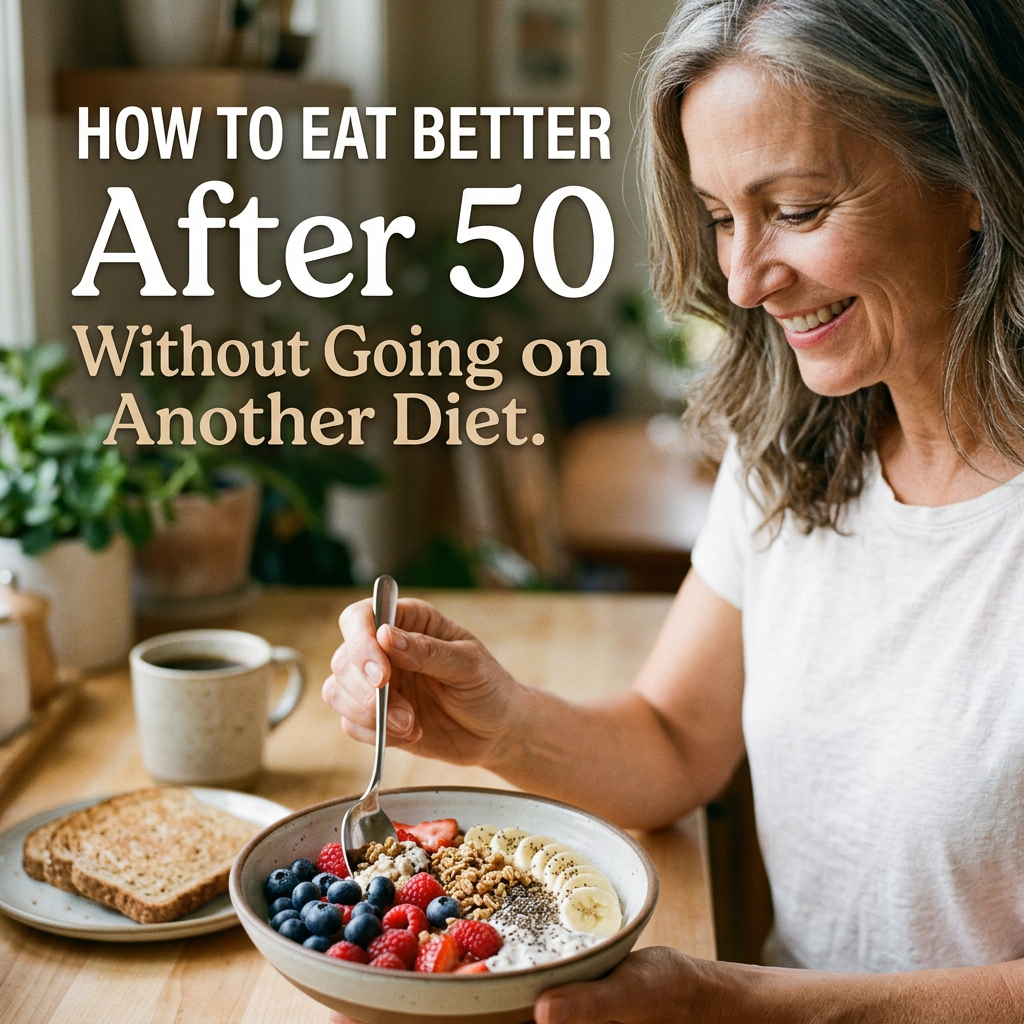
  • How to Eat Better After 50 Without Going on Another Diet

    How to Eat Better After 50 Without Going on Another Diet

    How do you eat better after 50 without going on a diet?

    Short answer: You don’t need another diet. Start by adding good things instead of banning foods: an egg or Greek yogurt at breakfast, more fiber from oats, beans and berries, and enough protein to help keep your muscle. When you’re not sure what to cook, use the Harvard Healthy Eating Plate, with about half your plate vegetables and fruit.

    Every few months, it seems somebody comes along with another diet that promises to fix everything. Cut out bread. Stop eating after six. Buy a powder. Count every bite. After 50, I think most of us have earned the right to ask a better question: How can I eat a little better without making food another source of stress?

    You don’t need a perfect refrigerator, expensive groceries, or the willpower to turn down every piece of birthday cake. You need a few meals you enjoy, a sensible shopping list, and habits that still work when you’re tired or your week goes sideways.

    Start with what you can add, not everything you must give up

    Instead of declaring certain foods forbidden, take a look at an ordinary day of eating. Is breakfast mostly coffee and toast? Could you add an egg or Greek yogurt? Is lunch a sandwich? Could you add fruit or a handful of baby carrots? A small improvement that lasts is more useful than a dramatic change you abandon by Thursday.

    Stanford nutrition researcher Christopher Gardner, interviewed by Elle Hunt in The Guardian, makes a similar argument: eat well most of the time instead of treating nutrition as an all-or-nothing contest. That’s not permission to ignore nutrition; it’s a way to make a generally healthy pattern sustainable.

    Use a simple plate as your guide

    When you’re not sure what to cook, the Harvard Healthy Eating Plate is a useful starting point: aim for about half a plate of vegetables and fruit, one-quarter whole grains, and one-quarter healthy protein, with sensible amounts of healthy fats and water as a usual drink. These are flexible proportions, not rules you must measure at every meal.

    Here’s what that can look like in a real kitchen: baked chicken or beans, a serving of brown rice, and a generous helping of frozen broccoli with olive oil and seasoning. Don’t like broccoli? Use green beans, cabbage, carrots, or the vegetables you’ll actually eat.

    Try this tonight: Before changing anything else on your dinner plate, add one vegetable or fruit that wasn’t there yesterday.

    After 50, don’t forget the protein

    Protein matters for maintaining muscle and supporting recovery, especially if you exercise. You don’t have to live on shakes or eat a steak at every meal. Fish, eggs, yogurt, cottage cheese, chicken, lentils, tofu, and beans can all contribute. How much you need depends on your size, activity, health, and goals; people with kidney disease or dietary restrictions should ask their care team about a suitable target.

    For a practical start, include a protein-containing food at breakfast, lunch, and dinner. That could be yogurt in the morning, tuna or hummus at lunch, and chicken, fish, or beans at supper. See my guide to protein after 50 if you’d like more detail.

    Fiber is one of the easiest upgrades

    Fiber helps keep digestion regular, and fiber-rich foods can support heart health and make meals more satisfying. Oats, beans, lentils, vegetables, berries, pears, and whole grains are everyday options. There’s no need to make every meal a giant salad.

    Three low-effort changes: choose oatmeal a few mornings a week; stir canned beans into soup, chili, or a rice bowl; and swap white bread for whole-grain bread when you enjoy the taste. Increase fiber gradually and drink enough fluids, particularly if you’ve been eating very little fiber.

    Make breakfast work for you

    Some mornings you’re hungry; other mornings you aren’t. Rather than forcing yourself into a complicated breakfast, keep two reliable options on hand:

    • Sweet: Plain or lower-sugar Greek yogurt with oats, berries, and a sprinkle of nuts or seeds.
    • Savory: Eggs with spinach or tomatoes and whole-grain toast.

    Registered dietitian Keri Gans, speaking with Prevention, describes Mediterranean-style eating as a balanced approach rather than a rigid diet. Her examples show how protein, whole grains, produce, and healthy fats can fit into an ordinary breakfast.

    Build a lunch you can repeat without getting bored

    One of the biggest obstacles to eating better isn’t knowing what to eat. It’s being hungry at noon and having absolutely nothing ready.

    Business Insider writer Rachel Hosie shares a simple, make-ahead grain bowl built from whole grains, beans, protein, and vegetables. Registered dietitian Nichola Ludlam-Raine comments in that article on why this combination is balanced and adaptable.

    You can make your own version with whatever is affordable: leftover rice, canned chickpeas, chopped cucumber or frozen vegetables, chicken or tofu, and a little dressing. Keep cooked leftovers refrigerated promptly, and follow safe storage guidance. Or skip the bowl entirely and make a tuna sandwich with fruit on the side. The point is to have a plan, not a complicated recipe.

    Eat better on a regular grocery budget

    Healthy eating doesn’t require boutique groceries. A few basics stretch a long way:

    • Frozen vegetables and fruit: Usually convenient, often less waste, and useful when fresh produce spoils before you can eat it.
    • Canned beans and fish: Shelf-stable meal starters. Compare labels for sodium when appropriate.
    • Oats, rice, and potatoes: Flexible, filling staples; combine them with protein and produce.
    • Eggs, yogurt, peanut butter, tofu, or chicken: Choose the proteins that fit your budget and dietary needs.
    • Cabbage, carrots, apples, and seasonal produce: Often practical options that keep relatively well.

    Five-minute shopping trick: Before leaving home, choose two proteins, three produce items, and one whole-grain staple. Then think of three meals you can make from them. This cuts down on buying ingredients that don’t fit together.

    A realistic one-day menu

    • Breakfast: Greek yogurt, oatmeal, and berries.
    • Lunch: Tuna or chickpea sandwich on whole-grain bread, plus carrots or fruit.
    • Snack, if hungry: An apple with peanut butter or cottage cheese.
    • Dinner: Baked fish, chicken, or tofu; roasted vegetables; and rice or a potato.
    • Dessert: Something you enjoy if you want it. One dessert doesn’t cancel out the rest of your day.

    Adjust portions and foods to your appetite, medical needs, activity, and preferences. This is an example, not a calorie-controlled diet or a medical meal plan.

    If dinner is the meal where you keep running out of ideas, a meal kit can carry some of that load a few nights a week. Marley Spoon sends the recipe and the ingredients right to your door, so a decent supper with protein and vegetables doesn’t take a lot of planning. (affiliate link)

    What I’d stop worrying about

    I’d stop chasing every food trend, buying “detox” products, and treating one meal as proof that I’ve failed. I’d also stop assuming packaged foods are automatically bad. Canned beans, frozen vegetables, and plain yogurt can make good eating easier. Nutrition is about the pattern over time—not a purity test.

    That doesn’t mean every choice has the same nutritional value. The American Heart Association’s overview of Mediterranean-style eating emphasizes vegetables, fruit, legumes, whole grains, healthy fats, and protein choices that support heart health. These basics are much more useful than a dramatic three-day reset.

    Try this for the next seven days

    1. Pick one breakfast you can repeat.
    2. Add a vegetable or fruit to lunch or dinner.
    3. Include a protein food at each main meal.
    4. Plan two simple dinners before shopping.
    5. Keep one easy backup meal in the house for a tiring day.
    6. Drink water regularly, unless your clinician has advised a fluid restriction.
    7. At week’s end, ask what felt easier—not what you did perfectly.

    Keep the habits that helped and change the ones that didn’t. That’s how eating better becomes part of life instead of another project you have to start over every Monday.

    Common questions about eating better after 50

    Do I need to go on a diet to eat healthier after 50?

    No. Many people can improve the nutritional quality of their usual meals by adding more vegetables, fruit, fiber-rich foods, and appropriate protein rather than following a restrictive diet.

    Are carbohydrates bad after 50?

    No. Carbohydrate quality and portion size matter more than avoiding all carbs. Oats, beans, fruit, and whole grains can be part of a healthy eating pattern.

    What if I cook for one?

    Buy smaller amounts when possible, use frozen produce, and plan meals around ingredients you can reuse. A can of beans might become soup one day and a rice bowl the next.

    What if I’m not hungry?

    Try smaller, nutrient-dense meals and snacks rather than forcing a large plate. Persistent appetite loss, unexpected weight change, or difficulty eating deserves a discussion with a healthcare professional.

    My bottom line

    After 50, the best way to eat better may be the one you can keep doing. Make breakfast a little stronger. Keep a few good groceries on hand. Add more plants. Eat enough protein. Enjoy your food. And don’t turn eating into another reason to be hard on yourself.

    Your turn: What’s one affordable, easy meal you keep coming back to? Share it in the comments—someone else might need that idea.

    Keep Reading

    About Tom Green

    Tom Green writes Sturdy Years. He was born in Pell City, Alabama, in 1962, and he’s a country boy and a true Southerner through and through. He’s just a regular, laid-back 64-year-old who keeps things simple. He shares what he learns about skincare, fitness and getting older, and what’s working for him. He’s also the author of A Practical Guide to Getting Older Without Giving Up on Yourself. Tom isn’t a doctor. He reads up on the research and passes along what’s useful, plain and simple.

    I’ve also mapped out some great tools on my new Tech for Independent Living After 50 page.

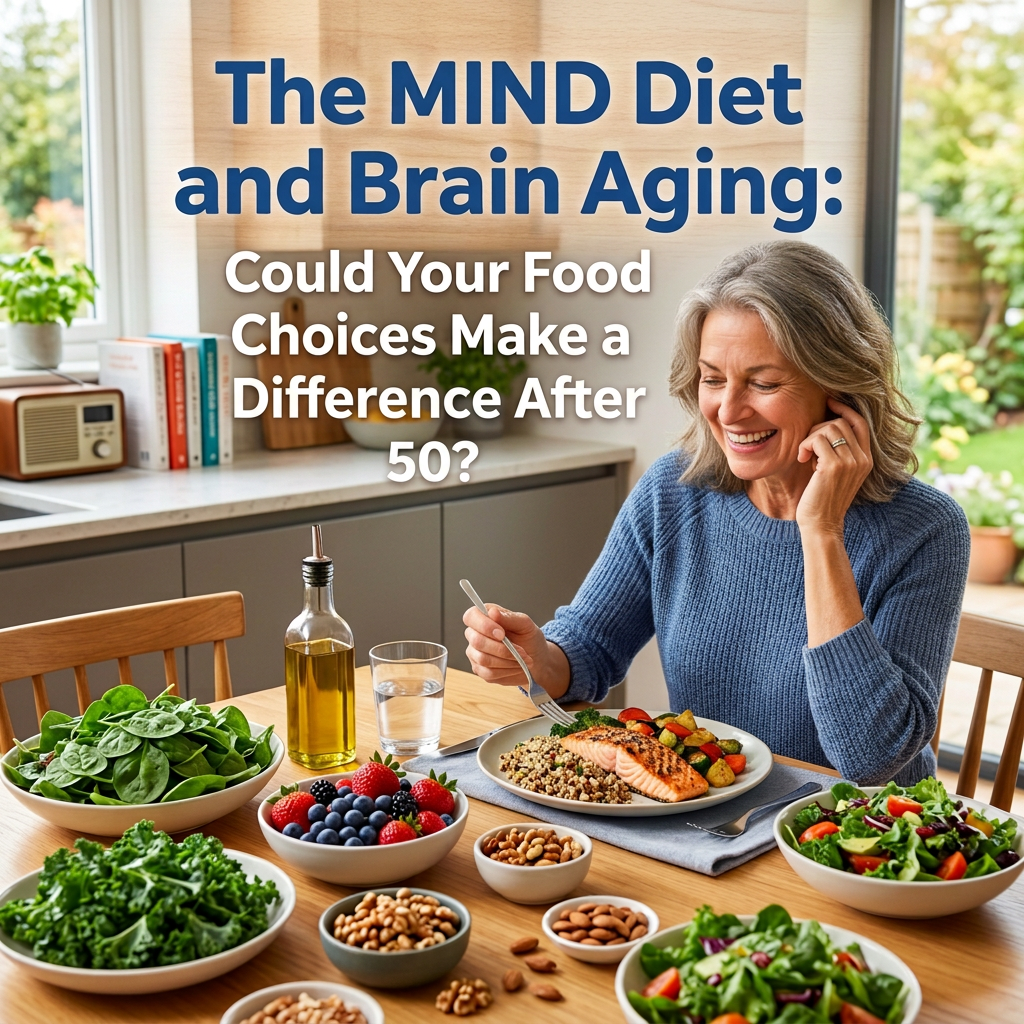
  • The MIND Diet and Brain Aging: Could Your Food Choices Make a Difference After 50?

    The MIND Diet and Brain Aging: Could Your Food Choices Make a Difference After 50?

    Can the MIND diet slow brain aging?

    Short answer: The MIND diet mixes the Mediterranean and DASH diets to help protect the brain. In a 2026 study of 1,647 adults followed for about 12 years, people who stuck closer to it lost brain gray matter more slowly. It doesn’t prove the diet prevents Alzheimer’s, but it’s a good reason to pay attention to what’s on your plate.

    What you eat may matter for your brain as you get older. A 2026 study gives us another reason to pay attention to the food on our plates—but the finding needs a little explanation.

    Researchers studying adults in the long-running Framingham Heart Study found that people who followed the MIND diet more closely experienced slower loss of gray matter over time. The difference associated with a three-point increase in their MIND diet score was estimated to be equivalent to about 2.5 years of age-related brain change over the study period.

    That is an interesting finding. But let’s keep it honest: the study does not prove that this diet makes your brain younger, prevents Alzheimer’s disease, or guarantees that your memory will stay sharp. It does give us a practical reason to look at how we eat—and a few changes that may be worth making after 50.

    What Is the MIND Diet?

    MIND stands for Mediterranean-DASH Intervention for Neurodegenerative Delay. The name is a mouthful, but the basic idea is simple. It combines elements of the Mediterranean and DASH eating patterns, with an emphasis on foods that fit into a generally healthy way of eating.

    You don’t need special powders, expensive supplements, or a refrigerator full of trendy products to understand it. The focus is on everyday foods:

    • Leafy green vegetables: spinach, kale, collards and other greens.
    • Other vegetables: add variety and color to your meals.
    • Berries: blueberries, strawberries and other berries.
    • Whole grains: oatmeal, brown rice and whole-grain bread.
    • Beans and legumes: beans, lentils and chickpeas.
    • Nuts: a small handful can be an easy snack.
    • Fish and poultry: practical sources of protein.
    • Olive oil: a useful replacement for some less healthful fats.

    The eating pattern also encourages limiting foods such as butter, fried foods, pastries, sweets, and large amounts of red meat and cheese. This isn’t about never eating a piece of cake again. It’s about what you do most of the time, not whether every meal is perfect.

    What Did the Researchers Find?

    The 2026 research examined 1,647 adults from the Framingham Heart Study Offspring cohort. Participants were followed for a median of about 12 years, and researchers used brain imaging to examine changes in brain structure over time.

    People with higher MIND diet scores tended to show slower loss of gray matter. Gray matter contains many of the brain’s nerve cell bodies and plays important roles in thinking, memory and other functions.

    The researchers estimated that each three-point increase in the MIND diet score was associated with a difference equivalent to about 2.5 years of age-related gray-matter change over the follow-up period.

    Here’s the important distinction: this was an observational study. Researchers observed people’s eating patterns and brain changes; they did not randomly assign participants to follow the diet and prove that the diet caused the difference. People who eat healthier diets may also differ in other ways, including exercise habits, sleep, income, education and general health. Researchers can account for some factors, but they cannot eliminate every possible explanation.

    So the finding is promising evidence of an association, not a guarantee of results. And a change in brain structure is not the same thing as proving better memory or preventing dementia.

    Berries and poultry stood out in the researchers’ analysis of individual foods. That doesn’t mean blueberries or chicken are miracle foods. The study looked at a broader dietary pattern, and its findings about individual foods should not be treated as proof that any one item independently slows brain aging.

    Still, both can fit easily into everyday meals. You could add berries to oatmeal at breakfast, have them with plain yogurt, or keep frozen berries on hand when fresh ones are expensive. Poultry can be part of a simple lunch or dinner alongside vegetables and a whole grain.

    You don’t have to buy organic berries, expensive specialty foods, or a stack of supplements to get started. Use foods you enjoy and can afford.

    You don’t have to overhaul your kitchen overnight. Start with one or two changes you can keep doing.

    If vegetables aren’t a regular part of lunch or dinner, start there. Frozen vegetables count, too. They’re convenient, often affordable and can save preparation time.

    Fresh berries are great, but frozen ones are useful when prices are high. Add a handful to oatmeal or yogurt, or eat them as a snack.

    Try oatmeal for breakfast, brown rice with dinner, or whole-grain bread for a sandwich. You don’t have to change everything at once.

    Beans and lentils can be inexpensive, filling sources of fiber and plant protein. Add them to soup, chili, salads or a side dish.

    A single meal won’t determine your future brain health. What matters more is the pattern you build over time. If you eat fried food today, that doesn’t mean you’ve failed. Make your next meal a reasonable one and keep going.

    Eating well matters, but it isn’t the only thing worth doing after 50. Regular physical activity, adequate sleep, social connection, and managing conditions such as high blood pressure and diabetes are also important parts of looking after your health.

    If you have concerns about memory or changes in thinking, talk with a qualified health professional rather than assuming food alone will solve the problem. Be wary of products that promise to reverse brain aging or prevent dementia. A promising study is not proof that a supplement, a single food, or a particular diet can deliver those results.

    My Takeaway

    I like research that gives us something practical to work with without pretending there’s a magic answer.

    The MIND diet study doesn’t mean we can turn back the clock on our brains. It does suggest that healthier eating patterns may be associated with more favorable changes in brain structure as we age.

    For me, the sensible approach is straightforward: eat more vegetables, include berries and beans when you can, choose whole grains more often, and pay attention to the overall pattern. Keep moving, get enough sleep, and look after your general health, too.

    If planning all those meals is the hard part, a meal kit can take a lot of the guesswork out of it. Marley Spoon sends the recipe and the ingredients right to your door, so getting more vegetables and good protein on the plate gets a whole lot easier. And if green tea is more your speed than coffee, More Than Matcha makes matcha you can stir up in about a minute. (affiliate links)

    You don’t have to eat perfectly. You just have to keep making reasonable choices.

    Getting older is part of life. Giving up on looking after yourself doesn’t have to be.

    Common Questions About the MIND Diet

    Does the MIND diet prevent Alzheimer’s disease?

    We cannot say that it does. Research has found associations between the MIND eating pattern and certain measures of brain health, but this study does not prove that the diet prevents Alzheimer’s disease or other forms of dementia.

    What does “2.5 years less brain aging” actually mean?

    It refers to an estimated difference in age-related gray-matter loss associated with a higher MIND diet score over the study period. It does not mean participants’ brains were literally rejuvenated by 2.5 years, nor does it guarantee better memory.

    Do I need to follow the MIND diet perfectly?

    No. Focus on the overall pattern of your eating rather than making every meal perfect. Start with changes that are affordable, enjoyable and realistic for you.

    Are blueberries the most important food for brain health?

    The study highlighted berries among the foods associated with favorable brain-imaging findings, but it did not establish blueberries as a miracle food. The overall eating pattern matters, and no single food guarantees protection.

    Is the MIND diet expensive?

    It doesn’t have to be. Frozen vegetables and berries, dried or canned beans, oatmeal, brown rice and other basic foods can help you build meals without relying on costly specialty products. Compare prices and choose what works for your budget.

    Research and Further Reading

    For another perspective on brain health and aging, explore the work of neuroscientist Dr. Lisa Mosconi, whose research and writing focus on the brain and women’s brain health. This is additional reading, not a claim that she reviewed or endorsed this article.

    MIND diet, cerebrovascular health, and cognition among community-dwelling older adults — Puja Agarwal and colleagues, Rush University. Alzheimer’s & Dementia, 2026. Studied 761 older adults without known dementia at the start (713 with complete diet, brain scan, and thinking-test data; average age 81). In plain words: older adults whose eating matched the MIND diet more closely had healthier small blood vessels in the brain — less hardening and narrowing — along with larger brain volume and fewer white spots on brain scans that are linked to dementia risk. They also scored better on thinking tests. The healthier blood vessels and larger brain size partly explained why better eating went along with better thinking. The link held even after accounting for exercise, weight, race, and existing vascular disease. This was an observational study, so it shows a link, not proof that the diet caused the difference. Link: Read the study

    Adherence to the MIND diet and longitudinal brain structural changes over a decade: evidence from the Framingham Heart Study Offspring cohort — Hui Chen and colleagues. Journal of Neurology, Neurosurgery & Psychiatry, 2026; 97(6):505–512. DOI: 10.1136/jnnp-2025-336957. Studied 1,647 middle-aged and older adults (average age about 60) from the Framingham Heart Study Offspring group, followed for about 12 years with repeated brain scans. In plain words: people whose eating matched the MIND diet more closely lost gray matter (brain tissue) more slowly over about 12 years. Each 3-point higher MIND score was linked to about 20% less age-related gray-matter loss — roughly equal to 2.5 years of delayed brain aging. Higher scores were also linked to slower widening of the brain’s fluid-filled spaces, about a 1-year delay. Berries and poultry showed the strongest favorable links, while sweets and fried fast food were tied to faster shrinkage in the memory area. This was an observational study, so it shows a link, not proof that the diet caused the difference. Link: Read the study

    Keep Reading

    About the Author

    Tom Green writes Sturdy Years. He was born in Pell City, Alabama, in 1962, and he’s a country boy and a true Southerner through and through. He’s just a regular, laid-back 64-year-old who keeps things simple. He shares what he learns about skincare, fitness and getting older, and what’s working for him. He’s also the author of A Practical Guide to Getting Older Without Giving Up on Yourself. Tom isn’t a doctor. He reads up on the research and passes along what’s useful, plain and simple.

    Health Disclaimer

    This article is for general educational purposes and is not a substitute for individual medical advice, diagnosis or treatment. Research findings do not guarantee individual results. Talk with a qualified health professional about dietary changes if you have medical conditions, special nutritional needs, or concerns about memory or thinking.

    I’ve also mapped out some great tools on my new Tech for Independent Living After 50 page.