Tag: look younger

  • Can the Right Glasses Make You Look Younger After 50? 7 Styles That Can Refresh Your Look

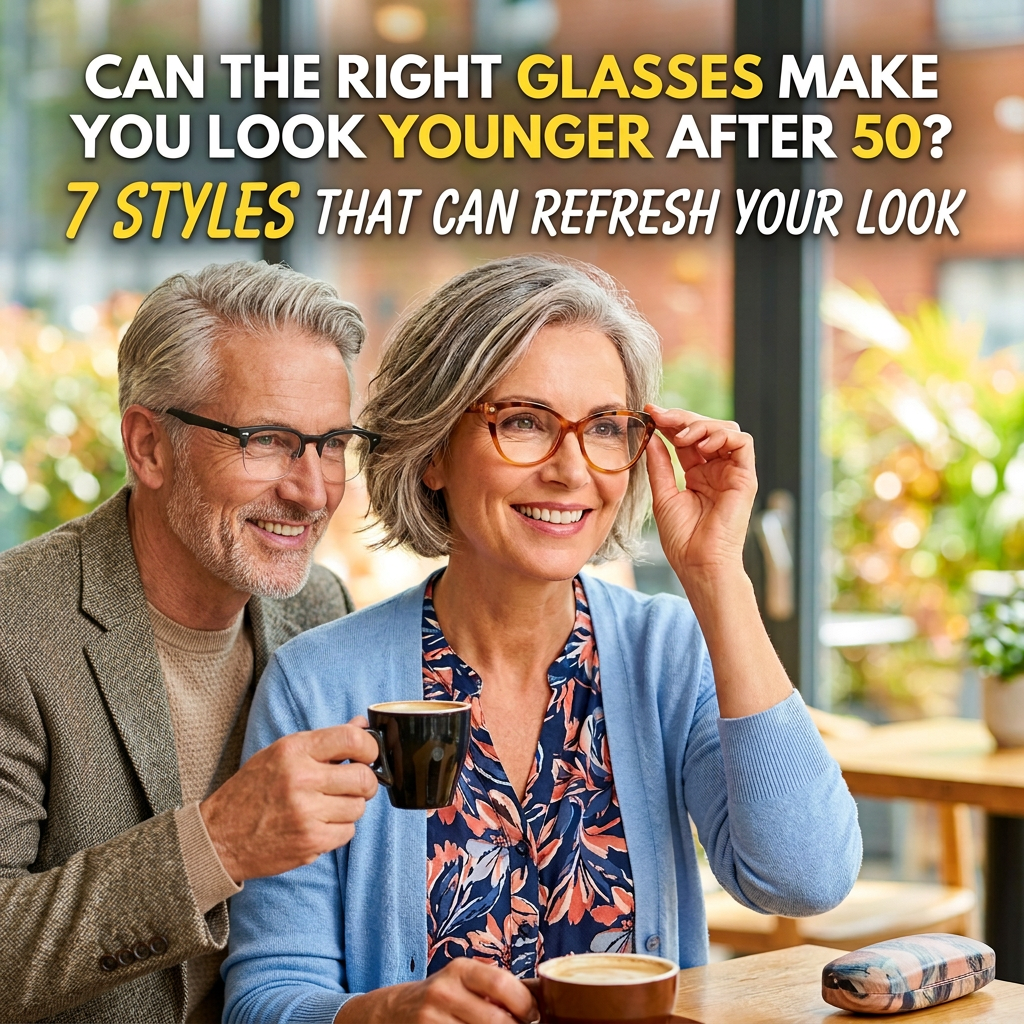
    Can the Right Glasses Make You Look Younger After 50? 7 Styles That Can Refresh Your Look

    Can the right glasses make you look younger?

    Short answer: A little, but not by “10 years.” A 2020 study found glasses can change how old people think you look, though the effect is modest. Frames that sweep up slightly at the corners, a color that suits your hair and skin, and a size that fits your face can make you look more awake and current.

    Can a pair of glasses actually make you look younger after 50? Not in the magical “take 10 years off” way some ads suggest. But the right frames can change how your face is perceived, and they can make your overall look feel fresher, more current and more intentional.

    That matters because glasses sit right in the middle of your face. Shape, color, thickness, size and even the position of the frame relative to your eyebrows can change the impression you make.

    Can glasses really make you look younger?

    There is some evidence that eyewear changes perceived age, although the effect is usually modest rather than dramatic. A 2020 study published in i-Perception found that eyewear can influence judgments of age and appearance, but it is only one part of the picture.

    Forget the promise of looking “10 years younger.” A better goal after 50 is to find frames that make you look awake, current, confident and comfortable in your own skin.

    1. Try an upswept or softly cat-eye shape

    A frame that rises slightly toward the outer corners can give the face a subtle lifted appearance. It can also draw attention toward the eyes and eyebrows.

    You don’t need an exaggerated cat-eye. A gentle upward sweep is often easier to wear every day and looks modern without looking like you’re chasing a trend.

    2. Don’t automatically avoid stronger frames

    Black or dark frames can be surprisingly flattering after 50. They create definition around the eyes and can make a simple outfit look more polished.

    The trick is proportion. If the frame is extremely thick, oversized or heavy for your face, it can overwhelm your features.

    3. Clear and translucent frames can look fresh

    Clear, champagne, soft gray and translucent frames can give you definition without adding a heavy dark line across your face.

    4. Thin frames can soften the look

    Minimal frames can work beautifully if you prefer an understated appearance. Metal, thin acetate and lightweight designs can add structure while keeping the face visually open.

    5. Consider color instead of always choosing black

    Brown, tortoiseshell, burgundy, deep blue, olive and warm neutral shades can complement hair, skin and eye color while making the glasses feel intentional.

    6. Frame size matters more than most people realize

    Oversized glasses can look stylish, but there is a point where they begin to hide the eyes and dominate the face. Frames that are too small can have the opposite problem.

    Ideally, the frame should sit comfortably without sliding, the eyes should sit reasonably well within the lenses, and the bridge should feel secure without pressure.

    7. Pay attention to your eyebrows and eyes

    Your glasses and eyebrows work together. A frame that sits too low can cover the eyebrows and make the upper face look heavier. A frame that sits at the right height can help the eyes look more open.

    What glasses should you avoid if you want a fresher look?

    There are no universal “bad” frames. But be cautious with frames that:

    • are badly oversized for your face
    • sit too low on the nose
    • pinch your temples or slide constantly
    • hide your eyes or eyebrows
    • look dated simply because you’ve worn the same style for decades
    • have a color that makes your complexion look tired or washed out

    Try this simple photo test before buying

    Take a clear photo facing the camera in natural light. Try three or four very different frames and take another photo in the same lighting.

    Don’t ask, “Which one makes me look younger?” Ask: Which one makes my eyes stand out? Which one makes my face look balanced? Which one looks current without looking like a costume? Which one makes me look like myself on a really good day?

    What about “anti-aging” glasses and blue-light claims?

    Be skeptical of glasses marketed as if the lenses themselves will reverse visible aging. Blue-light glasses may be useful for some people who find them comfortable, but they are not proven anti-aging treatment for the skin or face.

    If you’re buying prescription glasses, prioritize the prescription, fit, lens quality and your actual visual needs. Style comes next—but it absolutely matters.

    The Bottom Line

    The right glasses won’t turn back the clock. They can, however, change the way your face is framed—and that can make a real difference in how fresh, polished and confident you look.

    After 50, I think that’s a much better goal than trying to look younger at any cost.

    For another style-focused perspective, designer and lifestyle blogger Cindy Hattersley has written about choosing eyewear after 50. Her approach reinforces a useful point: frames should suit your face and personal style, not follow a rule that everyone must wear the same shape.

    Common Questions

    What glasses make you look younger after 50?

    There is no single best frame for everyone. Upswept shapes, well-proportioned dark frames, translucent frames and modern thin frames can all work. The key is fit, proportion and how the frame works with your face.

    Do bigger glasses make you look younger?

    Not necessarily. Oversized frames can look fashionable, but if they overwhelm your features or hide your eyes, they may have the opposite effect.

    Are cat-eye glasses good for mature faces?

    A softly upswept cat-eye can be flattering because it draws attention toward the outer corners of the eyes. A subtle version is usually easier to wear than an extreme shape.

    Do clear glasses look good after 50?

    Yes. Clear and translucent frames can create definition without looking heavy, and they can give an outfit a clean, contemporary feel.

    Can glasses really make you look younger?

    They can influence how people perceive your appearance, but the effect is usually modest. Good fit, flattering color and a current shape are more realistic goals than expecting a frame to erase years.

    A Note From Tom Green

    I’m a big believer in making small changes that help you feel better about how you look without pretending you’re someone else. Glasses are a perfect example. You don’t need to look younger—you just want a pair that makes you look like the best version of yourself right now.

    Keep Reading

    If you’re interested in looking and feeling your best after 50, take a look at 50+ Looksmaxxing: Simple Ways to Look Better at Any Age.

    Disclaimer: This article is for general informational purposes and is not medical or vision-care advice. For changes in vision, eye symptoms or questions about prescription lenses, consult an eye-care professional.

    I’ve also mapped out some great tools on my new Tech for Independent Living After 50 page.
  • What Color Hair Makes an Older Woman Look Younger?

    What Color Hair Makes an Older Woman Look Younger?

    What hair color makes an older woman look younger?

    Short answer: Softer, lighter shades usually flatter an older woman’s face more than going darker. Soft blonde can brighten the face, caramel and honey tones can soften brown hair, and gray hair can look absolutely beautiful when it’s healthy and well cut.

    If you’ve had the same hair color for 20 or 30 years, you may eventually notice something strange. The color that once made your face look bright and healthy doesn’t always have the same effect anymore.

    Your skin changes as you age. Your natural hair color changes. Gray appears. Hair can become finer or less dense. Even the amount of contrast between your hair and your face can change.

    So the question is a good one: What color hair makes an older woman look younger?

    The answer isn’t simply blonde, brunette, gray or red. The most flattering color is usually the one that adds some brightness and dimension without creating a harsh contrast with the face. And that can be different for every woman.

    Why Hair Color Can Change the Way Your Face Looks

    Hair surrounds your face, so it naturally affects how people see your complexion and facial features.

    Research has found that hair color and skin color work together in perceptions of age and appearance. One study found that lighter hair was associated with younger age judgments in participants, particularly among women with lighter skin, and that the relationship between hair and skin color mattered.

    Research on facial aging has also found that facial contrast tends to decrease with age. Changes in contrast can affect how young or old a face is perceived.

    That may help explain why some women feel that their old hair color suddenly looks “too harsh” or that their face looks washed out. It isn’t necessarily that the color is bad. It may simply no longer be working with the way your coloring has changed.

    So, What Hair Color Is Most Youthful?

    For many women over 50, the answer is a softer version of the color they already have, with some dimension around the face.

    • Soft blonde instead of very dark blonde
    • Caramel or honey highlights in brown hair
    • A softer brunette instead of almost-black brown
    • Dimensional auburn instead of a flat red
    • Blended silver instead of a dull, one-dimensional gray
    • A mixture of gray, silver and lighter pieces instead of fighting every new gray hair

    The goal isn’t necessarily to look younger. The goal is to make the face look brighter, healthier and more balanced. And sometimes that has a surprisingly youthful effect.

    1. Soft Blonde Can Brighten the Face

    Blonde can be particularly flattering when it isn’t too yellow, too gray or too stark. A softer blonde with some variation can reflect light around the face and keep the overall appearance from looking heavy.

    AARP’s hair-color guidance for older women discusses using silvery or golden highlights to blend gray and add light around the face.

    But going dramatically lighter isn’t automatically better. A very pale blonde can make some complexions look washed out. A good colorist can adjust the tone so the blonde works with the person’s natural coloring.

    2. Caramel and Honey Can Make Brown Hair Look Softer

    If you’re naturally brunette, you don’t have to become blonde to get a brighter appearance.

    Adding subtle caramel, honey or mocha tones can give brown hair more dimension. This can be especially useful when an old dark brown color has started looking flat or severe.

    Instead of coloring the entire head several shades lighter, a colorist can place lighter pieces around the face and throughout the hair. That creates movement without making the change look artificial.

    3. Don’t Automatically Go Darker

    This is one of the biggest mistakes women sometimes make when trying to cover gray. They go darker. Then darker again.

    Eventually the hair may be a very deep brown or almost black. That can create a strong contrast against the face. For some women it looks fantastic. For others, it can make the complexion look tired and draw attention to facial lines.

    That doesn’t mean dark hair makes every older woman look older. It means the amount of contrast matters.

    4. Gray Hair Can Absolutely Look Beautiful

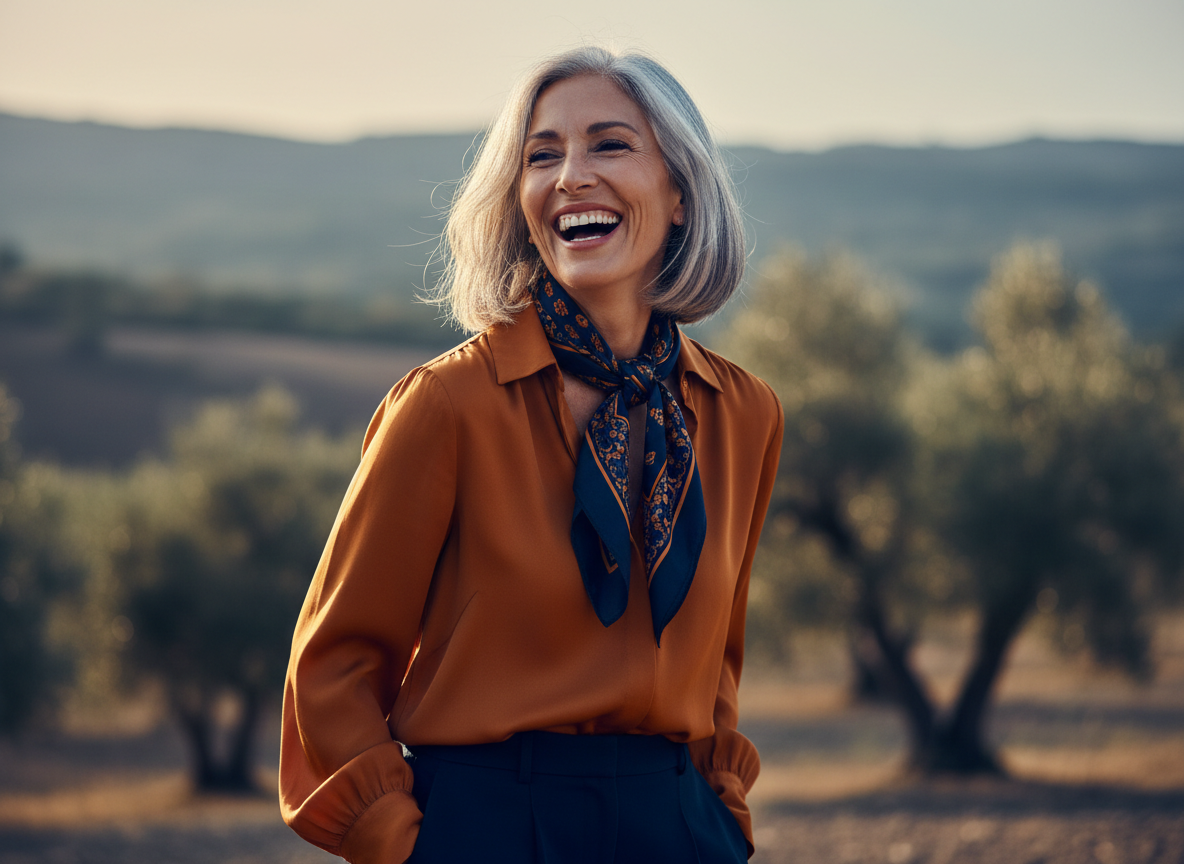
    Gray isn’t automatically an “aging” hair color. A woman with beautiful silver or white hair can look incredibly striking.

    Some women’s natural gray comes in bright silver, platinum or white, while others develop a more steely or ashy gray that can drain warmth from the complexion. Highlights can sometimes add life and brightness.

    If you’re going gray, you don’t necessarily need to cover it. You may simply need to make the gray work better with your complexion.

    • A shorter, more modern cut
    • Silver-enhancing products
    • Strategic highlights
    • Better conditioning
    • Removing yellow or dull tones
    • Adding some dimension

    What About Red or Auburn?

    Red can be beautiful on an older woman, particularly when it works with her natural coloring. Softer shades such as auburn, cinnamon, copper and copper-brown can provide warmth without overwhelming the face.

    The important word is dimension. Hair that has several related tones generally looks more natural than a flat block of one color.

    The Hair Color Trick That May Matter More Than the Color

    You don’t necessarily need to change your entire hair color. Sometimes the biggest difference comes from what happens around your face.

    A few strategically placed lighter pieces can brighten the area around the eyes and cheeks. Fine highlights can create a softer, more natural transition than thick, obvious streaks.

    You can tell your stylist: “I don’t want to completely change my color. I just want something that brightens my face and looks natural.”

    What About Black Women and Women With Deeper Skin Tones?

    The same basic principle applies, but the actual color choices can be very different. Hair color should work with the individual’s complexion rather than following a one-size-fits-all rule.

    Deep brunette, espresso, warm brown, auburn, copper, honey highlights and even silver can all be beautiful depending on the person’s skin tone, natural hair and desired level of contrast.

    A Simple Way to Choose Your Color

    Before making a dramatic change, stand near a window in natural daylight and look at your current hair next to your face.

    • Does this color brighten my complexion?
    • Does it make my eyes stand out?
    • Does it make my skin look dull or yellow?
    • Does the color look harsh against my face?
    • Does my hair look flat, or does it have dimension?
    • Do I actually like it?

    Common Questions

    What hair color makes a woman 50+ look younger?
    There isn’t one best color for everyone. Shades that complement your natural skin tone and eye color—rather than looking too harsh or flat—can create a softer, more refreshed appearance.

    Does lighter hair make a woman 50+ look younger?
    It can, especially when the shade adds warmth and dimension around the face. But going dramatically lighter isn’t always necessary; the right tone matters more than simply choosing a lighter color.

    Can highlights make mature hair look younger?
    Yes. Subtle highlights, lowlights, or blended color can add dimension and help hair look more natural and vibrant.

    Should women 50+ go blonde to look younger?
    Not necessarily. Blonde can work beautifully for some women, while brunette, red, gray, or blended shades may be more flattering for others.

    What hair colors can make you look older?
    Very harsh, flat, or overly dark shades can sometimes emphasize contrast and make the complexion appear less vibrant. The effect depends on the individual.

    Is gray hair aging or can it look youthful?
    Gray hair itself doesn’t have to look aging. Well-maintained gray with a flattering cut and healthy shine can look modern, polished, and confident.

    How often should women 50+ color their hair?
    That depends on the type of color, how quickly your hair grows, and how much gray you’re covering. Coloring too frequently can be hard on the hair, so maintaining its condition is important.

    What should you consider before choosing a new hair color after 50?
    Consider your skin tone, natural hair color, amount of gray, hair condition, maintenance you want to handle, and whether the color makes you feel confident and comfortable.

    My Take

    I don’t think women over 50 need to chase a magic “youthful” hair color.

    What seems more useful is understanding how color interacts with your face. If your old color suddenly feels too harsh, try softening it. If your hair looks dull, try adding dimension. If gray is making your complexion look washed out, consider blending it rather than automatically covering everything.

    And if you love your natural gray? Keep it.

    There is no rule saying a woman has to look younger to look great. Sometimes the most flattering hair color isn’t the one that makes you look 10 years younger. It’s the one that makes you look bright, healthy, confident and completely comfortable in your own skin.

    This article is for general information and personal experience, not professional hair-color or medical advice.

    About Tom Green

    Tom Green writes Sturdy Years. He was born in Pell City, Alabama, in 1962, and he’s a country boy and a true Southerner through and through. He’s just a regular, laid-back 64-year-old who keeps things simple. He shares what he learns about skincare, fitness and getting older, and what’s working for him. He’s also the author of A Practical Guide to Getting Older Without Giving Up on Yourself. Tom isn’t a doctor. He reads up on the research and passes along what’s useful, plain and simple.

    I’ve also mapped out some great tools on my new Tech for Independent Living After 50 page.