Tag: inner peace

  • The Best Things About Fall When You’re 50+

    The Best Things About Fall When You’re 50+

    What are the best things about fall when you’re older?

    Short answer: Fall gives you cooler air, changing leaves, quieter evenings and permission to slow down. After 50 you’ve stopped trying to prove yourself, so simple things like coffee on the porch, a drive in the country or a walk in the leaves can make an ordinary day a good one.

    There is a point in life when you start appreciating fall for reasons that have nothing to do with pumpkin spice. The cooler air, changing leaves, quieter evenings and simple feeling that you do not have to rush quite so much.

    Getting older has its challenges, but it also gives you perspective. You start to understand which things deserve your energy and which things do not.

    Fall makes ordinary things feel special

    A cup of coffee on the porch. A drive through the country. A walk when the leaves are changing. A good meal with somebody you enjoy. None of these things are complicated, but they can make an ordinary day feel like a good one.

    And if you want to make that porch coffee a little special this fall, Hula Daddy sells Kona coffee grown right on the slopes in Hawaii. It’s a nice treat for a cool morning. (affiliate link)

    More of a tea drinker, or want something warm in the evening without the caffeine? Azomalli Tea makes a cacao shell tea that tastes a lot like hot cocoa, and it’s caffeine-free, so you can sip a mug on a chilly fall night and still sleep fine. (affiliate link)

    You can stop proving yourself

    One of the best parts of being over 50 can be caring less about impressing everybody. You know yourself better. You know what you like. You also know that some opinions simply are not worth arguing with.

    There is still plenty to look forward to

    Age does not cancel curiosity. Learn something. Take a trip. Start exercising. Try a new restaurant. Redecorate a room. Call someone you have not talked to in a while. Make plans simply because you want to.

    Enjoy your own pace

    Fall is a good reminder that not everything has to happen immediately. Some of the best things take time, and some days are valuable simply because they are peaceful.

    I think that is one of the underrated pleasures of life after 50. You can finally learn to recognize a good day while you are actually living it.

    Make room for the season

    Put on a comfortable sweater. Go outside. Watch the leaves change. Have the coffee. Take the picture. Call the friend. You do not need a special occasion to enjoy your life.

    Common Questions

    What makes fall enjoyable after 50?
    Cooler weather, seasonal activities, outdoor walks, comfortable routines, and more opportunities to slow down can all make fall appealing.

    Is fall a good season to stay active after 50?
    Yes. Comfortable temperatures can make walking and other outdoor activities easier for many people.

    What are simple fall activities for people 50+?
    Walking, visiting fall events, cooking seasonal meals, gardening, photography, and spending time with friends or family are easy options.

    Can fall be a good time to start a new hobby?
    Yes. A seasonal change can be a natural time to try something new or return to an activity you enjoyed before.

    How can I enjoy fall without spending a lot of money?
    Take walks, visit free local events, cook at home, enjoy outdoor scenery, or spend time with people you care about.

    Can getting outside in fall help your mood?
    Outdoor activity and daylight can be enjoyable parts of a healthy daily routine, although mood changes have many possible causes.

    What should I do if cooler weather makes me less active?
    Have an indoor backup plan so a cold or rainy day does not completely stop your movement routine.

    How can I make the most of fall after 50?
    Choose a few seasonal things you genuinely enjoy instead of trying to fill every day with activities.

    Is it too late to start enjoying new experiences after 50?
    No. Age does not prevent you from learning, exploring, meeting people, or trying something different.

    What is the best thing about fall after 50?
    It can be a reminder that you do not need to rush through life to enjoy it.

    Practical takeaway: Keep the ideas from this post simple enough to use consistently. Small, repeatable habits usually work better than trying to change everything at once.

    A gentle health note: This post provides general information, not personalized medical advice. If you have persistent, severe, or unusual symptoms, or are making a major change to exercise or health routines, discuss it with a qualified healthcare professional.

    Affiliate Disclosure: Some links in this post may be affiliate links. If you purchase something through one of these links, Sturdy Years may earn a small commission at no extra cost to you. This helps support the site and allows us to continue creating helpful content.

    Written by Tom Green, creator of Sturdy Years

    Tom Green writes Sturdy Years. He was born in Pell City, Alabama, in 1962, and he’s a country boy and a true Southerner through and through. He’s just a regular, laid-back 64-year-old who keeps things simple. He shares what he learns about skincare, fitness and getting older, and what’s working for him. He’s also the author of A Practical Guide to Getting Older Without Giving Up on Yourself. Tom isn’t a doctor. He reads up on the research and passes along what’s useful, plain and simple.

    I’ve also mapped out some great tools on my new Tech for Independent Living After 50 page.
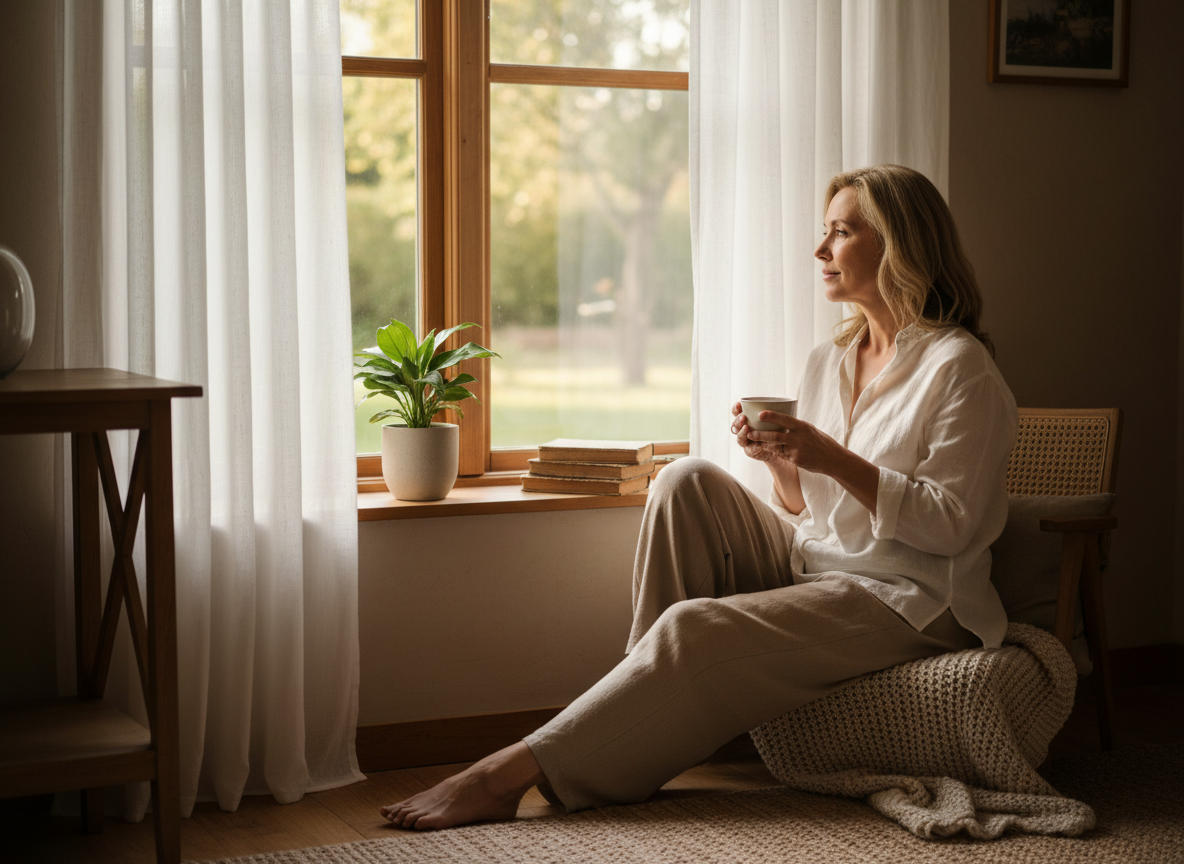
  • A Simpler Life After 50: How to Stop Pleasing Everyone and Find Your Peace

    A Simpler Life After 50: How to Stop Pleasing Everyone and Find Your Peace

    How do you stop pleasing everyone and find peace?

    Short answer: You find peace after 50 by not trying to make everybody happy. Know the difference between real peace and just avoiding things, stop treating quiet like a problem, spend money on what actually adds value, protect the relationships that feel real, and stop explaining every choice.

    One of the things I appreciate more about getting older is realizing that peace is not something you have to earn by making everybody else happy. For years, it can be easy to say yes because you don’t want to disappoint somebody, keep quiet because you don’t want an argument, or keep doing things simply because you’ve always done them. Then one day you realize how much of your time has been spent managing everybody else’s expectations. Life after 50 can be a chance to get more intentional. Not selfish. Not isolated. Just more honest about what deserves your time and what doesn’t.

    Learning the Difference Between Peace and Avoidance

    Choosing peace doesn’t mean avoiding every difficult conversation or walking away from everyone who disagrees with you. Sometimes peace comes from having the conversation you’ve been putting off and setting a boundary that makes the relationship healthier. The goal isn’t a life with no conflict. That’s not realistic. The goal is knowing which conflicts are worth your energy and which ones aren’t.

    Things That Can Make Life More Complicated Than It Needs to Be

    • Saying yes when you really mean no.
    • Keeping commitments that no longer fit your life.
    • Buying things because advertising or social media makes you feel behind.
    • Comparing your everyday life with someone else’s carefully selected highlights.
    • Filling every quiet moment with noise.
    • Trying to maintain relationships that are consistently one-sided.
    None of these has to disappear overnight. Sometimes simply noticing the pattern is the first step toward changing it.

    Stop Treating Quiet Like a Problem

    There is something different about quiet when you get older. You may discover that you don’t need constant entertainment, constant messages or a packed calendar to feel that your day mattered. A quiet morning. A walk. Coffee with someone you enjoy. Reading. Working in the yard. Listening to music. Spending time with a pet. These things can look ordinary from the outside while feeling pretty valuable from the inside.

    Spend Money on What Actually Adds Value

    Getting older can also change how you think about stuff. The newest product isn’t automatically better, and buying something simply because everyone online seems to have it rarely creates lasting satisfaction. I’m not against buying nice things. I just think there is a difference between enjoying something and constantly chasing the next thing. Sometimes simplifying your life means having fewer things to maintain, fewer bills to worry about and fewer purchases that need to justify themselves.

    Protect the Relationships That Feel Real

    Simplifying doesn’t mean becoming a hermit. In fact, good relationships can become even more important after 50. Look for relationships where you can be yourself, laugh, disagree without fear and still feel respected. Make time for the people who make life feel more human. And if a relationship needs a boundary, a boundary isn’t necessarily rejection. Sometimes it is what allows a relationship to continue without resentment.

    You Don’t Have to Explain Every Choice

    One of the freedoms of getting older is realizing that not every decision needs a committee. You don’t have to convince everyone why you changed your routine, stopped going somewhere, started exercising, picked up a hobby or decided to spend more time at home. If a choice is healthy and appropriate for your life, it doesn’t need universal approval.

    What I Want More of Now

    For me, the idea of a simpler life comes down to a short list: more time for people I care about, more time doing things I genuinely enjoy, better care of my body, less unnecessary drama and fewer decisions made simply because I feel pressured. That doesn’t mean life becomes boring. It means the things that remain have more room to matter.

    Peace Is Not Giving Up

    There is a big difference between giving up on life and giving up on things that drain you without adding anything worthwhile. After 50, your time is still yours. You can use it to build something, learn something, get stronger, travel, work, volunteer, fall in love, spend time with family, enjoy your pets or simply have a Tuesday afternoon that doesn’t need to become a story. Maybe one of the best parts of getting older is finally understanding that an ordinary peaceful day can be a very good day. For another thoughtful perspective on relationships and a meaningful later life, Larry Potter’s Last Best Bite article on the quality of relationships explores how the people around us can shape our well-being. It’s a useful companion to the idea that a simpler life can still be a full one.

    Five Ways to Make Your Life Feel Lighter This Week

    I’m not suggesting that everybody after 50 needs to throw away half the house and become a minimalist. Sometimes a simpler life starts with one less obligation and one more hour that belongs to you.

    1. Delay your answer. When asked to do something, say, “Let me check my week and get back to you.” You don’t owe an immediate yes.
    2. Pick one small area to clear. A kitchen drawer, bedside table or email inbox is enough. Keep what you use and stop there.
    3. Choose a realistic social commitment. One coffee with someone you like may nourish you more than five invitations you resent.
    4. Make a short ‘not my job’ list. You can care about another person’s feelings without being responsible for fixing every situation.
    5. Bring back one pleasure. Music, a hobby, time outdoors, or a phone call can make a regular day feel like your own.

    Something I’d try: Tonight, write down the single thing taking the most energy that you have the power to change. Then decide on one gentle step—not a complete life makeover.

    Peace Doesn’t Have to Mean Isolation

    There is a difference between enjoying solitude and withdrawing because everything feels overwhelming. The National Institute on Aging explains that persistent loneliness and social isolation can affect well-being. Protecting your peace may sometimes mean saying no to one demand so you have energy to say yes to a genuine friendship.

    In Harvard Health, writers exploring social connection explain why reconnecting with friends and maintaining relationships can matter for thinking and overall health. And the NIA’s guide to enjoyable activities offers a useful reminder: meaningful activities, hobbies, and volunteering can provide connection without filling every hour.

    Simple living isn’t about making your world smaller. It’s about leaving room for the people and experiences that make it worth getting up in the morning.

    Common Questions

    Why can life feel simpler and more peaceful after 50? After 50, many people become clearer about what matters to them and more willing to spend their time and energy on those priorities. What does choosing peace over pleasing others mean after 50? It means recognizing that you don’t have to keep everyone happy at the expense of your own time, energy, values, or well-being. How do you stop worrying so much about pleasing everyone after 50? Start by noticing when you’re saying yes out of guilt or pressure rather than because you genuinely want to. How can you simplify your life after 50? Reduce unnecessary commitments, protect your free time, clear out things you no longer need, and focus more on people and activities that add meaning to your life. Is it selfish to say no after 50? No. Saying no to something that doesn’t fit your priorities can be a healthy way to protect your time and energy. How do you set boundaries without feeling guilty? Keep your explanation simple. You don’t have to provide a long justification every time you say no. What can you stop doing after 50 to make life more peaceful? You can stop automatically saying yes, constantly explaining yourself, comparing your life with others, and taking responsibility for everyone’s happiness. How can you spend your time more intentionally after 50? Ask yourself whether a commitment, relationship, or activity genuinely matters to you before automatically giving it your time. Can simplifying your life improve your well-being after 50? A simpler life can create more room for rest, relationships, hobbies, meaningful activities, and things you actually enjoy. What is one simple way to choose peace over pleasing after 50? Before saying yes, pause and ask: “Do I actually want to do this, or am I afraid of disappointing someone?” Practical takeaway: You don’t have to become a different person after 50. You can simply become more selective about where you spend your time, energy, and attention. A gentle well-being note: If feelings of stress, sadness, isolation, or anxiety are persistent or interfering with daily life, consider talking with a healthcare or mental-health professional.

    Keep Reading

    Written by Tom Green, creator of Sturdy Years Tom Green writes Sturdy Years. He was born in Pell City, Alabama, in 1962, and he’s a country boy and a true Southerner through and through. He’s just a regular, laid-back 64-year-old who keeps things simple. He shares what he learns about skincare, fitness and getting older, and what’s working for him. He’s also the author of A Practical Guide to Getting Older Without Giving Up on Yourself. Tom isn’t a doctor. He reads up on the research and passes along what’s useful, plain and simple.

    I’ve also mapped out some great tools on my new Tech for Independent Living After 50 page.

  • Retirement and Mental Health: 7 Ways to Build a Life You Actually Enjoy

    Retirement and Mental Health: 7 Ways to Build a Life You Actually Enjoy

    How do you stay happy and mentally healthy in retirement?

    Short answer: Retirement can feel strange because it takes away your routine, coworkers and daily reasons to get out the door. Replace your routine before you miss it, put people on your calendar, find a reason to be needed, keep learning and keep moving. If you feel down for weeks, reach out for help.

    Retirement is supposed to feel freeing. So why can it sometimes feel surprisingly strange?

    Leaving a job can mean more time, but it can also remove routines, coworkers, goals and daily reasons to get out the door. That transition can affect your mood and sense of purpose.

    1. Replace the routine before you miss it

    You don’t need to recreate your working life. But having a reason to get up, get dressed and go somewhere can make a big difference. Build a loose morning and weekly rhythm that gives your days some shape.

    2. Put people on your calendar

    Don’t wait until you feel lonely to call somebody. Schedule coffee, walks, lunch, game nights, volunteer work or regular phone calls. Social connection is an important part of healthy aging.

    3. Find a reason to be needed

    Purpose doesn’t have to mean a new career. Helping a neighbor, mentoring someone, caring for a garden, volunteering or contributing to a community can give your week meaning.

    4. Give yourself something to learn

    Take a class. Learn photography. Try a language. Learn to cook something you’ve never made. Pick up an instrument. Your retirement years don’t have to be a period of standing still.

    5. Keep moving

    Physical activity can support mood, sleep, physical function and overall quality of life. It can also become a social activity when you walk with a friend or join a group.

    6. Watch for the signs that you need help

    Feeling unsettled during a major life change is normal. But persistent sadness, loss of interest, isolation or other troubling changes deserve attention. Talking with a doctor or mental-health professional can be a useful next step.

    7. Don’t make retirement smaller than your working life

    This may be the first time in decades when you have more freedom to decide what belongs in your life. You can change your schedule, meet different people, explore new places and finally make room for things you postponed.

    Your retirement reset

    • One thing that gets you moving.
    • One person you make time for.
    • One activity that challenges your brain.
    • One thing you do simply because you enjoy it.

    Retirement doesn’t have to be an empty space where work used to be. It can become a life with a different rhythm—and one that feels more like your own.

    Common Questions

    Can retirement affect your mental health?
    Yes. Retirement can bring more freedom, but it can also change your daily routine, social connections, sense of purpose, and identity.

    How can I stay mentally healthy after retiring?
    Keeping a regular routine, staying physically active, maintaining relationships, learning new things, and having activities you look forward to can all support well-being.

    Why can retirement feel lonely?
    Leaving the workplace can reduce everyday social interaction. Building new connections through hobbies, volunteering, clubs, classes, or community activities can help.

    Do you need a purpose after retirement?
    Having things that give your days meaning can make retirement more satisfying. Purpose can come from family, hobbies, volunteering, learning, work, creativity, or simply pursuing interests you’ve put off.

    How can I enjoy retirement if I don’t know what I want to do?
    Start small. Try different activities without expecting yourself to find one perfect passion immediately. Pay attention to what leaves you feeling interested, useful, or energized.

    When should I ask for help with my mental health?
    If sadness, anxiety, loneliness, loss of interest, or other emotional difficulties persist or interfere with everyday life, consider talking with a healthcare professional or mental-health professional.

    Question for you: What did retirement give you that you didn’t expect?

    Tom Green writes Sturdy Years. He was born in Pell City, Alabama, in 1962, and he’s a country boy and a true Southerner through and through. He’s just a regular, laid-back 64-year-old who keeps things simple. He shares what he learns about skincare, fitness and getting older, and what’s working for him. He’s also the author of A Practical Guide to Getting Older Without Giving Up on Yourself. Tom isn’t a doctor. He reads up on the research and passes along what’s useful, plain and simple.

    I’ve also mapped out some great tools on my new Tech for Independent Living After 50 page.

  • Protecting Your Peace After 50: 5 Science-Backed Ways to Support Emotional Wellness

    Protecting Your Peace After 50: 5 Science-Backed Ways to Support Emotional Wellness

    How do you protect your peace and emotional wellness after 50?

    Short answer: Protecting your peace after 50 comes down to five things: protect the relationships that are good for you, get better at saying no, move your body and take care of the basics, give your mind something better to do, and make peace with what you can’t control.

    There is something that can happen after 50 that nobody really prepares you for: you start realizing just how valuable your peace has become.

    Life may be fuller than ever. Family responsibilities can change. Work can change. Friendships can change. Your body can change. And sometimes the things that used to bother you suddenly seem much less important than they once did.

    That does not mean life after 50 is stress-free. Far from it. It means you may finally have the perspective to decide what deserves your energy — and what does not.

    Protecting your peace is not about avoiding people or pretending everything is positive. It is about building habits that support emotional wellness, keeping meaningful connections, and learning how to respond to stress without letting it run your life.

    1. Protect Your Relationships — Not Every Relationship

    Human beings need connection. Good relationships can provide companionship, emotional support, laughter, encouragement, and a sense that we belong somewhere.

    But protecting your peace does not require keeping every relationship exactly as it has always been.

    After 50, it is reasonable to become more selective. Spend time with people who respect you, listen to you, make room for your feelings, and are willing to give as well as receive.

    • Call a friend instead of waiting for someone else to call.
    • Make regular plans with people you genuinely enjoy.
    • Join a group, class, church, club, or community activity that interests you.
    • Reconnect with someone you have been meaning to call.
    • Give yourself permission to step back from relationships that repeatedly leave you drained or mistreated.

    There is also an important distinction between solitude and loneliness. Enjoying time alone can be healthy. Feeling disconnected when you want meaningful connection is different. If loneliness has become a regular part of your life, reaching out may be one of the best ways to protect your emotional health.

    2. Get Better at Saying No

    Sometimes the fastest way to lose your peace is to keep saying yes when you really mean no.

    You do not have to attend every event, solve every family problem, answer every message immediately, or volunteer for every responsibility simply because you have always done it that way.

    A healthy boundary can be surprisingly ordinary:

    • “I can’t take that on right now.”
    • “That doesn’t work for me.”
    • “Let me think about it before I answer.”
    • “I need some time for myself.”
    • “No, but thank you for asking.”

    Setting a boundary does not mean you are selfish. It means you recognize that your time and emotional energy are limited resources.

    And here is the part people often discover the hard way: you do not have to make everyone happy in order to have a good life.

    3. Move Your Body and Take Care of the Basics

    Emotional wellness is not completely separate from physical health. Your body and brain are connected, and the basics still matter after 50.

    Regular physical activity is associated with benefits for mood, sleep, physical function, and overall health. You do not need an extreme exercise program. A walk, a strength workout, gardening, dancing, or simply breaking up long periods of sitting can all count.

    • Walk regularly. Even a short daily walk can get you moving and outside.
    • Keep building strength. Maintaining muscle helps support everyday independence and function.
    • Take sleep seriously. A tired brain is not at its best when dealing with stress.
    • Eat reasonably well. You do not need a perfect diet to support your health.
    • Get outside. A change of surroundings can be surprisingly helpful when you feel mentally stuck.

    You do not have to wait until you feel motivated. Sometimes the motivation shows up after you start moving.

    4. Give Your Mind Something Better to Do

    Stress has a way of taking over your attention. You replay an argument. You worry about tomorrow. You check the news again. You scroll social media. Then you wonder why your mind feels exhausted.

    One of the simplest ways to protect your peace is to give your attention somewhere better to go.

    • Read a book you actually enjoy.
    • Learn something you have always been curious about.
    • Start a hobby or return to one you abandoned years ago.
    • Cook something new.
    • Garden, paint, photograph, build, write, or make something.
    • Spend time outdoors.
    • Limit the amount of time you spend consuming upsetting news or social-media arguments.

    Curiosity is particularly useful after 50 because it keeps life from becoming nothing but a list of responsibilities. You still have permission to discover things.

    And if your mind constantly feels overwhelmed, do not dismiss that as simply “getting older.” Persistent anxiety, depression, severe stress, or loss of interest in normal activities deserves attention.

    5. Make Peace With the Fact That You Cannot Control Everything

    This may be the hardest one.

    You cannot control what another person says. You cannot control every family decision. You cannot control every change that comes with aging. You cannot control the news, the economy, or what someone thinks about you.

    You can control your response.

    That does not mean pretending difficult things do not matter. It means separating what you can influence from what you cannot.

    If something can be changed, make a plan. If it cannot be changed today, ask whether continuing to worry about it is helping you.

    Sometimes protecting your peace means taking action. Sometimes it means accepting that you have done what you can and letting the rest go.

    A Simple 50+ Peace Reset

    If your life feels noisy right now, do not try to fix everything at once.

    • Choose one relationship you want to strengthen.
    • Say no to one thing you genuinely do not want to do.
    • Take a walk without your phone in your hand.
    • Spend an hour doing something you enjoy instead of scrolling.
    • Write down one problem you can control and one you cannot.

    And sometimes protecting your peace is as simple as sitting down with a warm cup and doing nothing for a few minutes. I reckon a nice tea makes that little break feel like a treat. Azomalli Tea makes a cacao shell tea with a mellow, chocolatey taste that’s good for slowing down. (affiliate link)

    Small changes repeated often can be more useful than a giant promise to completely reinvent your life on Monday.

    The Bottom Line

    Protecting your peace after 50 is not about becoming detached from the world.

    It is about becoming more intentional about the world you allow into your life.

    Keep the people who matter. Set boundaries where you need them. Move your body. Stay curious. Take care of your sleep. And remember that you are allowed to stop spending precious energy on things that no longer deserve it.

    You worked hard to get here. Your peace is worth protecting.

    For another perspective on emotional well-being and protecting your peace through life’s changes, Next Avenue offers reporting and resources on aging, health, and later-life transitions.

    Common Questions

    What does protecting your peace mean after 50?

    It means being intentional about your time, attention, relationships, and response to stress. It can include setting healthy boundaries and choosing where your emotional energy goes.

    Can exercise help emotional wellness after 50?

    Yes. Regular physical activity is associated with benefits for mood and overall mental well-being. It can also improve sleep, physical function, and daily routine.

    How can I set boundaries without hurting people?

    Be clear, respectful, and brief. You can say no without criticizing the other person or giving a long explanation. Healthy boundaries are about what you can and cannot do.

    How important are friendships after 50?

    Meaningful social connections can support emotional well-being and help reduce isolation. Quality matters more than having a large number of friends.

    How do I protect my peace without becoming isolated?

    Protecting your peace is not the same as shutting people out. Maintain supportive relationships while stepping back from unnecessary conflict and relationships that repeatedly harm your well-being.

    Can hobbies improve emotional wellness after 50?

    Enjoyable activities can provide structure, accomplishment, curiosity, and opportunities for connection. A hobby does not have to be productive to be worthwhile.

    What if I feel lonely after 50?

    Start with one connection. Call someone, invite a friend for a walk or coffee, join a group, volunteer, or try a class. If loneliness is persistent or affecting your daily life, discuss it with a healthcare or mental-health professional.

    When should I seek professional help for emotional wellness?

    If sadness, anxiety, hopelessness, loneliness, sleep problems, or loss of interest in normal activities persist or interfere with daily life, professional help is appropriate. Asking for help is a strength, not a failure.

    Is protecting my peace selfish?

    No. Taking care of your emotional well-being does not mean you stop caring about other people. Healthy boundaries can help you remain present for the people and responsibilities that truly matter.

    About Tom Green

    Tom Green writes Sturdy Years. He was born in Pell City, Alabama, in 1962, and he’s a country boy and a true Southerner through and through. He’s just a regular, laid-back 64-year-old who keeps things simple. He shares what he learns about skincare, fitness and getting older, and what’s working for him. He’s also the author of A Practical Guide to Getting Older Without Giving Up on Yourself. Tom isn’t a doctor. He reads up on the research and passes along what’s useful, plain and simple.

    Keep Reading

    I’ve also mapped out some great tools on my new Tech for Independent Living After 50 page.