Tag: friendship after 50

  • What Loneliness Does to Your Body After 55, and How to Turn It Around

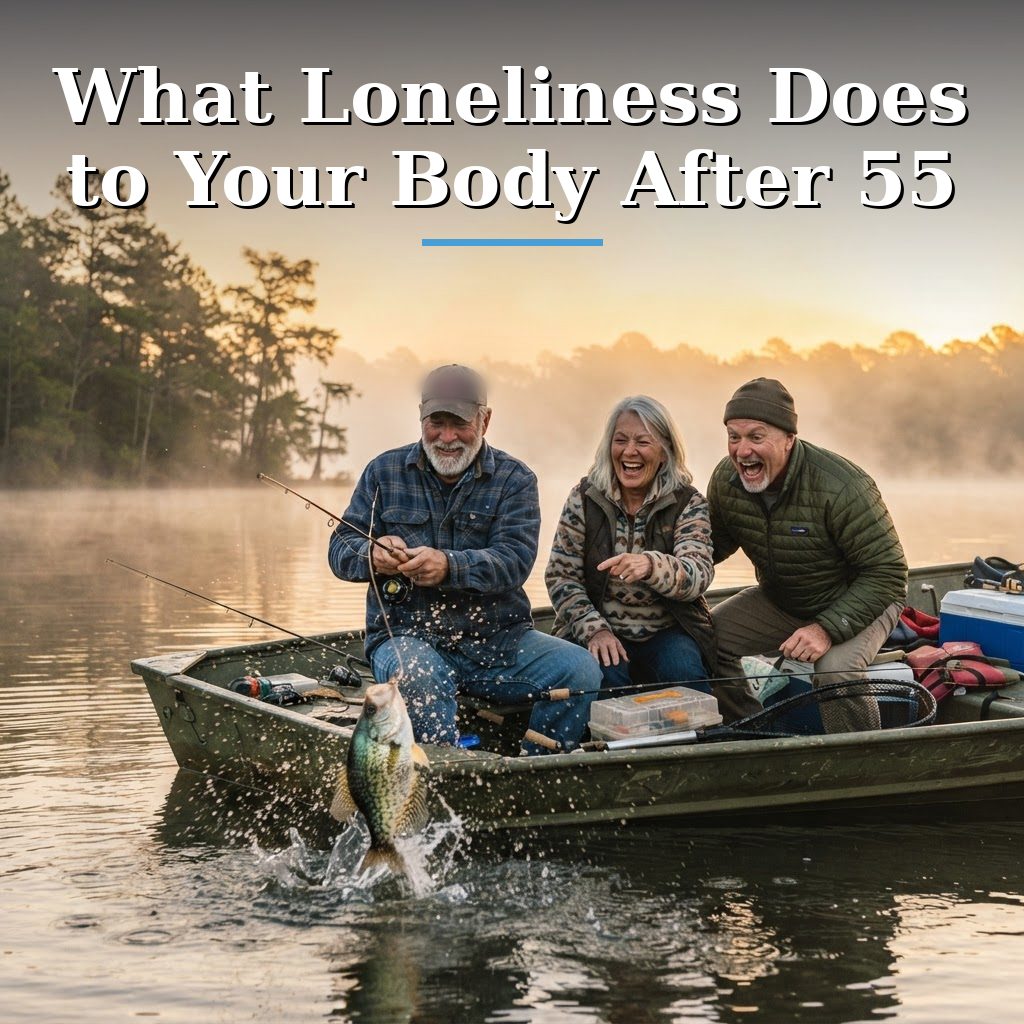
    What Loneliness Does to Your Body After 55, and How to Turn It Around

    How does loneliness affect you physically after 55?

    Short answer: When loneliness hangs on, your body stays in a low hum of stress. Over time that can push your blood pressure up, stir up inflammation, break up your sleep and make it harder to fight off viruses. It’s also tied to higher odds of heart disease, stroke and dementia. The good news is the fix doesn’t cost a dime, and your body starts settling down once you get back around people you enjoy.

    Thanksgiving’s almost here, and for a lot of folks that means a full table and too much pie. For a lot of others it means a quiet house and the TV on for company. I’ve been reading up on what that second kind of holiday does to us, and I’ll be honest, it surprised me. Loneliness gets into your blood pressure, your blood work and even your sleep.

    Stick with me, though, because this one ends on a hopeful note. The same research that shows how hard loneliness is on the body also shows how much good company helps. And men and women both have a better shot at it in these years than most people think.

    How common is loneliness after 55?

    More common than folks let on. AARP surveyed about 3,300 Americans 45 and older and found that 4 in 10 are lonely, up from about a third in 2010 and 2018. For the first time, men came out lonelier than women, 42% to 37%. Men were also more likely to say they don’t have a single close friend.

    Now for the part I liked. In that same survey, loneliness was highest for folks in their late 40s and 50s, and it dropped after 60. AARP has seen that same pattern every time they’ve asked since 2010. So if you’re coming up on 60 or already past it, the odds are leaning your way.

    What does loneliness do to your body?

    Dr. Robert Waldinger explains it about as plain as anybody. He’s a Harvard psychiatrist who runs the Harvard Study of Adult Development, which has followed the same men and their families since 1938, and he co-wrote the bestseller The Good Life about what they learned.

    When something upsets you, your body goes into fight-or-flight. Your heart speeds up and your blood pressure climbs, which is normal. Most of the time you go home, talk it over with somebody who listens, and your body calms back down. Waldinger told the Harvard Gazette that when you don’t have anybody like that, your body can stay stuck in a low level of fight-or-flight. More stress hormones and more inflammation keep running through you, and little by little they wear on your whole system.

    The National Institute on Aging says it about the same way. The hurt of being lonely sets off the same stress response in your body that physical pain does. Let that go on long enough and it can lead to chronic inflammation and a weaker immune system.

    Can loneliness raise your blood pressure?

    It sure looks that way. The late John Cacioppo was a University of Chicago scientist who spent his whole career on loneliness and wrote a book on it called Loneliness. He and researcher Louise Hawkley followed 229 people ages 50 to 68 for five years. By year four, the loneliest folks had seen their top blood pressure number rise 14.4 points more than the people who were happiest with their social lives. That held up even after they accounted for age, weight, smoking and drinking.

    Hawkley pointed out something worth remembering. You can have a whole lot of people around and still be lonely if those relationships leave you empty, and you can live a quiet life and be just fine if the few people in it really matter to you. So what really counts is how connected you feel inside.

    Margaret Manning, who started Sixty and Me, one of the biggest sites for women over 60, draws that same line. She says there’s nothing wrong with being alone, and introverts need it to recharge their batteries. Loneliness is when you want real company and can’t find it. Gretchen Rubin, the bestselling author of The Happiness Project, goes a step further on her blog and lays out seven different kinds of loneliness, because she says you have to know why you feel lonely before you can fix it. The one that rang truest for me is what she calls quiet-presence loneliness. You’ve got friends and family, but you miss having somebody around the house to fix a cup of coffee with or sit beside on the sofa.

    High blood pressure doesn’t usually hurt, which is why it sneaks up on so many of us. If yours has been creeping up, it’s worth mentioning to your doctor how much company you’ve been keeping lately, right along with the salt and the exercise.

    Does loneliness weaken your immune system?

    This was the part that got me. Cacioppo teamed up with Steve Cole at UCLA to look inside the immune cells of lonely people, including adults in their 50s and 60s. In the loneliest folks, the genes that turn up inflammation were working overtime, while the genes that help fight off viruses were turned down.

    The researchers’ thinking makes a lot of sense to me. Way back, being cut off from your people meant real danger, so the body seems to treat loneliness like a threat and brace for the wrong kind of fight. That leaves lonely folks a little more open to the colds and bugs going around, which is no small thing heading into winter.

    Can loneliness mess with your sleep?

    It can. Cacioppo and Cole’s work found that lonely, isolated people wake up more during the night and spend less of their time in bed actually asleep. Anybody who’s laid there at 3 AM listening to a quiet house knows that feeling. Poor sleep then feeds right back into blood pressure, mood and your immune system, so it all piles on. If that 3 AM wake-up sounds familiar, I wrote a whole post on waking up at 3 AM.

    How does loneliness affect your heart and brain?

    The numbers get big when you look at the heart and brain. When Dr. Vivek Murthy was U.S. Surgeon General, he put out a national advisory on loneliness. It found that poor social connection is tied to a 29% higher risk of heart disease and a 32% higher risk of stroke. For older adults, it was tied to a 50% higher risk of developing dementia.

    Murthy then went on to co-chair a World Health Organization commission on the same subject. Their 2025 report found that about 1 in 6 people worldwide are lonely, and that loneliness is linked to more than 871,000 deaths a year. That works out to about 100 every hour.

    Now, in fairness, most of this research shows a strong link, and it can’t prove loneliness alone caused every one of those problems. Lonely folks also tend to move less, sleep worse and skip the doctor. But when study after study points the same direction, I’d rather pay attention than wait around for more proof.

    Why do friendships thin out in retirement?

    Arthur Brooks, the Harvard professor who writes the happiness column for The Atlantic, has a way of putting it that cleared it up for me. He says most of us have a lot of what he calls deal friends, the folks we’re friendly with because of work or because they’re handy to know. Then there are real friends, the ones you’d call with any silly thought. Deal friends are fine, but they tend to crowd out the real ones. And I reckon when the job ends, a lot of those deal friends go right along with it.

    Longevity doctor Peter Attia talked this over with Brooks on his podcast and came away with some good advice. If you look around and can only name deal friends, don’t panic. That part of your life just needs some time and effort, and real friendships grow best when you spend your free time together on something you both enjoy.

    Fellas, that’s exactly why so many retired guys are finding their way to Men’s Sheds, the community workshops I wrote about in Men’s Sheds: Where Retired Guys Go to Make Real Friends. Ladies, a lot of y’all already know this one by heart. The friend you walk with every Tuesday becomes the friend you call when the news is bad.

    How do you turn loneliness around?

    Start smaller than you think you need to. Waldinger told the Gazette that “our social life is a living system, and it needs maintenance too.” His advice is to sit and think about who you miss, or who you haven’t heard from in a while, and then send them a text or pick up the phone. He says people are amazed at how warmly folks answer back.

    That one tiny step is where I’d start, today, before supper. After that, go looking for something that repeats. A standing breakfast with your old buddies, the same walking group every week, a volunteer shift, choir practice or a card night. Seeing the same faces over and over is how strangers turn into friends, and the National Institute on Aging suggests most of the same things.

    For the lonely evenings when nobody’s around to call, Leo Babauta has some gentle advice. He writes Zen Habits, one of the best-known blogs on simple living, and he admits he gets lonely himself when his wife and kids are out of town. Instead of running from that feeling or covering it up with snacks and the TV remote, he suggests sitting with it a minute and getting curious about it. Then go find people at a class or a club and take a real interest in them. I like that, because it takes the shame out of feeling lonely in the first place.

    One more thing that doesn’t get talked about enough. If your hearing has slipped, get it checked. The NIA notes that folks who can’t hear well often pull back from people because they’re embarrassed about missing what’s being said. A hearing aid might do more for your social life than any new hobby.

    Does good company really help your health?

    It does, and this is my favorite finding of the whole bunch. When the Harvard researchers looked back at their men in their 80s, they expected the best predictor of who aged well to be something like cholesterol or blood pressure at age 50. It wasn’t. Waldinger said the best predictor of a happy and healthy life was how satisfied they were with their relationships.

    Think about that for a minute. The people you share a cup of coffee with may matter as much to your heart as anything your doctor prescribes. Like the old saying goes, if you want a friend, you’ve got to be one.

    Common Questions

    Can loneliness make you physically sick?

    It can raise your risk. Long-lasting loneliness keeps the body’s stress response switched on, which is linked to inflammation, higher blood pressure, poorer sleep and a weaker defense against viruses.

    Does loneliness raise blood pressure?

    In a University of Chicago study of adults 50 to 68, the loneliest people saw their systolic blood pressure rise 14.4 points more over four years than the least lonely people.

    Is being alone the same as being lonely?

    No. Loneliness is feeling less connected than you want to be. Some people live alone and feel fine, while others are surrounded by people and still feel lonely.

    Are men lonelier than women as they get older?

    In AARP’s latest survey of adults 45 and older, 42% of men were lonely compared with 37% of women, and men were more likely to have no close friends.

    How can I feel less lonely after 55?

    Reach out to one person you miss today, then join something that meets on a regular schedule so you see the same faces often. Get your hearing checked if conversations have gotten hard to follow.

    So who’s the one person you’ve been meaning to call? Tell me in the comments, then go call them. I’d love to hear how it went.

    Tom

    About Tom Green

    Tom Green writes Sturdy Years. He was born in Pell City, Alabama, in 1962, and he’s a country boy and a true Southerner through and through. He’s a regular, laid-back 64-year-old who keeps things simple and passes along what he learns about getting older. Tom isn’t a doctor. He reads up on the research and shares what’s useful, plain and simple. Read more about Tom.

    Health note: This article is for general education and isn’t medical advice. If loneliness or low moods have been hanging on for weeks, let your doctor know. It’s a real health concern, and help is out there.

    Research & Sources

    Advertisement

    Marley Spoon meal kits advertisement

    Marley Spoon Meal Kits (affiliate link)

  • Books of the Month: November – 3 Bestsellers Worth Reading After 50

    Books of the Month: November – 3 Bestsellers Worth Reading After 50

    What are the best books to read this November?

    Short answer: This month’s three bestsellers are The Forever Strong Playbook by Dr. Gabrielle Lyon, a six-week plan for getting stronger; Vibe by Adam Grant, on the science of building close friendships; and Replaceable You by Mary Roach, a funny look at how medicine repairs and replaces the parts of us that wear out.

    Every month I pick three books worth your time, and they all have to earn a spot on the shelf here: they’ve got to be selling well right now, and they’ve got to have something real to offer folks over 50.

    This month’s three line up with the things we talk about most on this site: staying strong, staying connected to people, and understanding the body we’ve got. One will get you moving, one will help you feel less alone, and one will make you laugh while it teaches you something.

    Book cover of The Forever Strong Playbook by Dr. Gabrielle Lyon

    1. The Forever Strong Playbook by Dr. Gabrielle Lyon

    Dr. Gabrielle Lyon’s first book, Forever Strong, made a lot of folks rethink muscle. Her big idea is that muscle isn’t just about looks. It’s what keeps your metabolism, your balance and your independence going as you age. This new one, which came out in January and has been a New York Times and USA Today bestseller, takes that idea and turns it into a plan you can actually follow.

    It’s a six-week program. You get more than 100 exercises you can do at the gym or at home, over 60 recipes, and plain advice on sleep, recovery and stress. The plans scale, so whether you’ve never lifted a thing or you’ve been at it for years, there’s a starting point for you.

    Why I picked it: I work out four days a week, and if there’s one thing I’d tell anybody over 50, it’s that strength training matters more now, not less. Most books tell you why. This one tells you what to do on Monday morning. If you liked my post on building muscle after 60, this is the next step.

    Great for: men and women who want a simple, week-by-week plan to get stronger without guessing.

    Find The Forever Strong Playbook here →

    Book cover of Vibe by Adam Grant

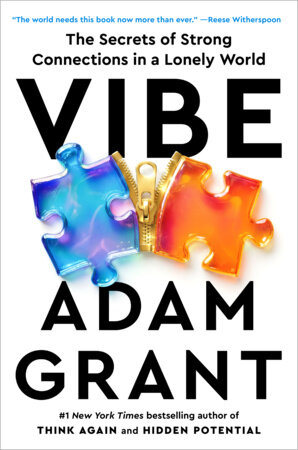
    2. Vibe: The Secrets of Strong Connections in a Lonely World by Adam Grant

    Adam Grant is an organizational psychologist at Wharton and one of the best-known writers on how people work and get along. Vibe came out October 13 and jumped right onto the New York Times, USA Today and independent bookstore bestseller lists. It’s all about the science of friendship, companionship and love, and how to build bonds that are faster, stronger and longer-lasting.

    A few of his points surprised me. You don’t have to have a lot in common with somebody to get close to them. Chemistry doesn’t always show up right away. And getting close doesn’t always take years. He backs it up with research and some good stories, from astronauts to a rock band.

    Why I picked it: Loneliness isn’t just a bad feeling. In 2023, U.S. Surgeon General Dr. Vivek Murthy put out a whole advisory on it, and he compared the health risk of being cut off from people to smoking up to 15 cigarettes a day. After 50, friend circles tend to shrink with retirement, moves and loss. I wrote about that in how to make new friends after 50, and I reckon this book is the perfect companion to it.

    Great for: anybody who’s feeling a little more alone than they’d like, or who wants to get closer to the people already in their life.

    Find Vibe here →

    Book cover of Replaceable You by Mary Roach

    3. Replaceable You: Adventures in Human Anatomy by Mary Roach

    Mary Roach, the author of Stiff, has a gift for making science funny. In this one she looks at how medicine repairs and replaces the parts of us that wear out. She spends time in a burn unit, travels with cataract surgeons, talks with amputees and people living with ostomies, and visits researchers trying to grow new tissue and even 3D-print it. It was an instant New York Times bestseller and landed on a pile of best-of-the-year lists, and the new paperback came out September 1.

    Why I picked it: After 50, replacement parts stop being a joke. Most of us know somebody with a new knee or hip, a pacemaker, or new lenses after cataract surgery, and some of us are that somebody. This book takes something that can feel a little scary and makes it fascinating. You’ll come away amazed at what your body can do and how far medicine has come.

    Great for: folks who are curious about how the body works, like a good laugh, or have a surgery coming up and want to feel less nervous about it.

    Find Replaceable You here →

    How I pick these books

    Popular isn’t enough. I check the current bestseller lists to see what folks are actually buying, then I only keep the ones that have something useful to say about health, strength, connection or getting older well. And they have to be books I’d hand to a friend on the porch without thinking twice.

    What are y’all reading this month?

    Tell me in the comments. You never know who’ll find their next favorite book because of you.

    I’ve also mapped out some great tools on my new Tech for Independent Living After 50 page.

  • How to Make New Friends After 50 When You’re Not a Social Butterfly

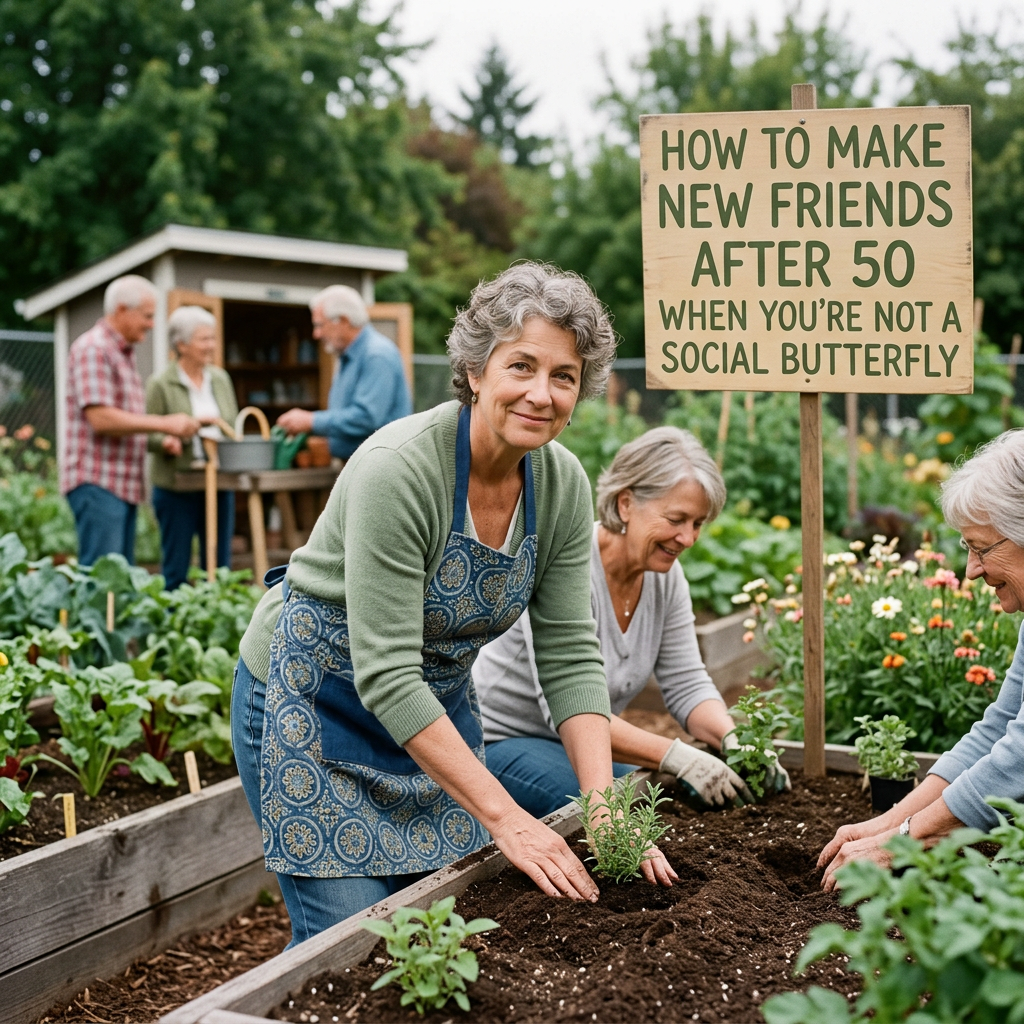
    How to Make New Friends After 50 When You’re Not a Social Butterfly

    How do you make new friends after 50 if you’re not a social butterfly?

    Short answer: Don’t go looking for a best friend. Look for one person you enjoy talking to, and go where the same people show up week after week, so faces turn into friends. When someone seems interesting, stay one extra minute, then invite them to something small, like coffee.

    You do not have to become a social butterfly to make a new friend.

    You do not have to walk into a crowded room and work the crowd. You do not have to become someone who loves small talk.

    And you certainly do not have to pretend you are younger than you are.

    You just need a reason to cross paths with the same people often enough for something real to grow.

    Friendship after 50 can be different

    When we are younger, friendship often happens automatically. School. Work. Neighbors. Children. Sports. Shared schedules.

    After 50, some of those built-in connections disappear. Retirement, divorce, moving, children leaving home and losing touch with old friends can quietly change a person’s social world.

    You can be surrounded by people and still feel alone.

    1. Stop looking for “a best friend”

    That goal is too big.

    Look for one person you enjoy talking to. One person you could have coffee with. One person who makes you laugh. One person you would like to see again.

    Friendship usually grows through small repetitions, not one dramatic meeting.

    2. Go where the same people go

    If you attend a different event every week, you meet lots of people but rarely have enough repeated contact to build familiarity.

    Try something recurring: the same walking group, class, volunteer shift, church activity, book club, gym time, community event or hobby group.

    Familiarity is one of friendship’s quiet ingredients.

    3. Use the “one extra minute” rule

    If someone seems interesting, stay one extra minute.

    Ask one question. Give one compliment. Mention something you have in common.

    You do not have to perform. You are simply leaving the door open.

    4. Invite people to something small

    “Want to grab coffee sometime?” can feel surprisingly big.

    Try something more specific:

    • “I’m going to walk Saturday morning. Want to come?”
    • “I’m grabbing lunch after this. Want to join me?”
    • “I’m going to that market next weekend. Want to go?”

    Small invitations are easier to accept and easier to decline without embarrassment.

    Or keep it close to home. A pot of good coffee on the porch is about as easygoing an invitation as there is. If you want to make it a little special, Hula Daddy sells Kona coffee grown in Hawaii that gives folks something to talk about. (affiliate link)

    5. Do not take every “no” personally

    Adults have complicated lives. Someone may be busy, tired, caring for family, working or simply not ready to expand their social circle.

    One no does not mean you are unlikeable.

    6. Let friendship be imperfect

    A new friend does not have to agree with everything you believe. They do not have to share your entire history. They do not have to be available every day.

    Sometimes a good friendship is simply two people who enjoy being around each other.

    Why this matters more than people realize

    The National Institute on Aging notes that loneliness and social isolation can affect physical, mental and cognitive health. That does not mean everyone needs a huge social calendar. It means meaningful connection matters.

    So if you have been telling yourself, “I’m just not a people person,” consider changing the sentence.

    Maybe you are not a crowd person. That is different.

    A challenge for this week

    Do not promise yourself you will make five new friends.

    Instead, start one conversation. Return to one place. Say yes to one invitation. Invite one person to do something simple.

    That is enough.

    Common Questions

    Is it harder to make friends after 50?

    It can be because some natural sources of connection change, but adults can absolutely form new friendships later in life.

    What if I am shy?

    Choose low-pressure settings with repeated contact. You do not need to become outgoing to become connected.

    Where can I meet people after 50?

    Try recurring activities such as volunteering, classes, walking groups, hobbies, community organizations, faith communities or places you already enjoy.

    What if someone does not respond to my invitation?

    Do not automatically interpret it as rejection. Keep meeting people and leave room for friendships to develop naturally.

    Keep Reading

    Find more practical ideas for living a fuller life after 50 at Sturdy Years.

    About Tom Green

    Tom Green is the creator of Sturdy Years, sharing practical ideas for healthier, happier and more meaningful life after 50. He was born in Pell City, Alabama, in 1962, and he’s a country boy and a true Southerner through and through.

    Sources & Proof

    National Institute on Aging: Loneliness and Social Isolation
    National Institute on Aging: Staying Connected

    Note: If loneliness is accompanied by persistent sadness, hopelessness or loss of interest in normal activities, consider talking with a healthcare professional.

    A Book Worth Picking Up

    Vibe: The Secrets of Strong Connections in a Lonely World book cover

    If this post spoke to you, here is a book that goes deeper. In Vibe: The Secrets of Strong Connections in a Lonely World, Adam Grant looks at the science of how closeness actually forms, and why building meaningful ties feels so hard right now. What I like best is that Grant starts from his own experience as a shy introvert, so this is not advice from someone who never struggled to connect. It is a practical, encouraging read for anyone who wants stronger friendships without pretending to be someone they are not. You can find Vibe on Amazon.

    Disclosure: Purchases through affiliate links may earn Sturdy Years a commission at no additional cost to the reader.

    I’ve also mapped out some great tools on my new Tech for Independent Living After 50 page.

  • 15 Ways to Be a Better Friend After 50

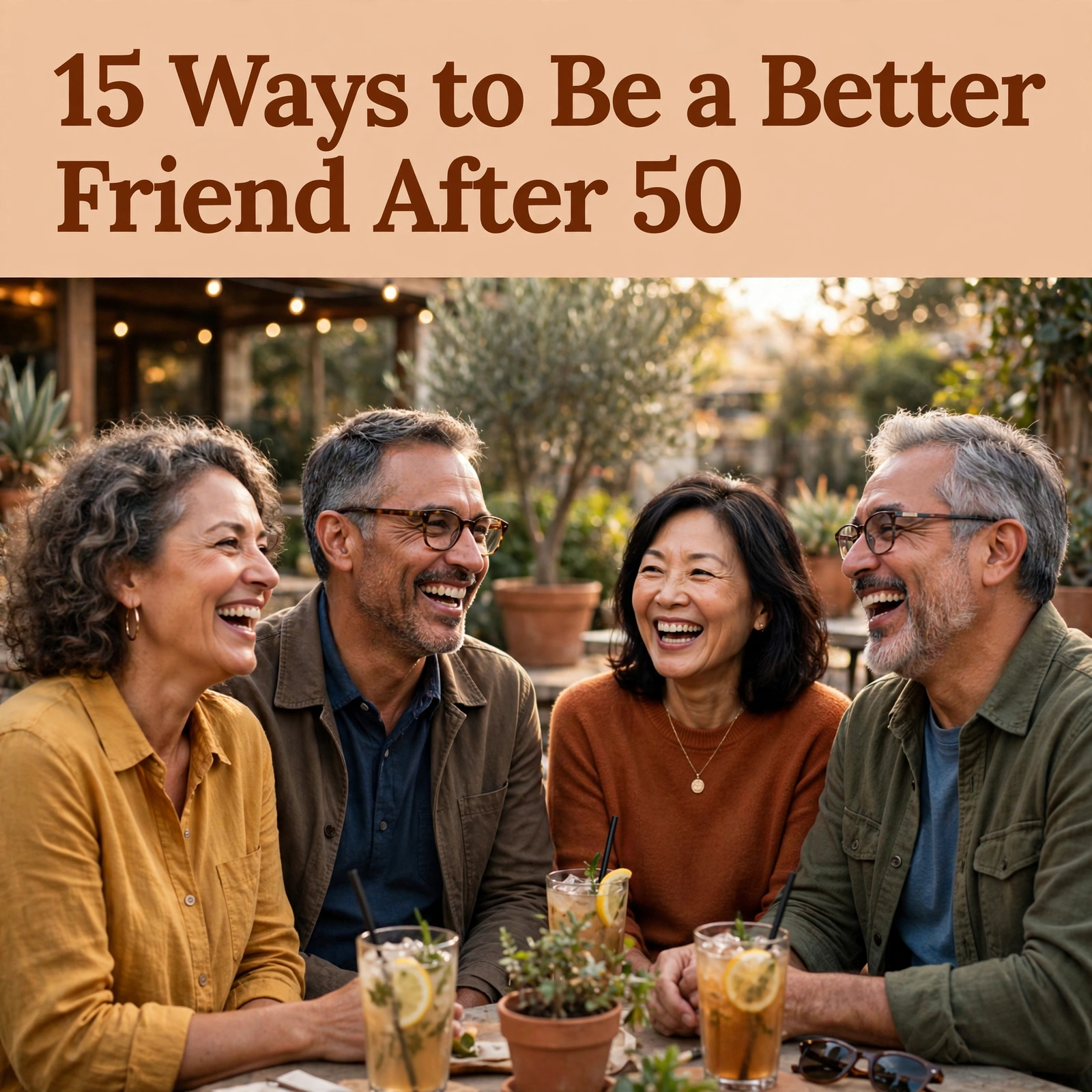
    15 Ways to Be a Better Friend After 50

    How can you be a better friend after 50?

    Short answer: Being a better friend after 50 mostly comes down to small things done often. Make the first move instead of waiting for a call, remember the little things your friend told you about, and keep showing up. A simple “Hey, I was thinking about you” can mean more than you realize.

    Friendship hits different after 50. Here’s how to keep the good ones strong, make room for new connections, and become the kind of friend people are glad to have.

    Friendship changes as we get older. Careers shift, families grow up, people move away, and sometimes the friends we thought would always be around become harder to reach.

    But here’s the good news: it’s never too late to become a better friend—or to build new friendships.

    Being a good friend after 50 doesn’t require grand gestures, endless free time, or a perfect personality. It comes down to small things that show people they matter.

    Here are 15 ways to make your friendships stronger, more meaningful, and a whole lot more fun.

    1. Make the First Move

    Stop waiting for someone else to call. Send a text, pick up the phone, or suggest lunch. A simple “Hey, I was thinking about you” can mean more than you realize.

    2. Remember the Little Things

    Ask about the doctor’s appointment, the job interview, or the family problem your friend mentioned last week. Remembering details shows you were listening—and that you care.

    3. Listen Without Trying to Fix Everything

    Sometimes a friend needs advice. Other times, they just need someone to hear them out. Before offering solutions, try asking, “Do you want my advice, or do you just need to talk?”

    4. Show Up When Life Gets Hard

    Anyone can be around for the fun stuff. A good friend also checks in during a rough patch, offers practical help, or simply sits beside someone who is having a difficult day.

    You don’t need the perfect words. Being there counts.

    5. Celebrate Their Good News

    A friend’s success isn’t a competition. Whether they get a promotion, reach a personal goal, or finally take that dream trip, celebrate with them. Give their good news the attention you’d want for your own.

    6. Put the Phone Down

    When you’re spending time together, be present. Make eye contact, listen, and resist the urge to check every notification. Your friend deserves more than half your attention.

    7. Be Honest—but Be Kind

    Real friendship allows room for honesty. If something bothers you, talk about it respectfully instead of letting resentment build. The goal isn’t to win an argument. It’s to understand each other.

    8. Don’t Keep Score

    Healthy friendships aren’t always perfectly balanced. One person might need more support during a difficult season, while the other needs help later. Give when you can, accept help when you need it, and look for mutual care over time.

    9. Make Plans That Actually Happen

    “We should get together sometime” sounds nice, but it rarely gets anyone out the door. Suggest a day, a time, and something simple to do. Coffee, a walk, lunch, or a movie can be enough.

    10. Give People Room to Change

    The person you knew at 30 may not be exactly the person you know at 60. Neither are you. Let friendships grow as interests, circumstances, and priorities change. You don’t have to agree on everything to care about each other.

    11. Apologize When You’re Wrong

    Everybody makes mistakes. Maybe you said something hurtful, forgot an important date, or jumped to the wrong conclusion. A sincere apology can help repair the damage. Skip the excuses and take responsibility for your part.

    12. Respect Their Boundaries

    Your friend may not be available every time you call. They may need quiet time, have family responsibilities, or simply have a different way of communicating. Respecting those limits helps a friendship feel safe rather than demanding.

    13. Keep Your Sense of Humor

    Don’t underestimate the power of laughing together. Share a funny story, enjoy an old inside joke, or be willing to laugh at yourself. Friendship doesn’t have to be serious all the time to be meaningful.

    14. Be Open to New Friends

    Don’t assume your best friendships are all behind you. Join a local group, try a class, volunteer, or strike up a conversation with someone you see regularly. New connections can begin in surprisingly ordinary places.

    15. Know When to Let Go

    Not every friendship lasts forever, and that’s okay. If a relationship repeatedly leaves you feeling disrespected, drained, or used, consider whether an honest conversation could help—or whether it’s time to step back. You can appreciate a friendship’s history without forcing it to continue as it once did.

    Other Voices on Friendship

    If you’d like to explore friendship more deeply, these three writers offer worthwhile places to start.

    Shasta Nelson is a friendship expert and author of Frientimacy: How to Deepen Friendships for Lifelong Health and Happiness. Her work explores how we can turn casual connections into closer, more supportive relationships.

    Nina Badzin is a writer who focuses on the ups and downs of adult friendship. She hosts Dear Nina: Conversations About Friendship, a podcast and newsletter that explore real-life friendship questions and dilemmas.

    Lydia Denworth is a science journalist and the author of Friendship: The Evolution, Biology, and Extraordinary Power of Life’s Fundamental Bond. Her book explores the science behind why friendship and social connection matter throughout our lives.

    Their work offers a useful reminder: friendship isn’t just something that happens to us. It’s a relationship we can keep building through attention, effort, and care.

    The Bottom Line

    You don’t need dozens of friends to have a rich social life. A few dependable people who laugh with you, listen when you need them, and show up when life gets messy can make a real difference.

    Start small. Reach out to someone you’ve been meaning to call. Listen a little more closely. Make a plan instead of putting it off.

    What’s one thing you think makes someone a truly good friend after 50? Share your thoughts in the comments. Your experience might be just what another reader needs to hear.


    About the Author

    Tom Green writes Sturdy Years. He was born in Pell City, Alabama, in 1962, and he’s a country boy and a true Southerner through and through. He’s just a regular, laid-back 64-year-old who keeps things simple. He shares what he learns about skincare, fitness and getting older, and what’s working for him. He’s also the author of A Practical Guide to Getting Older Without Giving Up on Yourself. Tom isn’t a doctor. He reads up on the research and passes along what’s useful, plain and simple.

    Sturdy Years — Look better. Feel stronger. Age well.


    I’ve also mapped out some great tools on my new Tech for Independent Living After 50 page.