Tag: fitness after 50

  • Weighted Vest Benefits After 50: Does It Really Help Bone Density?

    Weighted Vest Benefits After 50: Does It Really Help Bone Density?

    Does a weighted vest help bone density after 50?

    Short answer: Not on its own, it doesn’t. I wanted the answer to be yes as bad as anybody, but the best study we’ve got says no pretty plain. A vest only helps while you’re up and moving in it, and heavy lifting plus impact work does more for your bones. There are some real weighted vest benefits, though, and I’ll get to those.

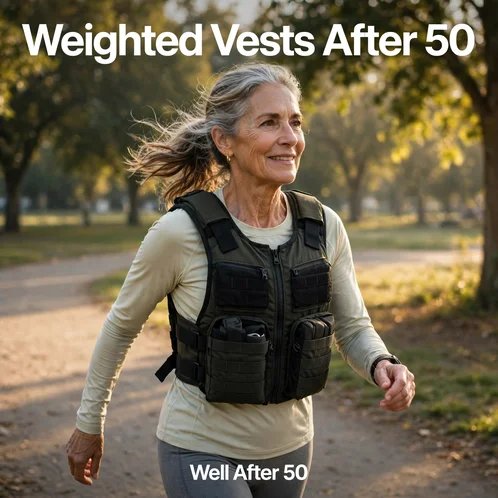
    You’ve seen them too. Folks walking the neighborhood in a vest that looks like something off a SWAT team, folks at the gym, folks online swearing it’ll save their bones. It sounds so simple. Strap on a little extra weight, go for your walk, and your bones get stronger while you’re at it.

    So I went and looked at what the research really says about weighted vests, bone density and osteoporosis. Some of it surprised me, and some of it’s good news if you already own one.

    The year-long study that put weighted vests and bone density to the test

    The best test of this idea is the INVEST trial, led by Dr. Kristen Beavers at Wake Forest. It ran a full year with 150 older adults, average age 66, about three out of four of them women. All of them were living with obesity and losing weight on purpose, which matters, because losing weight tends to cost you some bone too.

    They split folks into three groups. One just did the diet. One did the diet and wore a weighted vest during the busiest part of the day, with weight added to the vest as they lost pounds. The third did the diet plus supervised strength training three times a week.

    And the vest people stuck with it. They wore it a little over 7 hours a day on average and carried about 78 percent of the weight they’d lost right there in the vest.

    After a year, all three groups had lost some hip bone, somewhere between 1.2 and 1.9 percent. The vest group did no better than diet alone, and the strength group didn’t either, at least not in this setting. Dr. Beavers said in the Wake Forest announcement that these strategies “alone may not be enough.”

    Now here’s the part the headlines skipped. She also said it’s no reason to quit using a vest, and more than half the people in the study said they didn’t mind wearing one. So it’s not a bad tool. It’s just not a bone treatment all by itself.

    Walking with a weighted vest: you’ve got to be up and moving

    Earlier this year, Dr. Jason Fanning and the same research team took a second look at those vest wearers. They’d had everybody wear a little tracker, and it turned out the vest folks who spent more time standing and stepping had better hip bone results than the ones who mostly sat.

    Fanning put it about as simple as you can in Wake Forest’s write-up: a vest can be a great tool, but “it’s not going to do the work for you.”

    That makes good sense to me. Sitting in a vest loads the chair, not your hips. It only does your skeleton any good while you’re up on your feet in it.

    The real weighted vest benefits

    There’s some good news here. In August, a review in Osteoporosis International pulled together nine trials with 368 middle-aged and older adults. People who exercised in a vest did better on bone density at the hip and spine, and trimmed more body fat, than people who just went about their usual day.

    But when they stacked vest-plus-exercise against the same exercise with no vest, there wasn’t enough good evidence to say the vest added anything extra. So a lot of the credit likely goes to the exercise itself.

    That lines up with what Dr. Len Kravitz wrote for the American College of Sports Medicine. The main weighted vest benefits are that it’s a handy, hands-free way to make a walk burn more calories and work your legs harder. He also says walking in one doesn’t do much for bone density, and he points folks to impact work and strength training for that.

    One more thing worth knowing: more weight on your frame isn’t free. In the INVEST trial, the vest group reported 17 muscle and joint complaints and the strength group 19, against just 6 for the diet-only group.

    Writer Jolene Edgar, who wrote about weighted vests for Allure and talked with Dr. Beavers while the trial was still running, made a fair point on her Substack, Aesthetics Unfiltered. Some folks online took the results as proof vests are worthless, and that’s not right either. Vests aren’t magic, but they’re not junk.

    Can a weighted vest help osteoporosis? The old study everybody points to

    If you’ve read up on vests, you’ve probably run across a 2000 study from Christine Snow’s bone lab at Oregon State. Nine women past menopause did vest exercises plus jumping three times a week, most of the year, for five years. They held onto their hip bone. Nine other active women who didn’t do the program lost around 4 percent.

    That’s real, but it was a tiny group, and you can’t pull the vest apart from the jumping. My guess is the jumping did a good share of the work.

    What works better for bone density after 50

    Bone answers to load that’s heavy and quick, like lifting and landing a little jump. A slow, steady walk just doesn’t push it that hard, even with a vest on.

    The study that changed a lot of minds is the LIFTMOR trial out of Australia, led by Professor Belinda Beck. Researchers took 101 women past menopause, average age 65, who already had low bone mass. Half did supervised heavy lifting and impact work, things like deadlifts, squats, overhead presses and jumping, for 30 minutes twice a week for eight months.

    Their spine bone density went up 2.9 percent while the comparison group lost 1.2 percent. At the top of the thigh bone by the hip, they held steady while the others lost 1.9 percent. Those women were screened carefully and coached the whole way, so this isn’t something to try heavy on your own. Find a trainer or physical therapist who knows bone health.

    If you’re starting from scratch, my post on getting back the muscle you lose after 50 and the one on building muscle after 60 without getting hurt are good places to begin.

    And don’t forget what actually breaks most hips, which is a fall. Balance work is what cuts falls, and I laid out a simple kitchen-counter routine in Does Walking Prevent Falls After 65?

    How to start walking with a weighted vest safely

    I’m not telling you to throw yours in the closet. If it gets you out the door and makes your walk a little harder, that’s a win. Here’s how the experts say to go about it.

    • Start light. Both Dr. Sharon Hame at UCLA Health and the ACSM say begin around 5 percent of your body weight. That’s about 7 or 8 pounds if you weigh 150.
    • Start short. The ACSM suggests about 10 minutes of weighted walking at first. Dr. Hame says keep a weighted walk to less than half the length of your usual walk when you’re starting out.
    • Build up slow. Add a little weight or a little time as you get stronger. Trying to do too much too soon is how folks get hurt.
    • Wear it for the walk, not all day. The ACSM warns that all the twisting and turning of a whole day in a vest can strain your muscles and joints.
    • Get a good fit. Look for padding and snug straps, with the weight spread front and back. If it shifts around when you move, it doesn’t fit right. Weighted Vest
    • Watch your form. If you catch yourself hunching, leaning forward or shortening your stride, or you can barely finish your walk, take some weight out.

    And talk to your doctor first if you’ve got back or neck trouble, arthritis in your hips, knees or ankles, osteoporosis or a past fracture, balance problems, or heart trouble. If something starts hurting, take it off and get it checked.

    My take from the porch

    I’m not buying a vest to save my hips. I’ll keep walking, I’ll keep doing my strength work, and I’ll keep holding onto that kitchen counter for my balance work, because that’s what the research backs up.

    If you like your vest, I reckon keep wearing it, men and women both. Just wear it while you’re moving, start light, and don’t count on it to do the heavy lifting for you. Think of it as a helper, not a cure.

    This is general information only, not medical advice, and it’s no substitute for your own doctor who knows your history. If you’ve fallen, feel unsteady or have a condition that affects your bones or balance, talk to your doctor before starting a new exercise routine.

    — Tom, Sturdy Years

    Sources

    Join the Conversation

  • Why Fall Might Be the Best Season to Get Serious About Fitness After 50

    Why Fall Might Be the Best Season to Get Serious About Fitness After 50

    Is fall a good time to start getting fit?

    Short answer: Fall is a great time to start, because the weather’s easier and you won’t be starting with the January crowd. Keep it simple this week: take a 10-minute walk on a nice day, and do one short strength session, standing up from a sturdy chair 5 to 10 times and doing a few wall push-ups.

    Fall has a way of making a fresh start feel possible. The sweltering days ease, the leaves change, and walking outside can become enjoyable again. If you’ve been telling yourself you need to get moving, why wait for January?

    After 50, getting fit isn’t about proving you can exercise like you’re 25. It’s about walking without getting winded, carrying groceries, climbing stairs, staying steady and having energy left for the people and activities you love.

    If you only do three things this week

    • Take a 10-minute walk on a day when the weather is nice. That’s it. Don’t make it a big production.
    • Do one short strength session: stand up from a sturdy chair 5 to 10 times, then do a few wall push-ups.
    • Put your next two walks on the calendar. A plan you’ve written down is much harder to skip.

    If that’s all you do, you’re already ahead of where you were last week.

    Why I’d start now instead of waiting for January

    Here’s the way I look at it. January is when everybody starts at once, the weather is cold and gray, and most of us are coming off the holidays feeling a little heavier and a lot less motivated. Fall gives you a head start. The weather is on your side, the days are still reasonably long, and you have a couple of months to build a habit before the holiday season gets busy.

    I’m in my 60s, and I work out to feel like a healthier me as I age. What I care about is being able to keep doing the everyday things without thinking twice. That’s the goal of everything in this post: simple, safe and repeatable.

    Cooler weather can remove one big excuse

    If you’ve ever tried walking through a Southern summer, you know heat and humidity can sap your enthusiasm quickly. Autumn often makes outdoor exercise more comfortable. The season itself isn’t a fitness shortcut: the benefit comes when pleasant conditions help you move consistently. Getting started now also gives you time to establish a habit before the busy holiday season.

    Stop thinking only about the scale

    Weight isn’t the only measurement that matters. Strength helps you rise from a chair and carry bags. Cardio builds endurance. Balance helps you move with confidence. The CDC’s older-adult activity guidance recommends that people 65 and older work toward at least 150 minutes of moderate aerobic activity weekly, muscle strengthening at least twice, and balance activities. Adults in their 50s and early 60s also benefit from cardio and strength work. Build gradually if you are returning after a break.

    If you want a simple way to check where your strength stands right now, try the floor test I wrote about in Can You Get Up From the Floor? What a Simple Test Reveals About Strength After 50. It’s a good “before” picture you can compare against in a couple of months.

    Make your next walk more interesting

    Walking doesn’t need an expensive app or a complicated plan. Matthew Solan offers practical ideas in Harvard Health’s “Step up your walking routine.” Rather than walking at the same pace every time, try three or four minutes at your comfortable pace followed by 30 seconds a little faster. You can also mark the faster stretches using mailboxes or telephone poles.

    Keep it safe: aim for an effort where you breathe more noticeably but can still speak. If you’re unsteady or have painful joints, stay on level ground and keep a comfortable pace. Progress isn’t a contest.

    Don’t let walking become your entire fitness plan

    Walking can strengthen your endurance, but it doesn’t cover every physical need. Erica Sweeney explains why in AARP’s “4 Types of Exercise You Need as You Age.” Strength, cardio, balance and flexibility serve different purposes. Relying exclusively on one can leave important gaps.

    Consider two short strength sessions a week, choosing movements suitable for your abilities: supported chair sit-to-stands, calf raises, resistance-band rows, wall push-ups or controlled exercises on gym machines. Start with manageable resistance and avoid exercises that aggravate an injury. The point is to become more capable, not to leave yourself too sore to move the next day.

    For more on which strength habits are worth your time, see 7 Strength Habits That Matter More After 60.

    Enjoy autumn scenery, but watch your footing

    Those beautiful fallen leaves can hide roots, potholes and slick pavement. Earlier sunsets can leave your favorite walking route poorly lit. In Harvard Health’s “Protect yourself from falls outside the home,” Heidi Godman shares physical therapist Barbara Ranucci’s advice about supportive, nonslip shoes, uneven terrain, weather and building leg and core strength for balance.

    Choose a familiar route with firm, even ground. Wear shoes with good grip, carry your phone, and walk in daylight when possible. If you have balance problems, seek guidance rather than testing yourself alone on a slippery path.

    A first week that won’t wear you out

    You don’t need to overhaul your entire life on Monday. Here’s a flexible starting point if you’re returning to activity:

    • Monday: Walk 10–15 minutes at a comfortable pace.
    • Tuesday: Do a short, gentle strength session.
    • Wednesday: Walk again; try brief faster intervals only if comfortable.
    • Thursday: Rest or stretch gently.
    • Friday: Complete a second strength session.
    • Saturday: Enjoy a park or another active outing.
    • Sunday: Recover and plan your next week.

    These are examples, not requirements. Five minutes may be the right starting point for some people. Increase gradually and speak with a qualified clinician about exercise restrictions if you have significant health conditions or injuries.

    What to do on the days you don’t feel like it

    There will be days when it’s chilly, it’s getting dark early, and the couch looks a lot better than a walk. That’s normal. On those days, don’t skip it completely. Just shrink it. Walk to the end of the street and back. Do five chair stands while the coffee brews. A small win keeps the habit alive, and the habit is what matters.

    Make movement the easy choice

    Motivation comes and goes, so don’t count on it. Put your walking shoes where you’ll see them, keep comfortable workout clothes ready, and leave any home equipment where you’ll actually use it. Then treat your walks and strength sessions like appointments: pick the day and time ahead of time.

    It also helps to make it enjoyable. Walk somewhere with changing leaves, listen to music or a podcast, take the dog, or meet a friend for a walk instead of another meal. If an activity feels good, you’re far more likely to keep doing it.

    And if you spend a lot of the day sitting, break it up. Stand up, walk around the house, or step outside for a few minutes. Small movement breaks add up.

    Consistency beats punishment

    One of the easiest ways to give up is to exercise so hard on day one that you dread day two. You don’t need to prove anything with painful soreness. A repeatable routine is more valuable than one heroic workout. Stop for sharp pain, dizziness, chest discomfort or unusual shortness of breath and seek appropriate care.

    Here’s the best thing about beginning in fall: when January finally rolls around, you might already have a habit rather than another resolution. Start with a walk. Add some strength. Practice safe balance work. Make it something you actually enjoy. That’s real progress after 50.

    Common Questions

    Is fall a good time to start exercising after 50?
    Yes. Cooler weather often makes walking and outdoor activity more comfortable, and starting in fall gives you a couple of months to build a habit before the holidays and winter.

    How much exercise do I need after 50?
    The CDC suggests older adults work toward about 150 minutes of moderate activity a week, plus muscle strengthening at least two days a week and balance activities. If you’re starting from scratch, begin with much less and build up gradually.

    Is walking enough exercise after 50?
    Walking is a great foundation, but it doesn’t do everything. Adding simple strength work, like chair stands and wall push-ups, helps you keep the muscle you need for everyday tasks.

    What’s the easiest way to start if I haven’t exercised in years?
    Start small: a 10-minute walk and a few chair stands. Do that consistently for two weeks before adding more. If you have health conditions or injuries, check with your healthcare professional first.

    How do I stay safe walking outside in the fall?
    Wear shoes with good grip, stick to familiar routes with even ground, walk in daylight when you can, and watch for wet leaves, roots and potholes. Carry your phone.

    How do I stay motivated when the days get shorter?
    Schedule your walks like appointments, walk earlier in the day, and on low-energy days do a shorter version instead of skipping. Small, regular wins keep the habit going.

    Keep Reading

    About the author

    Tom Green writes Sturdy Years. He was born in Pell City, Alabama, in 1962, and he’s a country boy and a true Southerner through and through. He’s just a regular, laid-back 64-year-old who keeps things simple. He shares what he learns about skincare, fitness and getting older, and what’s working for him. He’s also the author of A Practical Guide to Getting Older Without Giving Up on Yourself. Tom isn’t a doctor. He reads up on the research and passes along what’s useful, plain and simple.

    I’m not a doctor—I’m a man in my 60s sharing research and practical experience. This article is for general education, not individual medical advice.

    I’ve also mapped out some great tools on my new Tech for Independent Living After 50 page.

  • The Floor Test That May Predict Longevity: How to Score It and Improve It

    The Floor Test That May Predict Longevity: How to Score It and Improve It

    Tom Green, Sturdy Years

    What is the floor test, and can it predict how long you’ll live?

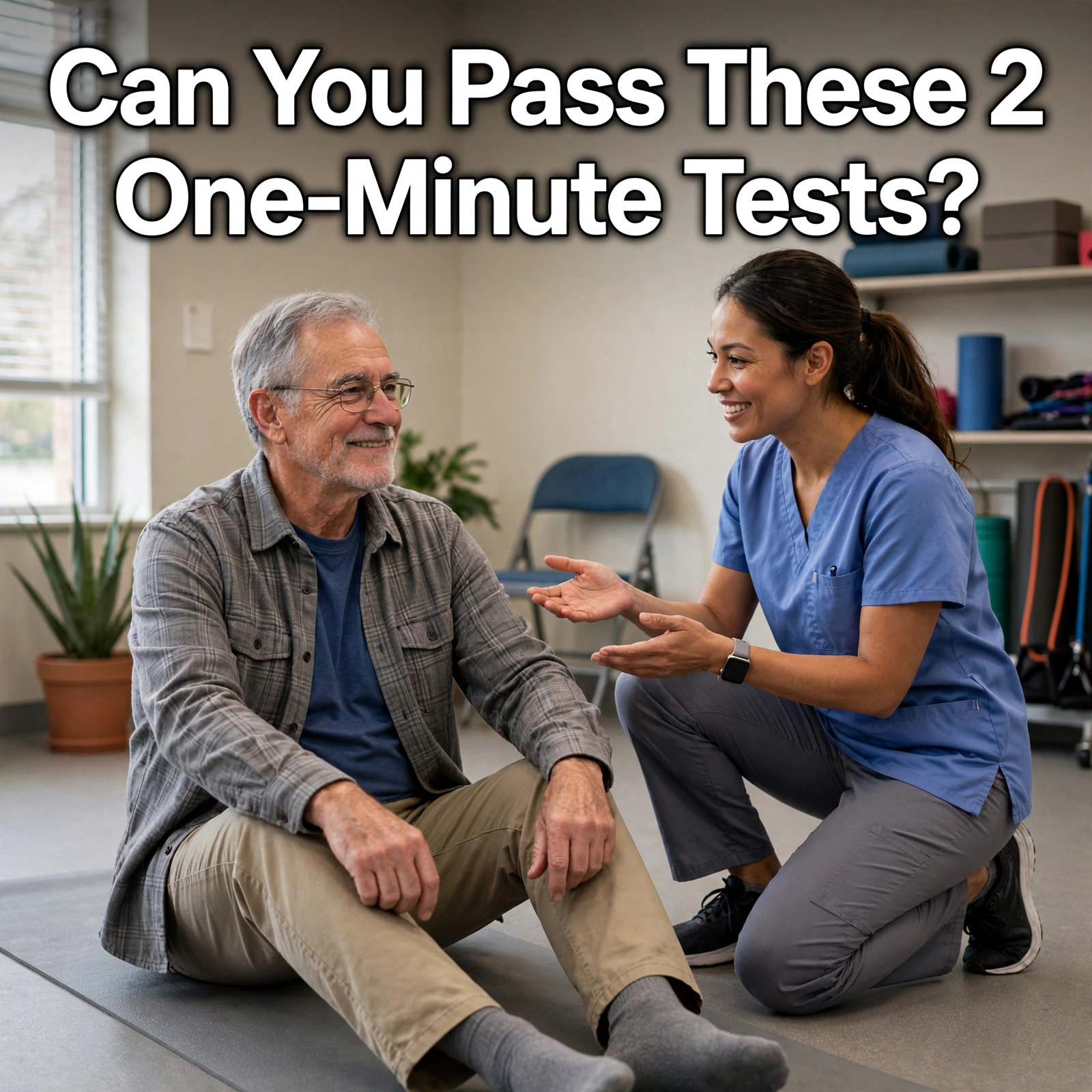
    Short answer: The floor test, also called the sitting-rising test, scores how easily you sit down on the floor and get back up, from 0 to 10. In a 2025 study of 4,282 adults aged 46 to 75, people who scored 0 to 4 had about 3.8 times the risk of dying from natural causes as those who scored a perfect 10. The good news: you can raise your score.

    We keep a close eye on blood pressure and cholesterol. But when was the last time you checked how well you balance, or whether you can get up off the floor without a struggle?

    I’m 64, and I’ve noticed I’m more prone to accidental falls than I used to be. It’s not one thing. It’s a few different things, and it means I have to think ahead in situations where a fall could happen. Balance isn’t something I used to think about. Now I do, and that’s why the research of Dr. Claudio Gil Araújo caught my attention.

    Here’s what you’ll get from this article: two simple tests you can try at home, what the research really found (and what it didn’t), what other real writers and bloggers have said about these tests, and a gentle plan for getting steadier. I won’t pretend any test can predict your future, because none can.

    Please read this first: safety comes before any score. Do both tests next to something sturdy to grab, and don’t try them alone if you might fall. If you have dizziness, balance problems, recent surgery, a hip or knee replacement, or a history of falls, check with your doctor before you try either one.

    Who Is Dr. Claudio Gil Araújo?

    Dr. Araújo is a physician in exercise medicine. In 1994 he founded a clinic called CLINIMEX in Copacabana, Rio de Janeiro, and it has done more than 15,000 fitness evaluations since. He created the Sitting-Rising Test and a flexibility test called the Flexitest, and he led the 2022 research on the 10-second one-legged stance. He has published more than 250 papers, and his patients range from Olympic athletes to people recovering from heart surgery, which he says gives a more realistic picture than studies of healthy volunteers only.

    He studies what he calls non-aerobic fitness: muscle strength and power, flexibility, balance, and body composition. We usually think of fitness as walking, cycling, and getting the heart rate up. But these other abilities are what you use to get out of a chair, climb steps, pick something up, or catch yourself when you stumble. They are what keeps you independent.

    One note: each study below used its own group of patients, not all 15,000, and they all came from one clinic in Rio. The findings may not apply equally to everyone.

    Test 1: The 10-Second One-Leg Stand

    How to do it

    Stand right beside a counter or sturdy support you can grab.

    Arms at your sides, eyes on a spot straight ahead.

    Lift one foot and rest it behind the opposite calf.

    Hold for 10 seconds without putting that foot down.

    In his clinic, Dr. Araújo uses a force platform that tracks body sway. The pass-or-fail home version exists because almost nobody has that equipment, so please don’t treat your home result as a diagnosis.

    What the research found

    The study followed 1,702 people aged 51 to 75 for a median of about 7 years.

    Roughly 1 in 5 couldn’t hold the position for 10 seconds.

    About 17.5% of that group died during follow-up, compared with 4.6% of those who passed.

    After adjusting for age, sex, body mass index, and health conditions, the risk of death was about 84% higher for those who failed.

    In plain English: People who couldn’t hold the position were more likely to have died during the study, even after researchers accounted for some differences between them. That’s a reason to pay attention to balance. It is not a prediction about you. The link is an association, not proof that failing the test causes anything, and the study didn’t account for things like recent falls or activity level. Dr. Araújo told an interviewer the same thing: the link is partial, not proven cause and effect. He also said about 60% of 70-year-olds can hold the position for 10 seconds, so if you can’t, you are far from alone. He mentioned a 97-year-old patient who can still do it after exercising at his clinic for 30 years.

    What other writers say about the one-leg stand

    Alex Brooks, who writes the newsletter Dueto for women over 45, admits she only just passed the one-leg test after years of hot yoga, and says it was strength training that really helped. It’s honest, funny, and very relatable.

    Wellness coach Gillian Bogden, in a guest column on Heather Martin’s Tumbleweed newsletter, tested herself the second she read about the study, then tried to beat her age group. She also shares easy daily habits, like standing on one foot while you brush your teeth or putting on your socks and shoes one leg at a time.

    Personal trainer Jennifer Rizzuto, who works with seniors, explains how a single-leg balance test can help you think about fall risk and how long you should be able to hold it as you age.

    If you couldn’t make 10 seconds, don’t panic. TODAY’s Brianna Steinhilber shares easy ways to build up: start with a few seconds per leg, lightly rest the toe of your lifted foot for help, or touch a wall and lean on it less over time.

    And for a smile, the blogger at WorkersCompensation.com had some fun with this study, joking that a thousand readers would push away from their desks to see if they could stand on one leg. I’d bet you’ve already thought about trying it too.

    Test 2: The Sitting-Rising Test (the “Floor Test”)

    How to do it

    Stand barefoot on a firm, non-slip surface with a clear area of about 6 by 6 feet. Put a mat down.

    Have another person beside you, clear any obstacles behind you, and keep something sturdy within reach.

    Without rushing, sit down on the floor, then stand back up, using as much support as you need to stay safe. The goal is not to force a high score.

    How it’s scored: You start with 5 points for sitting and 5 for rising. You lose a point each time you use a hand, forearm, knee, or the side of your leg for support (yes, a hand on your knee counts), and half a point for a wobble. Crossing your legs is allowed. A perfect score is 10.

    Watch it done by the team that created the test

    Dr. Araújo kindly shared his team’s updated 2025 demonstration video for Sturdy Years readers. It shows how the test is done and how each point is scored.

    CLINIMEX: Sitting-rising test (SRT), an updated 2025 video

    He also pointed readers to the full research article, which you can read for free: the sitting-rising test study in the European Journal of Preventive Cardiology (free full-text PDF).

    What the research found

    A 2025 study followed 4,282 adults aged 46 to 75 for a median of about 12 years.

    Death rates ranged from 3.7% among people who scored 10 to 42.1% among those who scored 0 to 4.

    After adjustment, the lowest-scoring group had about 3.8 times the risk of death from natural causes and about 6 times the risk of cardiovascular death, compared with the highest-scoring group.

    An earlier 2014 study from the same research group had also linked these scores to the risk of dying.

    In plain English: The people who needed the most help getting down and back up tended to have worse outcomes over the following years. The test checks muscle power, strength, balance, flexibility, and body weight all in one movement, and it matches real life: picking up something you dropped, or getting down to play with your grandchildren. But scoring poorly doesn’t seal anyone’s fate.

    What other writers say about the floor test

    This is where I found the most honest takes, and they’re worth your time.

    Humorist Dave Barry tried the test in his bedroom, asked his neighbors to try it, and came away convinced a perfect score is unrealistic for most of us. It’s a funny reminder that science still has to make sense to real people.

    On her independent blog Fit Is a Feminist Issue, Catherine W. wrote about trying to get up off the floor and asked sharp questions. She pointed out that the lowest scorers were older on average than the highest scorers, that knee problems and arthritis will hurt your score at any age, and that sitting on the floor isn’t part of every culture. That’s a good attitude for all of us: take the science seriously, but ask what it really measures.

    Patrick Posten shows himself doing the test on his Substack, losing a point for every hand or shin he needs, and tells readers to try it and see how they score. It’s a good look at what a real, everyday attempt looks like.

    Certified trainer Ashley Blake Greenblatt walks through the test in the Philadelphia Inquirer and follows it with simple floor exercises, like glute bridges, to build the strength you need.

    Muscle Power May Matter More Than Strength

    Strength is how much force you can produce. Power is force plus speed. You use power when you rise from a chair, climb stairs, or move fast enough to catch your balance.

    A 2025 study of 3,889 adults aged 46 to 75, with about 11 years of follow-up, found roughly 5.9 times the risk of death in men and 6.9 times in women with the lowest relative muscle power compared with the highest. Handgrip strength alone did not show a statistically significant link in the same analysis. The numbers for women had wide margins of error, so take the exact figure with a grain of salt.

    In plain English: The ability to move with power seemed more closely tied to survival than grip strength alone. That doesn’t mean strength is unimportant, and it doesn’t mean training faster will extend your life. Dr. Araújo has observed that after about age 60 we tend to lose speed faster than we lose strength. His approach is to lift a weight fairly quickly and lower it under control, for about 6 to 8 repetitions. That isn’t for everyone, so if you’re new to resistance training or have injuries, work with a qualified trainer or physical therapist first.

    Flexibility: The Overlooked Piece

    The Flexitest checks 20 movements across seven joints for a score from 0 to 80. In a 2024 study of 3,139 adults aged 46 to 65, women scored about 35% higher than men, and lower flexibility was linked to higher mortality in both sexes.

    In plain English: More flexible people tended to have better survival odds in this group. That can’t tell us whether stretching more would itself help anyone live longer. In an interview, Dr. Araújo suggested flexibility may take as little as about 10 minutes a day to improve, far less than aerobic fitness takes. Think ankles, knees, hips, trunk, wrists, elbows, and shoulders, not just hamstrings, and never stretch into pain.

    What These Tests Do Not Mean

    The numbers can sound frightening without context. Here’s what I want you to remember:

    They show associations, not guarantees. A low score might reflect illness, frailty, or other factors.

    No study here proves that raising your score adds years to your life.

    The groups came from one clinic in Rio. Results may not apply equally to every community.

    Standing still isn’t the whole story of falling. Moving safely takes abilities these tests don’t fully measure.

    A low score is a reason to ask questions and work on what you safely can. It is not a verdict.

    How to Get Steadier Without a Gym

    Practice balance with support. If your doctor says it’s safe, try brief one-leg stands next to a counter with your hand on it, even while the microwave runs or you brush your teeth. Don’t add distractions if you’re unsteady.

    Practice getting up and down safely. If the floor test seems unsafe, start with supported chair movements, or ask a physical therapist for an adapted progression.

    Build controlled leg strength. With medical clearance, practice rising from a sturdy chair and sitting back down slowly.

    Move your joints gently. A few minutes of easy stretching goes a long way.

    A simple seven-day starter plan

    Day 1: Read the instructions and safety notes. Only attempt a test if it’s safe for you. Otherwise, pick one comfortable, supported movement to practice.

    Days 2 to 6: Supported balance practice if appropriate, plus about 10 minutes of gentle stretching.

    Days 3 and 5: Add a few slow, controlled chair stands if you can do them safely.

    Day 7: Notice what feels steadier. Retest only if it’s safe and you want to.

    One week won’t change your long-term health. A habit you can stick with will.

    If you lose points, work on the part that cost you

    • If you needed your hands or knees to get up, that usually points to leg strength. Slow chair stands are a good place to start: sit, stand up without using your hands, then sit back down slowly. Try 8 to 10 if it feels safe.
    • If you wobbled or lost your balance, practice the one-leg stand next to a counter with a hand on it. As you get steadier, use just a fingertip, then no hand.
    • If getting down or up felt stiff, spend a few minutes a day sitting cross-legged on a mat or firm cushion, with a sturdy chair or couch beside you, practicing the lowering and rising movement.

    None of this is a prescription. If you’re unsure what’s safe for you, a physical therapist can tailor it.

    Your Turn

    Can you stand on one leg for 10 seconds? If it’s safe for you to try, tell me how it went in the comments. And if you’ve ever struggled to get up off the floor, you are certainly not the only one. You might also enjoy my earlier article, Can You Get Up From the Floor? What a Simple Test Reveals About Strength After 50.

    Health note: I’m not a doctor. I’m a man in my 60s sharing personal experience and research that interests me. This article is general information, not medical advice. Please check with your clinician before trying these tests or starting an exercise program, especially if you have fallen, feel dizzy, have joint replacements or recent surgery, or have other health concerns. Do not risk a fall to earn a score.

    More Reading From Real People

    Alex Brooks (Dueto), “Why balance is brutal”

    Gillian Bogden, guest column on Tumbleweed with Heather Martin, “How Long Can You Stand on One Leg?”

    Dave Barry, “Aging Well”

    Catherine W., “The sit-rise test: trying to get up to save my life”

    Patrick Posten, “Scoring Well On This Test Could Extend Your Life”

    Jennifer Rizzuto, a personal trainer’s take on the single-leg balance test

    Ashley Blake Greenblatt, “What this one-minute fitness test can reveal about your health”

    Brianna Steinhilber on TODAY, the 10-second balance test and how to build up to it

    Credits: Dr. Claudio Gil Araújo and CLINIMEX (Clínica de Medicina do Exercício), Rio de Janeiro. Dr. Araújo’s interview comments come from a conversation with writer Eli Lichter for Medical Guardian (August 2026).

    About the Author

    Tom Green writes Sturdy Years. He was born in Pell City, Alabama, in 1962, and he’s a country boy and a true Southerner through and through. He’s just a regular, laid-back 64-year-old who keeps things simple. He shares what he learns about skincare, fitness and getting older, and what’s working for him. He’s also the author of A Practical Guide to Getting Older Without Giving Up on Yourself. Tom isn’t a doctor. He reads up on the research and passes along what’s useful, plain and simple.

    I’ve also mapped out some great tools on my new Tech for Independent Living After 50 page.

  • Can You Get Up From the Floor? What a Simple Test Reveals About Strength After 50

    Can You Get Up From the Floor? What a Simple Test Reveals About Strength After 50

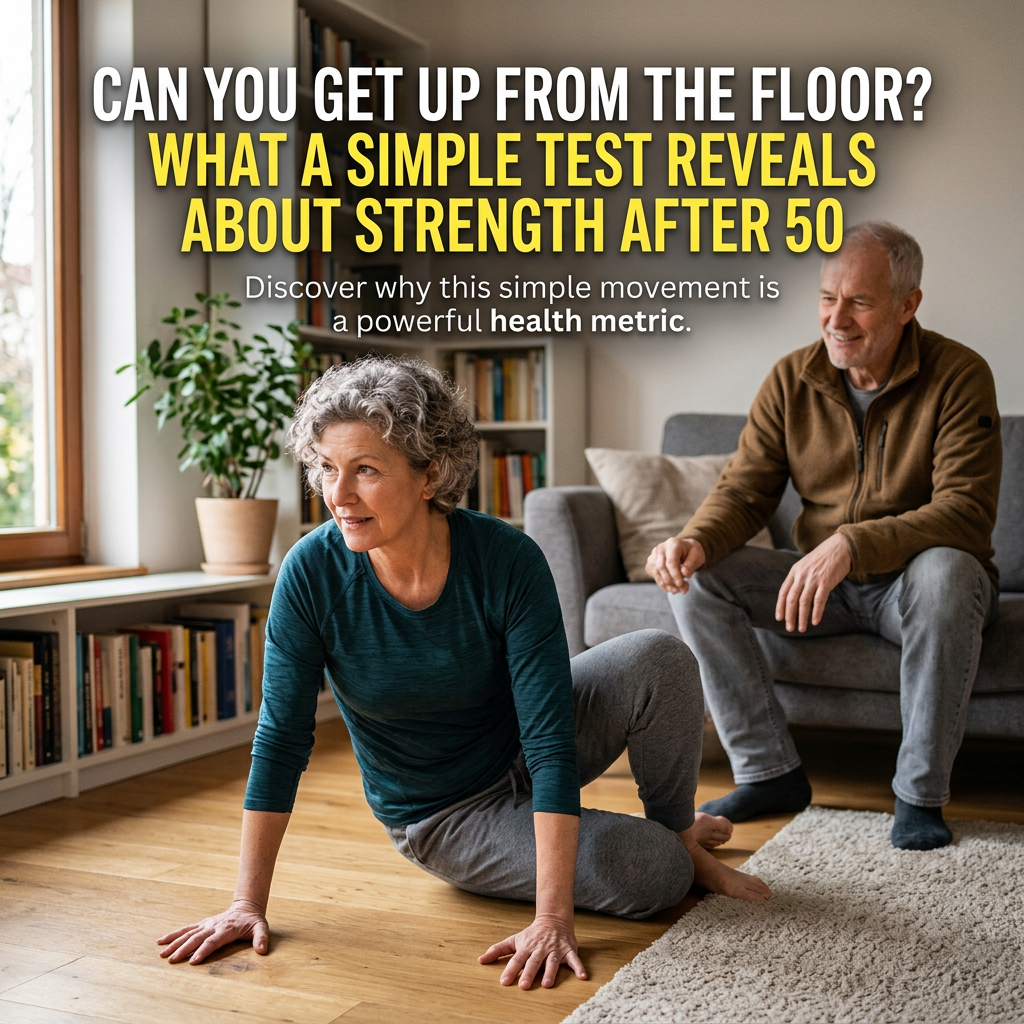
    What is the sitting-rising test, and how is it scored?

    Short answer: The sitting-rising test checks whether you can sit down on the floor and get back up. It’s scored out of 10: up to 5 points for sitting and 5 for rising, and you lose a point each time you use a hand, knee or other support. A lower score is a reason to work on strength and balance, not a verdict on your health.

    I think about independence a lot when it comes to life after 50. It is not just about how we look or how many birthdays we have had. It is about being able to do the everyday things we count on—getting out of a chair, climbing steps, carrying the groceries, and moving around without feeling that our own bodies are holding us back. Those movements may seem ordinary until one of them becomes difficult. Then we realize how much strength, balance, and confidence are woven into daily life.

    And I want to be honest about something personal: I am 64, and I have fallen myself. It can happen, even when we think we are doing all right. Experiences like that make the subject of balance, strength, and staying independent feel real to me—not just something researchers write about. I am not sharing that to frighten anybody or to suggest that one fall tells us what the future holds. I share it because it is easy to take steady movement for granted, and a fall can remind us that looking after ourselves includes paying attention to how we move. A fall does not define you, and one movement test cannot tell your whole story, but it is a reminder to take our safety and strength seriously.

    That is why the sitting-rising test (SRT) caught my attention. This is a real assessment studied by exercise-medicine researchers—not a social-media trick. Brazilian physician and researcher Dr. Claudio Gil Soares de Araújo, the lead author of the major follow-up study, and his colleagues have investigated what our ability to sit on the floor and stand back up can reveal about physical fitness and long-term health. The movement brings together strength, balance, flexibility, and coordination. It is worth knowing about, but it is not a diagnosis, a guarantee of longevity, or a challenge everyone should try at home. For anyone worried about falling, the safer first step is to talk with a healthcare professional or physical therapist.

    What is the sitting-rising test?

    The idea is straightforward: a person lowers themselves to sit on the floor, then gets back to standing. The commonly used scoring system gives up to five points for sitting and five for rising, for a total of 10. Points are deducted for using a hand, knee, or other support, or for losing steadiness during the movement.

    Want the full scoring rules, the 10-second one-leg stand, and gentle ways to improve your results? See my newer article, The Floor Test That May Predict Longevity: How to Score It and Improve It.

    It sounds simple when you read it. In practice, it calls on several things at once: leg and core strength, balance, flexibility, coordination, and the ability to control your body as you move. You need to lower yourself with control, manage your weight as you change positions, and stand without losing your balance. That is one reason the test has attracted researchers’ interest: it combines several everyday physical abilities into one movement. But it is not a pure measure of strength. Mobility, joint comfort, body proportions, and familiarity with getting down to the floor can also affect performance.

    But a score is not a measure of your value, and it does not tell your whole health story. Pain, arthritis, past injuries, disability, body shape, and other conditions can affect how a person moves. Someone who avoids the floor for a good medical reason should not feel pressured to try this test.

    Watch the test demonstrated by the team that created it

    Dr. Claudio Gil Araújo, the physician who developed the sitting-rising test, kindly shared his team’s updated 2025 demonstration video for Sturdy Years readers. It shows how the test is done and how it is scored.

    CLINIMEX: Sitting-rising test (SRT), an updated 2025 video

    He also pointed readers to the full research article, which you can read for free: the sitting-rising test study in the European Journal of Preventive Cardiology (free full-text PDF).

    What did the study actually find?

    Here’s what the study reported. The peer-reviewed study included 4,282 adults ages 46–75 (68% were men) who volunteered for a medical evaluation between 1998 and 2023. Researchers followed them for a median of 12.3 years. During follow-up, 665 participants died from natural causes. The natural-death rate was 3.7% among people who scored 10 and 42.1% among those scoring 0–4. After statistical adjustment for age, sex, body mass index, and clinical factors, the lowest-scoring group had a 6.05-times higher relative risk of cardiovascular death than the perfect-score group (95% confidence interval 2.29–20.94). The adjusted relative risk of death from natural causes was 3.84 times higher (95% confidence interval 2.25–6.97). These are the study’s reported figures—not a prediction of what will happen to any individual.

    Those numbers are striking, but here is the important detail: the study found an association; it did not prove that a low score causes heart disease or that getting a higher score will prevent it. A relative-risk figure can sound alarming, but it compares groups; it is not a personal countdown or a statement that a particular reader faces the same risk. The study group also consisted of people who had volunteered for a fitness evaluation and did not have relevant limitations that would prevent them from completing the test. That matters when applying the findings to people with pain, disability, previous injuries, or different health circumstances. The sensible takeaway is to pay attention to physical function and overall health—not to diagnose yourself from a score or assume the test predicts your future.

    You can check the evidence yourself: read the original peer-reviewed study in the European Journal of Preventive Cardiology, or look up its abstract in the U.S. National Library of Medicine’s PubMed database. For a reader-friendly explanation, see Harvard Health Publishing’s coverage. These sources support the reported association, but they do not establish that the test diagnoses disease or that improving a score changes a person’s lifespan.

    Should you try it yourself?

    My advice is simple: do not turn a research finding into a risky challenge. If you have balance problems, dizziness, significant knee or hip pain, arthritis that limits movement, a recent injury or surgery, or any reason to worry you could fall or get stuck, skip the test. If you are unsure, ask your healthcare professional or a physical therapist before attempting it. If you can safely try the test, have another person nearby and use a flat, nonslip carpet or exercise mat. Use support whenever you need it; getting a perfect score is not worth a fall.

    There is no prize for proving you can get down on the floor. Your safety matters more than a number. You can work on strength and mobility in safer ways without doing this particular test at all.

    Practical ways to support strength after 50

    You do not need an extreme workout or a complicated program to get started. Think of this as building useful ability a little at a time, not proving how tough you are. Choose activities that match your current health and mobility, and ask a clinician or physical therapist for guidance if you have a condition, pain, or a history of falls. These are sensible starting points to discuss with a professional:

    • Practice chair stands if they are safe for you. Use a sturdy chair that will not slide. Keep a stable counter or support within reach, and stop if you feel pain, dizziness, or unsteadiness.
    • Build strength gradually. Appropriate resistance exercises can help maintain the muscles used in daily life. Start at a level you can manage with good control rather than pushing through pain.
    • Include balance work carefully. If you are at risk of falling, get professional advice and use appropriate support rather than practicing alone.
    • Keep up regular movement. Walking and other activities you enjoy can be part of a healthy routine, adjusted to your circumstances.
    • Ask for help when a movement gets harder. A physical therapist can assess what is limiting you and suggest a plan that fits your needs.

    The U.S. Centers for Disease Control and Prevention recommends that adults 65 and older include aerobic activity, muscle-strengthening activity, and balance activity in their weekly routine, adapted to their abilities and health. You can read its practical guidance here: CDC: Older Adult Activity. You do not have to start all at once. The important thing is to choose movement that is appropriate for you and build gradually.

    It is about staying capable—not chasing a perfect score

    For me, the useful takeaway is not that everyone 50+ needs to take a floor test. It is that strength, balance, and flexibility deserve attention alongside walking and cardio. These abilities can make a difference in the ordinary moments that help us feel independent: rising from a chair, stepping off a curb, turning to reach for something, or recovering our balance when we stumble. You do not have to be an athlete. The goal is to keep the movements you rely on as safe and manageable as possible.

    If getting up from a low chair has become harder, or you feel less steady than you used to, do not panic and do not judge yourself. Treat it as useful information to discuss with a healthcare professional. Ask what might be contributing and what kind of activity is appropriate for you; a physical therapist may be able to assess your movement and tailor exercises to your needs. Make changes gradually, use support when needed, and do not practice risky movements alone just to test yourself. There may be practical steps that can help you move more comfortably and confidently.

    Common questions

    Does the sitting-rising test diagnose heart disease?

    No. It is not a diagnostic test and cannot tell you whether you have heart disease. The research describes a relationship between test scores and health outcomes across a group of people; it cannot determine an individual’s personal risk.

    What does a score of 10 mean?

    In this scoring system, 10 means completing the sitting and rising movements without support deductions or loss of points for unsteadiness. It does not guarantee perfect health, and a lower score does not mean a person is destined to become ill.

    What if I cannot safely sit on the floor?

    Do not attempt the test. Ask your healthcare professional or a physical therapist about safer ways to assess and work on strength, balance, and mobility.

    Can exercise help me get stronger after 50?

    Appropriate exercise can help support strength and everyday function, but the best plan depends on your health, mobility, and starting point. Begin gradually, and get professional guidance if you have pain, a medical condition, or a fall risk.

    Keep reading

    For more practical guidance, read the CDC’s advice on adding physical activity as we get older. For another perspective on balance and fall prevention, see physical therapist Margaret Martin’s Fall Prevention Guide at MelioGuide. For everyday strength and mobility, physical therapist Kelly Sturm’s guide to functional-strength exercises at Verywell Health offers additional reading.

    Medical disclaimer: This article is for general educational purposes only. It is not medical advice, a diagnosis, or a substitute for care from a qualified healthcare professional. Do not attempt the sitting-rising test if it may be unsafe for you. Speak with your healthcare professional before changing your exercise routine, especially if you have a medical condition, pain, balance problems, or a recent injury or surgery.

    About the author: Tom Green writes Sturdy Years. He was born in Pell City, Alabama, in 1962, and he’s a country boy and a true Southerner through and through. He’s just a regular, laid-back 64-year-old who keeps things simple. He shares what he learns about skincare, fitness and getting older, and what’s working for him. He’s also the author of A Practical Guide to Getting Older Without Giving Up on Yourself. Tom isn’t a doctor. He reads up on the research and passes along what’s useful, plain and simple.

    I’ve also mapped out some great tools on my new Tech for Independent Living After 50 page.

  • The Best Exercises for Staying Independent as You Get Older

    The Best Exercises for Staying Independent as You Get Older

    What are the best exercises for staying independent as you get older?

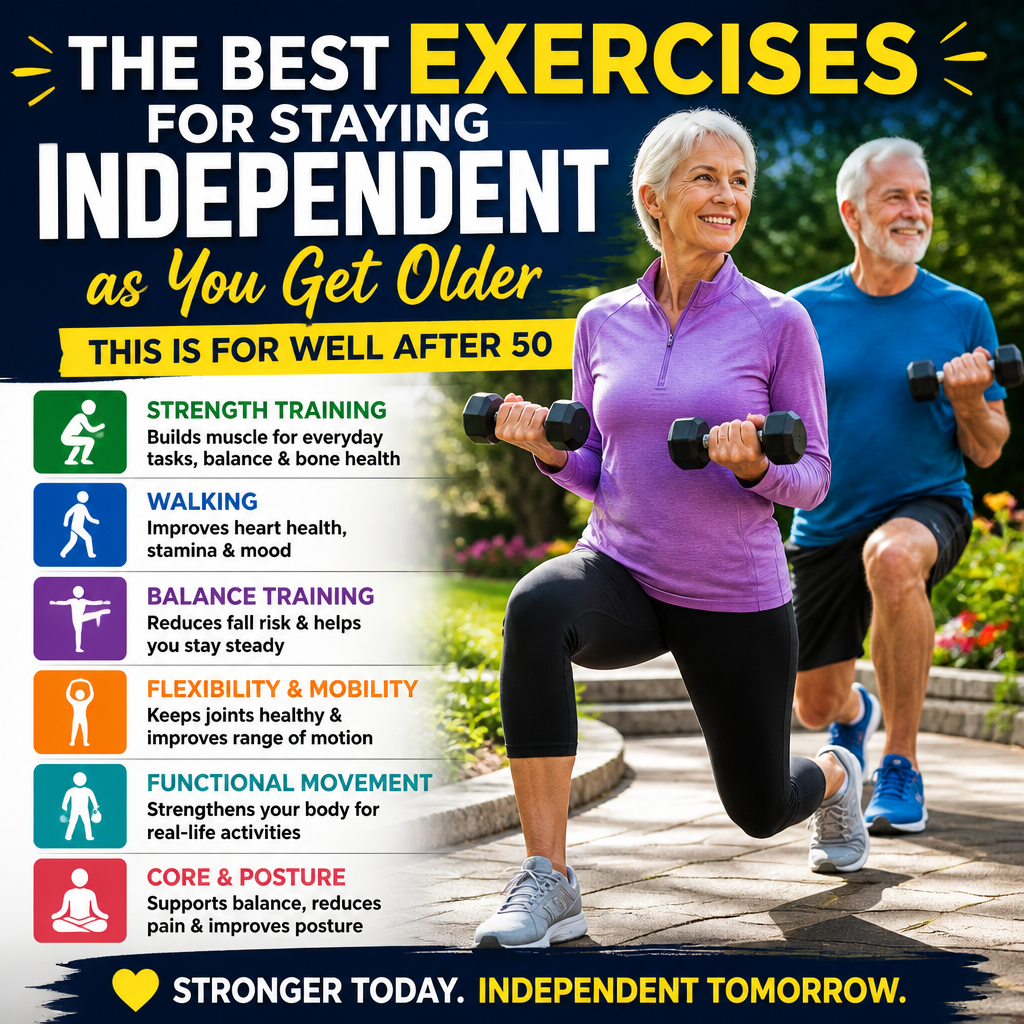
    Short answer: The best exercises for staying independent are the ones that train everyday life: strength training first, then practicing getting up and sitting down, walking, and balance work. Together they help you get up from the floor, climb stairs and carry your own groceries for years to come.

    There is a difference between getting older and feeling like your world is getting smaller.

    Maybe you have already noticed it in little ways. A flight of stairs feels different. Getting up from a low chair takes more effort. Carrying groceries from the car is not quite as easy as it used to be. You may not think of these things as fitness problems. They are really independence problems.

    That is why the best exercise after 50 is not necessarily the exercise that burns the most calories or makes you sweat the hardest.

    The best exercise is the kind that helps you keep doing your own life.

    Think about the life you want your body to handle

    Instead of asking, “What exercise should I do to look better?” try asking:

    • Can I get up from the floor if I need to?
    • Can I climb stairs without feeling defeated?
    • Can I carry my groceries?
    • Can I walk through an airport, museum or shopping center?
    • Can I get out of a chair without using my hands?
    • Can I keep traveling, working around the house and doing the things I enjoy?

    Those are not vanity questions. They are freedom questions.

    1. Strength training may be the most important place to start

    Muscle does not disappear simply because we reach a certain birthday, but muscle and strength can decline with age when we are inactive. The good news is that the body can respond to resistance training well into later life.

    You do not have to become a bodybuilder. Sit-to-stands, resistance bands, machines, dumbbells, wall push-ups and other simple movements can help.

    Think about training the muscles you use to live: legs, hips, back, chest, shoulders and arms.

    2. Practice getting up and sitting down

    This sounds almost too simple to count as exercise. It counts.

    Standing from a chair without pushing off with your arms trains the legs and hips in a movement you actually use. Start with a sturdy chair and use your hands if you need to. Over time, work toward smoother, stronger repetitions.

    3. Walk for the life outside the gym

    Walking is wonderfully unglamorous—and that is part of its strength. It is accessible, easy to repeat and useful for building endurance.

    You can walk around your neighborhood, inside a store, on a treadmill or with a friend. The goal is not to prove anything. The goal is to make movement part of ordinary life.

    4. Do not ignore balance

    Balance deserves attention because a strong body still needs to know where it is in space.

    Simple balance practice might include standing near a counter and briefly standing on one leg, walking heel-to-toe, or practicing controlled sit-to-stands. Use support when needed and do not turn balance work into a dare.

    5. Train your ability to push, pull, carry and reach

    Real life is full of awkward little strength tests. Opening a stubborn door. Lifting a bag. Reaching for something on a shelf. Carrying laundry. Moving a box.

    Your workout does not need to copy these tasks perfectly, but it should prepare your body for them.

    A simple week can be enough to make a difference

    • 2 days: strength training for the major muscle groups
    • Most days: some walking or other aerobic activity you enjoy
    • Several times a week: brief balance practice
    • Every day: look for opportunities to sit less and move more

    CDC guidance for adults 65+ recommends aerobic activity, muscle-strengthening activity at least two days a week, and balance activities. You do not have to jump straight into the full recommendation. Start from where you are and build gradually.

    The goal is not to become 30 again

    This may be the most important part.

    You are not exercising to erase your age. You are exercising so your age does not unnecessarily erase parts of your life.

    You want to be the person who can say yes when someone suggests a day trip. You want to carry your own bags. You want to get out of a chair without thinking about it. You want enough strength and balance to keep making your own choices.

    That is what fitness after 50 can really be about: keeping your world open.

    Common Questions

    What is the best exercise after 50?

    A combination of strength, aerobic activity and balance is more useful for healthy aging than relying on one type of exercise alone.

    Can I start strength training if I have never lifted weights?

    Yes. Start with manageable resistance, controlled movements and gradual progress. If you have a medical condition or significant physical limitation, ask your health professional what is appropriate.

    Do I have to exercise every day?

    No. Consistency matters more than perfection. Regular movement spread across the week is a practical goal.

    Can walking really help me stay independent?

    Walking can improve endurance and physical activity levels, while strength and balance work address other abilities needed for everyday independence.

    Keep Reading

    For more practical healthy-aging ideas, explore Sturdy Years.

    About Tom Green

    Tom Green writes Sturdy Years. He was born in Pell City, Alabama, in 1962, and he’s a country boy and a true Southerner through and through. He’s just a regular, laid-back 64-year-old who keeps things simple. He shares what he learns about skincare, fitness and getting older, and what’s working for him. He’s also the author of A Practical Guide to Getting Older Without Giving Up on Yourself. Tom isn’t a doctor. He reads up on the research and passes along what’s useful, plain and simple.

    Sources & Proof

    CDC: Older Adult Activity Guidelines
    National Institute on Aging: Health Benefits of Exercise and Physical Activity
    National Institute on Aging: Types of Exercise and Physical Ability

    Safety note: Start at a level appropriate for your current ability. Stop if you develop unusual pain, dizziness, chest pressure, severe shortness of breath or other concerning symptoms, and seek medical advice when appropriate.

    I’ve also mapped out some great tools on my new Tech for Independent Living After 50 page.

  • Belly Fat After 50: Why It Won’t Go Away — And What Actually Works

    Belly Fat After 50: Why It Won’t Go Away — And What Actually Works

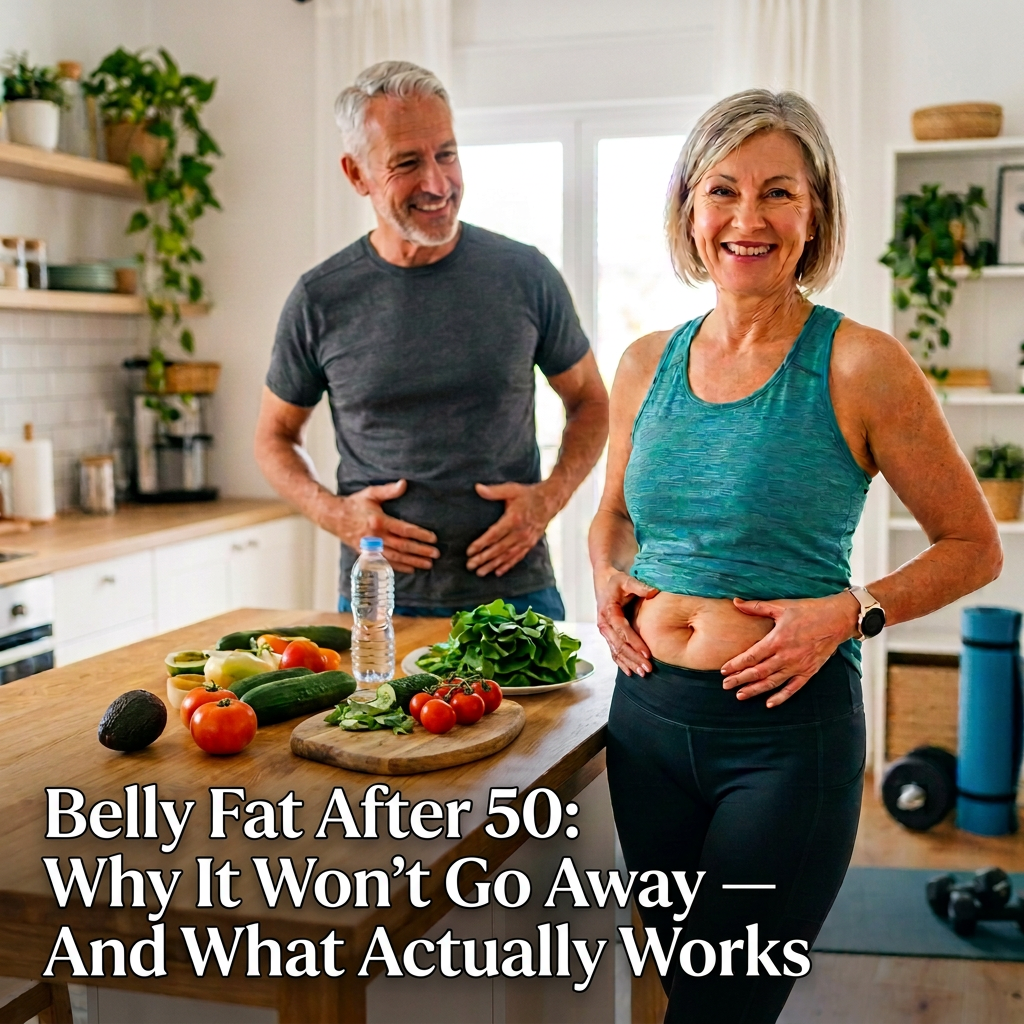
    Can you get rid of belly fat after 50?

    Short answer: No, you can’t spot-reduce belly fat after 50. Fat comes off your whole body, not just one spot. The CDC says to aim for at least 150 minutes of moderate activity a week, plus strength training at least 2 days a week. That strength work matters most after 50, because it keeps your muscle while the fat comes off.

    If you’re 50+ and you’ve been working out, eating better, and still looking in the mirror wondering, “Why is this belly fat still here?” — you’re not alone.

    And here’s the frustrating part:

    You can lose weight and still have a belly.

    You can do hundreds of crunches and still have a belly.

    And you can eat what you think is a pretty healthy diet and still struggle with that stubborn middle.

    So today, I want to talk about what is actually going on — and more importantly, what you can really do about it.

    No miracle pill.

    No detox.

    No ridiculous promise that you’ll lose your belly in seven days.

    Just the real stuff that works.

    First: You Can’t Spot-Reduce Belly Fat

    Let’s get one thing out of the way.

    Doing more sit-ups doesn’t tell your body, “Burn the fat right here.”

    Ab exercises can strengthen your abdominal muscles, and that’s a good thing. But your body decides where it takes stored fat from.

    So if you’ve been doing endless crunches hoping they’ll melt your belly, that’s probably not the answer.

    The answer is getting your overall body-fat level down while keeping as much muscle as possible.

    And that second part becomes especially important after 50.

    Here’s What Changes After 50

    As we get older, maintaining muscle becomes more important.

    If you aren’t doing resistance training and you’re eating too little, you can lose muscle along with fat.

    And that’s not what you want.

    Muscle helps you stay strong, active and independent. It also helps you maintain a higher daily energy expenditure.

    That’s why I don’t think the answer for people 50+ is simply:

    “Eat less and exercise more.”

    It’s more like:

    Build or maintain muscle, eat intelligently, move regularly, and give your body enough time to respond.

    So What Actually Works?

    Number One: Strength Training

    If you’re 50+, I would put strength training near the top of the list.

    You don’t have to become a bodybuilder.

    You don’t have to spend two hours in the gym.

    But you do need to give your muscles a reason to stick around.

    Squats, presses, rows, leg exercises, machines, resistance bands — there are plenty of ways to do it.

    The important thing is consistency.

    Don’t just try to get smaller. Try to stay strong while you get leaner.

    That’s a much better goal after 50.

    Number Two: Pay Attention to What You’re Eating

    This doesn’t mean starving yourself.

    It means becoming more aware of what you’re actually eating.

    Protein-rich foods can help support muscle.

    Fiber-rich foods can help you feel fuller.

    Vegetables, fruits, beans, whole grains and other minimally processed foods can make it easier to control calories without feeling like you’re constantly dieting.

    And then there’s something we don’t like talking about:

    Portion size.

    You can eat healthy foods and still eat more calories than your body needs.

    Healthy doesn’t automatically mean low-calorie.

    That’s one reason the belly sometimes refuses to cooperate.

    If cooking at home is where you keep falling off track, that’s often where the takeout and the quick snacks sneak in. A meal kit like Marley Spoon sends portioned ingredients and simple recipes right to your door, which takes a lot of the guesswork out of eating better. (affiliate link)

    Number Three: Walk More

    Walking is underrated.

    You don’t need to destroy yourself with cardio every day.

    Getting more movement into your normal day can make a real difference.

    Walk after meals.

    Take the stairs when appropriate.

    Get up from the chair.

    Go outside.

    Keep moving.

    And if you’re already exercising, adding more everyday movement can be a simple way to increase your total activity without beating up your body.

    Number Four: Don’t Ignore Sleep

    Here’s something people sometimes overlook when they’re focused on losing belly fat:

    Sleep matters.

    Poor sleep can make it harder to manage hunger, cravings, energy and your eating habits.

    So if you’re staying up late, sleeping poorly and then trying to fight your appetite all day, you’re making the job harder than it needs to be.

    Getting better sleep isn’t a magic belly-fat treatment.

    But it’s part of the bigger picture.

    And What About Stress?

    Stress isn’t something you can simply “turn off.”

    But if your life is constantly stressful, finding ways to manage that stress is worthwhile for your overall health.

    Walk.

    Exercise.

    Spend time with people you enjoy.

    Get outside.

    Take a break from the phone.

    Do something that actually makes you feel like yourself again.

    Because getting healthier after 50 shouldn’t mean turning your entire life into a punishment.

    Here’s the Part I Really Want You to Remember

    You don’t need to be perfect.

    You need to be consistent.

    If you eat well Monday through Friday and then completely abandon your plan every weekend, progress can disappear.

    If you exercise once and then take a week off, you’re not building a habit.

    But if you keep showing up?

    That’s different.

    Maybe the scale doesn’t move dramatically.

    Maybe your waist changes slowly.

    Maybe your clothes start fitting differently before you see a huge difference in the mirror.

    Those are still signs of progress.

    Don’t Believe Every Belly-Fat Promise You See Online

    If somebody tells you that one food melts belly fat…

    If somebody says a supplement targets abdominal fat…

    If somebody promises a flat stomach in seven days…

    Be skeptical.

    There is no magic button you can push that tells your body:

    “Only burn the fat around my stomach.”

    Real results usually come from things done consistently:

    Strength training.
    Better food choices.
    Reasonable portions.
    Enough protein and fiber.
    Regular movement.
    Good sleep.
    And patience.

    That’s not as exciting as a miracle cure.

    But it’s a lot more useful.

    One More Thing

    If you’re carrying extra weight around your middle, don’t assume it’s simply a cosmetic problem.

    Excess abdominal fat can be associated with increased health risks.

    That’s one reason it’s worth working on — but you don’t need to hate your body to improve your health.

    At 50, 60, 70 and beyond, the goal isn’t to look like you did at 25.

    The goal is to feel strong, move well, stay active and give yourself the best chance to enjoy the years ahead.

    And if your weight or waist size is changing unexpectedly, or you have health conditions or take medications that affect weight, talk with your healthcare professional before making major changes.

    The Bottom Line

    So if you’re 50+ and you’re frustrated because that belly doesn’t seem to want to leave, don’t give up and don’t fall for the next miracle cure.

    Your body isn’t broken.

    You don’t need to punish yourself.

    And you don’t need to live on lettuce.

    What you need is a plan you can actually live with.

    Build your muscle.
    Move your body.
    Eat mostly real, nutritious food.
    Pay attention to portions.
    Get enough sleep.
    And stay consistent.

    The research supports the bigger picture: combining healthy eating with physical activity — especially strength training and regular aerobic movement — can improve body composition, physical function and overall health as we age.

    And here’s something I really want you to remember:

    Don’t judge your progress by the scale alone.

    Maybe your waist gets smaller.

    Maybe your clothes fit better.

    Maybe you’re stronger getting out of a chair.

    Maybe you can walk farther.

    Maybe you look in the mirror and finally think, “Hey… I’m making progress.”

    Those things matter.

    Because after 50, we’re not trying to turn the clock backward.

    We’re trying to make the years ahead better.

    And if you’ve been sitting there thinking, “I’m too old to change now,” I want you to forget that idea.

    You’re not too old.

    Start where you are.

    Do something today that your future self will thank you for.

    I’m Tom Green, and this is Sturdy Years.

    And remember:

    Life gets better after 50 — but you’ve got to keep showing up for it.


    For another practical perspective on staying active and supporting fitness as we age, Nancy L. Fitness shares exercise and nutrition guidance for adults over 50. Her advice is another voice to consider alongside the basics discussed here; no single workout or food plan can target belly fat by itself.

    Common Questions

    Can you really get rid of belly fat after 50?

    Yes, it is possible to reduce body fat and waist size after 50, although results vary from person to person. Consistent eating habits and regular physical activity are more reliable than quick fixes.

    Do crunches burn belly fat?

    Crunches can strengthen your abdominal muscles, but they do not specifically tell your body to burn fat from your stomach. Overall fat loss is what reduces stored body fat.

    Is strength training important after 50?

    Yes. Strength training can help maintain muscle as you age and during weight loss. NIDDK recommends muscle-strengthening activities at least two days a week for healthy older adults.

    How much walking should I do?

    A common guideline for adults is at least 150 minutes of moderate-intensity aerobic activity per week, along with muscle-strengthening activity on at least two days. Start gradually if you have been inactive.

    Why isn’t my belly changing even though I’m exercising?

    Exercise is important, but food intake, portion sizes, sleep, stress, age, medications, medical conditions and other factors can affect weight management. Progress can also be slower than you expect.

    About Tom Green

    Tom Green writes Sturdy Years. He was born in Pell City, Alabama, in 1962, and he’s a country boy and a true Southerner through and through. He’s just a regular, laid-back 64-year-old who keeps things simple. He shares what he learns about skincare, fitness and getting older, and what’s working for him. He’s also the author of A Practical Guide to Getting Older Without Giving Up on Yourself. Tom isn’t a doctor. He reads up on the research and passes along what’s useful, plain and simple.

    Health note: This article is for general educational purposes and isn’t medical advice. If you have a medical condition, take medications that affect weight, or are unsure how to safely change your exercise or eating habits, talk with your healthcare professional.

    Research & Sources

    I’ve also mapped out some great tools on my new Tech for Independent Living After 50 page.