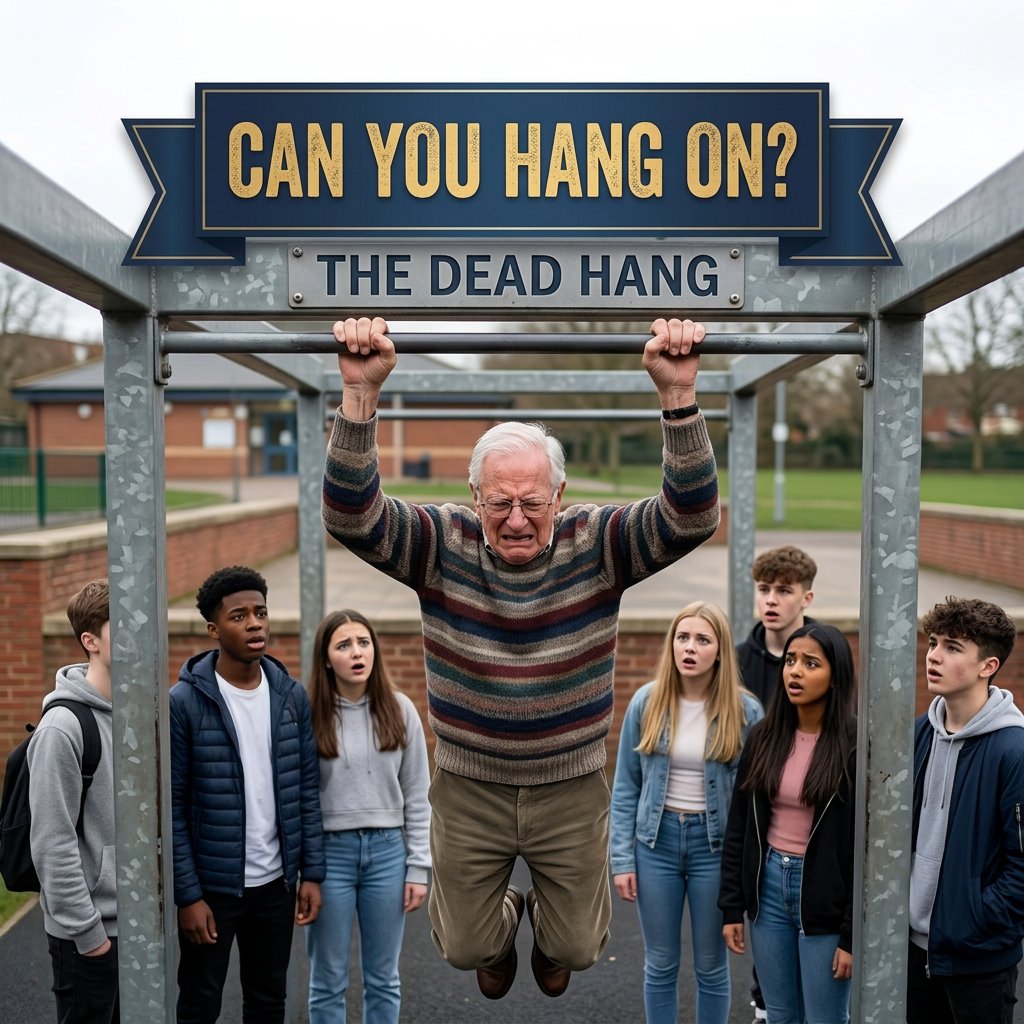
What’s a dead hang, and why should I care?
Short answer: You grab hold of a bar and just hang there, and that’s all it is. How long you can hang on says a whole lot about how strong you are.
Getting older sneaks up on you in little ways. One day the pickle jar won’t open. Another day the groceries feel heavier than they used to, or you grab the rail on the steps a little harder than you meant to. Nobody says anything, but you notice, and it can make you feel like you’re slipping. I want you to know you don’t have to just accept that.
What does your grip say about you?
More than you’d think. Researchers at McMaster University followed almost 140,000 people in 17 countries for four years, and for every 11 pounds of grip strength folks lost, they were about 17 percent more likely to die sooner. They said grip told them more about a person’s health than blood pressure did.
Dr. Ardeshir Hashmi at the Cleveland Clinic says grip starts slipping around 50, but the people who keep it strong age more slowly and stay healthier longer. That gives me a lot of hope.
Why does a dead hang help so much?
A dead hang is about as simple as it gets. You grab a bar and hang. Dr. Peter Attia, who wrote Outlive, says on his site that a strong grip shows your whole upper body is strong and steady. Healthline says hanging works your hands, forearms, shoulders, back and belly, and it may stretch out your back too.
Attia’s goal for a 40-year-old is two minutes for a man and 90 seconds for a woman, according to Rise With Drew. Don’t let that scare you off. The goal comes down every ten years after that, and anything you can do is a start.
Is it too late to get stronger?
It’s never too late, and I mean that. AARP says most of us lose nearly a third of our muscle between 50 and 70, but you can build new muscle at any age. Lynn Perkes, who writes for Sixty and Me, points out that a weak grip has been tied to falls and broken hips, and he says it’s never too late to start.
How do you start?
Find a solid bar and step up on something sturdy so you’re not jumping. Hold on with your palms facing away, let your feet come off for ten seconds, and step back down before you let go. If that’s too much, just stand on the step and hold the bar, and carry your groceries in with a bag in each hand. Check with your doctor first if your shoulder’s been bothering you.
Strength coach Dan John wrote in Breaking Muscle about advice from former world-record discus thrower John Powell, who said older folks need to get back two things, their muscle and their passion. I think that’s beautiful. You start with ten seconds on a bar, and then one morning that pickle jar opens on the first try, and you remember you’ve still got a lot of strength left in you.
Common Questions
What are the benefits of a dead hang?
It works your grip, forearms, shoulders, upper back and core, and Healthline notes it can stretch the spine and loosen tight shoulders. Grip strength has also been linked to a lower risk of death in a large study of almost 140,000 adults.
How long should you be able to dead hang by age?
Peter Attia likes to see 40-year-old men hang for two minutes and women for 90 seconds, with the goal easing each decade after 40. For most folks in their 60s and 70s, 30 seconds is a great first target.
Is the dead hang safe for seniors?
For most people, yes, if you use a secure bar, step up to it instead of jumping, and start with about 10 seconds. Check with your doctor first if you have a shoulder injury.
What if I can’t hang at all yet?
Keep your feet on a step and let your legs take some of the weight, then do farmer’s carries with grocery bags or water jugs to build your grip.
How often should you do dead hangs?
A few short hangs a few times a week is plenty to start. Test your best time about once a week and track it.
About Tom
I’m Tom Green, a country boy from Pell City, Alabama, and the fella behind Sturdy Years. I started this at 64 because I figured all those years ought to be good for something. Read more about me.
Research & Sources
- Peter Attia: Special AMA on exercise and grip strength
- Rise With Drew: Peter Attia’s key strength exercises from Outlive
- EurekAlert: McMaster study finds grip strength predicts health risk
- Cleveland Clinic: What your grip strength says about your health
- Sixty and Me: Lynn Perkes on the handgrip strength test
- Breaking Muscle: Dan John on training after 50
- Healthline: How to do a dead hang
- AARP: Smart guide to muscle health
Advertisement
Marley Spoon Meal Kits (affiliate link)

King Arthur Baker’s Companion (affiliate link)
Mercylion Dash Cams (affiliate link)