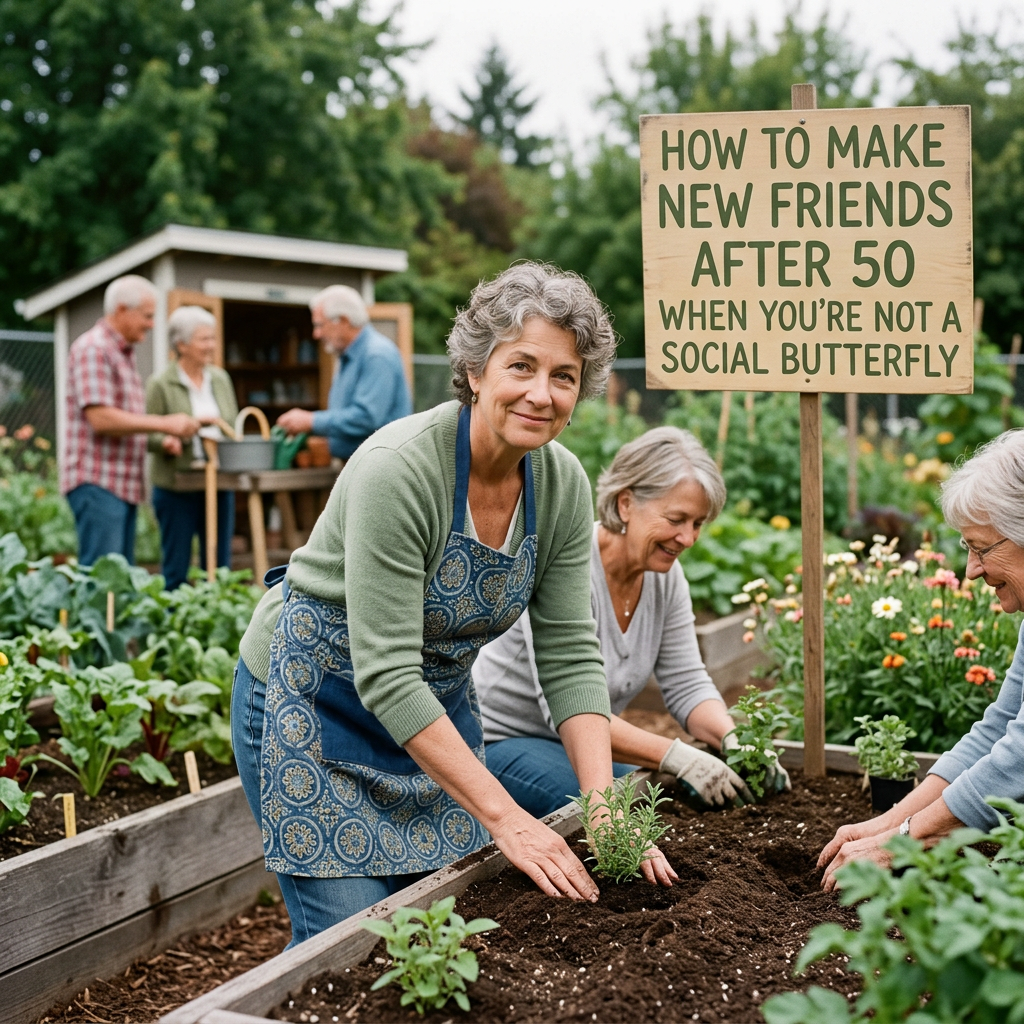
Tag: making friends as an adult

  • How to Make New Friends After 50 When You’re Not a Social Butterfly

    How to Make New Friends After 50 When You’re Not a Social Butterfly

    How do you make new friends after 50 if you’re not a social butterfly?

    Short answer: Don’t go looking for a best friend. Look for one person you enjoy talking to, and go where the same people show up week after week, so faces turn into friends. When someone seems interesting, stay one extra minute, then invite them to something small, like coffee.

    You do not have to become a social butterfly to make a new friend.

    You do not have to walk into a crowded room and work the crowd. You do not have to become someone who loves small talk.

    And you certainly do not have to pretend you are younger than you are.

    You just need a reason to cross paths with the same people often enough for something real to grow.

    Friendship after 50 can be different

    When we are younger, friendship often happens automatically. School. Work. Neighbors. Children. Sports. Shared schedules.

    After 50, some of those built-in connections disappear. Retirement, divorce, moving, children leaving home and losing touch with old friends can quietly change a person’s social world.

    You can be surrounded by people and still feel alone.

    1. Stop looking for “a best friend”

    That goal is too big.

    Look for one person you enjoy talking to. One person you could have coffee with. One person who makes you laugh. One person you would like to see again.

    Friendship usually grows through small repetitions, not one dramatic meeting.

    2. Go where the same people go

    If you attend a different event every week, you meet lots of people but rarely have enough repeated contact to build familiarity.

    Try something recurring: the same walking group, class, volunteer shift, church activity, book club, gym time, community event or hobby group.

    Familiarity is one of friendship’s quiet ingredients.

    3. Use the “one extra minute” rule

    If someone seems interesting, stay one extra minute.

    Ask one question. Give one compliment. Mention something you have in common.

    You do not have to perform. You are simply leaving the door open.

    4. Invite people to something small

    “Want to grab coffee sometime?” can feel surprisingly big.

    Try something more specific:

    • “I’m going to walk Saturday morning. Want to come?”
    • “I’m grabbing lunch after this. Want to join me?”
    • “I’m going to that market next weekend. Want to go?”

    Small invitations are easier to accept and easier to decline without embarrassment.

    Or keep it close to home. A pot of good coffee on the porch is about as easygoing an invitation as there is. If you want to make it a little special, Hula Daddy sells Kona coffee grown in Hawaii that gives folks something to talk about. (affiliate link)

    5. Do not take every “no” personally

    Adults have complicated lives. Someone may be busy, tired, caring for family, working or simply not ready to expand their social circle.

    One no does not mean you are unlikeable.

    6. Let friendship be imperfect

    A new friend does not have to agree with everything you believe. They do not have to share your entire history. They do not have to be available every day.

    Sometimes a good friendship is simply two people who enjoy being around each other.

    Why this matters more than people realize

    The National Institute on Aging notes that loneliness and social isolation can affect physical, mental and cognitive health. That does not mean everyone needs a huge social calendar. It means meaningful connection matters.

    So if you have been telling yourself, “I’m just not a people person,” consider changing the sentence.

    Maybe you are not a crowd person. That is different.

    A challenge for this week

    Do not promise yourself you will make five new friends.

    Instead, start one conversation. Return to one place. Say yes to one invitation. Invite one person to do something simple.

    That is enough.

    Common Questions

    Is it harder to make friends after 50?

    It can be because some natural sources of connection change, but adults can absolutely form new friendships later in life.

    What if I am shy?

    Choose low-pressure settings with repeated contact. You do not need to become outgoing to become connected.

    Where can I meet people after 50?

    Try recurring activities such as volunteering, classes, walking groups, hobbies, community organizations, faith communities or places you already enjoy.

    What if someone does not respond to my invitation?

    Do not automatically interpret it as rejection. Keep meeting people and leave room for friendships to develop naturally.

    Keep Reading

    Find more practical ideas for living a fuller life after 50 at Sturdy Years.

    About Tom Green

    Tom Green is the creator of Sturdy Years, sharing practical ideas for healthier, happier and more meaningful life after 50. He was born in Pell City, Alabama, in 1962, and he’s a country boy and a true Southerner through and through.

    Sources & Proof

    National Institute on Aging: Loneliness and Social Isolation
    National Institute on Aging: Staying Connected

    Note: If loneliness is accompanied by persistent sadness, hopelessness or loss of interest in normal activities, consider talking with a healthcare professional.

    A Book Worth Picking Up

    Vibe: The Secrets of Strong Connections in a Lonely World book cover

    If this post spoke to you, here is a book that goes deeper. In Vibe: The Secrets of Strong Connections in a Lonely World, Adam Grant looks at the science of how closeness actually forms, and why building meaningful ties feels so hard right now. What I like best is that Grant starts from his own experience as a shy introvert, so this is not advice from someone who never struggled to connect. It is a practical, encouraging read for anyone who wants stronger friendships without pretending to be someone they are not. You can find Vibe on Amazon.

    Disclosure: Purchases through affiliate links may earn Sturdy Years a commission at no additional cost to the reader.

    I’ve also mapped out some great tools on my new Tech for Independent Living After 50 page.

  • 15 Ways to Be a Better Friend After 50

    15 Ways to Be a Better Friend After 50

    How can you be a better friend after 50?

    Short answer: Being a better friend after 50 mostly comes down to small things done often. Make the first move instead of waiting for a call, remember the little things your friend told you about, and keep showing up. A simple “Hey, I was thinking about you” can mean more than you realize.

    Friendship hits different after 50. Here’s how to keep the good ones strong, make room for new connections, and become the kind of friend people are glad to have.

    Friendship changes as we get older. Careers shift, families grow up, people move away, and sometimes the friends we thought would always be around become harder to reach.

    But here’s the good news: it’s never too late to become a better friend—or to build new friendships.

    Being a good friend after 50 doesn’t require grand gestures, endless free time, or a perfect personality. It comes down to small things that show people they matter.

    Here are 15 ways to make your friendships stronger, more meaningful, and a whole lot more fun.

    1. Make the First Move

    Stop waiting for someone else to call. Send a text, pick up the phone, or suggest lunch. A simple “Hey, I was thinking about you” can mean more than you realize.

    2. Remember the Little Things

    Ask about the doctor’s appointment, the job interview, or the family problem your friend mentioned last week. Remembering details shows you were listening—and that you care.

    3. Listen Without Trying to Fix Everything

    Sometimes a friend needs advice. Other times, they just need someone to hear them out. Before offering solutions, try asking, “Do you want my advice, or do you just need to talk?”

    4. Show Up When Life Gets Hard

    Anyone can be around for the fun stuff. A good friend also checks in during a rough patch, offers practical help, or simply sits beside someone who is having a difficult day.

    You don’t need the perfect words. Being there counts.

    5. Celebrate Their Good News

    A friend’s success isn’t a competition. Whether they get a promotion, reach a personal goal, or finally take that dream trip, celebrate with them. Give their good news the attention you’d want for your own.

    6. Put the Phone Down

    When you’re spending time together, be present. Make eye contact, listen, and resist the urge to check every notification. Your friend deserves more than half your attention.

    7. Be Honest—but Be Kind

    Real friendship allows room for honesty. If something bothers you, talk about it respectfully instead of letting resentment build. The goal isn’t to win an argument. It’s to understand each other.

    8. Don’t Keep Score

    Healthy friendships aren’t always perfectly balanced. One person might need more support during a difficult season, while the other needs help later. Give when you can, accept help when you need it, and look for mutual care over time.

    9. Make Plans That Actually Happen

    “We should get together sometime” sounds nice, but it rarely gets anyone out the door. Suggest a day, a time, and something simple to do. Coffee, a walk, lunch, or a movie can be enough.

    10. Give People Room to Change

    The person you knew at 30 may not be exactly the person you know at 60. Neither are you. Let friendships grow as interests, circumstances, and priorities change. You don’t have to agree on everything to care about each other.

    11. Apologize When You’re Wrong

    Everybody makes mistakes. Maybe you said something hurtful, forgot an important date, or jumped to the wrong conclusion. A sincere apology can help repair the damage. Skip the excuses and take responsibility for your part.

    12. Respect Their Boundaries

    Your friend may not be available every time you call. They may need quiet time, have family responsibilities, or simply have a different way of communicating. Respecting those limits helps a friendship feel safe rather than demanding.

    13. Keep Your Sense of Humor

    Don’t underestimate the power of laughing together. Share a funny story, enjoy an old inside joke, or be willing to laugh at yourself. Friendship doesn’t have to be serious all the time to be meaningful.

    14. Be Open to New Friends

    Don’t assume your best friendships are all behind you. Join a local group, try a class, volunteer, or strike up a conversation with someone you see regularly. New connections can begin in surprisingly ordinary places.

    15. Know When to Let Go

    Not every friendship lasts forever, and that’s okay. If a relationship repeatedly leaves you feeling disrespected, drained, or used, consider whether an honest conversation could help—or whether it’s time to step back. You can appreciate a friendship’s history without forcing it to continue as it once did.

    Other Voices on Friendship

    If you’d like to explore friendship more deeply, these three writers offer worthwhile places to start.

    Shasta Nelson is a friendship expert and author of Frientimacy: How to Deepen Friendships for Lifelong Health and Happiness. Her work explores how we can turn casual connections into closer, more supportive relationships.

    Nina Badzin is a writer who focuses on the ups and downs of adult friendship. She hosts Dear Nina: Conversations About Friendship, a podcast and newsletter that explore real-life friendship questions and dilemmas.

    Lydia Denworth is a science journalist and the author of Friendship: The Evolution, Biology, and Extraordinary Power of Life’s Fundamental Bond. Her book explores the science behind why friendship and social connection matter throughout our lives.

    Their work offers a useful reminder: friendship isn’t just something that happens to us. It’s a relationship we can keep building through attention, effort, and care.

    The Bottom Line

    You don’t need dozens of friends to have a rich social life. A few dependable people who laugh with you, listen when you need them, and show up when life gets messy can make a real difference.

    Start small. Reach out to someone you’ve been meaning to call. Listen a little more closely. Make a plan instead of putting it off.

    What’s one thing you think makes someone a truly good friend after 50? Share your thoughts in the comments. Your experience might be just what another reader needs to hear.


    About the Author

    Tom Green writes Sturdy Years. He was born in Pell City, Alabama, in 1962, and he’s a country boy and a true Southerner through and through. He’s just a regular, laid-back 64-year-old who keeps things simple. He shares what he learns about skincare, fitness and getting older, and what’s working for him. He’s also the author of A Practical Guide to Getting Older Without Giving Up on Yourself. Tom isn’t a doctor. He reads up on the research and passes along what’s useful, plain and simple.

    Sturdy Years — Look better. Feel stronger. Age well.


    I’ve also mapped out some great tools on my new Tech for Independent Living After 50 page.